Our verdict
Suju Dining Rokkaku occupies a quietly serious position in Akasaka's dining circuit, drawing a repeat clientele that values consistency over spectacle. The address, a residential pocket of Minato City, signals the kind of discretion that Tokyo's established dining scene does particularly well. For visitors willing to move beyond the familiar Ginza-Roppongi corridor, it rewards the detour.

Pearl is the En Primeur Club membership app, where members save venues, book tables and use the concierge.

The menu
What to order
- Miso soup
- Grilled mackerel with miso
- Tofu with miso
- Tonkatsu
- Tuna tartare
The Case for Going Back
If there is one thing worth prioritising on a return trip to Tokyo's Akasaka district, it is finding the kind of restaurant that the city's regulars have already quietly claimed. Akasaka sits in Minato City's western arc, a neighbourhood defined less by tourist infrastructure than by the slow accumulation of embassies, media companies, and a working professional class with high expectations and limited patience for novelty. The dining that survives here tends to survive on repeat business, not passing footfall. Suju Dining Rokkaku, addressed at 9 Chome-7-4 Akasaka, belongs to that category.
Tokyo's premium dining scene has long operated on a spectrum between the internationally legible and the locally embedded. Ginza concentrates much of the former: counters that receive foreign critics, high-end omakase with English menus, sushi at the level of Harutaka, where the format and price signal are unmistakable. Akasaka runs slightly differently. The neighbourhood's restaurants are more likely to be known through professional networks and neighbourhood loyalty than through global ranking lists. That is not a limitation, it is a structural feature of how certain Tokyo restaurants build and hold their audience.
What the Regulars Know
The editorial angle most useful for understanding Suju Dining Rokkaku is not the chef biography or the dish count on any given evening. It is the pattern of return visits. In Tokyo's serious mid-to-upper tier, a restaurant that sustains a regular clientele over time is demonstrating something that a single Michelin inspection cannot fully capture: consistency across seasons, across different kitchen pressures, and across the full range of what a menu can do when a kitchen is cooking for people it recognises.
That dynamic is common at this tier across Japan's major dining cities. At Gion Sasaki in Kyoto, the kaiseki format builds seasonal loyalty through a calendar that changes with genuine rigour. At Goh in Fukuoka, the Hakata-inflected tasting menu has accumulated a local following that precedes its international recognition. Suju Dining Rokkaku operates within the same logic: the repeat visit is the product, not a secondary outcome.
For the regular at this kind of Tokyo address, the unwritten menu matters as much as the printed one. Seasonal preference, pace of service, the particular table or counter position that suits a regular group, these accumulate over visits in ways that a first-timer simply cannot access. That is worth naming directly: if your first visit to Suju Dining Rokkaku feels slightly opaque, that is the nature of a restaurant calibrated for depth rather than ease of entry. The second visit pays back the investment of the first.
Akasaka in the Context of Tokyo's Dining Geography
Tokyo's dining scene does not organise itself along a single axis. The Michelin-star concentration in Ginza, Roppongi, and Shinjuku is real, but it reflects which neighbourhoods receive the most external attention, not necessarily where the city's most committed dining happens. Akasaka, along with Aoyama and parts of Shibuya, hosts a significant tier of restaurants that serve the city's professional and diplomatic communities with comparatively less international visibility.
Comparable dynamic shifts are visible across the region. In Osaka, HAJIME occupies a specific position within its city's serious French-influenced tier, drawing on a local prestige circuit that runs somewhat independently from Tokyo benchmarks. In Nara, akordu has built a deliberate, low-volume reputation that serves a highly specific clientele. The pattern repeats: in Japan's secondary and tertiary dining cities, and in Tokyo's less-photographed neighbourhoods, the most durable restaurants often serve regulars more than reviewers.
Within Tokyo itself, the competitive set for a restaurant at Suju Dining Rokkaku's address includes operations that function at different points on the visibility spectrum. RyuGin in Roppongi represents one pole: kaiseki at the level of sustained international scrutiny. L'Effervescence and Sézanne represent the French-trained, Michelin-validated tier of the city's international dining conversation. Crony marks the newer, more informal end of the innovative French bracket. Suju Dining Rokkaku sits outside all of those orbits, which is precisely the point.
Planning a Visit
Akasaka is served by both the Tokyo Metro Chiyoda Line and the Ginza Line, with Akasaka-mitsuke station acting as the primary access point for the neighbourhood's restaurant cluster. The address at 9 Chome-7-4 places the restaurant in the quieter residential grid north of the main Akasaka commercial strip, a five-to-ten minute walk from the station depending on your starting point. Visitors staying in central Tokyo, particularly around the Minato City hotel corridor covered in our full Tokyo hotels guide, will find the location direct to reach by foot or taxi.
For those building a broader Tokyo itinerary around serious dining, our full Tokyo restaurants guide maps the full spectrum of the city's current scene. The bars circuit, detailed in our full Tokyo bars guide, includes the Akasaka and Aoyama options that make for a natural pairing with a dinner in this neighbourhood. Those with time to range beyond Tokyo will find relevant reference points in 1000 in Yokohama and 6 in Okinawa, both operating in the same mode of locally anchored, repeat-visit-oriented dining. For international comparison, Atomix in New York City and Le Bernardin in New York City represent what sustained regular-clientele reputations look like at the global tier. Tokyo's wine scene and experiences circuit complete the picture for a multi-day stay.
Booking in advance is advisable for any Akasaka address at this tier. The neighbourhood does not operate on walk-in culture in its serious dining segment, and given the regular-clientele dynamic described above, prime slots, particularly on weeknights when the professional audience is most active, tend to fill several weeks ahead. Arriving with a reservation is the operative assumption; the details of securing one are best confirmed directly through current booking channels.
Frequently asked questions
What part of town is Suju Dining Rokkaku in?
Suju Dining Rokkaku is located at 9 Chome-7-4 Akasaka, Minato City, Tokyo 107-0052, Japan, Tokyo.
Is Suju Dining Rokkaku suitable for a business dinner in Tokyo's Akasaka district?
Akasaka has historically been one of Tokyo's primary business-entertainment zones, with Minato City hosting a dense concentration of corporate offices and political institutions within walking distance of Rokkaku. Suju Dining Rokkaku's address at 9 Chome-7-4 Akasaka places it squarely inside that geography, making it a plausible choice for a private dinner where a neighbourhood setting is preferred over a hotel dining room.
What do regulars order at Suju Dining Rokkaku?
Specific menu details for Suju Dining Rokkaku in Akasaka are not published online, which is itself part of the pattern at this kind of Tokyo neighbourhood address. The regulars who fill the room on weeknight seatings tend to return for consistency rather than novelty, suggesting a kitchen that holds its repertoire tightly. Visiting without a fixed expectation and asking the staff what the kitchen is running that evening is the approach most suited to a place like this.
Can I walk in to Suju Dining Rokkaku?
Restaurants in Minato City that maintain a loyal local following tend to fill seats through repeat bookings and word-of-mouth, which leaves little buffer for spontaneous visits. Contacting the venue directly before arriving is the practical approach, particularly on weekends.
What has Suju Dining Rokkaku built its reputation on?
Suju Dining Rokkaku sits on Rokkaku in Akasaka, a district better known for its political and business clientele than for destination dining tourism. That positioning, away from the Ginza and Roppongi circuits, points to a reputation built on neighbourhood consistency rather than award-cycle visibility. The restaurant's standing among Tokyo locals appears to rest on repeat patronage rather than press coverage.
Do they accommodate allergies at Suju Dining Rokkaku?
No allergy or dietary accommodation policy is publicly documented for Suju Dining Rokkaku. As with most Tokyo restaurants operating outside large hotel groups, the safest approach is to communicate dietary requirements directly when making a reservation. Arriving without prior notice at an Akasaka address of this type and expecting flexible substitutions is not a reasonable assumption.
City Peers
Comparable venues nearby, for context on price, style, and recognition.
| Venue | Cuisine | Price | Awards | Notes |
|---|---|---|---|---|
| Suju Dining RokkakuThis venue (the venue you are viewing) | Modern Shinshu Miso Izakaya | $30–50 | Not listed | Not listed |
| Tantantei | Classic Tokyo Shina Soba & Wonton Ramen | $10–20 | Tabelog 100 #84 | Hamadayama |
| Tonkatsu Maruichi (とんかつ丸一) | Tonkatsu Specialist | $20–30 | Tabelog 100 #44 | Fukagawa |
| Tomita at NRT | Japanese Ramen and Tsukemen | $10–20 | Not listed | Narita Airport |
| Kusa Makura | Japanese Kissaten / Coffee Shop | Not listed | Tabelog 100 | Minato |
| 海月 | Seasonal Japanese Vegetable Cuisine | Not listed | Not listed | Shibuya |
Continue exploring
More in Tokyo
Restaurants in Tokyo
All restaurants in Tokyo →


Bars in Tokyo
All bars in Tokyo →



Details
- Modern
- Scenic
- Elegant
- Sophisticated
- Business Dinner
- Group Dining
- Family
- Casual Hangout
- Garden
- Open Kitchen
- Private Dining
- Panoramic View
- Sake Program
- Sommelier Led
- Local Sourcing
- Garden
- A La Carte
- Set Menu
- Sake
- Wine
- Vegetarian Friendly
- Allergy Accommodating
Current opening hours
- Monday
- 11 AM–11 PM
- Tuesday
- 11 AM–11 PM
- Wednesday
- 11 AM–11 PM
- Thursday
- 11 AM–11 PM
- Friday
- 11 AM–11 PM
- Saturday
- 11 AM–11 PM
- Sunday
- 11 AM–11 PM
Hours can change for holidays and private events. Hours as of .
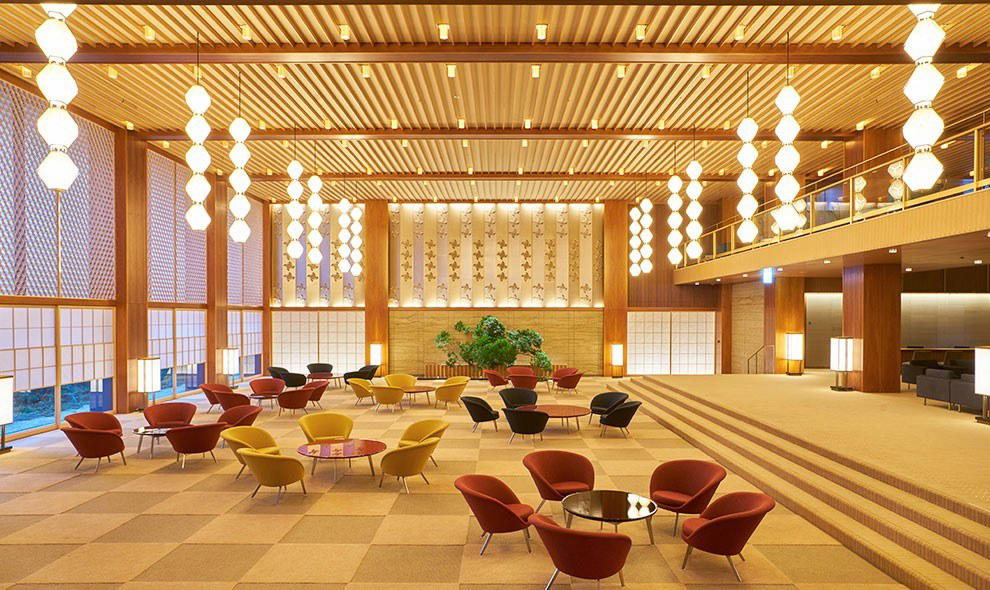
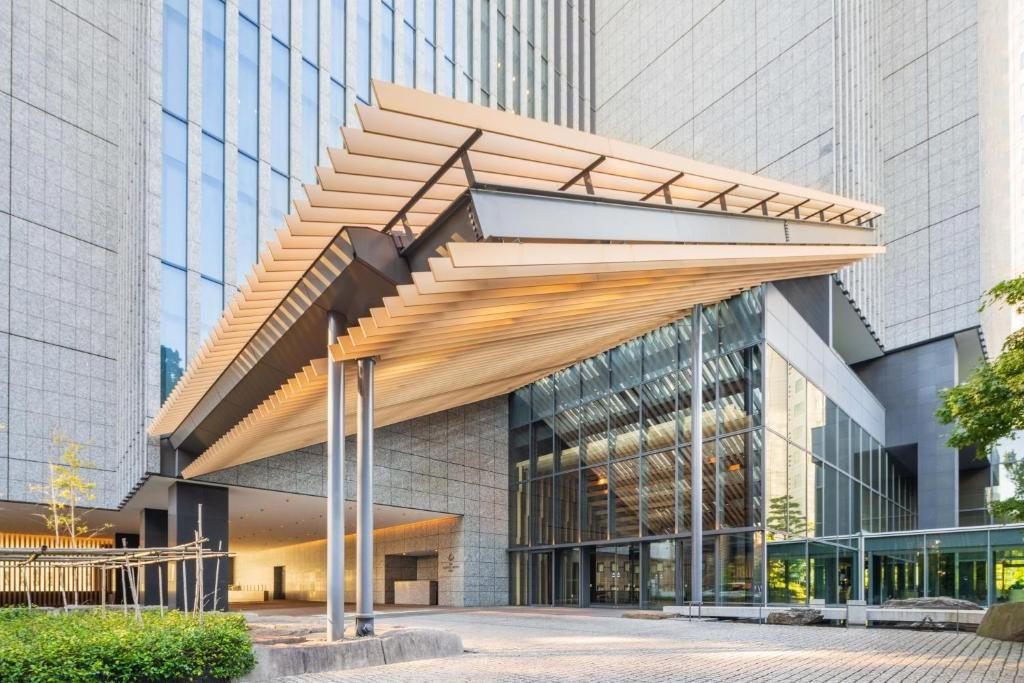
Spacious, modern, and relaxed with bright natural lighting from large windows overlooking the Midtown Garden; feels upscale yet approachable.