
Tabelog 100 #84
Our verdict
A nine-seat counter near Hamadayama Station, Shina Soba Tantantei belongs to Tokyo’s disciplined ramen tradition rather than the city’s luxury dining circuit. Its reputation rests on repeated Tabelog Ramen TOKYO 100 selections from 2017 through 2025, a tight counter format, and a price band that keeps the ritual closer to daily eating than destination tasting menus.

Pearl is the En Primeur Club membership app — saves, bookings, and concierge access live there. Same editors, same standards.
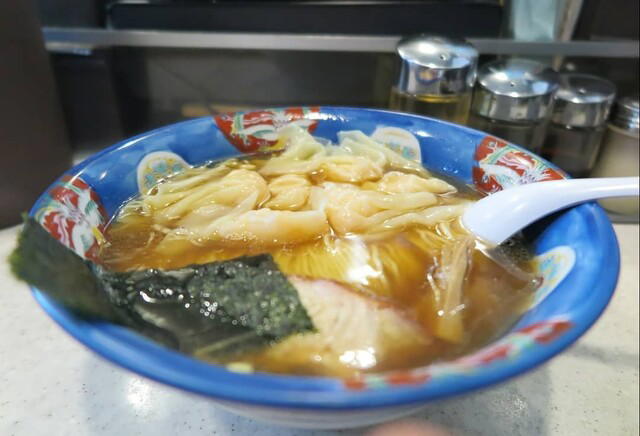
The menu
What to order
- Shina Soba (regular ramen)
- Tsuke Soba (tsukemen)
- Mix Won Ton Men (pork and shrimp wonton ramen)
- Niku Won Ton Men (pork wonton ramen)
- Ebi Won Ton Men (shrimp wonton ramen)
Tokyo gives ramen a tempo distinct from the city’s longer-form dining rooms. The room is best understood as a focused counter-style setting built for concentration: a short wait, a seat, a bowl served without ceremony, then a quick turnover that belongs to the city’s everyday noodle culture. Shina Soba Tantantei fits that grammar precisely. It is not a theatrical ramen shop, and that is the point. In Tokyo, serious ramen is often measured less by décor than by how tightly a shop controls pace, service, and repetition.
The category matters. Shina Soba Tantantei is listed for ramen and tsukemen, placing it in a part of the city’s noodle scene where the meal is brief but not casual in execution. Ramen and dipping noodles each reward timing, texture, and a kitchen’s ability to repeat the same standard across service. The diner’s role is equally codified: order efficiently, eat while the noodles hold texture, and free the seat for the next person.
A counter ritual shaped by Tokyo's ramen discipline
Tokyo ramen can look democratic from the outside because the price of entry remains low compared with many reservation-led meals. The internal hierarchy is sharper. Shops recognized by Tabelog’s ramen-focused selections compete on consistency across countless bowls, not on a single tasting-menu moment. Shina Soba Tantantei is listed in the 2025 Tabelog Hyakumeiten data, a useful signal in a category where demand often runs ahead of formal guide coverage.
The counter format is not a decorative detail. It defines the experience. Small ramen counters compress the kitchen and dining room into one working line, so the meal depends on timing rather than table service. This format rewards solo diners and pairs who understand the cadence. It is less suited to lingering, but it gives the bowl priority over everything else. In a city where high-end counters often turn exclusivity into theatre, this kind of ramen counter keeps the ritual blunt and efficient.
That is also why the Tokyo setting matters. The shop belongs to a city where specialist noodle rooms can sit beside every other scale of dining, from everyday counters to elaborate destination restaurants. Its appeal is easy to fold into a Tokyo day without treating ramen as a formal evening plan. For a broader reading of the city’s dining range, Our full Tokyo restaurants guide maps the contrast between small counters, specialist rooms, and larger-format restaurants.
Reputation here is cumulative, not theatrical
The strongest credential is recognition from a source diners actually use. A 2025 Tabelog Hyakumeiten listing places Shina Soba Tantantei inside a competitive ramen conversation rather than a purely anecdotal hype cycle. Its Tabelog score of 3.78 gives another quantitative marker, useful in Japan’s scoring culture where small differences can carry weight among regular diners. The listed budget, Dinner: JPY 1,000 - JPY 1,999; Lunch: JPY 1,000 - JPY 1,999, keeps it aligned with serious ramen peers rather than with Tokyo’s reservation-led dining economy.
Comparison within the supplied Tokyo ramen orbit is instructive. Nishieifuku no Niboshi Bako, Shio Soba Jikuu, Shiosoba Jiku, Shimura, and Ramen Koike all help frame the city’s low-price ramen bracket, which shows how Tokyo’s noodle culture separates value from lack of ambition. The competitive question is not whether a bowl costs like fine dining; it is whether a shop can hold attention in a city with deep specialization and relentless repeat customers. Against that group, 2025 Tabelog Hyakumeiten recognition gives Shina Soba Tantantei a clear signal of relevance.
The practical ritual remains part of the appeal. Ramen in this bracket generally works on arrival discipline rather than elaborate advance planning. Timing, appetite, and willingness to eat at the pace of the room matter more than dress or occasion. The venue is listed in the ramen and tsukemen categories, and the experience should be approached as a compact noodle stop rather than a sprawling dining room. For current operational details, diners should check the latest venue listing before going.
Where it fits in a Tokyo eating day
Shina Soba Tantantei makes the strongest case as a focused ramen stop, not as a long-form dining appointment. The value lies in the Japanese habit of taking a specialised meal seriously without inflating it into occasion dining. That makes it a useful counterpoint to Tokyo’s broader food map, from other small specialist counters and casual dining rooms to larger restaurants, cafés, and bars. The point is not to rank those formats against one another, but to understand how a brief noodle meal can carry its own discipline.
Travellers building a fuller Tokyo itinerary can pair this kind of ramen with the city’s other hospitality layers: hotels, bars, wine-focused venues, and experiences all sit around the meal rather than replacing it. For readers tracking Japanese dining beyond Tokyo, the comparison is best kept broad: ramen counters operate differently from destination restaurants, cafés, casual curry shops, and Japanese-inspired formats abroad. The Tokyo counter system has its own tempo, and Shina Soba Tantantei should be read within that local rhythm.
The verdict is simple: this is a ramen shop for diners who value format discipline, recognized standing, and the clean efficiency of a counter meal. The appeal is not scarcity for its own sake. It is the way a small Tokyo room turns a low-cost bowl into a precise dining ritual.
Frequently asked questions
Is Shina Soba Tantantei open every day?
Check the latest venue listing before visiting.
What's the price range at Shina Soba Tantantei?
Pricing at Shina Soba Tantantei is listed as JPY 1,000 - JPY 1,999 JPY 1,000 - JPY 1,999.
Where do I go for Shina Soba Tantantei?
Shina Soba Tantantei is located in Tokyo.
What has Shina Soba Tantantei built its reputation on?
Its reputation is supported by 2025 Tabelog Hyakumeiten recognition, a Tabelog score of 3.78, and its listing in the ramen and tsukemen categories. The JPY 1,000–1,999 budget makes it a focused ramen stop rather than a sprawling dining room.
Is Shina Soba Tantantei good for vegetarians?
Vegetarians should treat it as a cautionary choice and check the current offerings before going.
Is Shina Soba Tantantei good for families?
Treat it as a compact ramen-focused venue and check the venue's official channels for the latest details.
Cuisine and Awards Snapshot
Comparable venues for orientation by cuisine and category.
| Venue | Cuisine | Price | Awards | Notes |
|---|---|---|---|---|
| Shina Soba TantanteiThis venue (the venue you are viewing) | Classic Tokyo Shina Soba & Wonton Ramen | $10–20 | Tabelog 100 #84 | Not listed |
| Oiwake Dango Honpo Shinjuku honten | Traditional Japanese dango & wagashi cafe | $10–20 | Tabelog 100 #66 | Shinjuku |
| Kodaira Udon Kodaira honten | Musashino-style Udon Noodle Shop | $10–20 | Tabelog 100 #54 | Kodaira |
| KAMAYOSHI | Japanese Udon | $1–10 | Tabelog 100 #79 | Chiyoda |
| Kadoya | Japanese traditional sweets (wagashi) shop | $1–10 | Tabelog 100 #90 | Adachi |
| One More | Traditional Japanese kissaten café | $10–20 | Tabelog 100 | Edogawa |
Recognition history
Dated appearances from independent guides and award organizations, with the underlying list record or original source where available.
Tabelog 100 #84 · No. 84
Tabelog · Tabelog 100 - Ramen - TOKYO - 2025
Continue exploring
More in Tokyo
Restaurants in Tokyo
All restaurants in Tokyo →



Bars in Tokyo
All bars in Tokyo →




Details
- Classic
- Cozy
- Well Known
- Solo
- Casual Hangout
- Family
- After Work
- Chefs Counter
- Standalone
- Street Scene
- A La Carte
- Counter Dining
Current opening hours
- Monday
- 11 AM–8:30 PM
- Tuesday
- 11 AM–8:30 PM
- Wednesday
- 11 AM–8:30 PM
- Thursday
- 11 AM–8:30 PM
- Friday
- 11 AM–8:30 PM
- Saturday
- 11 AM–8:30 PM
- Sunday
- 11 AM–8:30 PM
Hours can change for holidays and private events. Last verified .
Traditional, compact counter-only ramen shop with a simple, no-frills interior; bright but modest lighting, tight seating, and a classic neighborhood feel focused entirely on the bowl rather than decor.