Our verdict
Shi Er Qiao Bao Zhi Dian is a Chengdu address where regulars return not for novelty but for consistency, the kind of place that earns loyalty through precision on familiar ground. Positioned within the city's dense street-food and casual-dining scene, it represents the segment where repetition is the point, and where the crowd on a Tuesday tells you more than any award ever could.

Pearl is the En Primeur Club membership app, where members save venues, book tables and use the concierge.
What the Regulars Already Know
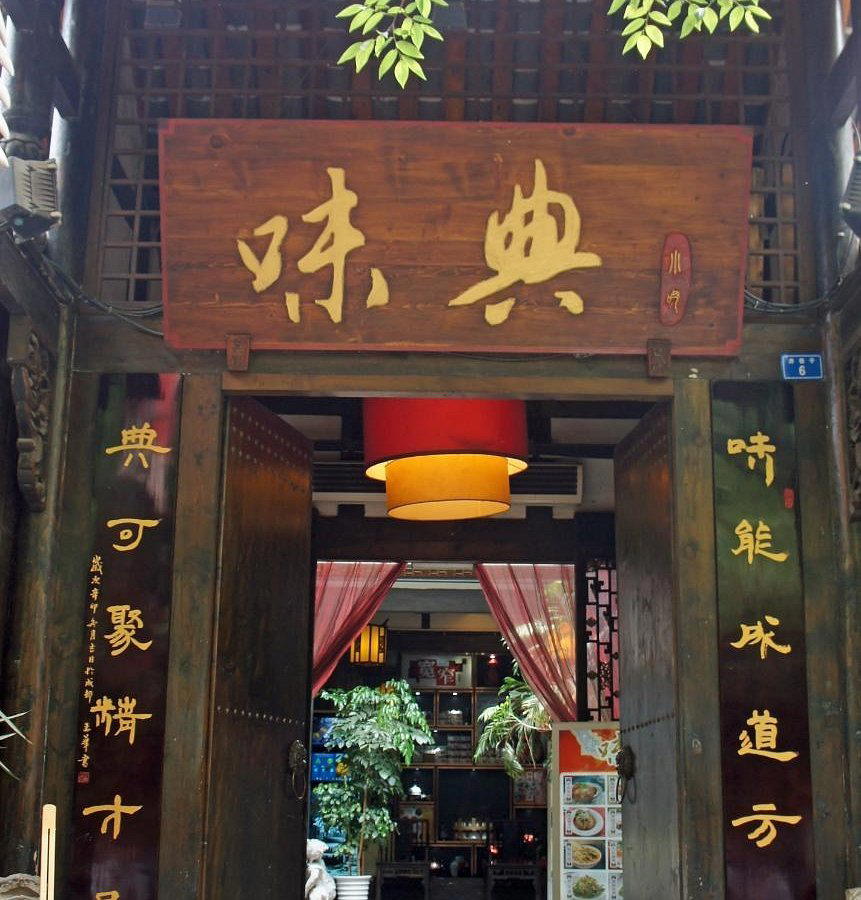
Chengdu's dining identity is built on two parallel tracks: the high-concept Sichuan tasting-menu circuit, where venues like Yu Zhi Lan and Fang Xiang Jing operate at premium price points with Michelin-level ambition, and the everyday neighbourhood tier where the measure of quality is not a star but a full house at an ordinary hour. Shi Er Qiao Bao Zhi Dian occupies the second track. Its name references the Shi Er Qiao area in the city's Jinniu district, a part of Chengdu that moves at a local rhythm, less photographed than Kuanzhai Alley, less trafficked by international visitors than Chunxi Road, and more likely to be where a Chengdu resident actually eats lunch.
That locational grounding matters. In a city where the restaurant scene ranges from UNESCO-recognised street food culture to the kind of refined Sichuan cooking that competes with anything produced in Beijing or Shanghai, the middle and lower registers of the dining spectrum carry their own rigour. The bao zhi in the name signals a focus on traditional morning or all-day eating: newspapers, tea, and steamed things. It is a format with deep roots in Sichuan urban life, and the regulars at a place like this are often measuring the offering against a very personal and very precise internal standard developed over years.
The Format and What It Signals
Across China, the traditional bao zhi dian model, literally a newspaper and snack shop, though in practice often a tea-and-dim-sum-adjacent eating house, sits in a category that resists easy translation for international visitors. It is not a restaurant in the Western sit-down sense, nor is it pure street food. The format tends toward communal seating, rapid turnover, and a menu that rewards familiarity. You eat what the regulars eat, or you spend more time than necessary deciphering options that were never designed with the first-time visitor in mind.
This is not a criticism. It is, in fact, the point. Cities like Chengdu that carry genuine food culture at a civic level, a culture substantiated by UNESCO's 2010 designation as a Creative City of Gastronomy, produce establishments where the knowledge gap between locals and newcomers is itself a signal of authenticity. The contrast with the more internationally legible tier, including addresses like Xin Rong Ji and Fu Rong Huang, is stark and deliberate. Those venues meet visitors on neutral, translatable ground. Shi Er Qiao Bao Zhi Dian does not make that concession.
The Logic of Return Visits
Regulars at this category of establishment are not returning because the menu changes seasonally or because a chef has introduced a new technique. They return because the specific item they want is reliably the specific item they remember. In Sichuan eating culture, this reliability is earned slowly and lost quickly. A dumpling wrapper that thins out when a supplier changes, a broth that shifts when ratios drift, the loyal customer notices before any critic does, and the neighbourhood consensus adjusts accordingly.
That dynamic operates differently from the kind of critical attention that shapes the upper tier of Chinese fine dining. Consider how 102 House in Shanghai or Chef Tam's Seasons in Macau attract visitors through verifiable award credentials and editorial coverage. At the street-food and neighbourhood-casual level, the credentialing mechanism is entirely different: it is the 7am queue, the regulars who arrive at the same time on the same days, the fact that the table next to you holds the same family it held last Saturday. These are not romantic details, they are functional signals of a kitchen maintaining its standard.
Chengdu's Broader Eating Context
Placing Shi Er Qiao Bao Zhi Dian within the city's full dining range requires acknowledging just how wide that range is. At one end, Chengdu produces the kind of refined Sichuan tasting menus that attract the same critical conversation as Ru Yuan in Hangzhou or Imperial Treasure in Guangzhou. At the other, it sustains a street-food and neighbourhood-casual tier that functions as the city's daily infrastructure. The distance between those two ends is traversed not by prestige but by intention: what kind of meal do you need, and when.
For a first-time visitor building a Chengdu itinerary around the premium tier, addresses like Hokkien Cuisine offer one calibration point. For a visitor who wants to understand how the city actually eats across a full day, the neighbourhood tier that Shi Er Qiao Bao Zhi Dian represents is not a supplement to the itinerary, it is a core part of it. The same city that supports formal Cantonese dining in Nanjing or French-influenced menus in Xiamen also produces the kind of all-day eating house where steamed buns are the primary currency and the price of a meal rarely breaks three figures in RMB.
That price-point reality matters for context. Compared to hotel-based fine dining or the ¥¥¥¥ tier occupied by venues like Dingshan·Jiangyan in Suzhou, the neighbourhood-casual segment operates on a completely different value framework. The investment here is time and local knowledge, not per-head spend. For visitors accustomed to evaluating restaurants through the metrics of a Le Bernardin or an Atomix, where tasting menu structure and awards architecture are the primary signals, the recalibration required for this category is significant and worthwhile.
Planning a Visit
Because verified operational details for Shi Er Qiao Bao Zhi Dian are not publicly consolidated through international booking platforms, the practical approach is to treat this as a walk-in destination rather than a reservable experience. Establishments of this type in Chengdu typically operate through peak morning and midday hours, and the Shi Er Qiao area is accessible by metro on Line 2. Arriving outside the peak morning window, roughly 9am to 11am, generally reduces wait times at busy neighbourhood counters. A working knowledge of Mandarin or a translation app is more useful than any printed guide here; menus at this tier are rarely multilingual. Cross-referencing with regional eating house formats elsewhere in China gives useful structural context for what to expect from the ordering process.
Frequently asked questions
What kind of experience does a traditional bao zhi dian in Chengdu offer compared to the city's formal Sichuan restaurants?
The bao zhi dian format operates outside the tasting-menu circuit entirely: no fixed courses, no chef's narrative, no booking window. In Chengdu, where the formal Sichuan dining scene includes Michelin-starred venues and nationally recognised names, the bao zhi dian is where the same culinary culture surfaces in its most accessible, unreconstructed form. Shi Er Qiao Bao Zhi Dian belongs to that everyday register, making it a useful counterpoint for anyone mapping the full breadth of the city's food culture.
What dish is Shi Er Qiao Bao Zhi Dian famous for?
Verified dish-level detail for Shi Er Qiao Bao Zhi Dian is not consolidated through international platforms, but the bao zhi dian format in Chengdu is built around Sichuan staples: dan dan noodles, zhong shui jiao (sweet-soy dumplings), and douhua. Expect the menu to reflect that everyday canon rather than a chef-driven set piece. On-the-ground intelligence from Chengdu locals is the most reliable route to knowing what the kitchen does best on any given morning.
How far ahead should I plan for Shi Er Qiao Bao Zhi Dian?
Bao zhi dian-format venues in Chengdu typically operate on a walk-in basis, serving the breakfast and mid-morning crowd without advance reservations. Arrival before 9am generally secures a seat at the most in-demand neighbourhood spots. Because no booking platform currently lists Shi Er Qiao Bao Zhi Dian's hours or reservation policy, showing up early remains the practical strategy.
What's the standout thing about Shi Er Qiao Bao Zhi Dian?
The format itself is the point. In a city where Michelin-recognised tasting menus at venues like Yu Zhi Lan draw international attention, the bao zhi dian represents the opposite end of Chengdu's dining range: low cost, high frequency, neighbourhood-rooted. Shi Er Qiao Bao Zhi Dian sits within that tradition, where consistency across hundreds of visits matters more than any single technique or seasonal menu change.
Do they accommodate allergies at Shi Er Qiao Bao Zhi Dian?
Traditional bao zhi dian operations in Chengdu are typically small-format, high-turnover kitchens where allergy customisation is limited and menu items often contain sesame, soy, and wheat as standard. Guests with severe dietary restrictions should communicate directly with the venue and, if Mandarin is not an option, bring a written translation of their requirements.
Is a meal at Shi Er Qiao Bao Zhi Dian worth the investment?
The bao zhi dian category is one of the lowest price-per-visit formats in Chinese urban dining, so the financial threshold is minimal. The value question is really about time and expectation: this is a neighbourhood snack house in Chengdu, not a destination tasting counter. For anyone spending time in the Shi Er Qiao area, it offers a direct read on how the city actually eats outside its restaurant-circuit venues.
Style and Standing
| Venue | Cuisine | Price | Awards | Notes |
|---|---|---|---|---|
| Shi Er Qiao Bao Zhi DianThis venue (the venue you are viewing) | Sichuan Cuisine | Not listed | Not listed | Not listed |
| Xin Rong Ji | Chinese | Not listed | 2 Michelin Stars · World's 50 Best #56 | Taizhou |
| Yu Zhi Lan | Modern Sichuan Fine Dining | $200–300 | 2 Michelin Stars · La Liste Top Restaurants | Sichuan |
| Mi Xun Teahouse | Modern Vegetarian Sichuan Chinese | $30–50 | 1 Michelin Star | Vegetarian |
| Chen Mapo Tofu (Qinghua Road) | Authentic Sichuan Mapo Tofu | $10–20 | Michelin Bib Gourmand | Sichuan |
| Gan Ji Fei Chang Fen (Jinniu) | Sichuan Pork Intestines Glass Noodles | $1–10 | Michelin Bib Gourmand | Noodles |
Continue exploring