
Our verdict
Seino is a ramen counter in Wakayama's Kintetsu department store basement, ranked among Japan's top casual dining addresses by Opinionated About Dining three consecutive years running. Operating Tuesday through Saturday across tight lunch and evening sittings, it represents the kind of precision-driven bowl culture that has made provincial Japanese ramen scenes worth tracking. Chef Kyobashi Kotaro runs the kitchen.

Pearl is the En Primeur Club membership app — saves, bookings, and concierge access live there. Same editors, same standards.
- Address
- Japan, 〒640-8546 Wakayama, Tomodacho, 5 Chome−18 近鉄百貨店和歌山店 B1F
- Phone
- +81 73-433-1122
- Hours
- Daily 10 AM–6:30 PM
- Website
- twitter.com
- Directions
- Get directions
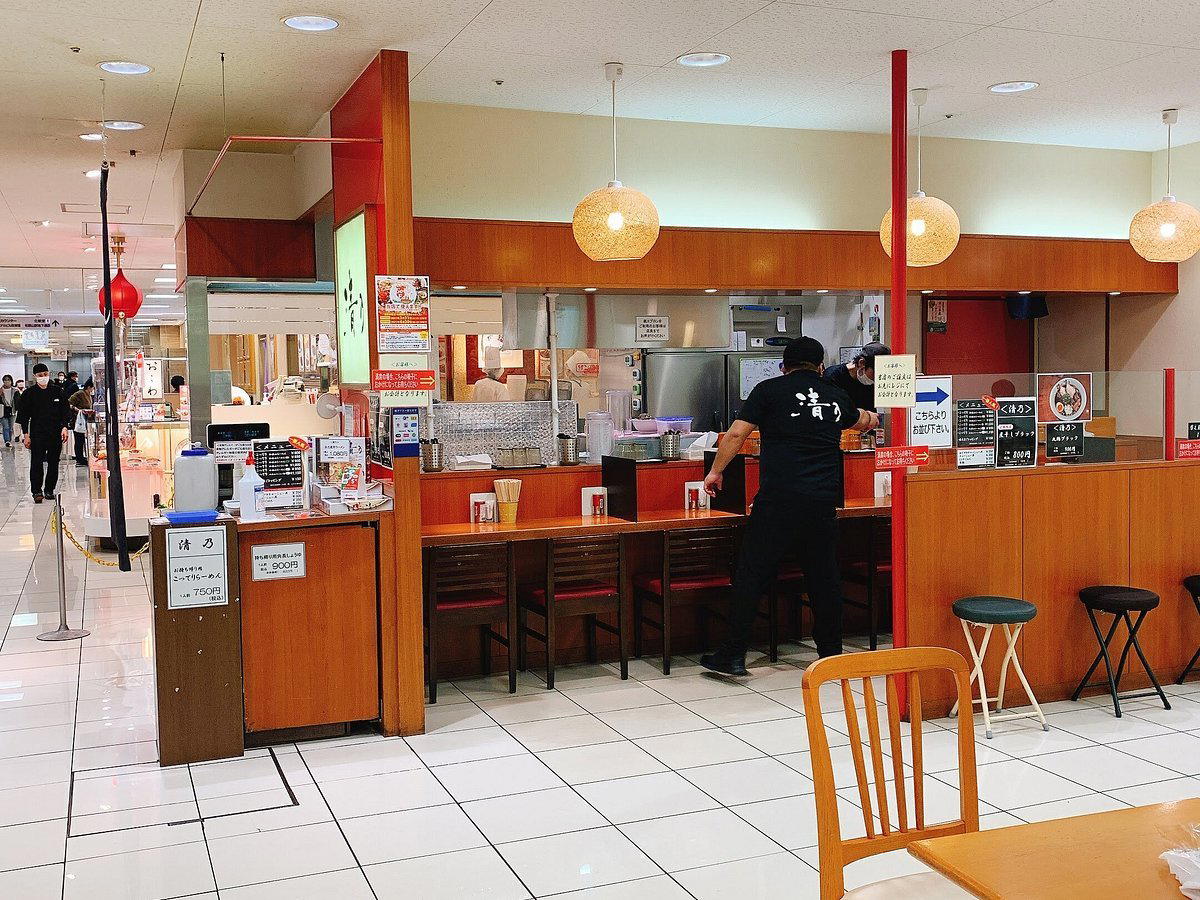
Ramen in the Basement: How Department Store B1 Became Wakayama's Most Serious Food Floor
In Japan, the department store basement — the depachika — has long functioned as a parallel dining institution. While foreign visitors tend to gravitate toward ground-floor confectionery and gift food, the restaurant floors embedded in these buildings often house something more interesting: long-running counters with loyal local followings, insulated from the pressures of high-visibility street-level rent and tourist foot traffic. Seino operates in exactly that context, occupying space in the basement of the Kintetsu department store in central Wakayama, where the format aligns the everyday social character of ramen eating with the infrastructure of a serious kitchen operation.
Ramen, as a dining category, has undergone a significant re-evaluation across Japan over the past fifteen years. What was once treated as fast food, utilitarian, disposable, valued for price and speed, has split into a tiered market. At one end, the category remains casual and high-volume. At the other, a smaller cohort of counter operators applies the same sourcing rigour and technical discipline found in kaiseki or sushi to broth construction, noodle specification, and topping execution. The critical community has begun to track this upper tier seriously, and Opinionated About Dining's Japan Casual list has become the primary reference point for identifying which ramen counters have crossed into that assessed tier. Seino appears on that list three consecutive years: ranked 39th in 2023, 50th in 2024, and 60th in 2025.
Three Consecutive Years on the OAD Ranking, What the Trajectory Signals
Consecutive appearances on the Opinionated About Dining Casual in Japan ranking carry a specific signal. OAD rankings are built from the aggregated opinions of frequent diners and food professionals rather than a single critic's visit, which makes sustained placement over multiple years more meaningful than a single high placement in one edition. Seino's presence at ranks 39, 50, and 60 across 2023, 2024, and 2025 reflects continued recognition across an expanding and competitive pool of assessed venues. The slight movement down the rankings from 2023 to 2025 is less a decline than evidence of a field that keeps growing in depth, with new entries appearing each cycle. Remaining inside the top 60 across three years is a more durable signal than a single high debut.
Wakayama itself is not typically the first stop on a Kansai food itinerary. Osaka draws the regional majority of restaurant attention, a city where venues like HAJIME in Osaka operate at the highest international tier, while Kyoto anchors fine dining tradition through kaiseki institutions like Gion Sasaki in Kyoto. Nara, to the north, has its own smaller cohort of serious restaurants, including akordu in Nara. Wakayama sits outside these better-mapped circuits, which is part of why an OAD-ranked counter here functions as a more useful signal than it might in Tokyo or Osaka, where the density of assessed venues is far higher. A ranking in a less-documented city tends to indicate genuine quality surfacing despite reduced critical attention, not quality manufactured for it.
The Ramen Counter as Social Architecture
The izakaya tradition in Japan has always been less about any single dish than about the rhythm of sharing, small plates arriving across an extended evening, punctuated by drinks, conversation, and the particular ease that comes from eating in a space designed for lingering rather than turning tables. Ramen counters operate differently. The format is tighter, the service linear, the meal compressed into a single focused bowl. But the social logic overlaps more than the format difference suggests. A ramen counter at the right hour, particularly during the evening sitting, carries something of the same communal energy: neighbouring diners sharing a narrow bench, staff working across an open pass, the sounds and smells of broth in motion. Seino's location inside a department store basement reinforces this civic quality. The setting is not destination dining in the theatrical sense; it is the kind of place a local returns to on a Tuesday evening because it is serious without being formal, consistent without being static.
Chef Kyobashi Kotaro runs the kitchen. Operating hours are Tuesday through Saturday, with a midday sitting from 11am to 2pm and an evening sitting from 6pm to 8:30pm. The counter is closed on Sundays and Mondays, which is consistent with the operating model of many serious Japanese ramen operations, where shorter weeks allow kitchen staff to maintain quality without the cumulative degradation of seven-day service.
Placing Seino in the Broader Ramen Conversation
Ramen's expansion as a serious category is visible beyond Japan's borders. Venues like Afuri in Tokyo, known for its yuzu-infused broths and light shio style, have taken their format as far as Afuri Ramen in Portland, where Japanese noodle technique meets a Pacific Northwest sourcing ethos. The category is no longer confined to Japan as a reference point.
For readers exploring Wakayama more broadly, the city's dining scene beyond ramen includes Hotel de Yoshino, which operates in the French tradition, and Sizen Mukuan, which takes a different approach to local ingredients. The full picture of what Wakayama offers is available across our guides: our full Wakayama restaurants guide, our full Wakayama hotels guide, our full Wakayama bars guide, our full Wakayama wineries guide, and our full Wakayama experiences guide.
For comparison within the broader Japanese dining circuit, EP Club covers precision counters and assessed casual venues across the country, from Harutaka in Tokyo to Goh in Fukuoka, 1000 in Yokohama, 6 in Okinawa, Abon in Ashiya, and affetto akita in Akita.
Planning a Visit
Seino is in the basement level (B1F) of the Kintetsu department store in Tomodacho, central Wakayama. The counter runs Tuesday through Saturday only, with lunch from 11am to 2pm and dinner from 6 to 8:30pm. Arriving before the sitting opens is advisable, particularly for the dinner service, which runs a narrow two-and-a-half-hour window. Given the evening sitting's compressed hours and the venue's OAD profile, early arrival is the more reliable approach than attempting to time a casual drop-in at peak hour.
Frequently asked questions
What are the operating hours at Seino?
Hours at Seino: Hours: Monday Closed Tuesday 11 am–2 pm, 6–8:30 pm Wednesday 11 am–2 pm, 6–8:30 pm Thursday 11 am–2 pm, 6–8:30 pm Friday 11 am–2 pm, 6–8:30 pm Saturday 11 am–2 pm, 6–8:30 pm Sunday Closed.
Who is the chef or culinary lead at Seino?
The chef associated with Seino is Kyobashi Kotaro.
What is Seino known for?
Seino is a ramen counter in the basement level of the Kintetsu department store in Tomodacho, Wakayama, and one of the few ramen venues in the prefecture to hold a sustained position on the Opinionated About Dining Casual in Japan ranking — appearing consecutively in 2023, 2024, and 2025. The counter operates Tuesday through Saturday, with both lunch and dinner sittings.
Booking and Cost Snapshot
| Venue | Cuisine | Price | Awards | Notes |
|---|---|---|---|---|
| SeinoThis venue — the venue you are viewing | Innovative Seafood Shoyu Ramen | $10–20 | Not listed | Not listed |
| Harutaka | Sushi | Not listed | Michelin 3 Star | Not listed |
| RyuGin | Modern Kaiseki | $500+ | 3 Michelin Stars · World's 50 Best #41 | Kaiseki, Japanese |
| HAJIME | French, Innovative | Not listed | Michelin 3 Star | Not listed |
| L'Effervescence | French | Not listed | Michelin 3 Star | Not listed |
| HOMMAGE | Innovtive French, French | Not listed | Michelin 2 Star | Not listed |
Recognition history
Dated appearances from independent guides and award organizations, with the underlying list record or original source where available.
Opinionated About Dining Casual in Japan Ranked #37
Opinionated About Dining
Full recognition history (4 entries)
Opinionated About Dining Casual in Japan Ranked #60
Opinionated About Dining
Opinionated About Dining Casual in Japan Ranked #50
Opinionated About Dining
Opinionated About Dining Casual in Japan Ranked #39
Opinionated About Dining
Continue exploring
More in Wakayama
Restaurants in Wakayama
Browse all →

Bars in Wakayama
Browse all →


Hotels in Wakayama
Browse all →
Wineries in Wakayama
Browse all →
Details
- Intimate
- Cozy
- Modern
- Solo
- Family
- Casual Hangout
- Open Kitchen
- Sake Program
- Local Sourcing
- A La Carte
- Counter Dining
Current opening hours
- Monday
- 10 AM–6:30 PM
- Tuesday
- 10 AM–6:30 PM
- Wednesday
- 10 AM–6:30 PM
- Thursday
- 10 AM–6:30 PM
- Friday
- 10 AM–6:30 PM
- Saturday
- 10 AM–6:30 PM
- Sunday
- 10 AM–6:30 PM
Hours can change for holidays and private events. Last verified .
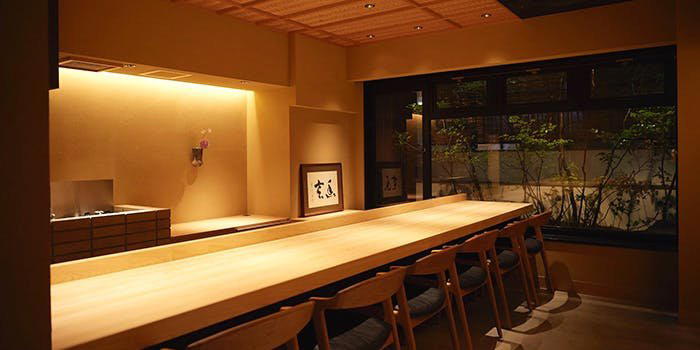
Intimate counter seating offering a theater-like view of the chef's precise technique in a non-smoking, contemplative hideout atmosphere.