
Tabelog Bronze #415
Our verdict
Sizen Mukuan belongs to Wakayama’s quieter high-end Japanese dining tier, where ingredient sourcing carries more weight than spectacle. Its Tabelog Bronze recognition and repeated selection for Japanese cuisine WEST place it beyond a local curiosity, while the compact counter-and-tatami format keeps the experience closer to regional craft than metropolitan ceremony.

Pearl is the En Primeur Club membership app — saves, bookings, and concierge access live there. Same editors, same standards.
- Address
- 4 Chome-59 Misonocho, Wakayama, 640-8331, Japan
- Phone
- +81 73-422-1475
- Hours
- Mon–Tue 11:40 AM–6:30 PMWed ClosedThu–Sat 11:40 AM–6:30 PMSun Closed
- Website
- tabelog.com
- Directions
- Get directions
Serious Japanese cooking in Wakayama feels different from Ginza, Kyoto, or Osaka. The noise drops, the frame widens, and the meal reads less as luxury performance than negotiation with place: sea, mountain, river valleys, citrus groves, vegetable fields, and the Kii Peninsula’s long food memory. Sizen Mukuan sits inside that logic. The point is not a grand room or chef mythology, but how a small Japanese restaurant turns local sourcing into structure, pacing, and identity.
Outsiders often flatten Wakayama dining into ramen shorthand, especially through chuka soba institutions such as Chuka Soba Senmon Ten Ide Shoten and local noodle counters around Chuka Soba Hayami. That misses the prefecture’s other side: a coastal-and-mountain pantry broad enough for formal Japanese cooking at a higher register. Here, vegetables, fish, vegetarian options, sake, and shochu are not lifestyle notes. They are the grammar of a region where seasonality is practical before decorative.
Regional Japanese cooking built around produce, fish, and restraint
The strongest reason to dine here is ingredient logic. Wakayama has long supplied Kansai kitchens with seafood, fruit, ume, and mountain produce, yet its restaurant identity rarely gets Kyoto kaiseki’s attention or Osaka’s appetite for immediacy. A small Japanese cuisine house in Tanabe can work with another authority: less urban polish, more credibility from nearby land and water.
Sizen Mukuan’s focus on vegetables and fish places it in that lineage. High-end Japanese cuisine outside major cities often succeeds or fails on sourcing discipline. Without the pull of a famous dining district, the meal must justify travel through materials, not theatre. Vegetarian options matter in a category where full accommodation can be uneven, though this remains Japanese cuisine rather than a plant-based restaurant. Sake and shochu correctly anchor a kitchen built around vegetables, fish, and seasonality, not heavy luxury ingredients.
Tabelog recognition gives the restaurant a measurable position in Japan’s crowded Japanese-cuisine field. It holds The Tabelog Award 2026 Bronze and has appeared repeatedly among Japanese cuisine WEST selections, including 2025, 2023, and 2021. These signals do not make it comparable to every trophy counter in Tokyo, and should not be read that way. They place it in a more interesting bracket: a regional dining room with sustained user-driven recognition in a country where evaluation is unusually granular and local diners are exacting.
Within Wakayama, the experience sits apart from everyday noodle culture, casual tonkatsu, and the sushi-specialist lane represented by higher-priced counters such as Sushi Gishin. It is closer to a destination meal that asks diners to slow down and accept regional produce as the main event. For broader prefectural context, Our full Wakayama restaurants guide maps the spread from ramen to formal dining, while Aji Ichi, Hotel de Yoshino (French), and Ichijoin show how varied Wakayama’s serious food conversation has become.
A compact room changes the terms of the meal
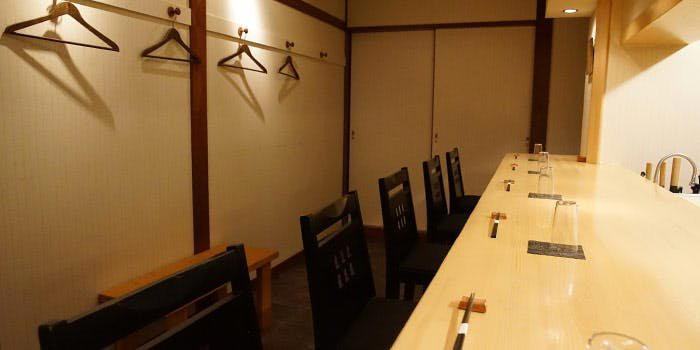
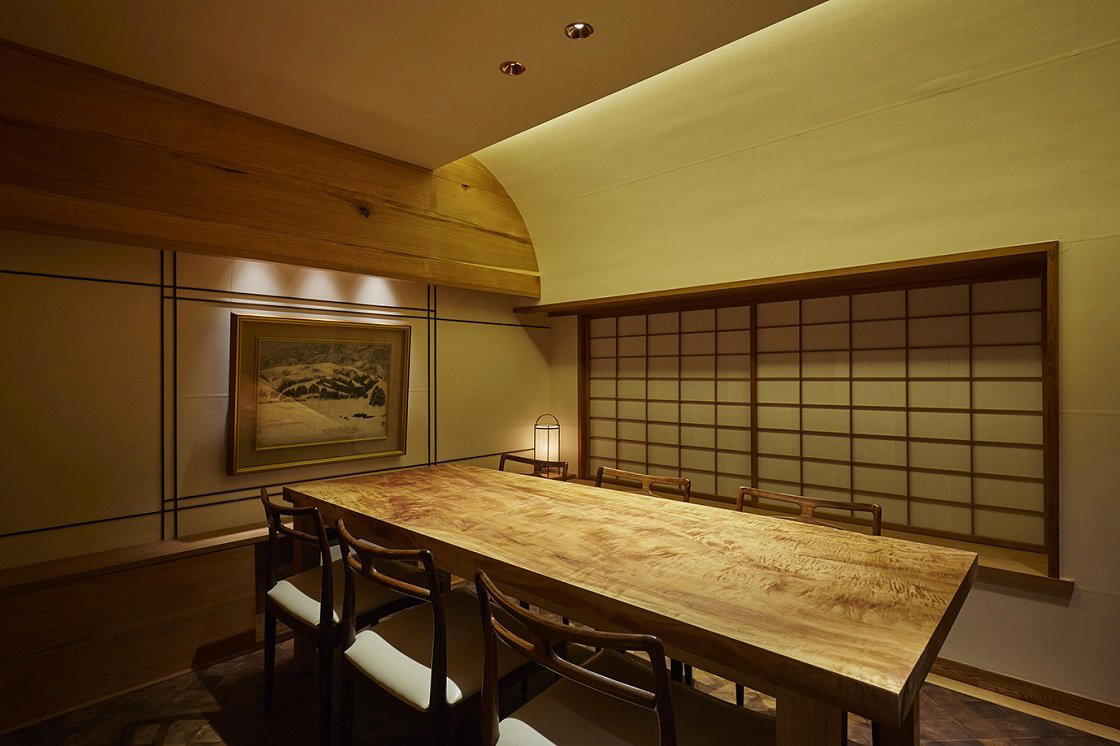
Small Japanese restaurants depend on proximity. Counter seating, tatami, sunken seating, and a total capacity in the small-restaurant range create a different rhythm from a hotel dining room or large urban kappo. The counter compresses attention; tatami and sunken seating keep the experience tied to domestic Japanese dining forms rather than international fine-dining staging. The restaurant is also wheelchair accessible and stroller-friendly, practical but significant details in a category that can be physically restrictive.
The family policy is unusually explicit for serious Japanese dining. Children and babies are welcomed, strollers are allowed, and a children’s menu can be requested, but the atmosphere is protected. This is not a free-form family restaurant; it is a small, focused dining room that permits families when the meal’s rhythm can be respected. For Wakayama travellers, that is clearer than the softer wording formal restaurants often use.
The recognition also changes how to read the room. A Bronze-level Tabelog address in a small regional setting is not imitating a metropolitan destination’s scale. Its appeal lies in compression: fewer seats, a narrower service window, and a closer relationship between guest, kitchen, and ingredients. That rewards diners who care about regional Japanese cooking more than menu spectacle, and will be less persuasive for anyone seeking a casual walk-in meal or broad à la carte night.
How it fits into a Wakayama itinerary
Wakayama rewards travellers who do not treat it as an Osaka side note. Its food identity runs from chuka soba and coastal seafood to temple-adjacent cooking, French dining using local materials, and small Japanese restaurants where sourcing is the argument. Sizen Mukuan belongs to the last group. It suits travellers building a food-led route through Tanabe, Shirahama, Koyasan, and Wakayama City, not those chasing only quick regional staples.
Planning matters because this is a destination-style meal in a prefecture where movement shapes the day. Visitors pairing dinner with regional stays should cross-check Our full Wakayama hotels guide; those extending the evening can use Our full Wakayama bars guide. For travellers connecting food with drinks, production, and cultural programming, Our full Wakayama wineries guide and Our full Wakayama experiences guide place the meal inside a wider itinerary.
Readers comparing Japanese dining across cities should separate category from mood. A beef-focused meal such as -Grilled beef Sukiyaki- KAMAKURA TANUKIAN 鎌倉 たぬき庵 in Kamakura, a Tokyo izakaya-grill format like. 鮪と炭火焼き うお炭 秋葉原店 in Tokyo, a casual Osaka cafe such as.cafe in Osaka, or a Kumamoto dining room like.know in Kumamoto answers a different question. So do diaspora Japanese-adjacent addresses such as Jōdo Saké Bar in Los Angeles and Onigiri Time in Pasadena, or category specialists such as (Shoku) Vietnam in Kawasaki and [Curry Senmon Ten] Maruyama Kyoju. in Sapporo. The Wakayama meal is quieter, more ingredient-led, and more dependent on interest in place.
The editorial case is clear: choose Sizen Mukuan to understand how regional Japanese cuisine operates outside the big-city prestige circuit. Its awards history supplies trust, but the stronger reason is sourcing. Wakayama has the raw material for serious cooking, and a compact Japanese dining room gives those materials less room to hide.
Frequently asked questions
Does Sizen Mukuan work for a family meal?
Yes. The restaurant lists children and babies as welcome, with strollers allowed, a children’s menu available on request, and 15 seats in total. The caveat is clear: parents are expected to keep children settled, and the house asks guests to respect the room’s atmosphere.
What's the vibe at Sizen Mukuan?
It is a compact room with 15 seats, including seven at the counter, plus tatami and sunken seating. The setting is quiet rather than casual, and the no-credit-card, reservation-only format keeps the operation close to the table. The 2026 Tabelog Bronze award and 2025 Tabelog 100 selection place it among Wakayama’s more closely watched Japanese dining rooms.
When can I go to Sizen Mukuan?
Hours at Sizen Mukuan: ■Business hoursLunch: 11:00 - 14:00 (Last seating at 12:00)Dinner: From 17:30 onwards (Last seating at 19:00)■Closed onThursdays (Negotiable for groups spending over JPY 60,000, with a minimum of JPY 22,000 per person, including holiday surcharge).
What's the address for Sizen Mukuan?
Sizen Mukuan is located in Wakayama.
Comparable venues nearby, for context on price, style, and recognition.
| Venue | Cuisine | Price | Awards | Notes |
|---|---|---|---|---|
| Sizen MukuanThis venue — the venue you are viewing | Kinan Seasonal Japanese Cuisine | $100–150 | Tabelog Bronze #415 | Not listed |
| Shintaro | Charcoal-Grilled Yakitori Kappo with Wine Pairing | $50–100 | Tabelog 100 #86 | Ota, Wakayama City |
| Chuka Soba Senmon Ten Ide Shoten | Wakayama-style ramen (chuka soba) | $1–10 | Tabelog 100 #59 | / Tanakaguchi area |
| Nakakooriten Kakigori | Japanese Kakigori | $1–10 | Not listed | Shingu |
| Takehara | Traditional Tuna Specialist | $10–20 | Not listed | Katsuura |
| Sushi Gishin | Sushi Omakase | $150–200 | Tabelog 100 #51 | Hatayashiki Higashinocho |
Recognition history
Dated appearances from independent guides and award organizations, with the underlying list record or original source where available.
Tabelog Bronze #415
Tabelog
Full recognition history (3 entries)
Tabelog 100 #71 · No. 71
Tabelog · Tabelog 100 - Japanese cuisine - WEST - 2025
Tabelog Bronze
Tabelog
Continue exploring
More in Wakayama
Restaurants in Wakayama
Browse all →

Bars in Wakayama
Browse all →
Hotels in Wakayama
Browse all →

Wineries in Wakayama
Browse all →
Details
- Quiet
- Elegant
- Intimate
- Cozy
- Special Occasion
- Sake Program
- Local Sourcing
- Vegetarian Friendly
- Allergy Accommodating
Current opening hours
- Monday
- 11:40 AM–6:30 PM
- Tuesday
- 11:40 AM–6:30 PM
- Wednesday
- Closed
- Thursday
- 11:40 AM–6:30 PM
- Friday
- 11:40 AM–6:30 PM
- Saturday
- 11:40 AM–6:30 PM
- Sunday
- Closed
Hours can change for holidays and private events. Last verified .
Relaxing atmosphere with counter seating, tatami room, and sunken seating, emphasizing an intimate and elegant dining experience.