Rosso1924
Our verdict
Rosso1924 occupies a address on Hongik-ro in Seoul's Mapo-gu, positioning itself within a neighbourhood that has shifted steadily toward serious dining over the past decade. Where the area once drew primarily for its art-school energy and street-level nightlife, a cluster of destination restaurants now anchor the western end of Hongdae's orbit. Rosso1924 reads as part of that maturation.

Pearl is the En Primeur Club membership app — saves, bookings, and concierge access live there. Same editors, same standards.
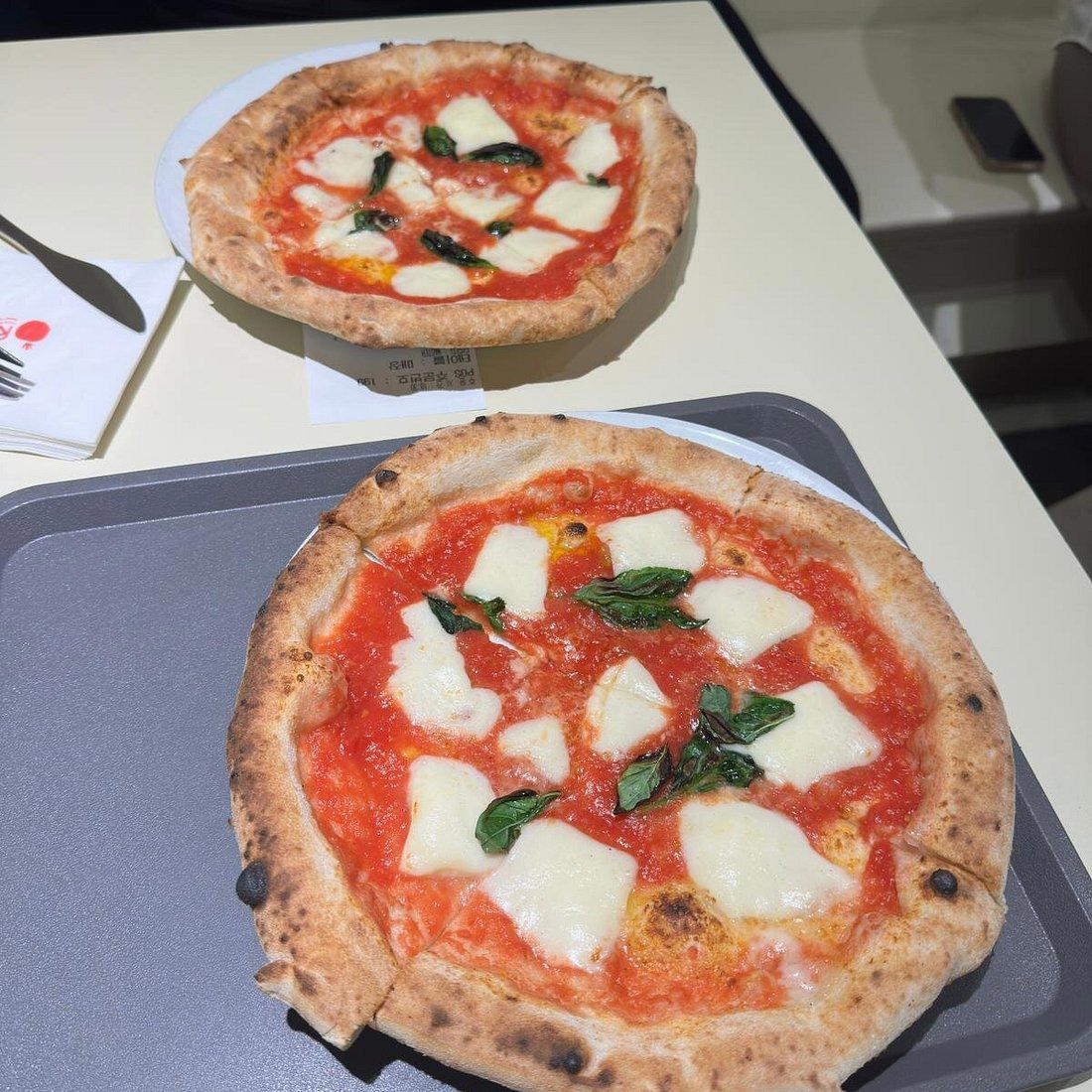
The menu
What to order
- Margherita Con Bufala
- Bufala Margherita
- Don Adolfo
Mapo-gu and the Westward Drift of Seoul's Serious Dining
Seoul's dining geography has never been static. For years, the gravitational pull of prestige restaurants ran through Gangnam's wide boulevards and the quiet side streets of Cheongdam, where Mingles and Jungsik helped define what contemporary Korean fine dining could look like on the global stage. But the northern bank of the Han has been catching up. Mapo-gu, anchored by Hongik University and its surrounding blocks, has absorbed a wave of restaurants that treat the neighbourhood's creative density as an asset rather than a liability. Rosso1924, at 29 Hongik-ro, sits at that intersection — a Mapo address that now carries a different weight than it did a decade ago.
The name carries a date — 1924, which in Italian contexts often signals a founding year, a vintage, or a moment of origin. Whether that reference is biographical, aesthetic, or purely nominal, the pairing of an Italian word for red with a four-digit year places the venue in a register that is neither purely Korean nor generically European. That tension, between imported visual and culinary languages and the Korean context in which they operate, is precisely what defines a growing tier of Seoul restaurants that resist easy categorisation. Soigné and alla prima occupy adjacent territory in the city's innovative dining spectrum, each working through different approaches to the same fundamental question: what does it mean to cook with global fluency in a city with one of the world's most demanding and specific food cultures?
Local Ingredients, Global Technique: The Frame That Matters Here
The most consequential shift in Seoul's restaurant scene over the past fifteen years has not been the accumulation of Michelin stars, though those have come, but the development of a coherent vocabulary for combining classical Western technique with Korean ingredients, seasons, and sensibility. Early iterations of this approach often defaulted to Korean ingredients as garnish on otherwise European plates. The more recent wave, represented by venues across the price spectrum from Kwonsooksoo to the contemporary tasting-menu circuit, reverses that hierarchy: the ingredient is primary, the technique is in service of it.
This matters for understanding where Rosso1924 sits. A name that reaches for Italian reference points in a Mapo neighbourhood context is making a statement about ambition and positioning. Korean dining at this tier, restaurants that signal seriousness through naming convention, address choice, and the formality of their approach, tends to compete less on price accessibility and more on the coherence of a culinary point of view. The comparison set here includes venues like Zero Complex, which works in Korean-French territory at the premium end, and L'Amitié, which operates in the French register at a slightly lower price bracket. Rosso1924's positioning relative to those peers would become clearer with a confirmed price tier, but the Mapo-gu address and the name's deliberate ambiguity place it in the bracket of restaurants that want the guest to arrive with appetite and attention in roughly equal measure.
The broader Seoul dining tradition that produces this kind of venue draws heavily on Korean producers: the peninsula's seasonal vegetables, its fermentation culture, its seafood sourced from both coasts and Jeju. For context on how Korean ingredient culture plays out across different formats and price points, the range is wide, from the charcoal-forward simplicity of Black Pork BBQ in Seogwipo and the galbi tradition kept by Gobojeong Galbi #1 in Suwon, to the refined tasting formats of Gangnam. What connects them is the primacy of the ingredient, a conviction that Korean produce, treated well, needs little augmentation. When European technique enters that framework, the leading outcomes tend to preserve that conviction rather than override it.
Reading the Room: Hongdae's Dining Maturation
Hongdae built its identity on youth culture, art-school energy, and a tolerance for experiment that its more corporate neighbours lacked. That tolerance created conditions for a different kind of restaurant development: venues willing to take aesthetic and culinary risks that would have been harder to sustain in Gangnam's more consensus-driven dining environment. The result, over time, has been a neighbourhood that now hosts both casual format restaurants and more considered dining propositions within a few blocks of each other, a range that mirrors what you find in established dining districts in Tokyo's Shinjuku or London's Soho, where the mix of registers is itself part of the character.
For the Seoul visitor working through the city's dining geography, the practical implication is that a Mapo-gu dinner no longer requires the kind of cross-city commitment it once did. The area is served by Hongik University station on Line 2 and the AREX airport express, making it more accessible from central Seoul than its reputation as a student neighbourhood might suggest. Diners already familiar with the Gangnam axis, restaurants like Mingles or the technically ambitious Atomix in New York, which represents what Korean fine dining looks like when transplanted entirely into a Western context, will find Mapo's proposition interesting precisely because it operates in Korean conditions with all the friction and opportunity that entails.
For a broader picture of how Seoul's restaurant culture maps across districts and formats, our full Seoul restaurants guide covers the city's dining geography in more depth. And for those extending a trip beyond the capital, venues like Mori in Busan, Dining Room in Busan, and the ingredient-led traditions documented at Hwangnam Bread and Busan Steamed Bun in Gyeongju show how Korean food culture diverges sharply from region to region. Jeju, meanwhile, operates almost as a separate culinary ecosystem, with venues like 88돼지, Badang Lounge, and Hinode each working with island-specific ingredients that rarely make it to Seoul menus. Gyeongju Wonjo Kongguk and Doosoogobang in Suwon anchor the more traditional end of the provincial spectrum. The parallel with how Le Bernardin in New York anchors a city's fine dining reference point is instructive: in each case, understanding the anchor helps locate everything else on the map.
Planning Your Visit
Rosso1924's address, 29 Hongik-ro, Mapo-gu, places it within comfortable walking distance of Hongik University station, which connects to central Seoul in under fifteen minutes by subway. The standard approach for serious Seoul restaurants at this tier is to book in advance, either through the venue's own channels or via one of the city's dining reservation platforms. Arriving without a reservation at restaurants in this category, the Italian-named, deliberate-positioning tier of Mapo dining, is generally not advisable, particularly on weekend evenings when the neighbourhood draws both locals and visitors.
Frequently asked questions
What do people recommend at Rosso1924?
What the venue's positioning in Mapo-gu's creative dining tier suggests is a kitchen working at the intersection of European technique and Korean ingredient culture, a frame shared, in different ways, by Seoul contemporaries like alla prima and Soigné. For the most current menu and dish recommendations, checking the venue directly or consulting recent visitor reviews on Korean dining platforms will yield the most accurate picture.
Is Rosso1924 reservation-only?
At Seoul's premium Mapo-gu dining tier, which increasingly mirrors the reservation-led formats of Gangnam counterparts and internationally recognised venues like Atomix, advance reservations are standard practice rather than the exception. Given the venue's positioning and address, contacting the restaurant directly before your visit is the safest approach.
What kind of dining experience does Rosso1924 offer compared to other Seoul restaurants with a European sensibility?
Rosso1924's Italian-inflected name and Mapo-gu location place it in a category of Seoul restaurants that use European reference points as a framing device while operating within the city's Korean dining culture. This puts it in a different register from straightforwardly French venues like L'Amitié and closer to the Korean-European hybrid territory occupied by Zero Complex and, on the more established end of the spectrum, Jungsik. The date embedded in the name, 1924, adds a layer of historical reference that distinguishes it aesthetically from the clean-modernist presentation favoured by many of its Seoul contemporaries.
A Lean Comparison
Comparable venues nearby, for context on price, style, and recognition.
| Venue | Cuisine | Price | Awards | Notes |
|---|---|---|---|---|
| Rosso1924This venue — the venue you are viewing | Authentic Neapolitan Pizza | $20–30 | Not listed | Not listed |
| Pizzeria O | Authentic Neapolitan Pizza | $20–30 | Not listed | 혜화동, Authentic Neapolitan Pizza |
| 청담 하게 | Japanese Izakaya with Curry | Not listed | Not listed | Cheongdam, Japanese Izakaya with Curry |
| Trattoria Romagna | Emilia-Romagna Trattoria | Not listed | Michelin Plate · Gambero Rosso 1 Forchetta | 반포본동, Emilia-Romagna Trattoria |
| Baekje Samgyetang (백제삼계탕) | Korean Samgyetang | $10–20 | Not listed | Myeongdong, Traditional Korean Ginseng Chicken Soup |
| Gubock Dumplings (구복만두) | Traditional Chinese Dumplings | $1–10 | Michelin Plate | Yongsan-gu, Traditional Chinese Dumplings |
Continue exploring
More in Seoul
Restaurants in Seoul
All restaurants in Seoul →
Bars in Seoul
All bars in Seoul →
Details
- Casual
- Trendy
- Cozy
- Casual Hangout
- Group Dining
- Open Kitchen
- A La Carte
- Vegetarian Friendly
- Vegan Options
Current opening hours
- Monday
- 11 AM–9 PM
- Tuesday
- 11 AM–9 PM
- Wednesday
- 11 AM–9 PM
- Thursday
- 11 AM–9 PM
- Friday
- 11 AM–9 PM
- Saturday
- 11 AM–9 PM
- Sunday
- 11 AM–9 PM
Hours can change for holidays and private events. Last verified .
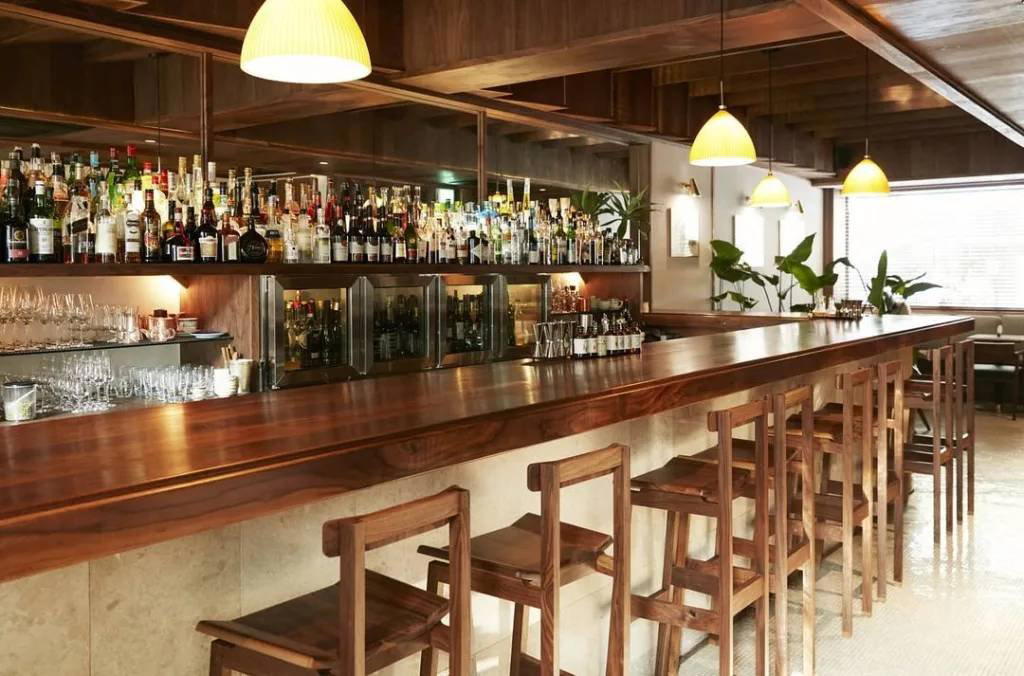
Casual and clean pizzeria with open kitchen, impeccably maintained space, comfortable for friends and groups.