

Tabelog 100 #84
Our verdict
A Nakameguro Italian with consecutive years on the Opinionated About Dining Japan rankings, Rodeo is chef Satoshi Asai's exercise in applying Japanese precision to Italian culinary tradition. The address puts it in one of Tokyo's most food-literate neighbourhoods, where the competition is serious and the clientele expects detail. Open for dinner through the week, with weekend lunch added to the schedule.

Pearl is the En Primeur Club membership app, where members save venues, book tables and use the concierge.
The menu
What to order
- Meat Spaghettoni
- Charcoal-grilled meat
- Wagyu Beef Carpaccio
Italian in Tokyo: What the Nakameguro Scene Actually Looks Like
Tokyo's Italian restaurant tier has quietly become one of the most competitive in Asia. The city now hosts Italian kitchens that could hold their own in Milan or Rome, alongside a separate category that goes further: restaurants where Japanese technique and seasonal sensibility reshape Italian form into something that only exists here. It is a distinction worth keeping in mind when approaching Rodeo, which has appeared on the Opinionated About Dining Leading Restaurants in Japan list in both 2024 (ranked #423) and 2025 (ranked #443). OAD rankings are crowd-sourced from serious diners and professional critics rather than awarded by a single inspector, making consecutive appearances a signal of sustained peer-level regard. For Italian in Tokyo, that kind of recognition places a restaurant in a distinct upper tier: smaller, harder to book, and built around cooking rather than concept theatrics.
Nakameguro is a considered address for a restaurant of this type. The neighbourhood sits comfortably above entry-level dining without tipping into the corporate formality of Ginza or the tourist density of Shinjuku. It draws a food-literate local crowd and a steady stream of visitors who have done the research. Other restaurants operating at comparable levels in the city Aroma Fresca, PRISMA, Principio, AlCeppo, and Gucci Osteria da Massimo Bottura Tokyo, cluster in Minami-Aoyama and Azabu, neighbourhoods that carry different social weight. Nakameguro positioning suggests a restaurant that earns its reputation through the plate rather than the postcode.
The Booking Reality
The editorial angle for any ranked OAD restaurant in Tokyo is largely a booking problem. The city's leading tables, whether Japanese or European, operate on lead times that reward planning. Rodeo's dinner service runs Monday through Friday, 5 to 11 pm, with the same evening window plus a 12 to 2 pm lunch slot on Saturdays and Sundays. That weekend lunch availability is worth noting: lunch seatings at recognised Italian restaurants in Tokyo tend to be slightly more accessible than dinner, and they often represent a more economical entry point into a kitchen's full range.
Given the restaurant's OAD standing and Nakameguro address, direct contact or a Japanese reservation platform (Tableall and Omakase are commonly used for this tier) is a reasonable first approach. Visitors coming from outside Japan should factor in language logistics: many restaurants at this level have limited English-language booking infrastructure, and using a hotel concierge or a specialist reservation service is often more efficient than attempting direct contact without Japanese. For broader planning, our full Tokyo restaurants guide covers the city's Italian and European tier in more detail.
What the Schedule Tells You
The Monday-to-Friday dinner-only format, with weekends expanding to include lunch, is a pattern common to owner-operated or small-team restaurants in Tokyo. It implies a kitchen that controls covers carefully rather than maximising throughput. Restaurants structured this way typically run tighter menus, source more deliberately, and operate with a staff-to-cover ratio that gives the kitchen actual control over the product. For the diner, that structure usually means a more consistent experience but also a harder booking: fewer seatings means less availability on any given week.
Chef Satoshi Asai and the Italian-in-Japan Tradition
Chef Satoshi Asai runs the kitchen at Rodeo. The training pipeline that brought Italian cooking to Japan, partly through the long residency tradition of Japanese cooks in Italian kitchens, partly through decades of sustained cultural interest in the cuisine, has produced a generation of chefs who approach Italian technique with the same methodology applied to kaiseki: attention to seasonal sourcing, precision in execution, and restraint in composition. How that plays out in Asai's specific kitchen is something the OAD rankings implicitly validate, but the detail of the cooking remains something a diner discovers at the table.
The broader Italian-in-Japan format is worth comparing to how the cuisine is handled elsewhere in Asia. At 8½ Otto e Mezzo Bombana in Hong Kong, Italian fine dining sits in a more overtly international luxury register. In Kyoto, cenci takes a different approach, embedding Italian structure more explicitly into the seasonal logic of the Kyoto culinary calendar. Rodeo's Tokyo positioning, mid-ranked on a peer-review list with a Nakameguro address, suggests a different register again: more neighbourhood-facing, less reliant on imported prestige, and evaluated primarily by a community of serious eaters.
Planning Your Visit
For visitors building a broader Japan itinerary around food, Rodeo sits in a different tier from the flagship kaiseki experiences, Gion Sasaki in Kyoto, HAJIME in Osaka, or akordu in Nara, but it occupies a genuinely recognised position in the country's Italian dining conversation. It also sits within a Tokyo itinerary that could include very different styles: Goh in Fukuoka, 1000 in Yokohama, and 6 in Okinawa each represent very different regional expressions of what serious dining looks like across Japan's geography.
For Tokyo-specific logistics beyond restaurants, our Tokyo hotels guide, bars guide, experiences guide, and wineries guide cover the broader city across categories.
Address: 3 Chome-5-1 Nakameguro, Meguro City, Tokyo 153-0061, Japan. Hours: Monday to Friday 5–11 pm; Saturday to Sunday 12–2 pm and 5–11 pm. Reservations: Budget: Dress: Not specified; smart casual is standard for Nakameguro restaurants at this recognition level.
Frequently asked questions
Where exactly is Rodeo?
Rodeo is located at 3 Chome-5-1 Nakameguro, Meguro City, Tokyo 153-0061, Japan, Tokyo.
Credentials Lens
A small set of peers for context, based on recorded venue fields.
| Venue | Cuisine | Price | Awards | Notes |
|---|---|---|---|---|
| RodeoThis venue (the venue you are viewing) | Modern Charcoal-Grilled Italian | $50–100 | Tabelog 100 #84 | Not listed |
| Harutaka | Edo-Style Omakase Sushi | $200–300 | 3 Michelin Stars · World's 50 Best #76 | Sushi |
| RyuGin | Modern Kaiseki | $500+ | 3 Michelin Stars · World's 50 Best #41 | Kaiseki, Japanese |
| L'Effervescence | Modern French with Japanese Influences | $200–300 | 3 Michelin Stars · World's 50 Best #69 | French |
| HOMMAGE | Modern French with Japanese Influences | $150–200 | 2 Michelin Stars · World's 50 Best #78 | Innovtive French, French |
| MAZ | Innovative Peruvian-Japanese Fusion | $150–200 | 2 Michelin Stars · World's 50 Best #28 | Innovative |
Recognition history
Dated appearances from independent guides and award organizations, with the underlying list record or original source where available.
Opinionated About Dining Top Restaurants in Japan Recommended
Opinionated About Dining
Tabelog 100 #84 · No. 84
Tabelog · Tabelog 100 - Italian - TOKYO - 2025
Full recognition history (4 entries)
Opinionated About Dining Top Restaurants in Japan Ranked #443
Opinionated About Dining
Opinionated About Dining Top Restaurants in Japan Ranked #423
Opinionated About Dining
Continue exploring
More in Tokyo
Restaurants in Tokyo
All restaurants in Tokyo →

Bars in Tokyo
All bars in Tokyo →



Details
- Elegant
- Intimate
- Trendy
- Date Night
- Special Occasion
- Open Kitchen
- Extensive Wine List
- Sake Program
- A La Carte
- Set Menu
Current opening hours
- Monday
- 5–11 p.m.
- Tuesday
- 5–11 p.m.
- Wednesday
- 5–11 p.m.
- Thursday
- 5–11 p.m.
- Friday
- 5–11 p.m.
- Saturday
- 12–2 p.m., 5–11 p.m.
- Sunday
- 12–2 p.m., 5–11 p.m.
Hours can change for holidays and private events. Hours as of .
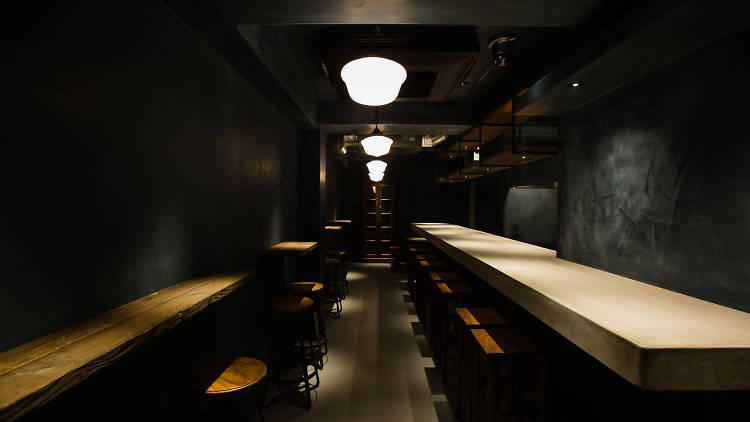
Stylish, relaxing, and dimly lit with a speakeasy-like hideaway atmosphere, featuring counter seating and private rooms.