Our verdict
Rishiri Ramen Miraku sits inside Shin-Yokohama Raumen Museum, a basement-level food destination that reconstructs the streetscapes of 1958 Japan around a rotating cast of regional ramen specialists. The Hokkaido-origin shop brings the kelp-forward broth tradition of Rishiri Island to Yokohama, making it one of the more geographically specific ramen propositions in the museum's lineup.

Pearl is the En Primeur Club membership app, where members save venues, book tables and use the concierge.
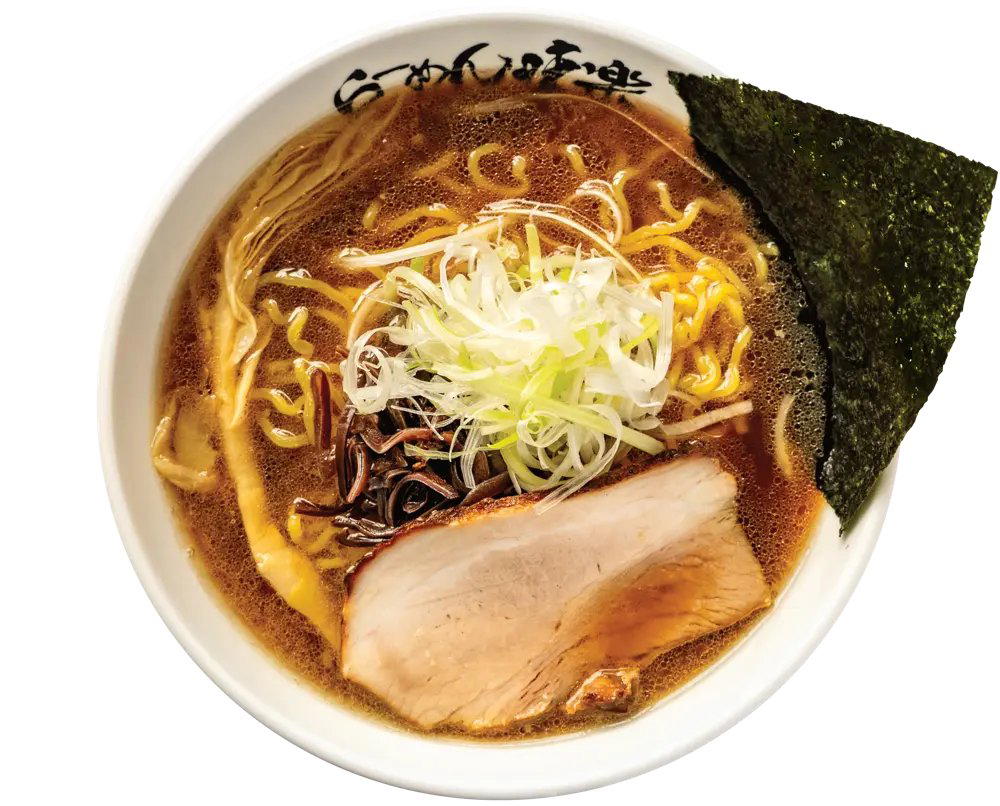
The menu
What to order
- Yaki Shoyu Ramen
A Museum Built Around a Bowl
Shin-Yokohama is, for most visitors, a transit node: the shinkansen stop that funnels travelers between Tokyo and destinations further west. The neighbourhood around the station is functional rather than atmospheric, a grid of business hotels and conference facilities that serves Japan's railway infrastructure more than its culinary ambitions. Which makes the existence of the Shin-Yokohama Raumen Museum, at street level unremarkable, below ground genuinely arresting, all the more pointed as an editorial fact. The museum opened in 1994 as the world's first food-themed amusement park dedicated to ramen, reconstructing the alleyway atmosphere of Japan circa 1958, the year instant ramen was introduced, across a basement that currently houses a rotating selection of regional ramen shops from across the country.
Rishiri Ramen Miraku (利尻らーめん 味楽) operates within that context. The original shop is based in Rishiri, a volcanic island off the northwest coast of Hokkaido, accessible only by ferry or small aircraft and home to one of Japan's most prized kombu harvests. That geography matters: Rishiri kombu is a designated origin product, its kelp cultivated in cold Sea of Japan waters and long associated with the dashi traditions of high-end kaiseki as much as regional ramen. A shop rooted there carries a provenance signal that most urban ramen counters cannot replicate.
The Rishiri Kombu Tradition in a Yokohama Context
Hokkaido ramen spans several distinct regional styles: Sapporo's miso-heavy, lard-enriched bowls; Hakodate's clear, delicate shio broth; Asahikawa's double-stock soy-based soup. Rishiri's tradition sits closer to the shio end of the spectrum, where the quality of the kombu dashi is the structural argument of the bowl rather than a background note. The practice of building a broth around kelp stock rather than pork or chicken bones as the primary base produces a soup that reads lighter in texture but carries considerable mineral depth.
In a city like Yokohama, where the dominant ramen narrative is ie-kei, the thick tonkotsu-soy hybrid developed locally in the 1970s and now replicated across hundreds of shops throughout the Kanto region, a kombu-forward Hokkaido shio style occupies a different tier of the conversation entirely. The two traditions are not in competition so much as they address different drinking appetites: ie-kei rewards richness and volume; Rishiri-style rewards attention to broth clarity and the specific savour of cold-water kelp. Visitors arriving at Shin-Yokohama Raumen Museum with an ie-kei frame of reference will find Miraku operating on a different register.
What the Museum Format Means for the Experience
The Shin-Yokohama Raumen Museum's basement is designed to recreate a specific kind of sensory memory: the covered alleyways and low-lit storefronts of postwar Japan, with period signage, narrow passageways, and the ambient sound of a city from seven decades ago. Individual shops within the space operate as functional restaurants, not exhibits, serving full bowls in a dining format rather than samples or demonstrations. The setting is deliberately theatrical, which means first-time visitors need a moment to calibrate between the stagecraft of the environment and the actual quality proposition of the food.
Miraku's presence in this format positions it as a regional ambassador rather than a neighbourhood local. The shop is not trying to be the bowl you eat after work; it is making the case for a specific Hokkaido island tradition to an audience that may have encountered Sapporo miso or Hakodate shio but is unlikely to have crossed to Rishiri Island for the source. For travelers connecting through Shin-Yokohama on the shinkansen, the museum's basement offers a condensed argument for Japan's regional ramen diversity in a single sitting.
Practically, the Shin-Yokohama Raumen Museum operates on ticketed entry, with visitors paying an admission fee to access the floor and then ordering individually at each shop. The museum sits a short walk from Shin-Yokohama Station on the JR Yokohama Line and Tokaido Shinkansen, making it accessible from central Yokohama in under fifteen minutes, and from Tokyo's Shin-Osaka-bound shinkansen routes as a direct stop. The venue's hours and specific pricing are subject to change; checking the museum's current schedule before visiting is advisable, particularly on weekday afternoons when queues at popular shops are shorter than peak weekend slots.
Placing Miraku in Yokohama's Broader Dining Map
Yokohama's dining range is wider than the ramen conversation alone suggests. The city's Chinatown, the largest in Japan, anchors a Cantonese and Shanghainese tradition that goes back to the nineteenth-century port opening, represented at the refined end by venues like Manchinro Tenshinpo (萬珍樓 點心舗). At the counter end of the spectrum, Nakajo represents the city's serious sushi tier, while 1000 (Yakitori) and Enishi reflect the strength of the city's specialist counter dining outside of ramen. Nodaiwa (野田岩) extends the unagi tradition from its Tokyo origins into Yokohama's dining circuit. For a complete picture of what the city offers, the EP Club Yokohama restaurants guide maps the full range.
Miraku's positioning within that landscape is specific: it is a regional ramen specialist accessed through a curated food museum rather than a street-level shop, and its point of difference is geographic provenance rather than technique reinvention. That is neither a criticism nor a commendation in isolation; it is the frame through which the bowl should be evaluated. Against the broader canvas of Japan's regional ramen traditions, the Rishiri kombu argument is a serious one, and the museum format, whatever its theatrics, does not diminish the broth's structural claim.
Travelers with an appetite for Japan's regional dining traditions at a wider scale will find comparable depth of provenance-led argument at venues like Goh in Fukuoka, Gion Sasaki in Kyoto, or HAJIME in Osaka, each operating within their own regional logic at a different price tier. At the fine dining end of the Tokyo comparison set, Harutaka in Tokyo represents the capital's counter tradition, while akordu in Nara demonstrates how non-Japanese culinary frameworks are being applied to regional Japanese produce. Regional specialists at a more accessible price point, such as a Sapporo counterpart or the craft precision of Birdland in Sakai, complete the picture of how Japan's dining scene distributes quality across geography and format. For international reference points at the highest tier, Le Bernardin in New York City and Atomix in New York City illustrate how provenance-led ingredient arguments translate across culinary traditions.
Frequently asked questions
What part of town is Rishiri Ramen Miraku (利尻らーめん 味楽) in?
Rishiri Ramen Miraku (利尻らーめん 味楽) is located at 港北区新横浜2-14-21 (新横浜ラーメン博物館 B2F), 横浜市, 神奈川県, 222-0033, Yokohama.
How does Rishiri Ramen Miraku differ from other stalls inside the Shin-Yokohama Raumen Museum?
The Shin-Yokohama Raumen Museum (新横浜ラーメン博物館, B2F) rotates and hosts regional ramen specialists from across Japan, placing Miraku's Hokkaido shio style alongside heavier regional formats such as tonkotsu and miso. Miraku's Rishiri kombu broth is among the lightest and most mineral-forward broths in the museum's lineup, making it a useful contrast if you plan to sample multiple stalls in a single visit. For visitors tracing Hokkaido's regional ramen geography, Miraku specifically represents the island's northern shio tradition rather than the more internationally recognised Sapporo miso style.
What should I eat at Rishiri Ramen Miraku (利尻らーめん 味楽)?
Miraku's signature is its shio ramen, built on a broth derived from Rishiri kombu, the kelp harvested off the northwestern coast of Hokkaido and long regarded as Japan's benchmark dashi ingredient. The clear, mineral-forward broth sits within the Hokkaido shio tradition rather than the richer miso or lard-heavy Sapporo style. Start with the standard shio bowl before considering any optional toppings the menu offers.
What's the best way to book Rishiri Ramen Miraku (利尻らーめん 味楽)?
Miraku operates within the Shin-Yokohama Raumen Museum (港北区新横浜2-14-21, B2F), so entry requires purchasing museum admission. There is no reservation system for individual ramen counters inside the museum; seating is first-come, first-served. Visiting on weekday mornings or shortly after opening reduces wait times, particularly on weekends when the museum draws steady foot traffic from Shin-Yokohama station commuters and tourists.
What is Rishiri Ramen Miraku (利尻らーめん 味楽) known for?
Miraku represents the Hokkaido shio style within the Shin-Yokohama Raumen Museum's curated lineup of Japan's regional ramen traditions. Its defining characteristic is the use of Rishiri kombu, a seaweed with Protected Geographical Indication status in Hokkaido, as the foundation of a clean, light broth. In a museum that spans Fukuoka tonkotsu to Yamagata beef-fat ramen, Miraku occupies the delicate, restrained end of the spectrum.
Is Rishiri Ramen Miraku (利尻らーめん 味楽) good for vegetarians?
The kombu-based shio broth is seaweed-derived, but traditional preparations of this style typically include chicken or seafood stock alongside the kombu. The museum setting at 新横浜2-14-21 means staff from multiple stalls are accessible nearby if alternatives are needed.
Should I splurge on Rishiri Ramen Miraku (利尻らーめん 味楽)?
Ramen in Japan, including at museum-format venues like the Shin-Yokohama Raumen Museum, is priced accessibly by the standards of the cuisine: expect a bowl in the range typical of mid-tier Tokyo and Yokohama ramen shops, with museum admission added on top. This is not a splurge decision in financial terms. The question is whether the museum format and the Rishiri kombu shio style specifically interest you enough to make the trip to Shin-Yokohama rather than eating at one of Yokohama's street-level ramen counters.
A Tight Comparison
| Venue | Cuisine | Price | Awards | Notes |
|---|---|---|---|---|
| Rishiri Ramen Miraku (利尻らーめん 味楽)This venue (the venue you are viewing) | Rishiri-Style Yaki Shoyu Ramen | $10–20 | Not listed | Not listed |
| Nakajo | Edomae Sushi Omakase | $300–500 | Tabelog Bronze #305 | Sushi |
| Omino Kamiyacho | Modern Yakitori Omakase | $150–200 | Tabelog Bronze | Sushi |
| 1000 | Japanese | Not listed | Tabelog Bronze #392 | Yakitori (Grilled chicken skewers), JPY 15,000 - JPY 19,999 |
| Ribatei | Traditional Yakitori Omakase | $50–100 | Tabelog Bronze #368 | Not listed |
| Yoda | Modern Tonkatsu | $50–100 | Tabelog 100 #43 | Tonkatsu (Pork cutlet), Cafeteria, Japanese Cuisine, JPY 8,000 - JPY 9,999 JPY 8,000 - JPY 9,999 |
Continue exploring
More in Yokohama
Restaurants in Yokohama
All restaurants in Yokohama →



Bars in Yokohama
Browse all →



Details
- Cozy
- Casual Hangout
- Sake Program
- Local Sourcing
- A La Carte
- Counter Dining
Casual, bustling ramen museum atmosphere with quick service and savory aromas from kelp-infused broths.