
Tabelog 100 #81
Our verdict
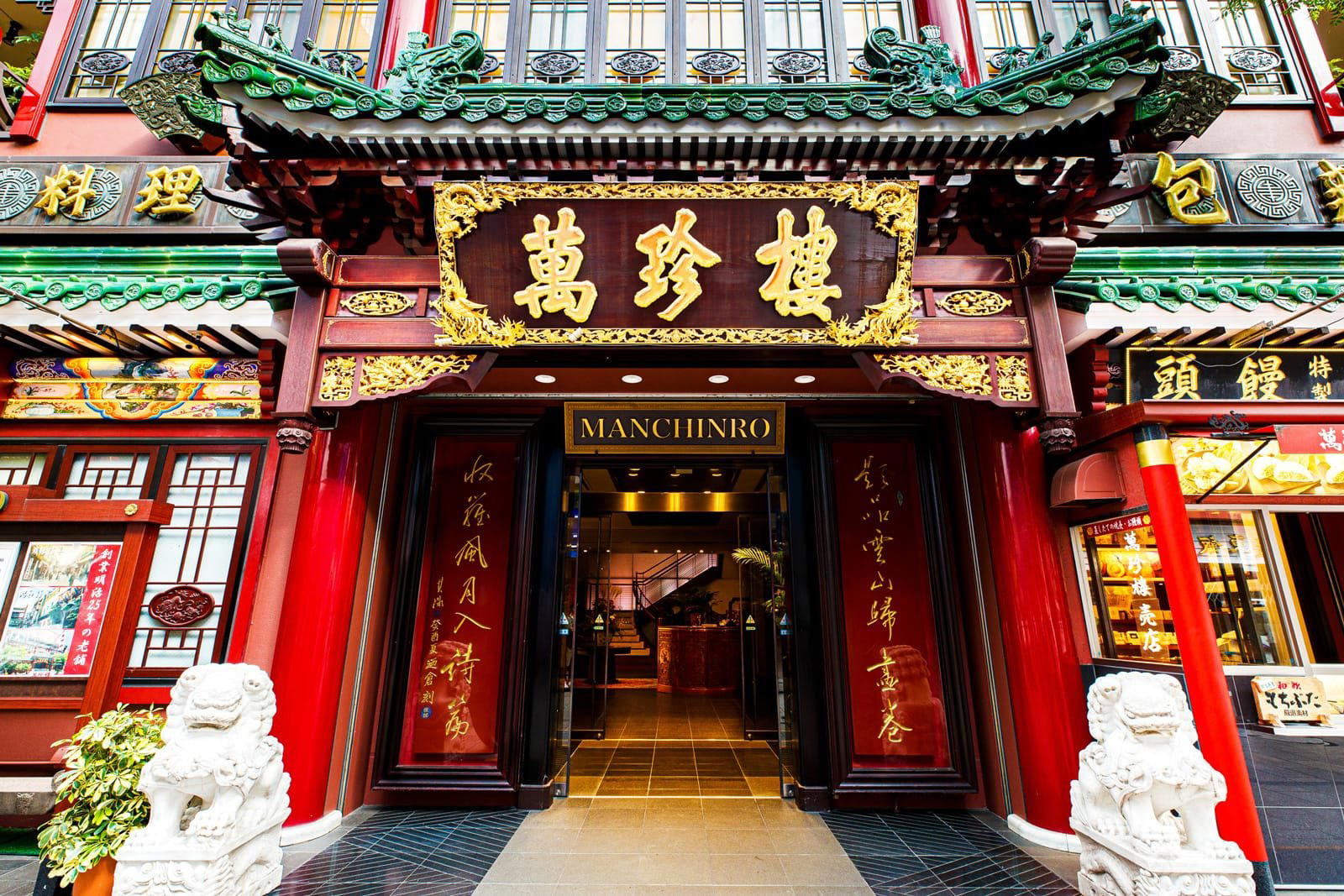
Manchinro Tenshinpo (萬珍樓 點心舗) occupies a distinct position in Yokohama's Chinatown dining tradition, operating as the dim sum and point-heart annex to one of the district's most established Cantonese houses. The format centres on the unhurried rhythms of traditional dim sum service, where steamer baskets and small plates accumulate across a shared table in a setting that reflects Chinatown's layered, century-deep hospitality culture.

Pearl is the En Primeur Club membership app — saves, bookings, and concierge access live there. Same editors, same standards.
- Address
- 中区山下町156, 横浜市, 神奈川県, 231-0023
- Directions
- Get directions
The menu
What to order
- Steamed shrimp dumplings
- Hong Kong style prawn shumai
- Peking duck
Yokohama Chinatown and the Dim Sum Ritual
Yokohama's Chinatown, concentrated around Yamashita-cho in the Naka Ward, is the largest in Japan and one of the most historically continuous in East Asia outside the Chinese-speaking world. It is not a themed dining precinct; it is a functioning neighbourhood with generational businesses, temple calendars, and a culinary identity that runs deeper than the tourist-facing storefronts along the main boulevard. Within that neighbourhood, the tradition of yum cha — the Cantonese custom of drinking tea alongside accumulating small plates of dim sum — occupies a particular social role. It is a meal structured around time, not efficiency: around conversation, refilled teapots, and the slow architecture of a shared table.
Manchinro Tenshinpo (萬珍樓 點心舗), at 156 Yamashita-cho, operates directly inside that tradition. The 點心舗 suffix, literally "dim sum shop", signals the format clearly. This is not a formal banquet hall but a space given over to the specific customs and pacing of dim sum service, functioning as a dedicated annex to Manchinro (萬珍樓), one of Chinatown's long-standing Cantonese establishments. The relationship between the two addresses reflects a broader pattern in high-volume Chinatown dining: the separation of elaborate banquet cooking from the more democratic, time-extended ritual of dim sum.
The Architecture of a Dim Sum Meal
Understanding what to expect at Manchinro Tenshinpo requires understanding how dim sum service actually works, because the format differs meaningfully from the à la carte or set-menu structures that govern most Japanese dining. Traditionally, dim sum restaurants operate on a push-cart or order-sheet model, with dishes arriving in waves rather than a predetermined sequence. The meal has no fixed endpoint; it expands or contracts depending on appetite, company, and the rotation of available items. Tea, typically pu-erh, chrysanthemum, or jasmine, is not an accompaniment but a structural element of the meal, ordered before food and maintained throughout.
In a Yokohama Chinatown context, this ritual carries additional resonance. The Chinese community here has sustained Cantonese foodways across generations, and the dim sum houses that have endured do so partly because they serve a local clientele with specific expectations, not just visitors looking for novelty. That dual function, serving both the neighbourhood and the broader city, shapes the register of a place like Manchinro Tenshinpo. The cooking has to hold up to repeat scrutiny, not just make a strong first impression.
Dim sum as a category spans a wide technical range: the paper-thin skin of a har gow (shrimp dumpling), the laminated pastry of a char siu bao (barbecue pork bun), the custardy interior of a dan tat (egg tart), the precisely folded edges of a siu mai. Each demands a different dough, a different steam time, a different hand. Houses with genuine depth in their dim sum program treat these distinctions seriously, and the leading measure of a kitchen's command is consistency across the full range, not just the showcase items. For visitors exploring our full Yokohama restaurants guide, Chinatown's dim sum options represent one of the few places in Japan where Cantonese technique of this breadth is available in a single neighbourhood.
Where Manchinro Tenshinpo Sits in the Yokohama Dining Picture
Yokohama's dining scene is more varied than its proximity to Tokyo sometimes suggests. The city has its own sushi tradition, Nakajo (Sushi) and Omino Kamiyacho (Sushi) represent the counter-format end of that spectrum, and a range of Japanese cuisines including yakitori at 1000 (Yakitori), priced in the JPY 15,000–19,999 range, and Japanese cuisine with kappo sensibility at Enishi. Against that backdrop, Chinatown's Cantonese houses occupy a category with almost no overlap: the cuisine, the service format, and the social occasion are all distinct.
The dim sum annex model that Manchinro Tenshinpo represents positions it differently from the main Manchinro operation. Where the parent restaurant likely handles private dining, banquets, and more elaborate Cantonese cooking, the 點心舗 functions as a more accessible entry point, oriented toward the shared-table, multiple-small-plates format that works for groups of two to six people with two to three hours and no particular agenda. This is not the kind of meal you rush. The Cantonese concept of yum cha, literally "drink tea", names the ritual correctly: the tea is the frame; the food arrives inside it.
For comparison at the upper end of Japanese fine dining elsewhere in the country, the approach to pacing at venues like Gion Sasaki in Kyoto or HAJIME in Osaka shares one quality with traditional dim sum: the meal is a durational experience, not a transaction. The similarity ends there in terms of format, but the underlying expectation, that guests arrive with time, translates across traditions.
Planning Your Visit
Manchinro Tenshinpo is located at 156 Yamashita-cho in Naka Ward, Yokohama, postal code 231-0023, within easy walking distance of Motomachi-Chukagai Station on the Minatomirai Line. Chinatown reaches its highest footfall on weekends and during Chinese New Year and the surrounding festival period in late January or early February; visiting on a weekday reduces the ambient congestion considerably and gives you a better read of the restaurant's operating rhythm. Dim sum service in Cantonese tradition runs from morning through early afternoon in the strictest interpretation, though Yokohama Chinatown houses often extend service through the lunch period and into late afternoon.
Visitors who want to extend a Yokohama dining day beyond Chinatown might consider Nodaiwa (野田岩) for a different register of Japanese cooking entirely. For those building a broader Japan itinerary around serious eating, Harutaka in Tokyo, akordu in Nara, and Goh in Fukuoka each represent distinct regional positions worth building around.
Frequently asked questions
What's the address for Manchinro Tenshinpo (萬珍樓 點心舗)?
Manchinro Tenshinpo (萬珍樓 點心舗) is located at 中区山下町156, 横浜市, 神奈川県, 231-0023, Yokohama.
Is Manchinro Tenshinpo (萬珍樓 點心舗) suitable for a quick solo lunch in Yokohama Chinatown?
The Tenshinpo concept, operating as a specialist dim sum shop rather than a full-service restaurant, lends itself to shorter, lighter visits compared to the main Manchinro banquet hall nearby in Yamashita-cho. Solo diners in Yokohama's Chinatown typically find dim sum-format venues more accommodating than round-table Chinese restaurants, where portions are calibrated for groups. The location near Motomachi-Chukagai Station makes it a practical midday stop within the Naka Ward circuit.
What do people recommend at Manchinro Tenshinpo (萬珍樓 點心舗)?
Manchinro Tenshinpo is the dedicated dim sum branch of the long-established Manchinro group in Yokohama's Yamashita-cho Chinatown. Visitors consistently seek out the steamed and baked dim sum offerings that define the Cantonese-influenced repertoire the Chinatown district has built over generations. Given its position within Japan's largest Chinatown, the kitchen draws on a deep tradition of handmade dumplings and buns rather than a rotating fusion menu.
How hard is it to get a table at Manchinro Tenshinpo (萬珍樓 點心舗)?
Weekend lunch hours in Yokohama's Chinatown are consistently the most contested, and Manchinro Tenshinpo at 156 Yamashita-cho sits at the heart of the district's foot traffic. Arriving early or timing a visit to a weekday afternoon significantly reduces wait times.
What's the signature at Manchinro Tenshinpo (萬珍樓 點心舗)?
As the point-of-sale dim sum arm of the Manchinro operation in Yokohama Chinatown, Tenshinpo's identity is built around takeaway and sit-down dim sum rather than full banquet service. The format positions it as a specialist rather than a general Chinese restaurant, which is the meaningful distinction within the Yamashita-cho dining cluster.
How does Manchinro Tenshinpo (萬珍樓 點心舗) handle allergies?
Dim sum kitchens by their nature handle wheat, shellfish, pork, and sesame as core ingredients across much of the menu, so guests with serious dietary restrictions should check the venue's official channels before visiting. The address is 156 Yamashita-cho, Naka Ward, Yokohama, for in-person enquiries.
Cuisine and Credentials
Comparable venues nearby, for context on price, style, and recognition.
| Venue | Cuisine | Price | Awards | Notes |
|---|---|---|---|---|
| Manchinro Tenshinpo (萬珍樓 點心舗)This venue — the venue you are viewing | Cantonese Dim Sum | $20–30 | Tabelog 100 #81 | Not listed |
| Kasei Rou Honten | Traditional Beijing-style Chinese banquet restaurant | $30–50 | Tabelog 100 #76 | Naka |
| Chen Kenichi Mapo Tofu Restaurant (陳建一麻婆豆腐店) | Sichuan Mapo Tofu Specialist | Not listed | Not listed | Minatomirai |
| Saiko Shinkan | Traditional Cantonese & Dim Sum | $30–50 | Tabelog 100 #23 | Naka |
| SUIRINKAKU | Nouvelle Chinese fine dining in Yokohama Bashamichi | $100–150 | Tabelog 100 #67 | Naka |
| 中華菜館同發本館 | Traditional Cantonese Roasted Meats | $30–50 | Not listed | Yokohama Chinatown |
Recognition history
Dated appearances from independent guides and award organizations, with the underlying list record or original source where available.
Tabelog 100 #81 · No. 81
Tabelog · Tabelog 100 - Chinese cuisine - EAST - 2026












Details
- Classic
- Elegant
- Family
- Casual Hangout
- Historic Building
- Sake Program
- Street Scene
- A La Carte
- Small Plates
Lavish, imperial-palace-inspired setting with attentive service and classic elegance.