
A Tabelog Bronze Award winner every year from 2017 through 2026, Ribatei sits in a back alley of Yokohama's Fukutomicho district and serves a fixed course of 12 to 13 yakitori dishes for around JPY 10,000 to JPY 14,999 per person. With 24 seats, phone-only reservations, and a Tabelog score of 4.04, it occupies a clearly defined position at the serious end of Yokohama's grilled chicken tradition.
Pearl is the En Primeur Club membership app — saves, bookings, and concierge access live there. Same editors, same standards.
- Address
- Japan, 〒231-0043 Kanagawa, Yokohama, Naka Ward, Fukutomicho, 3-2 井上共同ビル
- Phone
- +81 45-251-7676
- Website
- ja-jp.facebook.com
- Directions
- Get directions
 Saves & bookings on Pearl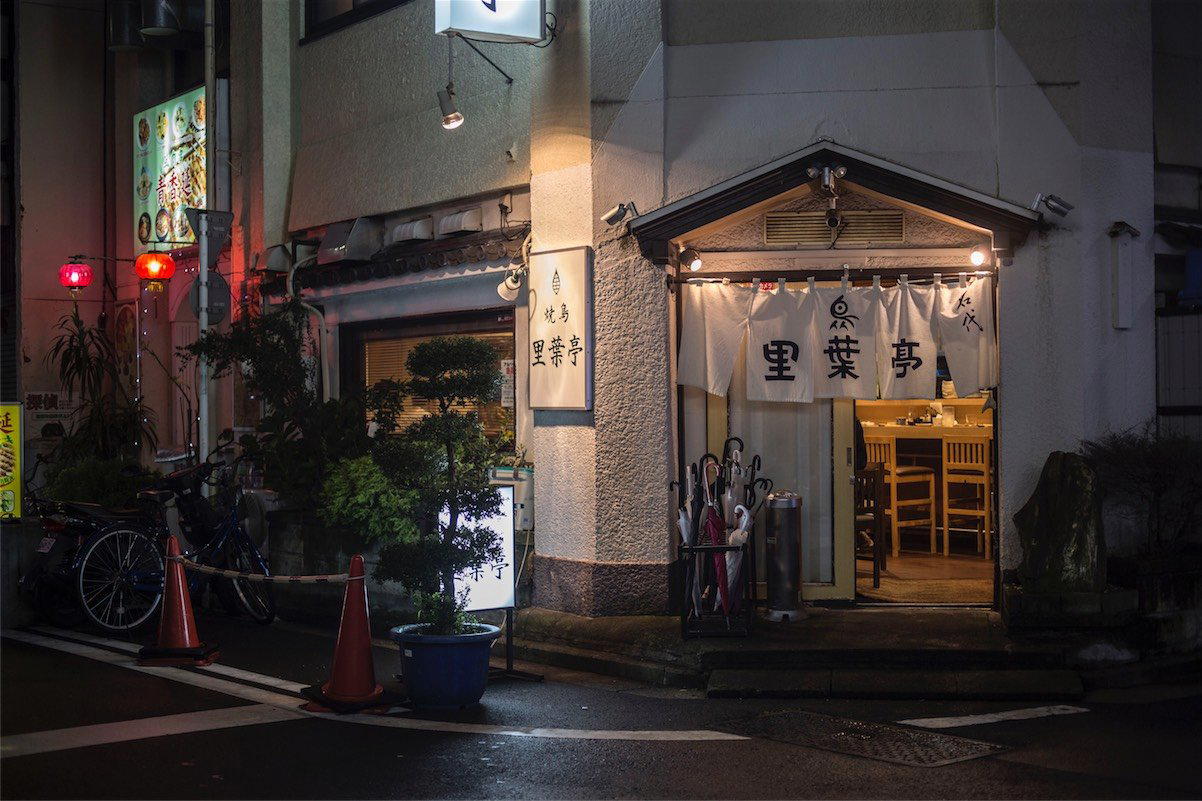
The Alley Behind Kannai
Yokohama's Naka Ward contains at least two distinct dining registers: the waterfront Minato Mirai strip, where restaurants position themselves for visibility and tourism, and the older grid of streets around Kannai and Hinodecho, where the restaurants serve the neighbourhood first. Fukutomicho, the sub-district that runs through this older grid, belongs firmly to the second category. The street carries a Showa-era density, the kind of narrow passage where signage accumulates over decades and the smell of charcoal reaches you before the entrance does. It is in this environment that Ribatei has operated, earning the Tabelog Bronze Award consecutively from 2017 through 2026 and appearing on the Tabelog Yakitori EAST "Tabelog 100" list every year from 2018 through 2025. That recognition reflects a kitchen that has remained consistent.
The neighbourhood context matters because it shapes the kind of experience on offer. Fukutomicho is not a destination district in the way that Yokohama's Chinatown or Motomachi attract foot traffic. Arriving here requires intent. The five-minute walk from JR Kannai Station passes through streets that register as local rather than curated, which means the 24-seat room at Ribatei functions more like a reserved meal than a drop-in. That relationship between place and clientele is one reason the reservation policy specifies phone-only booking: the format assumes a degree of commitment before you arrive.
Yakitori at This Price Point in Yokohama
Within Japan's yakitori category, price tier carries meaning. The entry level, clusters of skewers ordered freely at an izakaya counter, operates on a different axis from the fixed-course format, where the kitchen controls sequence, pacing, and selection. Ribatei sits in the fixed-course tier, serving 12 to 13 dishes per sitting with a dinner spend of JPY 10,000 to JPY 14,999 on average, with That positions it below the JPY 15,000 to JPY 19,999 average recorded at 1000, the other Yokohama yakitori specialist in the Tabelog award tier, but in the same structured-course format category.
At this level, the course format is not incidental. A kitchen committing to 12 to 13 dishes in sequence is making decisions about how each skewer relates to the next, which parts of the bird appear when, and how the progression reads as a whole. The fixed-course model at serious yakitori restaurants is a direct parallel to omakase in sushi: the chef controls the arc, and the diner's role is to follow it.
For comparison with Yokohama's other recognised dining, the city's sushi counter tradition is well-documented, with venues like Nakajo and Omino Kamiyacho operating at the premium omakase end of that category. Ribatei occupies an equivalent position of sustained critical recognition within its own category, yakitori, where the Tabelog 100 designation functions as a shortlist of particularly credible practitioners in Eastern Japan.
The Room and the Format
Twenty-four seats, split between a 10-seat counter and 12 to 14 table seats, describes a room that is small enough for the kitchen to manage quality without delegation but large enough that group bookings remain viable. The counter is where the relationship between cook and guest is most direct in this format; watching charcoal yakitori prepared at this level is part of what justifies the price point and the fixed-course structure. The table section accommodates the social dynamic that Tabelog's own occasion data reflects: the platform's reviewers identify groups of friends as the primary use case for Ribatei, which aligns with the group-accessible but still intimate scale.
The drink program is notably specific: the venue signals a particular focus on nihonshu (sake) and shochu alongside wine, with the Tabelog listing explicitly noting that the kitchen is particular about all three categories. At a yakitori counter where the progression of skewers is controlled by the kitchen, a drink list that has been curated with the same level of attention reinforces the overall discipline of the format. Credit cards (VISA, Mastercard, JCB, AMEX, Diners) are accepted; electronic money and QR code payments are not.
The venue does not accept children below high school age. Cancellations on the day of reservation are specifically discouraged in the booking policy.
Yokohama's Dining Scene in Context
Yokohama's restaurant recognition tends to be overshadowed by Tokyo in international dining coverage, but the city has a substantial base of award-acknowledged venues across categories. Beyond Ribatei, the Tabelog-recognised scene includes Yoda, which holds awards in the tonkatsu category. Across the broader EP Club coverage of Japan, the country's yakitori and grilled specialist tradition connects to a much wider network of precision-led cooking: venues like Harutaka in Tokyo, HAJIME in Osaka, Gion Sasaki in Kyoto, akordu in Nara, Goh in Fukuoka, 6 in Okinawa, and Abon in Ashiya represent the range of serious Japanese cooking outside the capital. Internationally, the fixed-course discipline that defines venues like Ribatei has parallels in precision-led Western restaurants such as Le Bernardin in New York City and Atomix in New York City, where the kitchen's control of sequence and pacing is similarly central to the proposition.
Within Yokohama specifically, the concentration of award-tier dining in the Naka Ward area, rather than in the more internationally visible Minato Mirai district, reflects a broader pattern in Japanese cities: particularly consistent and critically recognised restaurants tend to occupy the older, denser commercial districts where rents support a long-term operating model. Ribatei's address in Fukutomicho fits that pattern precisely.
Planning a Visit
Ribatei opens at 17:00 Monday, Tuesday, Thursday, Friday, Saturday, and Sunday, closing at 22:00. Wednesday is the weekly closing day. Wednesday is the weekly closing day. Reservations are recommended. The walk from JR Kannai Station takes approximately five minutes; from Keikyu Hinodecho Station, allow roughly ten minutes. No parking is available on site. The course runs to 12 or 13 dishes; guests with dietary restrictions or ingredient dislikes should communicate these when booking. Excessive perfume is specifically listed as a reason for refusal of entry, a policy common at counters where smoke and aroma management are part of the dining environment's design.
For the broader Yokohama dining and hospitality picture, EP Club maintains guides to restaurants, hotels, bars, wineries, and experiences across the city.
The Minimal Set
Comparable venues nearby, for context on price, style, and recognition.
| Venue | Cuisine | Price | Notes |
|---|---|---|---|
| RibateiThis venue — the venue you are viewing | Naka, Traditional Yakitori Omakase | $$$ | Not listed |
| Omino Kamiyacho | Kamiyacho, Modern Yakitori Omakase | $$$ | Not listed |
| Yakitori Midori | Naka, Yakitori Omakase | $$$ | Not listed |
| Tempura Fukunishi Zen to Takumi | Nishi, Seasonal Tempura | $$$ | Not listed |
| Oishi | Hodogaya, Premium Wagyu Yakiniku | $$$ | Not listed |
| Teuchi Soba Fuurai Kyo | Not listed | $$$ | Aoba, Seasonal Handmade Soba & Soba Kaiseki |
Recognition history
Dated appearances from independent guides and award organizations, with the underlying list record or original source where available.
Tabelog Bronze #368
Tabelog
Tabelog Bronze
Tabelog
Tabelog 100 #39 · No. 39
Tabelog · Tabelog 100 - Yakitori - EAST - 2025










At a Glance
- Classic
- Cozy
- Intimate
- Group Dining
- Special Occasion
- Open Kitchen
- Sake Program
- Local Sourcing
Current opening hours
- Monday
- 5–10 PM
- Tuesday
- 5–10 PM
- Wednesday
- Closed
- Thursday
- 5–10 PM
- Friday
- 5–10 PM
- Saturday
- 5–10 PM
- Sunday
- 5–10 PM
Hours can change for holidays and private events. Last verified .
Unpretentious, plain interior with an open kitchen counter evoking nostalgic Showa-era charm in a gritty back alley setting.