
Tabelog 100 #1
Our verdict
Restaurant Chez mura bleu Lis occupies an address in Morioka's Shinmeicho district, placing it within a city that has earned quiet national attention for the depth of its dining culture. The French-influenced name sits at an interesting angle to Tohoku's predominantly washoku identity, making it a point of curiosity for visitors working through the city's restaurant scene. Full details on cuisine style and booking are best confirmed directly with the venue.

Pearl is the En Primeur Club membership app — saves, bookings, and concierge access live there. Same editors, same standards.
- Address
- 10-10 Shinmeicho, Morioka, Iwate 020-0884, Japan
- Phone
- +81196015205
- Hours
- Mon ClosedTue–Sun 11:30 AM–1:30 PM, 6–8 PM
- Website
- morioka-restaurant.com
- Directions
- Get directions
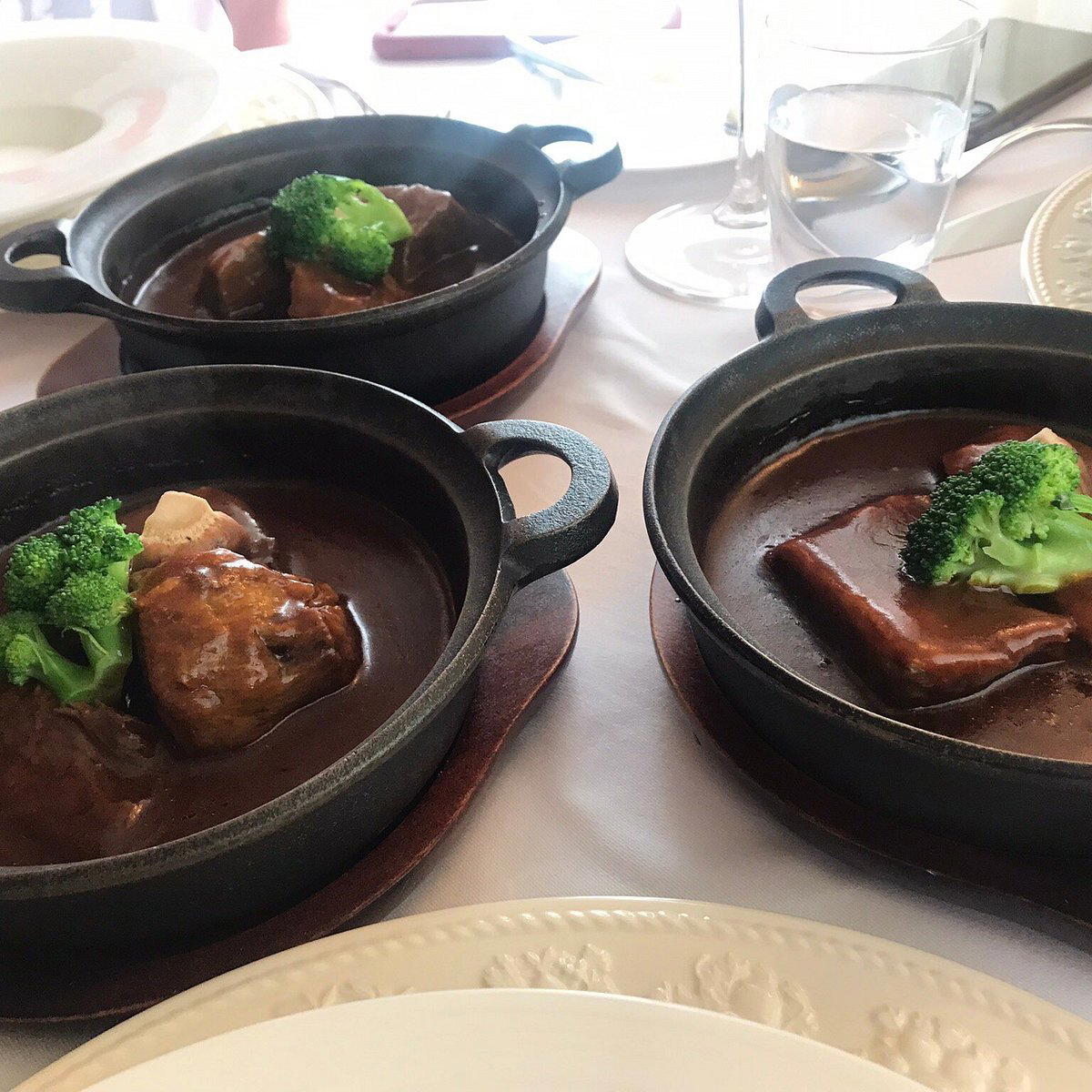
Shinmeicho and the Quiet Seriousness of Morioka's Restaurant Streets
Morioka does not announce itself the way Kyoto or Tokyo does. The Iwate prefectural capital sits in a mountain basin where the Kitakami and Nakatsu rivers meet, and its dining culture shares something of that geographic character: contained, deliberate, and largely indifferent to outside validation. The Shinmeicho district, where Restaurant Chez mura bleu Lis is addressed at 10-10 Shinmeicho, sits within that quieter register. Morioka's most serious tables tend not to be on the main boulevard. They occupy the kind of street where the signage is modest and the assumption is that you already know why you are there.
That context matters when reading a name like Chez mura bleu Lis against a backdrop of wanko soba counters and reimen specialists. French or French-adjacent restaurant naming in a Tohoku city of this scale typically signals a particular kind of ambition: a chef or operator who has looked outside the region's dominant culinary grammar and made a deliberate choice. In Morioka's restaurant ecosystem, that choice is notable. Our full Morioka restaurants guide maps the city's dining range, from long-established noodle institutions to the newer generation of tables that are drawing visitors from further afield.
The Dining Ritual in Rooms Like This
One of the persistent truths about French-influenced dining in smaller Japanese cities is that the ritual of the meal often becomes more pronounced, not less, than in major urban centres. Without the volume or throughput of a Tokyo arrondissement equivalent, a kitchen operating in this register tends to pace courses with more deliberate spacing. The table conversation fills differently. The room, whatever its size, carries the weight of the decision to be there.
This is the tradition that restaurants named in the French idiom in cities like Morioka tend to operate within. Whether the format at Chez mura bleu Lis is a fixed menu, a carte, or a hybrid, the surrounding context suggests a meal calibrated around intentionality rather than speed. Comparable exercises in French-influenced precision at the top of the Japanese regional tier can be seen at akordu in Nara, where the format discipline is as much the point as the plate, or at HAJIME in Osaka, which operates within a structured progression that treats time at the table as a component of the experience itself.
At the level of specific detail, the service rhythm, the number of courses, and the kitchen's orientation toward Tohoku produce or classical French technique are confirmable only at the venue directly. What the address and name together imply is a table that has made choices about what kind of meal it wants to offer, and that those choices are worth investigating before you arrive.
Morioka in the Regional Japanese Dining Conversation
Japan's regional dining scene has shifted meaningfully over the past decade. The concentration of Michelin attention in Tokyo, Kyoto, and Osaka has not prevented a parallel recognition that serious cooking is happening in prefectural cities that rarely appear in international travel coverage. Morioka sits within that broader shift. Azumaya Honten, Kozuki, and Shokudoen each represent facets of the city's range, from heritage noodle craft to more contemporary cooking.
Against that field, a French-named restaurant is an editorial statement. It places itself in dialogue not only with local competition but with a wider national conversation about what regional French or European-influenced cooking in Japan looks like in 2024 and beyond. For reference points at the upper end of that conversation: Harutaka in Tokyo and Gion Sasaki in Kyoto each demonstrate how deeply technique and ingredient sourcing can be intertwined when a kitchen has a clear point of view. Goh in Fukuoka provides a useful regional parallel: a table in a non-capital city that has built a reputation through consistency and a defined culinary identity rather than through metropolitan proximity.
Further afield, the question of how French-inflected dining operates in smaller Japanese cities is also live at tables like 一本木 石川製 in Nanao, 湖邸荘 in Takashima, and 鳥羽屋 in Nishikawa Machi. Each operates within a regional context where the dining ritual carries more local specificity than the cuisine category alone would suggest. The same is likely true here.
Placing Chez mura bleu Lis in the Broader Pattern
Restaurants that carry European names in Japanese provincial settings occupy a particular position. They are not trying to replicate something from Paris or Lyon. They are drawing on a set of techniques and a vocabulary of hospitality, then translating both through local produce, local expectations, and the particular character of a room in a specific city. That translation process is, in many cases, where the most interesting cooking in Japan is happening right now.
For context on what that looks like when the execution is at its sharpest: Bistro Ange in Toyohashi and Birdland in Sakai both illustrate the range of ambition within this category. So, at a different register of ambition entirely, do Le Bernardin in New York City and Atomix in New York City, two tables that have built sustained reputations through disciplined format and kitchen consistency over time. The comparison is not about scale; it is about the clarity of intent that distinguishes tables worth planning around from those that are simply convenient.
Chez mura bleu Lis sits at 10-10 Shinmeicho in a city that rewards attentive visitors. If you are already planning a Morioka trip around its food, this address belongs in the research. If you are new to the city, the full city guide is the better starting point. Additional comparison points from further north include 古代山乃 in Sapporo and Blue Ocean Steak in Nakagami District, each operating within a regional dining context where ambition and locality are in productive tension.
Planning Your Visit
Concrete logistics for Restaurant Chez mura bleu Lis, including current hours, pricing, and booking method, are best confirmed directly with the restaurant at its Shinmeicho address. Morioka is accessible from Tokyo via the Tohoku Shinkansen in approximately two hours and twenty minutes, making it a viable destination for a focused dining trip from the capital. Within the city, the Shinmeicho area is walkable from the central station district. As with most serious small-room restaurants in regional Japan, arriving with some prior research and a confirmed reservation is the practical approach, regardless of the format the kitchen is running on any given evening.
Frequently asked questions
What's the address for Restaurant Chez mura bleu Lis?
Restaurant Chez mura bleu Lis is located at 10-10 Shinmeicho, Morioka, Iwate 020-0884, Japan, Morioka.
Is Restaurant Chez mura bleu Lis a good option for a formal dinner occasion in Morioka?
Restaurants carrying European names in provincial Japanese cities like Morioka typically position themselves around the ceremony of the meal — set courses, considered pacing, and room formats that signal occasion dining rather than casual drop-in eating. Chez mura bleu Lis sits in the Shinmeicho district, one of Morioka's quieter dining streets, which reinforces that orientation toward deliberate, seated experiences. For formal occasions, confirming dress expectations and course structure directly with the restaurant at its Shinmeicho address is advisable.
What do people recommend at Restaurant Chez mura bleu Lis?
Specific dish recommendations are best gathered directly from the restaurant at its Shinmeicho address in Morioka, as the menu reflects French-influenced cooking interpreted within a regional Japanese context. Morioka's position in Iwate prefecture gives it access to mountain-basin produce and northern Honshu ingredients that tend to shape what kitchens like this put forward. check the venue's official channels for current offerings.
How far ahead should I plan for Restaurant Chez mura bleu Lis?
French-influenced restaurants of this format in smaller Japanese cities like Morioka often operate with limited covers and a loyal local clientele, which can compress availability faster than the venue's profile might suggest. Reaching out to the restaurant at 10-10 Shinmeicho directly — by phone or in person — is the most reliable way to confirm current lead times. Planning at least two to three weeks ahead is a reasonable baseline for weekend sittings.
Cuisine and Credentials
Comparable venues nearby, for context on price, style, and recognition.
| Venue | Cuisine | Price | Awards | Notes |
|---|---|---|---|---|
| Restaurant Chez mura bleu LisThis venue — the venue you are viewing | French Bistro with Local Iwate Ingredients | Not listed | Tabelog 100 #1 | Not listed |
| Golot | Aged Iwate wagyu steakhouse & bar | $50–100 | Tabelog 100 #37 | Saien |
| Aji no Mise Iwashi | Japanese Izakaya & Seafood Set Meals | $20–30 | Tabelog 100 #96 | Not listed |
| Kozuki | Premium Teppanyaki with Maesawa Beef | $200–300 | Not listed | Morioka |
| The bar Sato | Craft cocktail and wine bar | $30–50 | Tabelog 100 #86 | Odori |
| Kakashi Ya | Seafood-focused Japanese Izakaya | $50–100 | Tabelog 100 #92 | Sai-en (Saien) |
Recognition history
Dated appearances from independent guides and award organizations, with the underlying list record or original source where available.
Tabelog 100 #1 · No. 1
Tabelog · Tabelog 100 - French - EAST - 2025
Continue exploring
More in Morioka
Restaurants in Morioka
Browse all →
Details
- Elegant
- Sophisticated
- Date Night
- Special Occasion
- Sake Program
- Local Sourcing
- A La Carte
Current opening hours
- Monday
- Closed
- Tuesday
- 11:30 AM–1:30 PM, 6–8 PM
- Wednesday
- 11:30 AM–1:30 PM, 6–8 PM
- Thursday
- 11:30 AM–1:30 PM, 6–8 PM
- Friday
- 11:30 AM–1:30 PM, 6–8 PM
- Saturday
- 11:30 AM–1:30 PM, 6–8 PM
- Sunday
- 11:30 AM–1:30 PM, 6–8 PM
Hours can change for holidays and private events. Last verified .
Elegant bistro atmosphere with attentive sommelier service.