
Morioka’s teppanyaki tradition reads differently from Tokyo’s luxury counter culture: beef, seafood, wine, private rooms, and a regional confidence shaped by Iwate produce. Steak Teppan Ryori Wakana Morioka honten sits in that frame, with a 2025 Tabelog 100 Steak / Teppanyaki EAST selection, 70 seats, English menu support, and a format that works for both serious beef dinners and mixed-generation meals.
Pearl is the En Primeur Club membership app — saves, bookings, and concierge access live there. Same editors, same standards.
- Address
- 1 Chome-3-33 Osawakawara, Morioka, Iwate 020-0025, Japan
- Phone
- +81 50-3188-8610
- Website
- wakanagroup.co.jp
 Saves & bookings on Pearl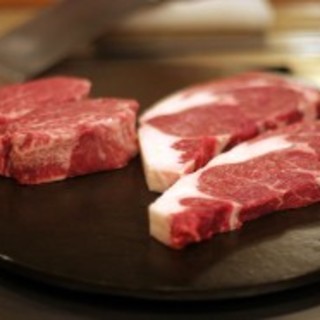
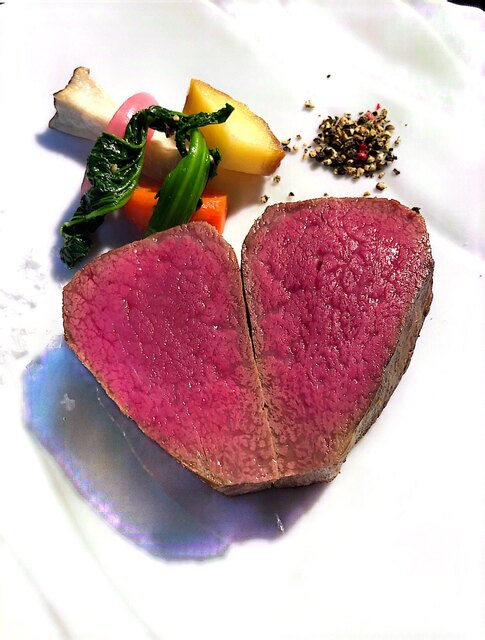
The appeal of teppanyaki in Morioka is not built around secrecy or theatrical scarcity. It is built around proximity: the grill in view, the pace set by heat, and a regional larder that gives northern Japan’s steak houses their reason to exist. In Iwate, beef carries local weight, while Sanriku seafood brings the Pacific edge that makes the format broader than a steak dinner. That sourcing context matters more than imported luxury cues. A teppan counter can flatten regional identity into performance; here, the stronger reading is produce first, technique second, spectacle last.
Steak Teppan Ryori Wakana Morioka honten belongs to the older, more civic-minded side of Japanese teppanyaki: a room designed for occasions, groups, and repeat local use rather than a tiny counter engineered for chase value. Its selection for Tabelog 100 Steak / Teppanyaki EAST 2025 places it inside a national conversation about steak and grill cooking, but the more interesting point is geographic. Morioka is not usually treated as a default stop on Japan’s luxury dining circuit, so recognition in this category gives the restaurant a different kind of authority: it connects Iwate’s ingredient base to a format often associated with larger cities.
Iwate beef and Sanriku seafood give the grill its argument
Japanese steak culture can easily become a discussion of marbling grades and brand names, but the northern version has a broader field of reference. Iwate’s agricultural identity, colder climate, and proximity to the Sanriku coast support a teppanyaki style where beef is not the only source of status. Seafood from the Pacific side of Tohoku adds another register, especially in a format where timing, surface heat, and restrained seasoning define the meal more than elaborate plating.
That is why the category match matters. Steak and teppanyaki are listed together, but they are not identical experiences. Steak restaurants can be about cut, doneness, and sauce; teppanyaki adds a public cooking grammar, where the room watches technique unfold in real time. The stronger houses in this genre make the grill feel purposeful rather than decorative. The Tabelog 100 selection signals that this address is judged within that steak and teppanyaki bracket, not merely as a local special-occasion room.
For travellers mapping the city, the restaurant sits alongside a wider Morioka dining circuit rather than apart from it. Regional eating here should include contrast: Chinese cooking at Chinese jiu, local izakaya rhythm at Kakkou Ya, and sake-friendly cooking at Matsubokkuri. For a different register, PIZZERIA 5 and Ren show how compact the city’s serious dining map can be. The point is not to treat teppanyaki as an isolated splurge, but to read it against Morioka’s range: grills, drinking rooms, casual counters, and small restaurants built around local demand.
A large-format teppanyaki room, not a Tokyo-style chase counter
The scale changes the experience. With 70 seats, private rooms for small parties, and private-use capacity for larger groups, the restaurant operates in a different lane from the eight-seat counters that dominate reservation discourse in Tokyo and Osaka. That makes it more flexible, and also more revealing of how regional Japanese dining works. Celebrations, business meals, family dinners, and visitors looking for Iwate beef can occupy the same ecosystem without forcing the restaurant into a single luxury script.
That flexibility does not make the category casual in the ordinary sense. A Tabelog 100 selection, non-smoking room, wine interest, and card acceptance all point to a polished steak-house environment. The presence of sake, shochu, wine, and cocktails also matters. Teppanyaki houses can lean narrowly into wine-paired beef service; this one reads as more Japanese in its beverage range, with enough breadth for mixed groups who may not want the same pairing logic across the table.
The comparison set around Iwate is useful because it shows the spread of serious local spending. Kakashi Ya, The bar Sato, Golot, and Aji no Mise Iwashi all sit in different out-of-metro lanes, from bar culture to casual eating and mid-priced dinners. Against that range, this teppanyaki address occupies the occasion-driven grill category: larger, more structured, and more closely tied to beef and seafood provenance than to small-plate spontaneity.
How to fold it into an Iwate trip
For visitors, this is strongest when placed within a broader Iwate itinerary rather than treated as a stand-alone trophy booking. Morioka rewards an appetite for regional specificity: noodles, sake, beef, mountain produce, and coastal seafood all sit within reach of the city. A teppanyaki meal gives that itinerary a composed centre of gravity, especially for travellers who want local ingredients without the language barrier and rigidity that can come with smaller counters. English menu support and a kids menu make it more accessible than many serious Japanese dining rooms, while private rooms give families or business groups a way to keep the meal focused.
The wider planning frame is simple: use our full Iwate restaurants guide for the dining map, then build the rest of the trip through our full Iwate hotels guide, our full Iwate bars guide, our full Iwate wineries guide, and our full Iwate experiences guide. Readers comparing Japanese beef formats beyond Iwate can also look at -Grilled beef Sukiyaki- KAMAKURA TANUKIAN 鎌倉 たぬき庵 in Kamakura, while broader Japan dining contrasts include. 鮪と炭火焼き うお炭 秋葉原店 in Tokyo,.cafe in Osaka,.know in Kumamoto, (Shoku) Vietnam in Kawasaki, and [Curry Senmon Ten] Maruyama Kyoju. in Sapporo. For Japanese drinking culture abroad, Jōdo Saké Bar in Los Angeles and Onigiri Time in Pasadena widen the reference point.
The editorial case is clear: Steak Teppan Ryori Wakana Morioka honten is not compelling because it mimics the high-pressure luxury grammar of bigger cities. It is compelling because it translates Iwate’s beef and coastal identity into a format with enough ceremony for an occasion and enough practical range for real travellers. In a prefecture where food identity is tied to place rather than trend, that is the right kind of seriousness.
Quick Comparison
Comparable venues by cuisine and price in the same metro.
| Venue | Cuisine | Price | Awards | Notes |
|---|---|---|---|---|
| Steak Teppan Ryori Wakana Morioka hontenThis venue — the venue you are viewing | Teppanyaki Steakhouse | $$$ | , | |
| Ren | Modern Chinese with French-influenced seasonal courses | $$$ | , | Hanamaki |
| Ryuen | Yakiniku with Maesawa Beef | $$$ | , | Mizusawa |
| Chinese jiu | Chinese Fine Dining | $$$ | , | Hizume |
| Ristorante SHIKAZAWA | Modern Italian with Iwate Influences | $$$$ | Morioka | |
| Kakkou Ya | Traditional Japanese Dango Teahouse | $ | , | Genbikei Gorge, Ichinoseki |
Continue exploring
More in Iwate
Restaurants in Iwate
Browse all →
At a Glance
- Elegant
- Classic
- Romantic
- Sophisticated
- Special Occasion
- Celebration
- Business Dinner
- Date Night
- Group Dining
- Chefs Counter
- Open Kitchen
- Standalone
- Extensive Wine List
- Local Sourcing
Refined and classic teppanyaki atmosphere with counter seating around iron griddles, attentive service, and a calm, special‑occasion feel suited to celebrations and business meals rather than a casual quick bite.