
Tabelog 100 #52
Our verdict
Chikyuya Honchou honten puts Morioka’s lunch economy in a different frame: Indian curry, vegetable-forward cooking, and a Tabelog 100 Asian cuisine / Ethnic cuisine EAST 2024 selection at a sub-¥999 listed budget. The appeal is not luxury signalling but precision in a small-format room, where regional produce-minded eating meets Japan’s long-running curry culture.

Pearl is the En Primeur Club membership app — saves, bookings, and concierge access live there. Same editors, same standards.
- Address
- Japan, 〒020-0015 Iwate, Morioka, Honchodori, 1 Chome−17−27 テンロードビル 201
- Phone
- +81 19-681-4277
- Hours
- Mon ClosedTue–Fri 11:30 AM–3 PMSat–Sun Closed
- Website
- chikyuuya.com
- Directions
- Get directions
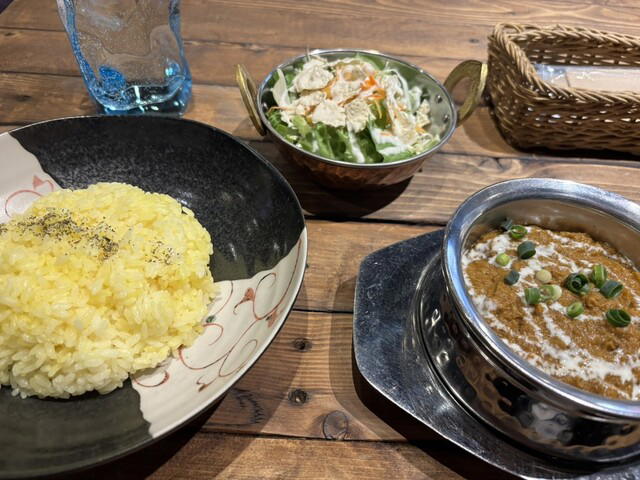
On Honchodori, the approach is more everyday Morioka than destination dining theatre: an upstairs address in a modest building, a compact room, and a lunch window that rewards people who plan their day around the meal rather than around a drawn-out reservation ritual. Chikyuya Honchou honten belongs to a category Japan does well but visitors often underestimate: serious curry served in a small independent setting, priced for regular use, judged by repeatability rather than spectacle.
That matters in Morioka, a city whose dining identity is usually introduced through noodles, bread, seafood, and izakaya rhythms. The local shorthand sends travellers toward wanko soba at Azumaya Honten, filled koppepan at Fukuda Pan Nagata chou honten, or fish-led counters such as Aji no Mise Iwashi. Indian curry sits outside that postcard version of the city, yet its presence here is not accidental. Across Japan, curry has become a localised comfort form, and the more interesting rooms are those that treat spice, vegetables, and rice as a daily craft rather than an imported novelty.
Vegetable-led curry in a city better known for noodles
The most useful way to read this table is through sourcing and restraint. The restaurant is categorised as Indian and Indian curry, with particular attention noted for vegetables, health-conscious cooking, and vegetarian options. In a northern prefecture where seasonality is often expressed through mountain vegetables, dairy, grains, and clean cold-climate produce, that emphasis gives the curry format a local logic. It is not trying to compete with Morioka’s celebratory beef or seafood meals; it occupies the lunch slot where balance, spice, and price all have to work at once.
Recognition gives the point some weight. Selection for Tabelog 100 Asian cuisine / Ethnic cuisine EAST in 2024 places the restaurant inside a broader eastern Japan list rather than a purely local popularity contest. The same recognition appears for 2022 and 2023, which suggests continuity across more than one awards cycle. Its Tabelog score is listed at 3.58.
The price band sharpens the editorial case. Morioka has higher-spend rooms in the comparison set: Kakashi Ya is listed around ¥6,000 to ¥7,999, as is Yakiniku Segawa, while The bar Sato sits around ¥4,000 to ¥4,999. Chikyuya Honchou honten’s listed budget sits below ¥999, which makes its awards recognition more interesting, not less. In Japan, low price does not necessarily mean casual indifference; it can mean a narrow format executed with discipline.
A small room, a short service window, and a lunch-first rhythm
The room is limited to 24 seats, including three counter seats, so the experience has the scale of a neighbourhood specialist rather than a high-capacity dining room. That size changes the way the meal should be understood. Small curry restaurants in Japan often rely on pace, consistency, and a clear point of view, because the lunch trade is unforgiving: a sauce that lacks structure, rice that fails, or a vegetable plate that feels like an afterthought gets exposed quickly when the menu is built around repetition.
Practical rhythm is equally specific. Public hours concentrate on lunch, with Monday closed and a late-morning-to-mid-afternoon service pattern listed through the week. Dinner is tied to private reservations, which puts ordinary access firmly in the daytime. For travellers, that makes the restaurant a planning anchor rather than a fallback: pair it with a morning in central Morioka, then use the afternoon for the city’s slower cultural pace rather than trying to fold it into a late dinner circuit.
Payment and access details also shape the reader decision. Credit cards are not accepted, electronic money is accepted, and lunch and takeaway have separate payment limitations. Takeaway is available with advance reservation. Parking exists in the building but is limited, with nearby paid lots as the practical backup. The nearest station is Kami Morioka, listed at 742 meters away, which makes walking plausible for travellers already moving through the central districts.
Where it fits in a Morioka itinerary
Morioka rewards mixed eating: one meal can be about local ritual, another about a compact specialist doing one format with seriousness. Chikyuya Honchou honten is useful precisely because it breaks the expected itinerary. It gives the city’s restaurant map a second register, one where Asian and ethnic cooking earns attention without abandoning the local lunch economy.
Travellers building a food-led stay should treat it as a daytime counterpoint to heavier evening plans. Aji no Mise Iwashi makes more sense when the evening calls for seafood and drinks; Kakashi Ya suits a higher-spend Japanese meal; Golot and Kakashi Ya point to another side of the local table. For broader planning, Our full Morioka restaurants guide is the better map, with companion context in Our full Morioka hotels guide, Our full Morioka bars guide, Our full Morioka wineries guide, and Our full Morioka experiences guide.
There is a national comparison worth making, but only in category terms. Japan’s curry and Asian-food specialists now range from Sapporo counters such as [Curry Senmon Ten] Maruyama Kyoju. to Vietnamese cooking at (Shoku) Vietnam in Kawasaki, casual urban rooms such as.cafe in Osaka, and compact dining formats like.know in Kumamoto. The broader point is that serious, low-cost specialist cooking in Japan is rarely confined to the major dining capitals.
That same planning logic applies beyond Japan. A traveller who understands why a focused curry room in Morioka can merit attention will also understand the appeal of category-specific places such as Jōdo Saké Bar in Los Angeles or Onigiri Time in Pasadena: narrow formats, clear limits, and a reason to go beyond a generic restaurant search. For a different register of Japanese dining, compare the formality of -Grilled beef Sukiyaki- KAMAKURA TANUKIAN 鎌倉 たぬき庵 in Kamakura or the urban grilled-fish-and-tuna model at. 鮪と炭火焼き うお炭 秋葉原店 in Tokyo. Morioka’s version is quieter and less expensive, but the editorial lesson is the same: format discipline often tells more than décor.
Frequently asked questions
Does Chikyuya Honchou honten work for a family meal?
The room has 24 seats and lunch stays in the JPY 999 range, so it suits a simple daytime meal in Morioka rather than a long family outing.
What's the vibe at Chikyuya Honchou honten?
Expect a compact, lunch-first room with 24 seats and just three counter seats, plus a designated smoking area. The Tabelog 100 East 2024 selection gives it credibility, but the feel is more neighbourhood specialist than destination dining room.
What should I budget for a meal at Chikyuya Honchou honten?
Pricing at Chikyuya Honchou honten is listed as - JPY 999.
What is Chikyuya Honchou honten known for?
Chikyuya Honchou honten is primarily known for its core concept and execution in Morioka.
Quick Comparison
Comparable venues by cuisine and price in the same metro.
| Venue | Cuisine | Price | Awards | Notes |
|---|---|---|---|---|
| Chikyuya Honchou hontenThis venue — the venue you are viewing | Indian curry house in Morioka | Not listed | Tabelog 100 #52 | Not listed |
| Fukuda Pan Nagata chou honten | Classic Morioka coppe-pan bakery | $1–10 | Tabelog 100 #46 | Nagatacho |
| 東家 本店 | Traditional Wanko Soba | $20–30 | Not listed | 中ノ橋通 |
| Kakashi Ya | Seafood-focused Japanese Izakaya | $50–100 | Tabelog 100 #92 | Sai-en (Saien) |
| Azumaya Honten | Traditional Wanko Soba | $20–30 | Not listed | Kami Morioka |
| Golot | Aged Iwate wagyu steakhouse & bar | $50–100 | Tabelog 100 #37 | Saien |
Recognition history
Dated appearances from independent guides and award organizations, with the underlying list record or original source where available.
Tabelog 100 #52 · No. 52
Tabelog · Tabelog 100 - Asian cuisine / Ethnic cuisine - EAST - 2024
Continue exploring
More in Morioka
Restaurants in Morioka
Browse all →
Details
- Casual Hangout
- Solo
- Family
- Group Dining
- Standalone
- A La Carte
Current opening hours
- Monday
- Closed
- Tuesday
- 11:30 AM–3 PM
- Wednesday
- 11:30 AM–3 PM
- Thursday
- 11:30 AM–3 PM
- Friday
- 11:30 AM–3 PM
- Saturday
- Closed
- Sunday
- Closed
Hours can change for holidays and private events. Last verified .