
Tabelog 100 #96
Our verdict
A fish-led izakaya in Morioka’s Chuodori district, Aji no Mise Iwashi belongs to the compact, ingredient-first side of the city’s dining culture rather than the spectacle-driven end of Japanese restaurants. Its Tabelog 100 Izakaya EAST selections in 2024 and 2025 give it a clear quality signal, while the room’s counter-and-table format keeps the experience grounded and local.

Pearl is the En Primeur Club membership app — saves, bookings, and concierge access live there. Same editors, same standards.
- Address
- 2 Chome-11-7 Chuodori, Morioka, Iwate 020-0021, Japan
- Phone
- +81 19-618-6442
- Hours
- Mon–Tue 5–10 PMWed–Fri 11:30 AM–2:30 PM, 5–10 PMSat 5–10 PMSun Closed
- Website
- extlink-gate.tottokun.com
- Directions
- Get directions
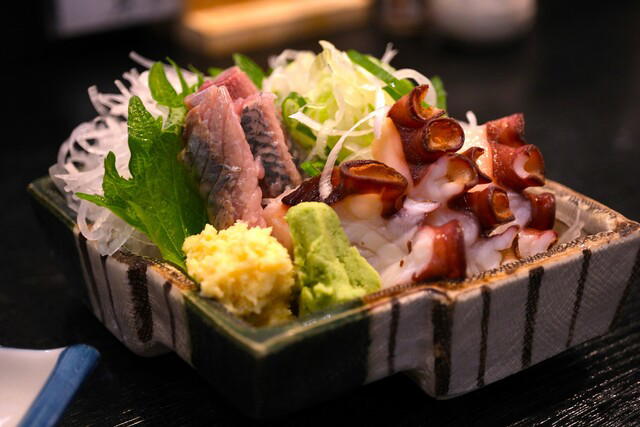
The menu
What to order
- Fried horse mackerel set lunch
- Prawn set lunch
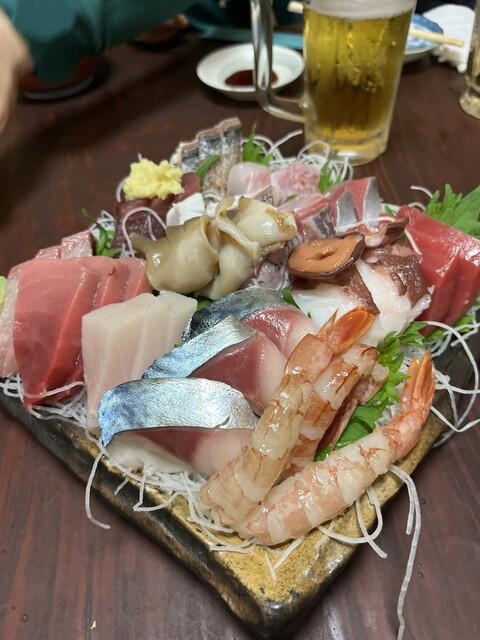
- Sashimi set
- Grilled fish set
- Fried sardine set
Chuodori’s evening rhythm suits the izakaya form: office lights thinning, small rooms filling early, and meals built less around ceremony than sequence. In Morioka, that sequence often starts with ingredients rather than architecture. The city sits inland, yet Iwate’s food identity pulls from several directions: Sanriku seafood to the east, mountain produce and dairy to the north and west, and a drinking culture long open to sake, shochu and unfussy Japanese cooking. Aji no Mise Iwashi belongs to that ingredient-led register, where fish is not decoration but the organizing idea.
That matters because izakaya in Japan can mean anything from chain dining to personal kitchens with serious sourcing habits. The stronger end is not defined by formality but by discipline: a short distance between product and plate, drinks chosen to support the food, and a room small enough for the counter to retain authority. The restaurant’s selection for Tabelog 100 Izakaya EAST in both 2024 and 2025 places it in a regional conversation, not just a local one. For a Morioka itinerary, that recognition is useful because the city’s dining appeal extends beyond its better-known noodle traditions.
Fish, sake and the serious side of the izakaya format
The name points plainly toward iwashi, or sardine, but the broader signal is a kitchen particular about fish. That distinction matters. It suggests a place aligned with the Japanese izakaya habit of letting seafood dictate the meal, especially with sake, rather than treating it as a fixed tasting-menu theme. No chef mythology is needed. The editorial point is category precision: value lies in ingredient handling, pacing and drink compatibility, not theatrical concept.
Morioka’s stronger casual restaurants often work this way: specific without being narrow. Azumaya Honten gives visitors a classic local entry through wanko soba; Fukuda Pan Nagata chou honten shows the city’s affection for inexpensive everyday food; and Golot sits in a higher-spend bracket with different dining grammar. Against that spread, Aji no Mise Iwashi gives Morioka’s evening-drinking side a sharper food argument.
The drink list also clarifies positioning. Sake and shochu are expected in an izakaya, but the explicit emphasis on sake, alongside wine, points to a room for guests who care about pairing without needing a formal pairing menu. In regional Japan, the better izakaya experience often sits there: not in luxury signaling, but in a calibrated relationship between fish, salt, acidity, rice alcohol and table pace. The absence of private rooms reinforces the point. This is counter-and-table dining, not corporate banquet dining.
Why Morioka's compact dining scene rewards specificity
Morioka is not Tokyo scaled down; it has its own logic. The city rewards restaurants with a clear lane, partly because the market is smaller and repetition gets exposed quickly. A fish-focused izakaya competes not only with other taverns, but with soba houses, yakiniku rooms, cafés, bakeries and specialist Japanese kitchens that locals already rank in daily life. Nearby comparison points sharpen the picture: Kakashi Ya operates at a higher dinner spend, while Chikyuya Honchou honten represents another strand of the city’s casual dining map. The draw here is not breadth; it is focus.
The Tabelog score of 3.66 should be read with Japanese restaurant-rating literacy. On Tabelog, especially outside the largest metropolitan restaurant corridors, mid-3 scores can signal strong local standing; scores do not inflate like many global review platforms. The Tabelog 100 Izakaya EAST selections carry more editorial weight than the number alone because they place the restaurant among selected izakaya across eastern Japan, not inside a neighborhood popularity contest.
For travellers building a Morioka food day, treat this as the evening anchor rather than the whole thesis. The city’s range is better understood through contrast: noodles, bread, fish-led drinking, coffee, bars and the rural hospitality network around Iwate. Our full Morioka restaurants guide is the natural starting point for that spread, while our full Morioka bars guide maps the post-dinner end of the night. For the broader trip frame, use our full Morioka hotels guide, full Morioka experiences guide and full Morioka wineries guide to see how the city sits within northern Honshu travel.
A small-room choice for travellers who care where dinner begins
The strongest case for this restaurant is not a rarefied night out. It expresses a mature izakaya value system: fish at the center, drinks in support, a compact room, and enough recognition to separate it from a convenience pick. Scale matters. A 20-seat room, split between counter and tables, changes the meal’s tempo; small kitchens can feel constrained or focused, and this format gives the counter a role without making every guest commit to a chef’s-counter ritual.
That suits diners who like Japanese restaurants where the category remains legible. It is not a temple of sushi, not a kaiseki room, not a noodle landmark. It is an izakaya with a fish emphasis, its own serious genre. Families are not excluded, and the children-welcome note broadens its usefulness, though the evening-drinking structure will suit some families more than others.
Readers comparing across Japan should not flatten every specialist venue into the same checklist. A sake bar in Los Angeles such as Jōdo Saké Bar in Los Angeles, an onigiri specialist like Onigiri Time in Pasadena, a curry shop such as [Curry Senmon Ten] Maruyama Kyoju. in Sapporo, or a casual room like (Shoku) Vietnam in Kawasaki answers a different dining question. So do -Grilled beef Sukiyaki- KAMAKURA TANUKIAN 鎌倉 たぬき庵 in Kamakura. 鮪と炭火焼き うお炭 秋葉原店 in Tokyo.cafe in Osaka and.know in Kumamoto. The value of Morioka’s version is its clarity: a regional city, a small izakaya, fish as the organizing principle, and enough external recognition to make the detour defensible.
Frequently asked questions
Is Aji no Mise Iwashi good for families?
Yes. The venue is marked family friendly and children are welcome, and the 20-seat room includes both counter and table seating in Morioka.
Is Aji no Mise Iwashi formal or casual?
It reads as casual rather than formal, with izakaya service, counter seating, and a price range of JPY 4,000–JPY 4,999 for dinner. The Tabelog 100 Izakaya EAST 2025 selection signals quality without pushing it into a dressy format.
Is Aji no Mise Iwashi more mid-range or high-end?
Pricing at Aji no Mise Iwashi is listed as JPY 4,000 - JPY 4,999 - JPY 999.
What are the opening hours for Aji no Mise Iwashi?
Hours at Aji no Mise Iwashi: Mon: 5–10 PM; Tue: 5–10 PM; Wed: 11:30 AM–2:30 PM, 5–10 PM; Thu: 11:30 AM–2:30 PM, 5–10 PM; Fri: 11:30 AM–2:30 PM, 5–10 PM; Sat: 5–10 PM; Sun: Closed.
A Quick Peer Check
Comparable venues by cuisine and price in the same metro.
| Venue | Cuisine | Price | Awards | Notes |
|---|---|---|---|---|
| Aji no Mise IwashiThis venue — the venue you are viewing | Japanese Izakaya & Seafood Set Meals | $20–30 | Tabelog 100 #96 | Not listed |
| Fukuda Pan Nagata chou honten | Classic Morioka coppe-pan bakery | $1–10 | Tabelog 100 #46 | Nagatacho |
| Azumaya Honten | Traditional Wanko Soba | $20–30 | Not listed | Kami Morioka |
| Seirokaku | Yakiniku & Morioka Reimen | $20–30 | Tabelog 100 #37 | Moriokaekimaedori |
| Restaurant Chez mura bleu Lis | French Bistro with Local Iwate Ingredients | Not listed | Tabelog 100 #1 | Kami Morioka |
| 東家 本店 | Traditional Wanko Soba | $20–30 | Not listed | 中ノ橋通 |
Recognition history
Dated appearances from independent guides and award organizations, with the underlying list record or original source where available.
Tabelog 100 #96 · No. 96
Tabelog · Tabelog 100 - Izakaya - EAST - 2025
Continue exploring
More in Morioka
Restaurants in Morioka
Browse all →
Details
- Cozy
- Intimate
- Casual Hangout
- After Work
- Family
- Group Dining
- Solo
- Standalone
- Sake Program
- Beer Program
- A La Carte
- Set Menu
- Small Plates
- Sake
- Shochu
- Beer
- Wine
- Pescatarian Friendly
Current opening hours
- Monday
- 5–10 PM
- Tuesday
- 5–10 PM
- Wednesday
- 11:30 AM–2:30 PM, 5–10 PM
- Thursday
- 11:30 AM–2:30 PM, 5–10 PM
- Friday
- 11:30 AM–2:30 PM, 5–10 PM
- Saturday
- 5–10 PM
- Sunday
- Closed
Hours can change for holidays and private events. Last verified .
A small, house-like hideout with a cozy, intimate feel, non-smoking interior, and a relaxed neighborhood izakaya atmosphere suited to both families and casual drinkers.