
Tabelog 100 #16
Our verdict
Rakushaan occupies a quieter register within Kyoto's kaiseki tradition, where the city's instinct for seasonal restraint shapes every element of the meal. Positioned among a tier of Kyoto restaurants where occasion dining carries genuine weight, it draws visitors planning milestone meals alongside the city's most revered tables. Advance research and careful timing remain essential for any serious reservation.

Pearl is the En Primeur Club membership app, where members save venues, book tables and use the concierge.
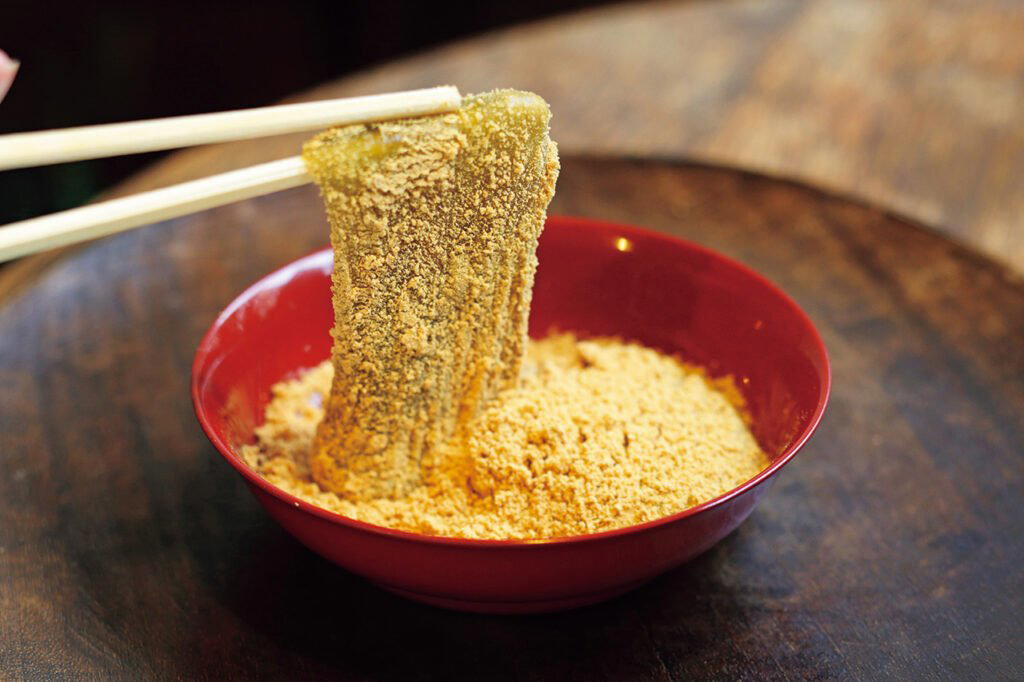
The menu
What to order
- Shiki Warabi
- Warabi Mochi
Where Kyoto Sets the Table for What Matters
There is a particular quality of silence in Kyoto's finest dining rooms, not emptiness, but deliberate quiet. The clatter and informality of casual eating is nowhere. What you find instead is a room calibrated for attention: to the season, to the tableware, to the meal itself. Rakushaan occupies this register. In a city whose culinary reputation rests on kaiseki's formal grammar of sequence, ingredient, and presentation, a reservation here carries the same weight that milestone meals carry anywhere, except that in Kyoto, the meal itself is the ceremony.
Kyoto's high-end dining tier is not a single style but a spectrum. At one end sit the multi-generational kaiseki houses whose lineages are documented in food literature: Hyotei, whose history extends across centuries, and Kikunoi Honten, which helped codify kaiseki for an international audience. At another point on the spectrum sit newer addresses, like Gion Sasaki, where contemporary interpretations of Japanese seasonal cooking have attracted significant critical attention. Rakushaan draws from this same city-wide tradition of treating the table as a site for occasion rather than convenience.
The Occasion Dining Question in Kyoto
Across Japan's major cities, the decision about where to mark a birthday, an anniversary, or a significant professional milestone follows a recognizable logic: proximity to the best of a recognized ranking, a room that signals occasion without theatrical excess, and a format that delivers enough time at the table to justify the commitment. In Kyoto specifically, kaiseki's multi-course structure answers all three. The meal unfolds over two hours or more, each course timed to a progression that mirrors the Japanese concept of ma, the productive use of interval and pause.
What distinguishes Kyoto from Tokyo or Osaka for this kind of dining is the density of historically embedded restaurants in a relatively compact city. Tables at Mizai and Isshisoden Nakamura require planning windows measured in months, not days. The expectation at this tier is that you arrive knowing the season, knowing the format, and having made logistical arrangements well in advance. Rakushaan sits within this planning culture, where last-minute access is rarely an option for the rooms worth entering.
Season as Structure
Kaiseki's organizing principle is the calendar. No other cuisine format is as openly governed by season: the ingredients available in early spring bear almost no resemblance to those served in late autumn, and a kitchen operating at the level Kyoto demands will not attempt to bridge that gap artificially. Bamboo shoots in April, ayu sweetfish in summer, matsutake mushrooms as autumn advances, the progression is both gastronomic and cultural, tying the meal to the precise moment it is being eaten.
This seasonality has practical implications for planning occasion meals. A reservation made for cherry blossom season in late March or early April, when Kyoto attracts its highest visitor volumes, requires a lead time that can stretch to three months or beyond for the city's most sought-after tables. Autumn, when the maple foliage draws a second wave of visitors, carries similar pressure. The quieter months of January and February offer shorter booking windows but sacrifice nothing in kitchen quality, and for certain dishes built around winter ingredients, they may represent the sharper argument. For Kyoto at its full occasion-dining weight, the question of when to visit is inseparable from the question of what you want to eat.
Within Kyoto's formal dining tier, a group defined by kaiseki format, seasonal sourcing, and price points that position them against one another rather than against casual dining, Rakushaan competes on the terms that matter in this city: room quality, kitchen discipline, and the ability to hold the attention of a table that has come expressly to pay attention. Comparable occasion destinations across Japan include HAJIME in Osaka, where a different culinary language produces a similar sense of formal occasion, and Harutaka in Tokyo, which operates in the capital's parallel premium tier. Further afield, akordu in Nara demonstrates how the Kansai region's occasion-dining culture extends beyond Kyoto's borders.
For readers building itineraries across Japan, the comparison extends to restaurants in less expected locations. Goh in Fukuoka has established Kyushu as a genuine destination for serious eating. Regional restaurants like those in Nanao and Sapporo anchor Japan's argument that high-level cooking is not concentrated solely in the three major cities. For internationally framed comparisons, the occasion-dining logic at Rakushaan is not entirely remote from what Le Bernardin in New York City or Atomix provide in a different culinary tradition: a room organized around the idea that some meals deserve to be treated as events.
Planning a Meal at Rakushaan
Visitors approaching Kyoto's formal dining tier should build their research around several fixed realities. Booking windows at this level of the market typically open one to three months ahead, and for high-demand periods, spring sakura season and autumn koyo, the earlier end of that range is not cautious but necessary. For occasion dining specifically, communicating the nature of the meal at the time of reservation (birthday, anniversary, dietary requirements) is standard practice in Kyoto, where kitchens plan around the guest rather than the reverse. The city is well served by our full Kyoto restaurants guide, which maps the dining tier more broadly and helps situate individual reservations within the city's wider options.
Additional context from the broader Kansai region is useful for multi-city planning: Takashima and Nishikawa Machi both offer alternative registers for the serious traveler moving through the region, as do more accessible formats like Birdland in Sakai and Bistro Ange in Toyohashi for days when the occasion calls for something less formal.
Frequently asked questions
What is Rakushaan known for?
What do people recommend at Rakushaan?
Should I book Rakushaan in advance?
Can Rakushaan adjust for dietary needs?
Is Rakushaan worth the price?
When is the ideal time to visit Rakushaan?
Is Rakushaan suitable for a first experience of kaiseki dining in Kyoto?
Comparable Venues
Comparable venues nearby, for context on price, style, and recognition.
| Venue | Cuisine | Price | Awards | Notes |
|---|---|---|---|---|
| RakushaanThis venue (the venue you are viewing) | Traditional Japanese Warabi Mochi Specialty | $10–20 | Tabelog 100 #16 | Not listed |
| らく山 | Kyoto-style Izakaya Obanzai | $30–50 | Not listed | 下京区 |
| PRIVATE KITCHEN SUMIYOSHI | Seasonal Chinese by ex-hotel chef | $30–50 | Tabelog 100 #93 | Higashiyama |
| Menya Inoichi Hanare | Modern Seafood Dashi Ramen | $10–20 | Michelin Bib Gourmand · Tabelog 100 #57 | Shimogyō |
| Ichijoji Nakatani | Kyoto wagashi & cafe with Japanese–Western fusion sweets | $10–20 | Tabelog 100 #5 | Sakyō |
| 德まる | Seasonal À La Carte Japanese | $100–150 | Michelin Plate | 中京区 |
Recognition history
Dated appearances from independent guides and award organizations, with the underlying list record or original source where available.
Tabelog 100 #16 · No. 16
Tabelog · Tabelog 100 - Japanese traditional sweets / Japanese sweets cafe - WEST - 2023
Continue exploring
More in Kyoto
Restaurants in Kyoto
All restaurants in Kyoto →
Bars in Kyoto
All bars in Kyoto →
Hotels in Kyoto
All hotels in Kyoto →
Wineries in Kyoto
Browse all →
Details
- Classic
- Cozy
- Casual Hangout
- A La Carte
Traditional Japanese confectionery shop focused on takeout, emphasizing simplicity and craftsmanship in a quiet neighborhood setting.