
Ichijoji Nakatani reads as part wagashi shop, part neighborhood cafe, with Kyoto’s sweet-making tradition filtered through Ichijoji’s quieter, residential rhythm. Its 2023 Tabelog 100 selection for Japanese traditional sweets and sweets cafes in West Japan places it in a serious category without pushing it into formal-occasion dining.
Pearl is the En Primeur Club membership app — saves, bookings, and concierge access live there. Same editors, same standards.
- Address
- 5 Ichijoji Hananokicho, Sakyo Ward, Kyoto, 606-8151, Japan
- Phone
- +81 75-781-5504
- Website
- ichijouji-nakatani.com
 Saves & bookings on Pearl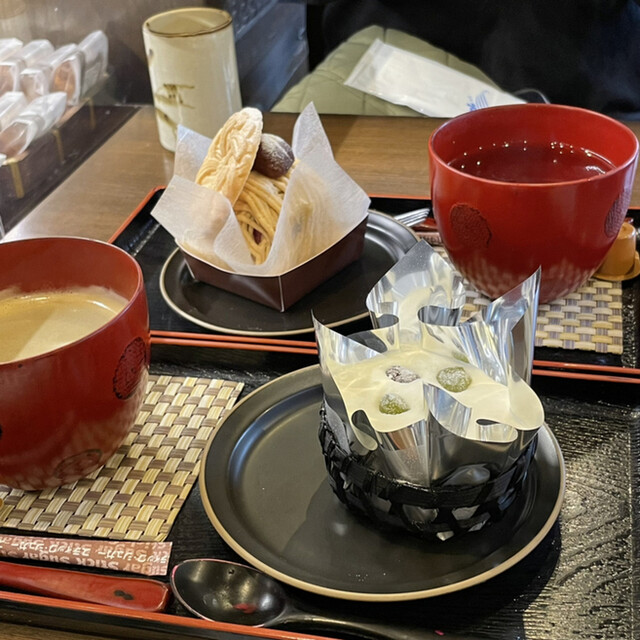
The approach to Ichijoji corrects the Kyoto many visitors over-plan. North of the central hotel-and-temple circuit, the district mixes sweet shops, ramen counters, student traffic, and family errands. Ichijoji Nakatani belongs to this daily Kyoto rather than the ceremonial one: a house-style sweets cafe where regulars treat wagashi as an afternoon habit, not a staged cultural performance.
That matters because Kyoto’s Japanese-sweets culture has two identities. One is formal, tied to tea ceremony, seasonal presentation, and purposeful gift boxes. The other is casual and repeatable, built around cafes where locals return for sweets, cake, and tea without making an event of it. Ichijoji Nakatani sits in the second lane, yet its selection for the 2023 Tabelog 100 Japanese traditional sweets and sweets cafe list for West Japan shows the casual format being judged against serious regional peers.
Wagashi culture without the temple-district script
Kyoto rewards visitors who separate craft from ceremony. A sweet shop does not need a garden view or lacquered-service narrative to carry authority; often, repetition is the stronger signal. Regulars return because the category allows small decisions: Japanese traditional sweets, cafe sweets, cake, take-out, or a counter pause. That mixed format reflects how Kyoto residents use sweet shops, moving between gifts, family stops, and short cafe breaks.
Ichijoji Nakatani’s category mix, cafe featuring Japanese sweets, Japanese traditional sweets, and cake, places it beyond a narrow wagashi-only reading. In Kyoto, that hybridity is not a compromise but part of the city’s long accommodation between old confectionery technique and modern cafe behavior. The formal end asks diners to read seasonality and symbolism; the neighborhood end asks whether a shop can sustain repeat visits across ordinary weeks.
The 2023 Tabelog 100 recognition is useful because it frames the shop within West Japan’s sweets-cafe field, not Kyoto sightseeing alone. Tabelog scores and selections are no substitute for taste, but in Japan they often show where local repeat traffic and specialist interest overlap. A 3.63 score in this category points to a steady audience, not novelty or scarcity theatre.
The regulars' map of northern Kyoto sweets
Ichijoji is not Gion, and that shapes the decision. Visitors chasing polish may cluster in central Kyoto, then add a known sweets stop near a shrine or shopping arcade. Regulars fold the shop into a northern Kyoto circuit: errands near Sakyo Ward, a stop before or after a residential walk, or a sweets break beside the area’s better-known ramen culture.
The comparison set is telling. Ramen Jiro Kyoto ten and GOKKEI Ichijouji honten make the district legible through ramen queues and thick local loyalty, while Patisserie Tandresu points to a patisserie audience at a similar casual-spend level. Ichijoji Norihide and Akihana broaden the range, from Japanese dining to Chinese. Against that mix, Ichijoji Nakatani gives Ichijoji a quieter sweets anchor: less a destination meal than the kind of stop that turns a neighborhood into a repeatable food route.
For visitors, the better strategy is not to treat the shop as a trophy stop; Kyoto has enough of those. Use it as a lens on local rhythm: sweets before a walk, take-out when the room is full, or a sit-down pause when the day has been overbuilt with temples. The absence of reservations reinforces that rhythm. Work it into a flexible day rather than making the day revolve around a fixed seating.
This is also where children and mixed-age groups fit Kyoto dining. High-ceremony counters and tasting menus can turn family travel into negotiation. A sweets cafe with children welcome, non-smoking service, and a modest spending band gives families a lower-pressure way to engage with Kyoto food culture. That does not make it casual in quality; it makes the format forgiving.
How to place it in a Kyoto itinerary
Ichijoji Nakatani’s practical value lies in restraint. It is not competing with the city’s kaiseki rooms, cocktail bars, or hotel dining rooms. It gives a different read on Kyoto: the sweet shop as neighborhood infrastructure. The room count is small enough to feel local, with counter and table seating rather than banquet formality, and take-out keeps the experience from depending entirely on a seat.
Use it when the itinerary needs a northern detour rather than another central reservation. The Eizan line makes Ichijoji part of a different Kyoto geography, pointing toward Sakyo Ward, university neighborhoods, and the foothill side of the city. For travelers staying centrally, it pairs better with a wider northern plan than a quick dash between heavily scheduled meals.
Readers mapping broader Kyoto dining should treat it as one part of a category spread, not a standalone answer. For compact central dining, see 3TOKU6MI Shijo karasuma ten, 551蓬莱, [ki:], and Abbesses. For another Kyoto sweets tradition with a more shrine-adjacent identity, Aburi Mochi Honke Nemoto Kazariya gives a sharper contrast. Broader planning belongs in Our full Kyoto restaurants guide, with sleep, drinking, wine, and cultural context in Our full Kyoto hotels guide, Our full Kyoto bars guide, Our full Kyoto wineries guide, and Our full Kyoto experiences guide.
For a Japan-wide food map, the useful comparison is not only within Kyoto. Casual formats carry different meanings across cities: beef sukiyaki at -Grilled beef Sukiyaki- KAMAKURA TANUKIAN 鎌倉 たぬき庵 in Kamakura, charcoal tuna dining at. 鮪と炭火焼き うお炭 秋葉原店 in Tokyo, cafe culture at.cafe in Osaka, and regional dining at.know in Kumamoto each show how everyday formats carry local identity. The same applies beyond Japan’s city centers, from (Shoku) Vietnam in Kawasaki and [Curry Senmon Ten] Maruyama Kyoju. in Sapporo to Japanese-inflected dining abroad at Jōdo Saké Bar in Los Angeles and Onigiri Time in Pasadena.
The verdict is simple: Ichijoji Nakatani is for travelers who understand that Kyoto’s food culture is not only in reserved rooms and formal courses. Its appeal is the repeatable sweet-shop visit, backed by a recognized West Japan sweets-cafe selection and grounded in a neighborhood where locals have reasons to return.
Reputation Context
Nearby venues at a similar price tier for orientation.
| Venue | Cuisine | Price | Awards | Notes |
|---|---|---|---|---|
| Ichijoji NakataniThis venue — the venue you are viewing | Kyoto wagashi & cafe with Japanese–Western fusion sweets | $$ | , | |
| 麺屋 裕 | Japanese Ramen (Crab Salt Ramen) | $$ | , | Yamashina-ku |
| Fujimura | Kyoto Yakiniku (Omi beef) | $$ | , | Shimogyō |
| ほしぞら | Korean-style Yakiniku | $$ | , | Shimogyo-ku |
| Grill & Coffee Hasegawa | Kyoto yoshoku hamburger steak grill | $$ | , | Kita |
| Shinme | Traditional Kyoto Izakaya | $$ | , | Kamigyō |
Continue exploring
More in Kyoto
Restaurants in Kyoto
Browse all →
Bars in Kyoto
Browse all →
Hotels in Kyoto
Browse all →

Wineries in Kyoto
Browse all →
At a Glance
- Cozy
- Classic
- Quiet
- Hidden Gem
- Solo
- Family
- Casual Hangout
- After Work
- Brunch
- Historic Building
- Standalone
A nostalgic, quietly elegant Kyoto house‑style cafe with warm, homely interiors where guests can relax over tea and sweets while feeling the changing seasons of Rakuhoku.