
Tabelog 100 #43
Our verdict
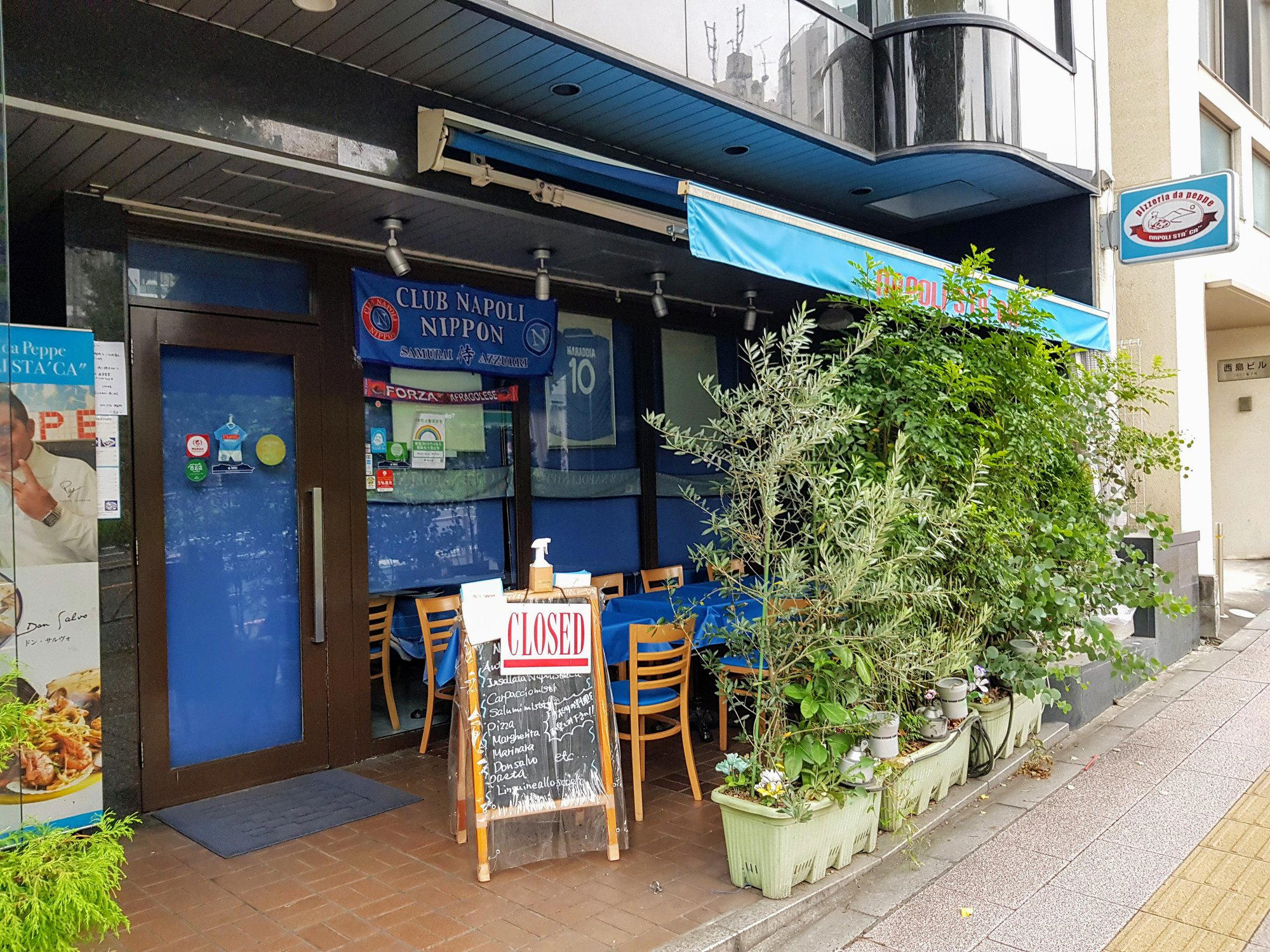
Peppe Napoli Sta Ca' brings Neapolitan culinary tradition to Azabudai, one of Tokyo's most architecturally ambitious new districts. The restaurant occupies ground-floor space in a development that has reshaped Minato City's dining map, positioning Italian regional cooking alongside some of the city's most decorated kitchens. For Tokyo diners tracking where serious European cuisine is landing, this address is part of a meaningful new cluster.

Pearl is the En Primeur Club membership app, where members save venues, book tables and use the concierge.
The menu
What to order
- Don Salvo
- Generale
- Margherita
- La Magia della Cipolla
Azabudai's New Dining Gravity
Tokyo's premium dining map has never been static, but the opening of the Azabudai Hills complex in Minato City marked a genuine redistribution of culinary weight. Where Roppongi and Ginza once absorbed the majority of internationally inflected fine dining, Azabudai has drawn a different kind of operator: kitchens with strong regional European identities that sit adjacent to, rather than inside, Japan's established fine-dining hierarchies. Peppe Napoli Sta Ca' occupies ground-floor space within this development, and its Neapolitan framing places it in a specific and underserved niche in a city where Italian cooking tends to resolve toward either casual trattoria formats or abstracted tasting menus.
The name itself signals intent. "Sta Ca'" is Neapolitan dialect, roughly translating to "it's here" or "here it is", a vernacular declaration of presence that sits at a distance from the studied neutrality of most Tokyo restaurant branding. In a city where restaurant names are frequently opaque or aspirationally abstract, the dialect signals a kitchen comfortable with its regional specificity rather than one attempting to translate it into something more palatable to a global audience.
The Intersection of Neapolitan Craft and Japanese Precision
The broader editorial context here is one of the more interesting dynamics in contemporary Tokyo dining: what happens when Southern Italian culinary technique, built around high-heat, dough fermentation, simplicity of ingredient, and regional specificity, meets the ingredient sourcing culture and kitchen discipline of Japan. This is not a theoretical question. Tokyo has produced some of the most technically precise pizza-making outside Naples, and competitions like the World Pizza Championship have seen Japanese practitioners rank consistently near the best of international fields. The country's approach to fermentation timing, flour hydration, and oven management has, in some cases, pushed Neapolitan method further than practitioners in Naples itself.
Where Peppe Napoli Sta Ca' sits within that dynamic is the meaningful question for anyone booking a table. The Azabudai address places it in proximity to kitchens operating at the upper end of Tokyo's Western-cuisine tier, L'Effervescence and Sézanne represent French fine dining with serious international recognition, while Crony operates in the innovative French register. A Neapolitan specialist in this neighbourhood is making a statement about format: that regional Italian cooking, done with sufficient seriousness, belongs in the same conversation as tasting-menu-driven European cuisine.
That positioning has precedent elsewhere in Japan. HAJIME in Osaka and akordu in Nara both demonstrate how European culinary frameworks, applied with Japanese ingredient discipline and kitchen rigour, can achieve recognition that transcends their imported origins. The question Peppe Napoli Sta Ca' poses is whether Neapolitan specificity, as opposed to broader European fine dining, can occupy that same tier in Tokyo.
What the Azabudai Context Tells You
Azabudai Hills, which opened in late 2023, is the largest urban redevelopment project in Tokyo in decades. The complex includes residential towers, gallery space, international school facilities, and a dining precinct designed to attract operators with genuine culinary credentials rather than brand-extension concepts. Being selected for ground-floor space in that precinct is itself a form of vetting, comparable in some respects to the curation processes that govern entry to major hotel dining programs or Michelin-adjacent tasting-menu clusters in Ginza and Minami-Aoyama.
For context on how Tokyo's non-Japanese fine dining scene is structured, the city's most recognised kitchens in the French and European register, including L'Effervescence, Sézanne, and Crony, share a common characteristic: they are not attempting to replicate European dining as experienced in Europe, but to use Japanese sourcing, seasonal frameworks, and precision to do something structurally different. The same logic applies to the sushi counter tier, where Harutaka represents the kind of omakase discipline that has made Tokyo's Japanese dining internationally significant, and to kaiseki practitioners like RyuGin, which applies classical Japanese frameworks to contemporary seasonal produce.
Neapolitan pizza and pasta, brought into this environment, faces a different set of pressures. Tokyo diners with access to the full range of the city's dining options are not looking for approximations; they are looking for the kind of specificity and execution that justifies the address. Peppe Napoli Sta Ca' is, by its location and name, making a claim to that standard.
Regional Italian in a Japanese Context: The Wider Pattern
The Italian restaurant sector in Japan has historically occupied an interesting middle ground. Italian cuisine arrived in Japan earlier than most European traditions, became thoroughly domesticated through the yoshoku (Western-influenced Japanese cuisine) tradition, and then re-imported in more regionally specific forms as Japanese chefs began travelling to Italy in larger numbers through the 1990s and 2000s. The result is a market where Italian regional cooking is both broadly familiar to Japanese diners and held to a high standard of authenticity by those with direct experience of the source traditions.
Neapolitan pizza specifically has become a category in Japan with its own credentialling systems. The Associazione Verace Pizza Napoletana (AVPN) has certified Japanese pizzerias, and Tokyo has multiple practitioners who have trained in Naples or under Neapolitan masters. The competitive field is serious, which means that a restaurant arriving in Azabudai under a Neapolitan banner is entering an informed market, not an empty one. Comparable patterns exist in other Japanese cities: Goh in Fukuoka and Gion Sasaki in Kyoto each demonstrate how regional culinary identity, handled with precision, can build recognition beyond their immediate geography. Outside Japan, the same dynamic of imported technique meeting local ingredient culture is visible at Le Bernardin in New York City and Atomix, where Korean fine dining frameworks have been adapted for a New York audience without losing their structural identity.
Planning Your Visit
Azabudai Hills is accessible from Kamiyacho Station on the Tokyo Metro Hibiya Line, with direct connections to central Tokyo. The complex itself is large enough to require navigation: the dining precinct is on the lower floors of the Mori JP Tower and adjacent buildings, with ground-floor access from multiple street-level entry points. For further orientation on Tokyo's broader dining scene across price tiers and cuisine types, our full Tokyo restaurants guide maps the city's current landscape in detail.
Visitors planning itineraries that extend beyond Tokyo will find relevant comparisons in HAJIME in Osaka, Gion Sasaki in Kyoto, akordu in Nara, and regional specialists including 一本杉川嶋製 in Nanao, 夕然厨庵乃 in Sapporo, 湖隣庵堂 in Takashima, 庄羽屋 in Nishikawa Machi, Birdland in Sakai, and Bistro Ange in Toyohashi.
Logistics at a Glance
| Factor | Peppe Napoli Sta Ca' | L'Effervescence | Crony | RyuGin |
|---|---|---|---|---|
| Cuisine | Neapolitan Italian | French | Innovative French | Kaiseki |
| Price Tier | Not confirmed | ¥¥¥¥ | ¥¥¥¥ | ¥¥¥¥ |
| District | Azabudai, Minato | Nishi-Azabu | Minami-Aoyama | Roppongi |
| Format | Regional Italian | Tasting menu | Tasting menu | Kaiseki tasting |
| Awards Confirmed | None on record | Michelin starred | Michelin starred | Michelin starred |
Frequently asked questions
What's the must-try dish at Peppe Napoli Sta Ca'?
Given its Neapolitan identity and position within a development that has attracted ingredient-serious operators, the kitchen's approach to pizza dough and regional pasta forms is the logical focus. Comparable Italian-meets-Japan precision is visible in the way kitchens like Crony handle European technique through a Tokyo sourcing lens.
How far ahead should I plan for Peppe Napoli Sta Ca'?
Azabudai Hills has attracted significant attention since its late-2023 opening, and restaurants within the complex have reported strong demand through the development's initial operating period. If you are visiting during peak Tokyo tourism windows (late March to early May for cherry blossom season, October and November for autumn), planning two to four weeks ahead for any Minato City restaurant is a reasonable baseline. For award-holding peers like L'Effervescence, lead times can extend to two months or more.
What's the standout thing about Peppe Napoli Sta Ca'?
The combination of a specifically Neapolitan identity, signalled through the dialect in the restaurant's name, and a location within Tokyo's most significant recent urban development makes this a kitchen positioned at the intersection of regional European authenticity and Japanese culinary ambition. In a city where Italian cooking tends toward either casual or fully abstracted fine dining, a committed regional specialist occupies a gap in the market that few kitchens have tried to fill at this address level. Peers worth comparing in the European-in-Tokyo register include Sézanne and L'Effervescence.
Can Peppe Napoli Sta Ca' adjust for dietary needs?
Neapolitan kitchens vary significantly in their flexibility given the tradition's reliance on specific dough processes and dairy-forward preparations. If dietary requirements are a factor, contacting the restaurant through the Azabudai Hills dining concierge or the venue's own reservations channel before booking is the practical approach. Tokyo broadly has a strong culture of advance dietary communication, and most restaurants operating at this address tier will have a protocol for managing requests.
Is Peppe Napoli Sta Ca' overpriced or worth every penny?
What the location implies is that pricing will reflect Azabudai Hills positioning rather than neighbourhood trattoria economics. The relevant comparison is not against casual Italian in Tokyo, but against other Minato City operators in the serious European-cuisine tier. If the kitchen is executing Neapolitan technique at the level the address and branding suggest, the value proposition is comparable to what Crony offers in its own format: a specific culinary argument made with enough skill to justify premium positioning.
What makes Peppe Napoli Sta Ca' different from other Italian restaurants in Tokyo?
The Neapolitan dialect in the restaurant's name is a deliberate regional declaration, not a generic Italian branding choice, which places it in a different category from Tokyo's many Italian-influenced kitchens that draw on the cuisine broadly. Neapolitan cooking is a tradition with its own credentialling bodies, specific ingredient geography, and technique orthodoxy, and Tokyo has a sophisticated enough market to register the distinction. For diners tracking how European regional cooking is evolving in Japan, this venue is part of the same conversation as akordu in Nara, which applies Basque culinary frameworks to Japanese ingredients with comparable regional specificity.
The Short List
Comparable venues nearby, for context on price, style, and recognition.
| Venue | Cuisine | Price | Awards | Notes |
|---|---|---|---|---|
| Peppe Napoli Sta Ca'This venue (the venue you are viewing) | Authentic Neapolitan Pizza | $20–30 | Tabelog 100 #43 | Not listed |
| Trattoria Tsukiji Paradiso | Southern Italian Seafood Trattoria | $50–100 | Tabelog 100 #14 | Chūō, Southern Italian Seafood Trattoria |
| CRAZY BRAVO | Italian Pizza / Neo-Italian | $50–100 | Tabelog 100 #88 | Shinjuku, Italian Pizza / Neo-Italian |
| PIZZERIA GTALIA DA FILIPPO | Producer-focused Neapolitan Pizzeria | $30–50 | Tabelog 100 #33 | Nerima, Producer-focused Neapolitan Pizzeria |
| 400℃ PIZZA TOKYO (KAGURAZAKA) | Tokyo-style Neapolitan Pizza | $20–30 | Tabelog Bronze #2 | Kagurazaka, Modern Tokyo Pizza Counter |
| TEST KITCHEN H | Modern Italian | Not listed | Tabelog 100 #8 | Minato, Modern Italian |
Recognition history
Dated appearances from independent guides and award organizations, with the underlying list record or original source where available.
Tabelog 100 #43 · No. 43
Tabelog · Tabelog 100 - Pizza - 2025
Continue exploring
More in Tokyo
Restaurants in Tokyo
All restaurants in Tokyo →

Bars in Tokyo
All bars in Tokyo →




Details
- Lively
- Intimate
- Classic
- Cozy
- Casual Hangout
- Family
- Date Night
- Group Dining
- Open Kitchen
- Standalone
- Beer Program
- Local Sourcing
- Street Scene
- A La Carte
- Counter Dining
- Italian Wine
- Limoncello
- Vegetarian Friendly
Current opening hours
- Monday
- Closed
- Tuesday
- Closed
- Wednesday
- 11:30 AM–2:30 PM, 6–10:30 PM
- Thursday
- 11:30 AM–2:30 PM, 6–10:30 PM
- Friday
- 11:30 AM–2:30 PM, 6–11 PM
- Saturday
- 11:30 AM–3 PM, 6–11 PM
- Sunday
- 11:30 AM–2:30 PM, 6–9 PM
Hours can change for holidays and private events. Hours as of .
Warm and lively Italian atmosphere with cheerful Italian staff, Italian music, walls decorated with SSC Napoli football memorabilia, and an open kitchen where diners can watch the pizzaiolo at work.