

2 Michelin Stars · Tabelog Bronze #345
Our verdict
Otagi brings Kyoto Japanese cooking into Takagamine, where the city thins toward hills and temple country. The draw is not izakaya looseness in the casual sense, but the shared rhythm that underpins Kyoto dining: small courses, conversation, drinking, and a room built for a slower evening, backed by Michelin two-star recognition and repeated Tabelog Bronze awards.

Pearl is the En Primeur Club membership app, where members save venues, book tables and use the concierge.
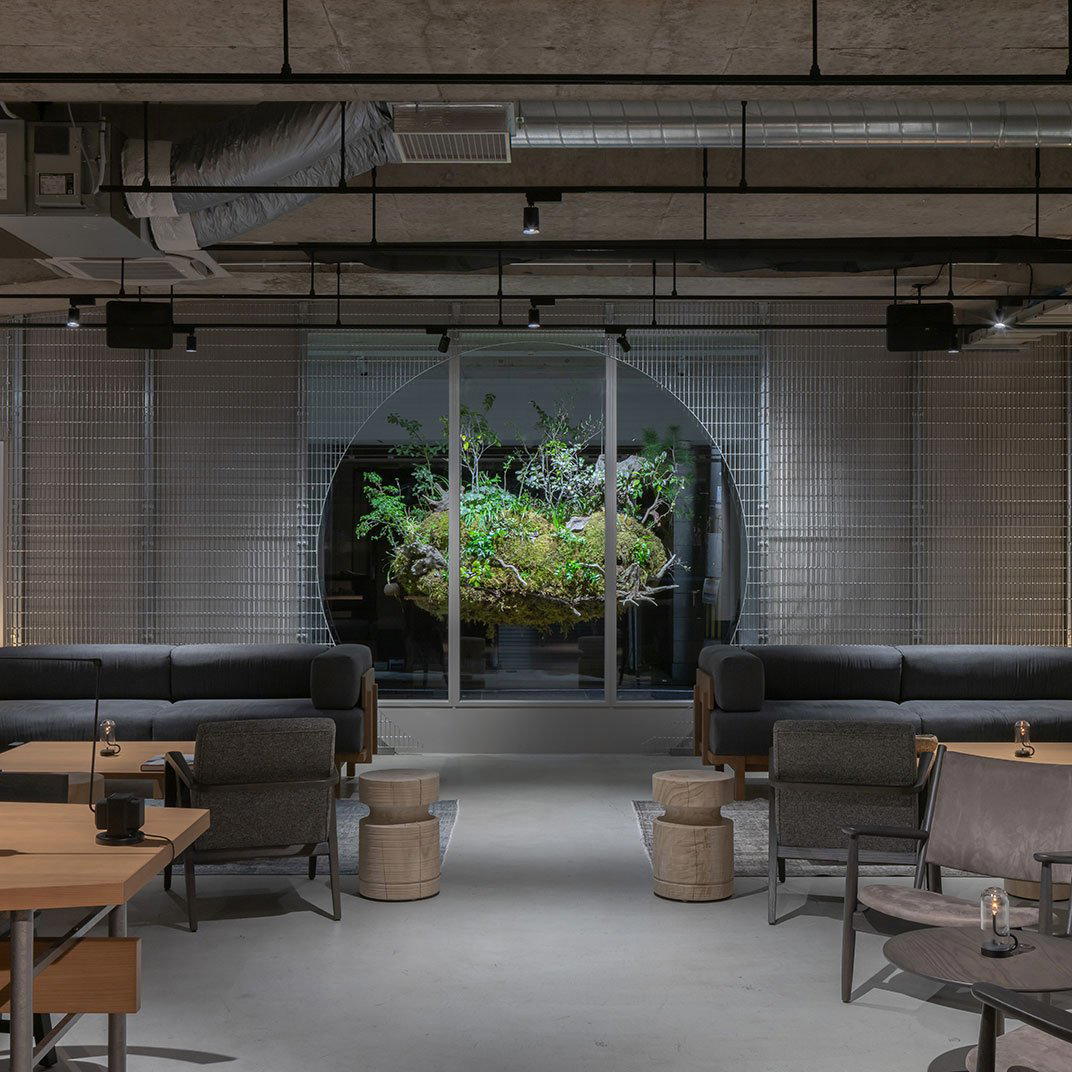
Takagamine changes the register before dinner begins. Kyoto’s central grid gives way to a hillier northern edge, a part of the city associated with temple routes, old craft districts, and a quieter pace after dark. That setting matters because Japanese dining in Kyoto is rarely only about what arrives on the plate. It is also about how a table settles into the evening: the first drink, the staggered arrival of dishes, the pauses between courses, and the social grammar of eating in company.
Otagi belongs to the formal end of that spectrum, but its appeal is easier to understand through izakaya culture than through ceremony alone. The izakaya idea, at its core, is communal eating around drink, not a rigid cuisine category. Kyoto’s higher-register Japanese restaurants often refine that impulse: a meal becomes more measured, ingredients are treated with greater precision, and the room expects a longer attention span, yet the pleasure remains collective rather than solitary. This is where the restaurant’s private-room availability and reservation-only format become more than logistics. They point to an evening designed around a fixed group, a conversation, and a deliberate sequence rather than a quick counter stop.
Kyoto cooking with the social rhythm of a drinking table
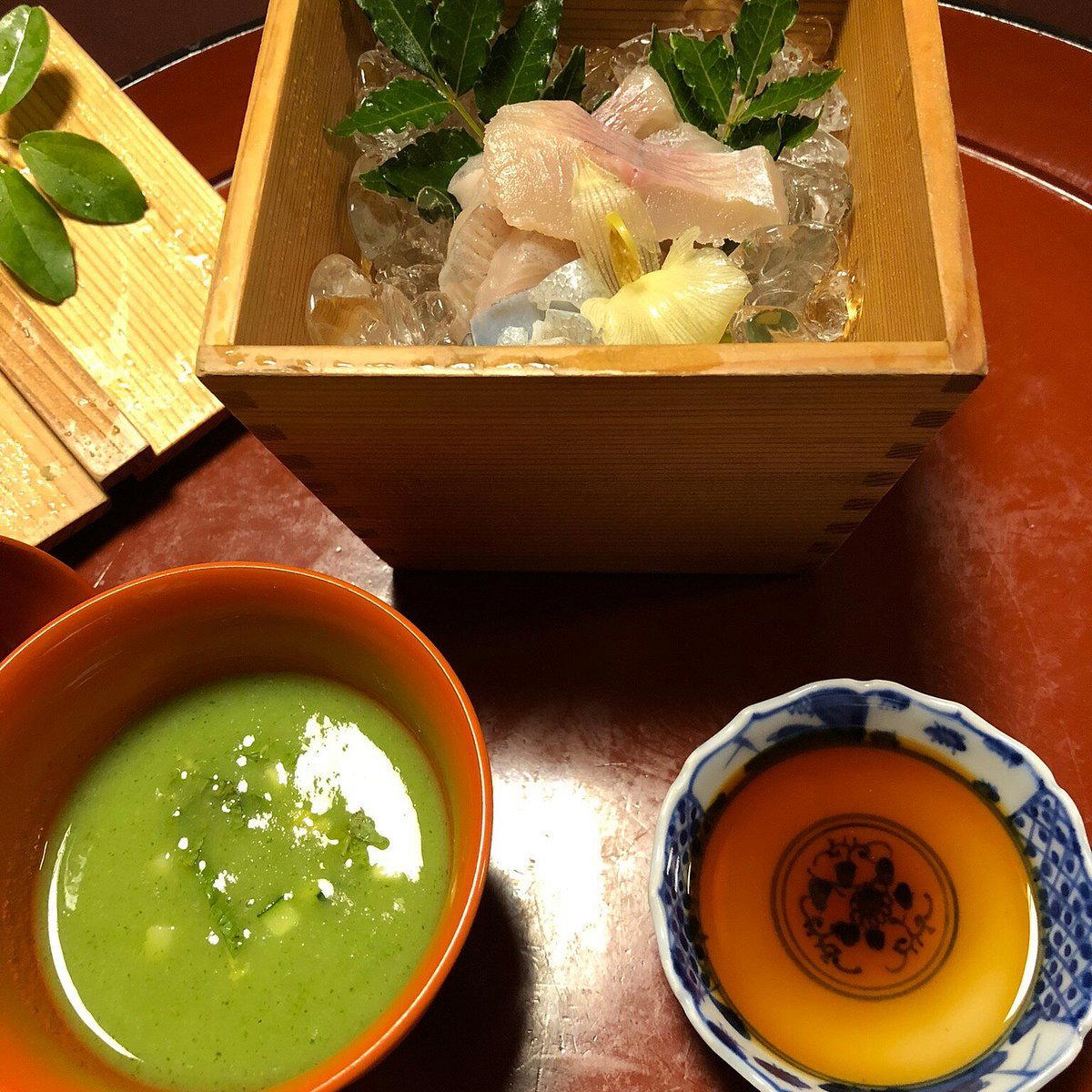
Kyoto’s Japanese dining culture is often discussed in the language of kaiseki, seasonality, and restraint. Those terms are accurate but incomplete. The city also has a deep culture of small-plate progression, sake-led pacing, and rooms where hierarchy softens once the meal is underway. Otagi sits at the point where those worlds meet: polished enough to sit with Kyoto’s serious Japanese restaurants, but not defined by the hushed museum quality that can make some high-end meals feel sealed off from ordinary pleasure.
The kitchen is led by Park Sungbae and Cho Eun Hee, a detail worth noting less as biography than as context for the restaurant’s position in Kyoto. The city’s Japanese dining scene is conservative in its expectations, especially at this level, and kitchens that earn sustained recognition tend to do so by handling tradition without turning it into costume. Otagi’s repeated Tabelog Bronze recognition from 2022 through 2026, plus selection for Tabelog Japanese cuisine WEST 100 in 2023 and 2025, places it in the band of restaurants judged on consistency over multiple seasons, not a single burst of attention.
That distinction matters for travellers. Kyoto has many restaurants that read beautifully on paper but are built for a narrow, formal occasion. A dinner here is better understood as a serious Japanese meal that still leaves space for the social act of dining. Compared with Kyoto peers such as Wakasugi, Doppo, Funaokayama Shimizu, Nishijin Fujiyoshi, and Tozentei, the question is not simply which room is more traditional. The more useful distinction is mood: whether the evening should feel tightly ceremonial, intimate and conversational, or closer to a refined extension of Japan’s drinking-and-dining culture.
Takagamine gives the meal a different Kyoto frame
Location changes expectation in Kyoto. Gion and central Higashiyama carry the pressure of postcard Kyoto; downtown dining districts offer convenience and density. Takagamine, in Kita Ward, asks for a more intentional plan. That northern setting suits a restaurant whose value depends on settling in rather than stacking multiple stops into a single night. It is a dinner to anchor an evening, not a prelude to bar-hopping across the city.
The area’s slower tempo also gives the restaurant a different competitive identity. Kyoto visitors often compress Japanese cuisine into a short list of temple-adjacent meals and famous counters, but the city’s stronger dining map extends into residential and northern neighbourhoods. Takagamine makes that point plainly. The reward is not novelty; it is a shift in context. A meal here sits outside the thickest tourist routes while remaining firmly inside Kyoto’s serious Japanese dining conversation.
For broader planning, Otagi pairs naturally with a Kyoto itinerary built around depth rather than volume. Readers comparing Japanese restaurants in the city can place it alongside Aji Fukushima, Aoikonshin Yamada, Ayanokoji Karatsu, Chiso Aida, and Choshoku Kishin. For citywide context, use Our full Kyoto restaurants guide, then layer the trip with Our full Kyoto hotels guide, Our full Kyoto bars guide, Our full Kyoto wineries guide, and Our full Kyoto experiences guide.
Who should choose it over a central Kyoto counter
The strongest case for Otagi is for diners who want Kyoto Japanese cooking without reducing the night to a silent performance. The reservation-only structure, private rooms, non-smoking policy, and card acceptance make it more practical than many small-format Japanese restaurants, while the northern location keeps it from feeling like a convenience pick. It suits a couple, a small group, or a business dinner where conversation matters as much as the cooking.
It is less suited to travellers trying to sample Kyoto in fragments. The meal’s logic depends on time and attention; the setting asks diners to commit to the evening. That is also why the izakaya comparison is useful. Not because the restaurant is casual, but because the best version of this kind of Kyoto dinner keeps the table alive. Courses create rhythm, drinks support conversation, and the room allows the group to settle into a slower cadence.
For readers building a wider Japan dining itinerary, this is a Kyoto reference point rather than an isolated trophy. The contrast is instructive against more casual or category-specific listings such as -Grilled beef Sukiyaki- KAMAKURA TANUKIAN 鎌倉 たぬき庵 in Kamakura. 鮪と炭火焼き うお炭 秋葉原店 in Tokyo.cafe in Osaka.know in Kumamoto, (Shoku) Vietnam in Kawasaki, and [Curry Senmon Ten] Maruyama Kyoju. in Sapporo. Outside Japan, Japanese dining takes different forms, from 715, Japanese in Los Angeles to 99 sushi bar, Japanese in Alcobendas; Kyoto’s version is more demanding, more seasonal, and far more tied to the social structure of the table.
Frequently asked questions
Is Otagi good for families?
Otagi offers private rooms and accepts children only if the group plans for a reservation-only dinner at ¥30,000–¥39,999 per person. The Kyoto address at 18 Takagamine Dotenjocho and the non-smoking setting suit family groups that want a quieter room rather than a casual drop-in meal.
What's the vibe at Otagi?
The mood is reservation-only and dinner-only, with service starting from 5:30 PM in Takagamine, Kyoto. Tabelog Bronze recognition from 2022 through 2026 gives it the feel of a serious Japanese dining room, while private rooms keep the experience contained rather than theatrical.
What should I expect cuisine-wise at Otagi?
Otagi serves Japanese cuisine.
Is Otagi more mid-range or high-end?
Pricing at Otagi is listed as ¥¥¥¥.
What days is Otagi closed?
Hours at Otagi: Mon: 5:30–9 PM; Tue: 5:30–9 PM; Wed: Closed; Thu: 5:30–9 PM; Fri: 5:30–9 PM; Sat: 5:30–9 PM; Sun: 5:30–9 PM.
Booking and Cost Snapshot
Comparable venues by cuisine and price in the same metro.
| Venue | Cuisine | Price | Awards | Notes |
|---|---|---|---|---|
| OtagiThis venue (the venue you are viewing) | Seasonal Kyoto Kaiseki Omakase | $200–300 | 2 Michelin Stars · Tabelog Bronze #345 | Not listed |
| Gion Matayoshi | Michelin 2-Star Kaiseki | $200–300 | 2 Michelin Stars · Tabelog Bronze #262 | Higashiyama, Michelin 2-Star Kaiseki |
| Ryō-shō | Modern Kaiseki | $300–500 | 2 Michelin Stars | Higashiyama, Modern Kaiseki |
| Kodaiji Wakuden | Luxury Kaiseki | $300–500 | 2 Michelin Stars · La Liste Top Restaurants | Higashiyama, Luxury Kaiseki |
| Shimmonzen Yonemura | Innovative Japanese-French Omakase | $150–200 | 1 Michelin Star · Tabelog Bronze #523 | Higashiyama, Japanese French |
| Sanso Kyoyamato | Traditional Japanese Kaiseki | $150–200 | 2 Michelin Stars | Higashiyama, Traditional Japanese Kaiseki |
Recognition history
Dated appearances from independent guides and award organizations, with the underlying list record or original source where available.
Michelin 2 Stars
Michelin
Tabelog Bronze #345
Tabelog
Full recognition history (6 entries)
Michelin 2 Stars
Michelin
Tabelog Bronze
Tabelog
Tabelog 100 #44 · No. 44
Tabelog · Tabelog 100 - Japanese cuisine - WEST - 2025
Michelin 2 Stars
Michelin
Continue exploring
More in Kyoto
Restaurants in Kyoto
All restaurants in Kyoto →
Bars in Kyoto
All bars in Kyoto →
Hotels in Kyoto
All hotels in Kyoto →
Wineries in Kyoto
Browse all →
Details
- Quiet
- Elegant
- Intimate
- Sophisticated
- Classic
- Special Occasion
- Date Night
- Business Dinner
- Solo
- Chefs Counter
- Private Dining
- Standalone
- Local Sourcing
- Omakase
- Set Menu
- Counter Dining
Current opening hours
- Monday
- 5:30–9 PM
- Tuesday
- 5:30–9 PM
- Wednesday
- Closed
- Thursday
- 5:30–9 PM
- Friday
- 5:30–9 PM
- Saturday
- 5:30–9 PM
- Sunday
- 5:30–9 PM
Hours can change for holidays and private events. Hours as of .
Refined and serene, with a quiet Kyoto-style atmosphere suited to a leisurely, formal meal.