
In Shimogyo Ward, Muromachi Kaji occupies a particular niche in Kyoto dining: izakaya format with ryotei-grade cooking. The meal opens with a hassun platter so guests can shape the evening as they eat, while the kitchen applies small technical gestures, soy sauce blended with fish liver, perilla-pickled tartar, that shift familiar dishes into sharper focus. Local sakes from several regions arrive in measured pours to keep pace with food.
Pearl is the En Primeur Club membership app — saves, bookings, and concierge access live there. Same editors, same standards.
- Address
- 185 Nakanonocho, Shimogyo Ward, Kyoto, 600-8435, Japan
- Phone
- +81 75-353-1113
- Website
- muromachi-kaji.gorp.jp
 Saves & bookings on Pearl
Where Izakaya Format Meets Ryotei Precision
Kyoto's drinking-and-dining culture has always existed on two tracks that rarely converge. On one side sit the formal kaiseki houses, places like Gion Sasaki, Hyotei, and Kikunoi Honten, where the progression of courses is fixed, the atmosphere is ceremonial, and arriving underdressed is a statement. On the other side sit the neighbourhood izakayas, where the drink drives the evening and the food exists largely to support another round. Muromachi Kaji is a restaurant in Kyoto's Shimogyo Ward serving Kyoto Kappo Izakaya cooking at about $70 per person. It sits across both tracks. The format is izakaya, casual and participatory. The cooking is not.
This pairing is less unusual in Kyoto than it might appear in other Japanese cities. The city's long relationship with kyo-ryori, the refined vegetable-forward cooking tradition shaped by temple proximity and imperial court aesthetics, means technical precision bleeds into lower-register contexts more readily here than almost anywhere else in Japan. What Muromachi Kaji does is formalise that bleed: the ryotei vocabulary is present in the dish construction and seasoning logic, while the izakaya structure means the guest sets the pace rather than the kitchen.
The Hassun Opening and the Logic of Guest Agency
The evening begins with a hassun platter. In a kaiseki context, the hassun is the second course and functions as a seasonal statement, a small arrangement of dishes that signals the kitchen's read on the time of year. Here, it functions differently: as an appetiser spread from which guests survey the wider menu and decide what to order next. The structural borrowing is precise, but the intent is the opposite of formal kaiseki sequencing. Rather than submitting to the kitchen's arc, the diner builds their own.
That editorial angle, the team at Muromachi Kaji handing the narrative back to the guest rather than retaining it, is visible in how the rest of the menu is organised. Sashimi arrives with soy sauce blended with fish liver, a pairing that deepens the umami register and shifts how the fish reads against the drink in hand. Fried dishes come with tartar sauce incorporating red perilla-flavoured pickles, which cuts through the fry coating with a herbal sharpness. These are not decorative flourishes. They are decisions made at the kitchen level that change the drink pairing calculus, and that points toward a front-of-house and back-of-house working in deliberate concert. The small twists serve the evening's drinking logic as much as they serve the food itself.
Sake Service as a Collaborative System
The editorial angle that most distinguishes Muromachi Kaji from Kyoto's other izakaya-adjacent addresses is the sake program and how it is administered. Local sakes from multiple regions are offered in small pours, calibrated to accompany what is on the plate at a given moment rather than presented as a list to work through independently. That approach requires coordination between whoever is managing the drinks and whoever is running the room, since the timing of each sake depends on knowing what the guest has ordered and how far along they are in the meal.
In Kyoto's upper tier, the same coordination operates at places like Mizai and Isshisoden Nakamura, but in a fixed-course environment where the kitchen and front-of-house are running a known sequence. Executing it inside an à-la-carte izakaya structure, where each table is at a different point in a self-directed meal, is a more complex orchestration problem. The solution here is incremental pours and attentive floor work rather than a presented sake menu left to the guest to decipher alone.
For comparison, in Japan's other major cities the izakaya format rarely attempts this level of drink-to-dish coordination. At Harutaka in Tokyo the counter omakase format makes such sequencing more direct; at HAJIME in Osaka the fixed creative tasting menu removes the variable entirely. The restaurant approach is more demanding precisely because the format is open.
Snacks, Texture, and the Art of the In-Between Dish
The range of snacks on offer, which includes a potato salad built around small additions rather than any single dominant ingredient, reflects a category of Japanese drinking food that is easier to execute badly than well. The in-between dish, neither a statement course nor a palate cleanser, has to occupy attention without disrupting the rhythm of drinking. Getting that balance consistently across a menu requires the kitchen to think in terms of the evening's pace, not just the plate.
That sensibility connects the restaurant to a broader tradition in Japanese hospitality that operates at a different register from the headline kaiseki format. The attention is quieter, the moves smaller, but the discipline required to maintain it across a full evening of à-la-carte service for multiple tables is not lesser than what the formal houses demand. See the same principle operating in different city contexts at akordu in Nara or Goh in Fukuoka, where the format is more defined, but the underlying logic of hospitality as a paced, attentive system holds.
Shimogyo Ward and Kyoto's Lower-Profile Dining Belt
Shimogyo Ward sits south of the Gojo area and west of the Fushimi axis, removed from the concentrated tourist routes of Higashiyama and Gion. Dining in this part of the city skews toward neighbourhood regulars rather than visitors working through a curated list, which means the competitive context is local restaurants rather than the kaiseki tier. That positioning gives the restaurant a different kind of authority: it is not trying to win on Michelin terms, but on the terms of a guest who will return next week and judge the evening against memory rather than expectation.
Internationally, the same izakaya-precision dynamic appears at different scales: Le Bernardin in New York City operates in a formal register where every element is fixed, while Atomix has pushed Korean fine dining toward a structured narrative format. The restaurant's contribution is a third approach: structured informality, where the guest holds the agency but the kitchen maintains the standard. It is also worth noting what peers at the other end of Japan's geographic spread are doing: 1000 in Yokohama and 6 in Okinawa represent the same tendency toward deliberate, calibrated hospitality in settings that do not announce themselves loudly.
Planning Your Visit
Address: 185 Nakanonocho, Shimogyo Ward, Kyoto, 600-8435, Japan. Dress: Smart casual is consistent with the izakaya format. Budget: About $70 per person. Timing: Mon to Wed, Fri to Sun, 6-11 PM; Thu closed.
Where It Fits
Comparable venues nearby, for context on price, style, and recognition.
| Venue | Cuisine | Price | Awards | Notes |
|---|---|---|---|---|
| Muromachi KajiThis venue — the venue you are viewing | Kyoto Kappo Izakaya | $$ | Bib Gourmand | Not listed |
| Mendokoro Janomeya | Kyoto-Style Chicken Ramen | $$ | Bib Gourmand | Nakagyō |
| Ramen Touhichi | Chicken Shoyu Ramen | $$ | Bib Gourmand | Sakyō |
| KOBUSHI Ramen | Kyoto Duck Ramen | $$ | Bib Gourmand | Shimogyō |
| KORISU | Yoshoku (Japanese-style Western) | $$ | Bib Gourmand | Higashiyama |
| Teuchisoba Kanei | Traditional Hand-Ground Soba | $$ | Bib Gourmand | Kita |
Recognition history
Dated appearances from independent guides and award organizations, with the underlying list record or original source where available.
Michelin Bib Gourmand
Michelin
Continue exploring
More in Kyoto
Restaurants in Kyoto
Browse all →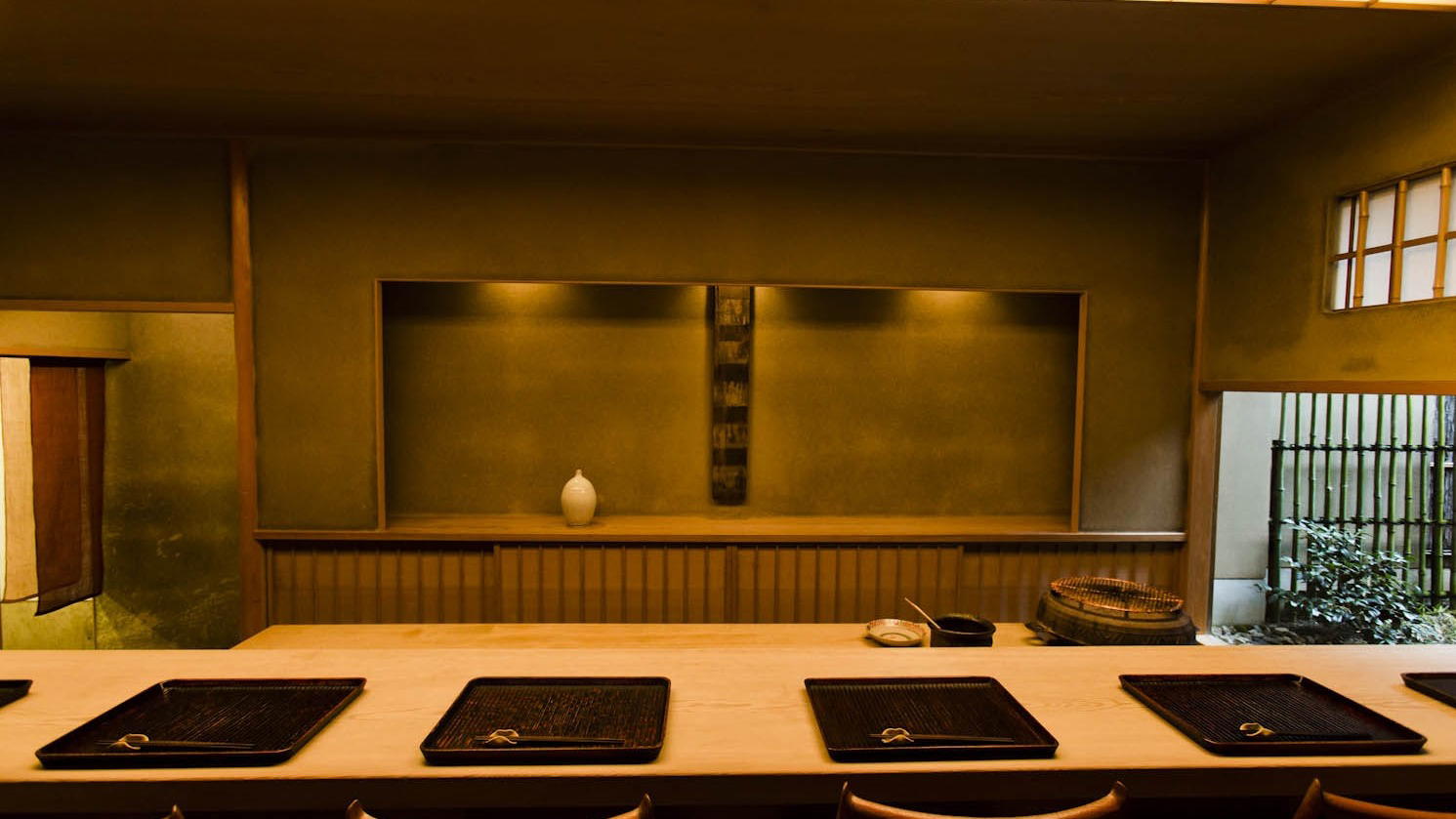


Bars in Kyoto
Browse all →


Hotels in Kyoto
Browse all →

Wineries in Kyoto
Browse all →
At a Glance
- Cozy
- Intimate
- Elegant
- Date Night
- Solo
- Special Occasion
- Chefs Counter
- Open Kitchen
- Sake Program
- Local Sourcing
Current opening hours
- Monday
- 6–11 PM
- Tuesday
- 6–11 PM
- Wednesday
- 6–11 PM
- Thursday
- Closed
- Friday
- 6–11 PM
- Saturday
- 6–11 PM
- Sunday
- 6–11 PM
Hours can change for holidays and private events. Last verified .
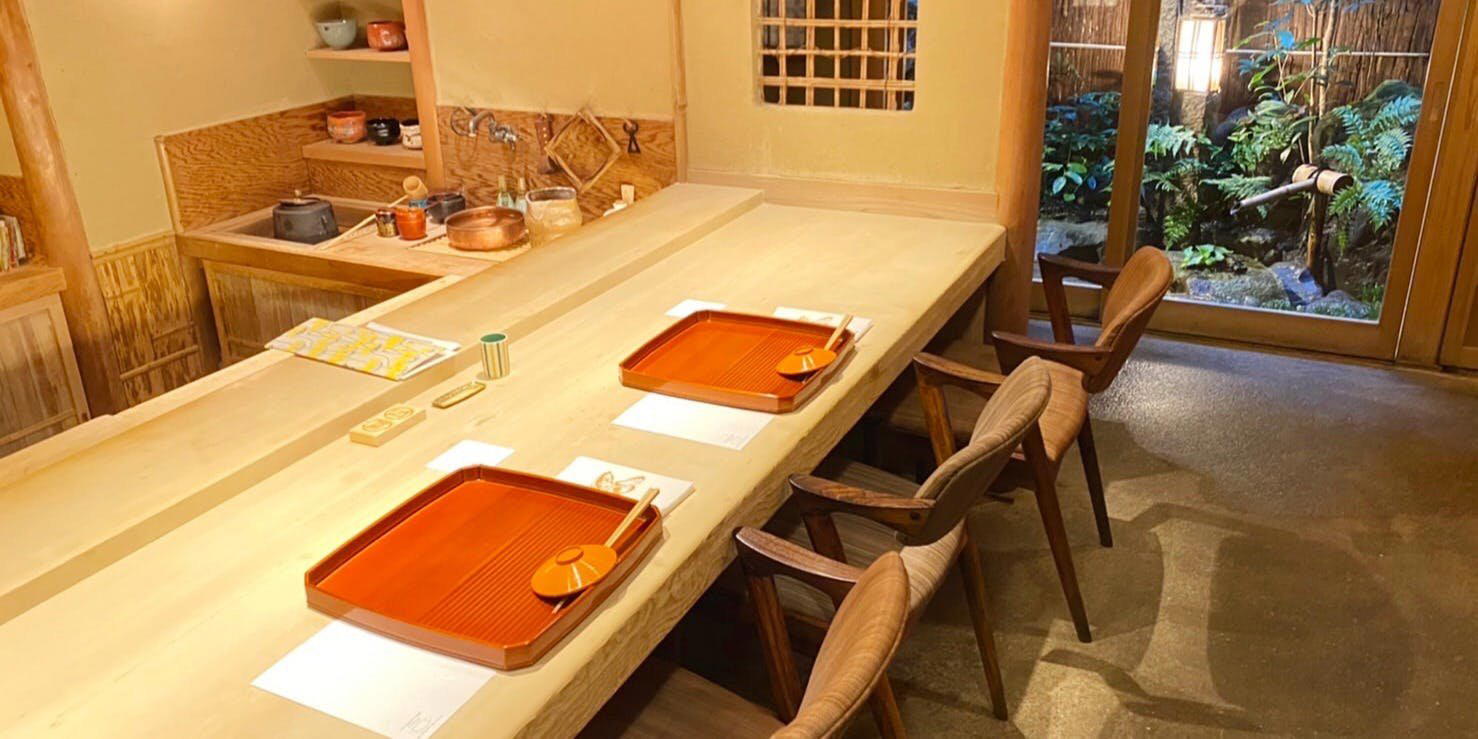
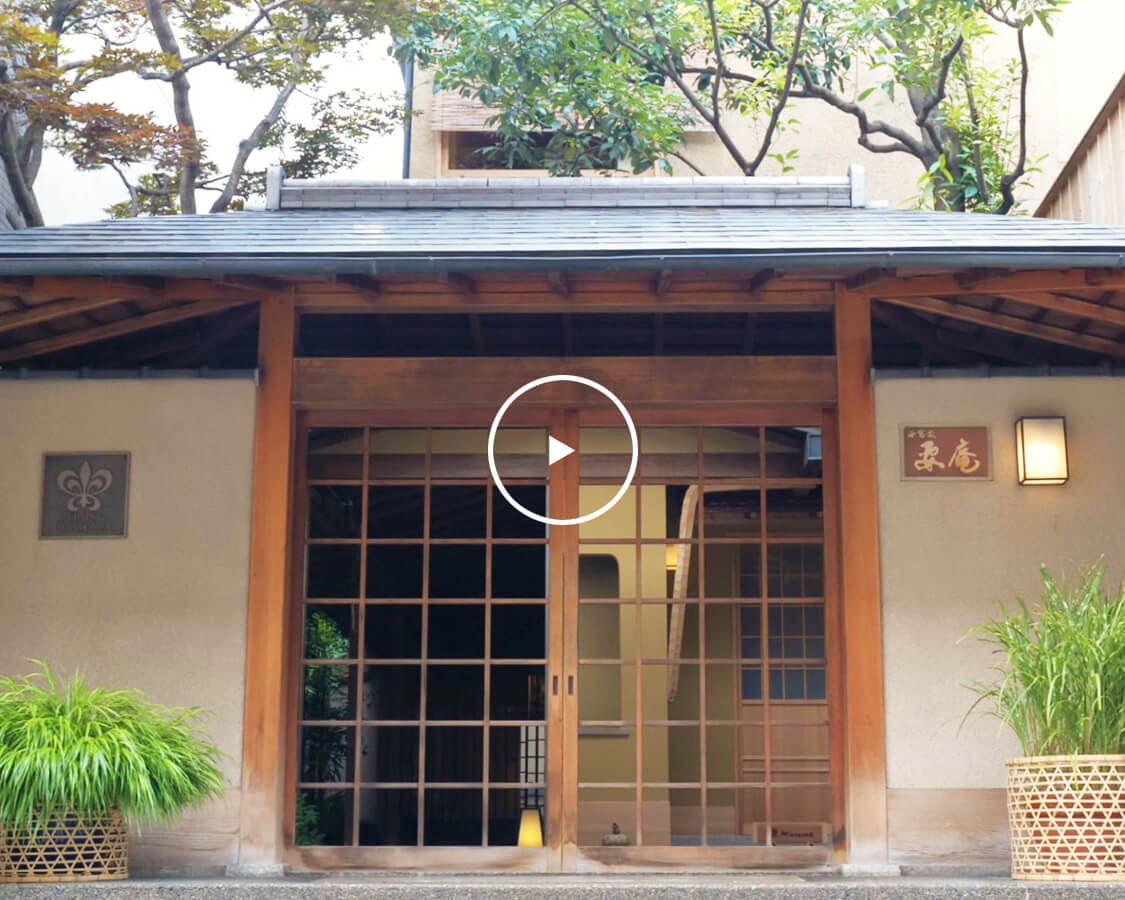
Warm wooden interior creating a tranquil, relaxing atmosphere with counter seating overlooking the open kitchen.