Our verdict
In Asakusa, one of Tokyo's most historically layered districts, Miyakodori offers geisha entertainment alongside a traditional Japanese dining format, a combination that places it in a narrow tier of cultural experience venues operating outside the mainstream restaurant circuit. For travellers seeking direct access to the ozashiki tradition without a personal introduction, this address in Taito City represents a structured entry point into a form of hospitality that most visitors never reach.

Pearl is the En Primeur Club membership app, where members save venues, book tables and use the concierge.
Asakusa as Context: What the Neighbourhood Brings to the Table
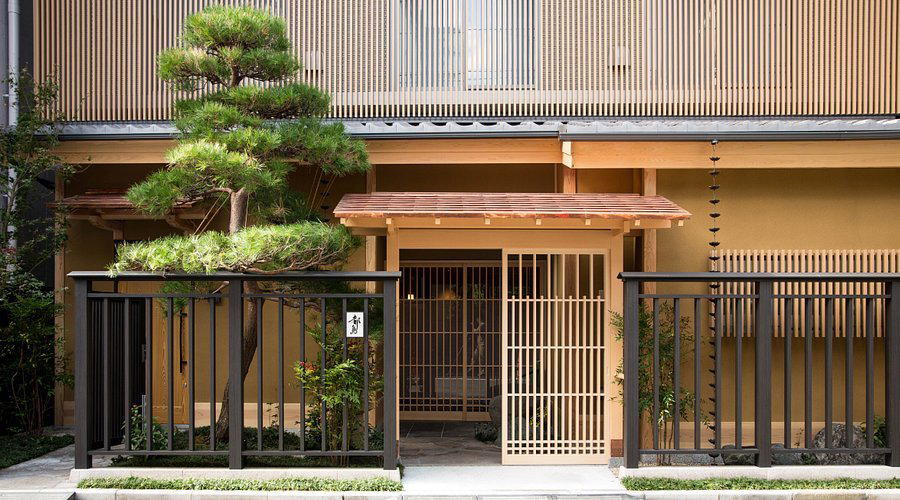
Asakusa is not where Tokyo performs its modernity. That work happens in Ginza's omakase counters, Roppongi's high-concept dining rooms, and the densely awarded restaurants of Marunouchi. Asakusa performs something older: a version of Tokyo that predates the post-war rebuilding, where the relationship between food, entertainment, and ritual hospitality has its own grammar. The Senso-ji temple precinct anchors one end of the district; the narrow streets behind it, lined with traditional machiya-style buildings and craft merchants, anchor the character that draws travellers looking for something the newer wards have largely erased.
It is within this district, at 3 Chome-23-10 Asakusa in Taito City, that Miyakodori operates, combining a traditional Japanese dining format with geisha (ozashiki) entertainment. The address matters here more than at almost any other dining category in Tokyo. Asakusa's historical identity as a shitamachi district, the low city, the working and artisan quarters of Edo-period Tokyo, gives the geisha tradition a different register than it would carry in, say, Kyoto's Gion or in a purpose-built tourism facility. This is not heritage as museum exhibit. It is heritage as neighbourhood character, accumulated over generations rather than packaged for export.
The Ozashiki Format: A Tradition with Few Entry Points
The ozashiki, the formal room in which geisha entertain, has historically been one of the most access-restricted experiences in Japanese hospitality. Access has traditionally required an introduction from an existing patron, a relationship with the ochaya (teahouse), and an understanding of the protocols involved. The result is a tradition that remains largely invisible to foreign visitors and even to many domestic travellers without the right connections.
Venues like Miyakodori occupy a specific position in this landscape: they offer structured access to geisha entertainment for guests who lack the established introductions that ozashiki culture traditionally requires. This is not a dilution of the form, it is a reconfiguration of the access model. The entertainment format itself, the music, the games, the sequential hospitality rituals, remains rooted in the same traditions that define ozashiki culture across Japan's historic geisha districts. What changes is the entry mechanism, which shifts from personal introduction to a reservable booking format.
For comparison, the ozashiki experiences most accessible to international travellers tend to fall into two categories: highly mediated, short-form cultural demonstrations aimed at tour groups, and the genuine ochaya system requiring significant social capital and local connection. Miyakodori occupies a third position, sitting closer to the latter in format while offering the accessibility of the former. That positioning is relatively rare in Tokyo, where the geisha districts of Yanaka, Akasaka, and Shimbashi each operate with different levels of openness to outsiders.
Dining Within the Experience Format
Geisha entertainment venues that include a dining component operate differently from restaurants that add entertainment as a secondary feature. The meal in an ozashiki context is not the primary event, it is the frame within which the entertainment unfolds. Course structure, pacing, and the sequencing of dishes typically align with the rhythm of the entertainment rather than with culinary logic alone. This is a fundamentally different relationship between food and hospitality than the one on offer at Tokyo's leading kaiseki tables like RyuGin, where the food is the unambiguous centre of attention, or the contemporary French rooms like L'Effervescence and Sézanne, where ingredient and technique carry the entire weight of the evening.
That distinction is worth stating plainly for anyone comparing dining experiences across Tokyo's premium tier. Visiting Miyakodori for the food alone would miss the structure of what the experience offers. Visiting for the geisha entertainment without understanding the dining component as part of that entertainment's hospitality grammar would produce equal confusion. The two are designed to operate together, and evaluating either in isolation misreads the format.
This kind of integrated entertainment-dining format has parallels in other Japanese cities. Gion Sasaki in Kyoto represents the kaiseki tradition at the high end of serious dining; it does not offer geisha entertainment. The ozashiki format as offered at venues like Miyakodori sits in a different category entirely, one where the dining is in service of a cultural experience rather than the inverse.
Tokyo's premium dining circuit is concentrated in other wards. The Michelin-starred sushi counters cluster in Ginza and Minami-Aoyama; innovative French addresses like Crony operate in Shinjuku and Shibuya-adjacent zones; the high-end omakase market, exemplified by counters like Harutaka, runs almost entirely outside Asakusa's geography. Asakusa's dining identity is built differently: on craft, on continuity, on formats that predate the modern restaurant economy rather than competing within it.
The broader Japan context reinforces this point. Venues combining traditional cultural entertainment with a structured dining format appear across the country's historic hospitality zones: in Kyoto's Gion and Pontochō districts, in Kanazawa, in Niigata's geisha towns. Asakusa's version of this model draws from the shitamachi tradition rather than the courtly formalism of Kyoto, producing a slightly different register, more direct, less ceremonially weighted, and more accessible to guests arriving without deep background in ozashiki protocol.
For travellers building a wider Japan itinerary, the cultural hospitality tradition extends well beyond Tokyo. HAJIME in Osaka, akordu in Nara, and Goh in Fukuoka each represent a different facet of premium dining and cultural experience across the country. Further afield, fine dining in Nanao, Sapporo's dining scene, restaurants in Takashima, Nishikawa Machi, Birdland in Sakai, and Bistro Ange in Toyohashi complete a picture of Japan's remarkably distributed culinary geography. For international comparison, the tasting-menu format with deep cultural integration finds analogues at venues like Atomix in New York City, where Korean cultural heritage shapes service ritual, and the rigorous technical dining of Le Bernardin offers a useful Western benchmark for how seriously a single cuisine type can be taken at the highest level. See our full Tokyo restaurants guide for broader coverage of the city's dining spectrum.
Planning Your Visit
| Factor | Miyakodori (Asakusa) | Typical Tokyo Omakase Counter | Kyoto Ozashiki (ochaya) |
|---|---|---|---|
| Access model | Reservable directly | Reservable directly or via concierge | Requires personal introduction |
| Primary experience | Geisha entertainment + dining | Chef-led tasting menu | Geisha entertainment + kaiseki |
| Location character | Shitamachi (Asakusa, Taito) | Ginza / Marunouchi / Minami-Aoyama | Gion / Pontochō |
| Price tier | Not published | ¥¥¥¥ (¥30,000–¥60,000+ per head) | Not published / introduction-based |
| Language support | Confirm at booking | Often English available | Limited without introduction |
Address: 3 Chome-23-10 Asakusa, Taito City, Tokyo 111-0032.
Frequently asked questions
What's Miyakodori:Tokyo Geisha Entertainment and Restaurant's location?
Miyakodori:Tokyo Geisha Entertainment and Restaurant is located at 3 Chome-23-10 Asakusa, Taito City, Tokyo 111-0032, Japan, Tokyo.
What dish is Miyakodori Tokyo Geisha Entertainment and Restaurant famous for?
Miyakodori operates within the ozashiki format, where the dining component is structured around the entertainment experience rather than a single signature dish. Guests should expect a curated multi-course format designed to accompany the geisha entertainment.
Do I need a reservation for Miyakodori:Tokyo Geisha Entertainment and Restaurant?
Reservations are recommended for Miyakodori:Tokyo Geisha Entertainment and Restaurant in Tokyo. Confirm current policy via the venue's official channels.
What's Miyakodori:Tokyo Geisha Entertainment and Restaurant best at?
Miyakodori:Tokyo Geisha Entertainment and Restaurant is best approached by focusing on the core concept and signature offerings.
Cuisine and Credentials
Comparable venues nearby, for context on price, style, and recognition.
| Venue | Cuisine | Price | Awards | Notes |
|---|---|---|---|---|
| Miyakodori:Tokyo Geisha Entertainment and RestaurantThis venue (the venue you are viewing) | Traditional Japanese Kaiseki with Geisha Entertainment | $300–500 | Not listed | Not listed |
| Sushi Sugita (日本橋 蛎殻町 すぎた) | Edomae Sushi Omakase | $300–500 | Not listed | Nihonbashi |
| Ningyocho Imahan (人形町今半) | Traditional Japanese Sukiyaki | $100–150 | Tabelog 100 #33 | Chūō |
| 月花 MoonFlower Sagaya Ginza, Art by teamLab | Seasonal Japanese Omakase with Saga Beef | $200–300 | Not listed | Chūō |
| Ginza Cobau | Yakiniku | $10–20 | Tabelog 100 #44 | Chūō |
| Sushi TAKAYA | Edomae Sushi Omakase | $150–200 | Star Wine List | Chūō |