Our verdict
Nihonbashi Kakigaracho Sugita operates from a basement address in one of Tokyo's oldest merchant districts, where the tradition of honzen ryori and tea-ceremony kaiseki has shaped the city's formal dining culture for centuries. The restaurant draws serious attention from those tracking the quieter end of Tokyo's high-end Japanese dining scene, where restraint and ritual carry as much weight as ingredient sourcing.

Pearl is the En Primeur Club membership app, where members save venues, book tables and use the concierge.
The menu
What to order
- Kohada nigiri
- Norimaki with mackerel ginger shiso
Descending into Old Nihonbashi
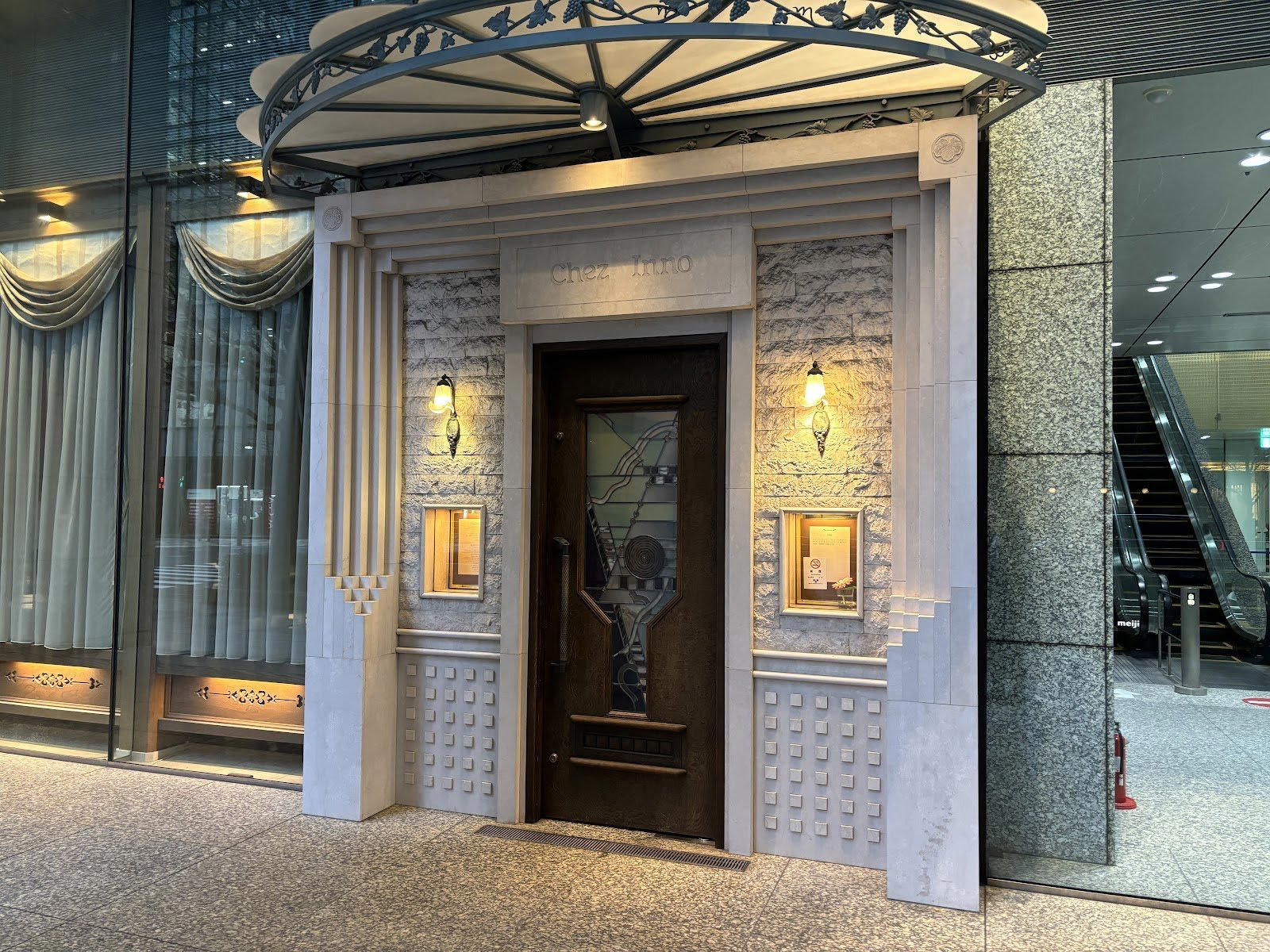
The approach to Sugita establishes the register before anything is served. Nihonbashikakigaracho sits in Chuo City, on the eastern side of the Nihonbashi river district, a neighbourhood whose commercial identity dates to the Edo period when it served as the administrative and mercantile heart of the city. The area has none of the pedestrian theatre of Ginza a kilometre to the south, and that is partly the point. The restaurant occupies a basement floor of a residential building on a quiet block, the kind of address that requires deliberate navigation rather than chance encounter. In Tokyo's premium dining tier, basement and low-signage premises are not concessions to obscurity but rather a recognised grammar of seriousness. The city's most attended omakase counters and kaiseki rooms consistently choose this kind of envelope.
The Ritual Architecture of the Meal
Japanese formal dining in the tradition Sugita operates within is structured around sequence and pace in ways that differ substantially from the European tasting-menu format. Where a contemporary Western progression moves roughly from lighter to richer, the Japanese kaiseki or sushi-focused omakase sequence is governed by older logic: the rhythm of seasonal display, the alternation of cooking methods, and the careful management of palate and attention across what can be two hours or more at the counter. The chef at a serious Tokyo counter is not merely executing courses but conducting a session, and the diner's role is correspondingly active, attentive rather than passive.
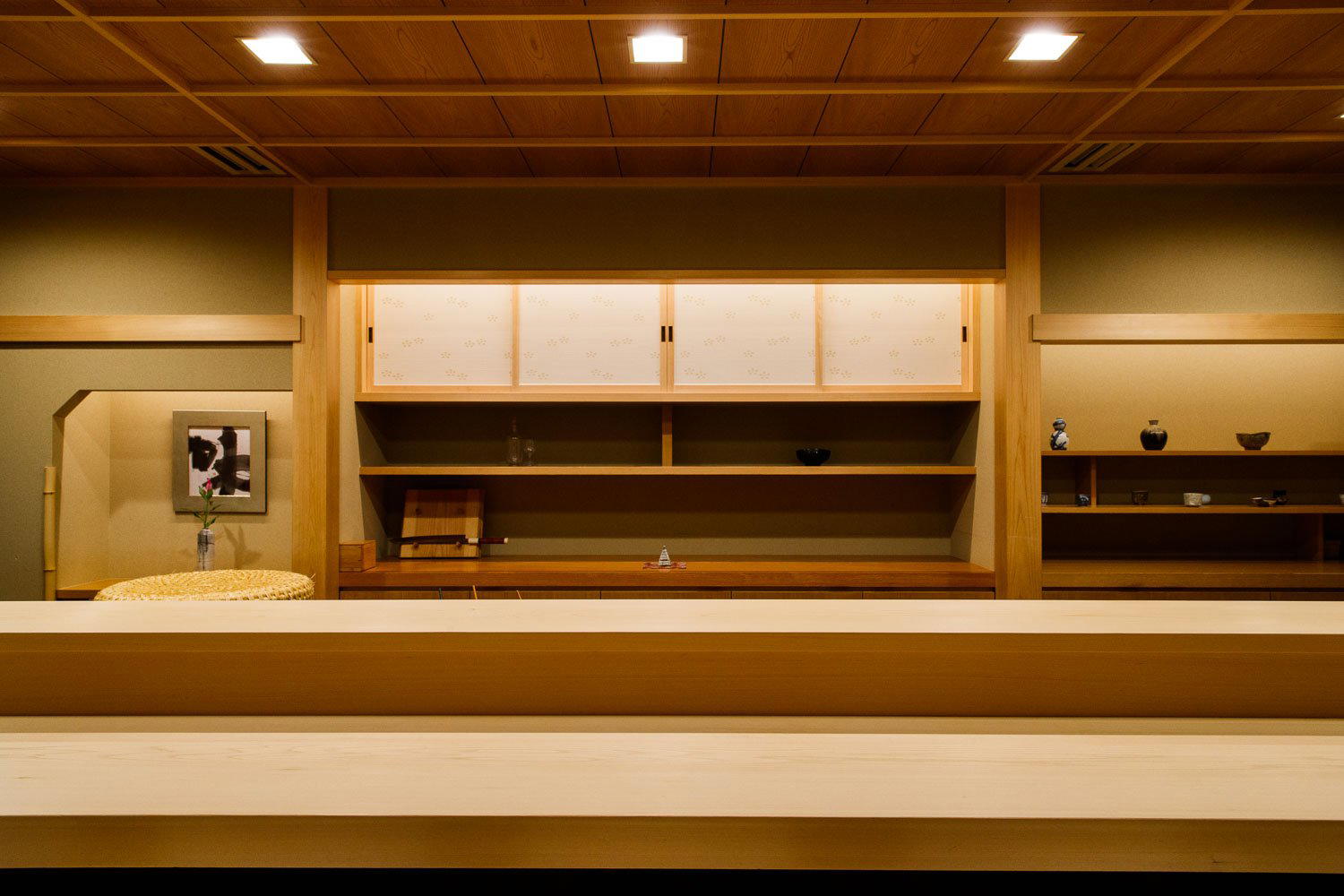
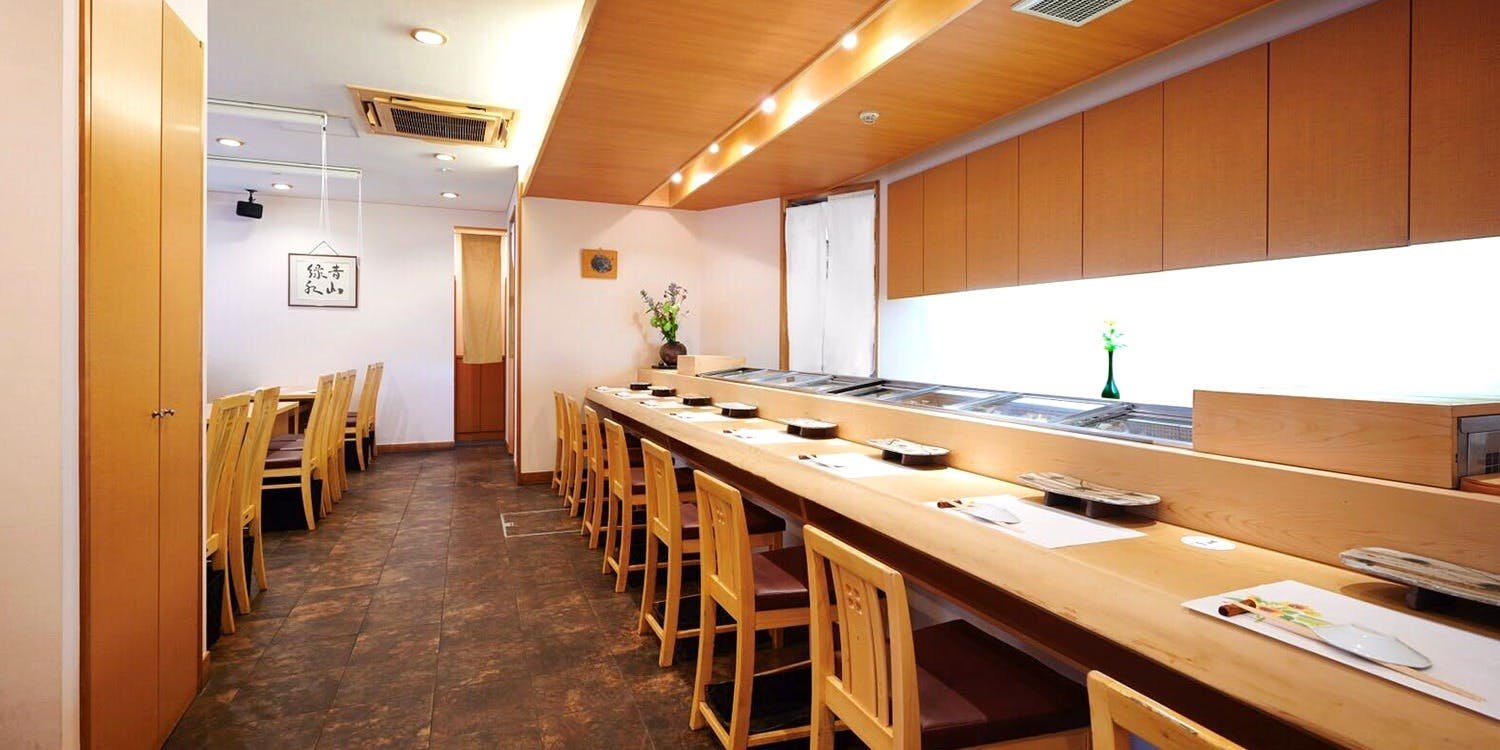
At this level of Japanese dining, the physical setting is inseparable from the ritual. Counter seating, typically in the range of eight to fourteen seats for a venue operating at this register, means that every guest is positioned to observe the preparation directly. There is no separation between kitchen and dining room in any meaningful sense. This transparency is not performance in the way that open-kitchen formats in Western restaurants tend to be. It is instead a continuation of the craft tradition in which the making and the receiving of food are understood as a single event. Venues in Sugita's neighbourhood tier of Tokyo dining, including Harutaka in the Ginza area, operate on this same structural principle.
Where Sugita Sits in the Tokyo Dining Order
Tokyo's high-end Japanese dining scene is not monolithic. It divides, broadly, between the showroom confidence of three-Michelin-star operations whose reputations are internationally circulated, and a quieter stratum of counters and rooms that carry serious local standing without the same volume of foreign press. Sugita belongs to the second category. Its Nihonbashi address places it in a neighbourhood associated with old Tokyo money and old Tokyo taste rather than the internationalist luxury of Ginza or the media-friendly energy of Minami-Aoyama.
The comparison set at this level includes kaiseki operations like RyuGin, which operates in a more contemporary register with three Michelin stars, and the French-influenced rooms at L'Effervescence and Sézanne, both of which approach the question of seasonal precision from a European technique base. Sugita's orientation is more inward-facing, rooted in Japanese culinary grammar rather than cross-cultural synthesis. That positioning is increasingly rare in a city where ambitious chefs frequently work across both traditions, as seen at venues like Crony. For a broader orientation to Tokyo's formal dining tier, our full Tokyo restaurants guide maps the scene across price points and styles.
The Weight of the Neighbourhood
Understanding Nihonbashikakigaracho requires some sense of what the Nihonbashi district means in Tokyo's cultural geography. This is where the road network of Edo Japan was measured from, the literal kilometre zero of the old country. The area's culinary culture reflects that administrative and commercial history: it has long supported a class of serious, formal restaurants whose clientele are domestic professionals rather than tourists or visiting critics. That context shapes the atmosphere inside Sugita in ways that are difficult to separate from the food itself. The diner in these rooms is typically operating within a set of shared assumptions about conduct, appreciation, and the relationship between host and guest that constitutes the Japanese concept of omotenashi.
This is a different proposition from the kaiseki operations in Kyoto, where venues like Gion Sasaki work within the older, more codified Kyo-ryori tradition, or from the technically innovative work being done at HAJIME in Osaka. Tokyo's version of formal Japanese dining tends to carry a more urban, mercantile inflection, shaped by centuries of feeding a dense professional population rather than serving the temple and court culture that defined Kyoto's table.
Booking and Planning
Restaurants at this level in Tokyo typically require reservations placed weeks to months in advance, and Sugita is not an exception to that pattern. The basement location and limited seating capacity mean that availability is structurally constrained rather than a function of marketing scarcity. Visitors travelling from outside Japan should account for the language logistics: a significant proportion of Tokyo's serious counter restaurants handle reservations in Japanese, either by phone or through intermediaries. Booking via a hotel concierge with established local relationships, or through a reputable reservation service, is the practical path for most international guests. The address is in Chuo City, accessible from Ningyo-cho Station on the Hibiya and Asakusa lines, or from Suitengumae on the Hanzomon line, both a short walk from the venue.
For those building a broader itinerary around serious Japanese dining, the range of the country's regional scenes is worth considering. The intimate counter format Sugita operates within has equivalents across Japan: Goh in Fukuoka, akordu in Nara, Abon in Ashiya, affetto akita in Akita, Aji Arai in Oita, Ajidocoro in Yubari District, Akakichi in Imabari, and aki nagao in Sapporo each represent the format in their respective regional contexts. Internationally, the closest analogues in terms of chef-led, counter-format ritualism are arguably venues like Lazy Bear in San Francisco or, in terms of technical rigour at a seafood counter, Le Bernardin in New York City, though the cultural framework they operate within is entirely distinct.
Frequently asked questions
What's the address for Nihonbashi Kakigaracho Sugita?
Nihonbashi Kakigaracho Sugita is located at Japan, 〒103-0014 Tokyo, Chuo City, Nihonbashikakigaracho, 1 Chome−33−6 ビューハイツ日本橋 地下1階, Tokyo.
Is Nihonbashi Kakigaracho Sugita suitable for solo diners, and what is the counter format like?
Counter seating at restaurants of this type in Nihonbashi is well-suited to solo diners, the format places guests directly within sightline of the kitchen, and the meal's paced sequence makes the solo experience structurally coherent rather than socially awkward. Sugita operates from a basement space in a residential building in Chuo City, Tokyo, which sets a deliberately low-key physical register. The setting signals that attention is directed inward, toward the meal itself, rather than toward room design or theatrical presentation.
What's the signature dish at Nihonbashi Kakigaracho Sugita?
Sugita does not publish a fixed signature dish, and the menu structure at this level of Tokyo formal dining changes with season and sourcing. The kitchen operates within a sequence-driven tradition where the arc of the meal, from opening broths through to rice course, carries more weight than any single preparation. Expecting a calling-card dish misreads how the restaurant is designed to be experienced.
How far ahead should I plan for Nihonbashi Kakigaracho Sugita?
Restaurants operating at this tier in Tokyo's high-end Japanese dining scene typically fill reservations weeks to months in advance. Sugita, located in the basement of a residential building in Nihonbashikakigaracho, Chuo City, holds a small number of seats, which compresses availability further. Planning two to three months ahead is a reasonable starting position, with flexibility on dates improving your chances considerably.
Where It Fits
| Venue | Cuisine | Price | Awards | Notes |
|---|---|---|---|---|
| Nihonbashi Kakigaracho SugitaThis venue (the venue you are viewing) | Edomae Sushi Omakase | $300–500 | Not listed | Not listed |
| Harutaka | Edo-Style Omakase Sushi | $200–300 | 3 Michelin Stars · World's 50 Best #76 | Sushi |
| L'Effervescence | Modern French with Japanese Influences | $200–300 | 3 Michelin Stars · World's 50 Best #69 | French |
| RyuGin | Modern Kaiseki | $500+ | 3 Michelin Stars · World's 50 Best #41 | Kaiseki, Japanese |
| Crony | Modern French with Japanese Influences | $150–200 | 2 Michelin Stars · World's 50 Best #34 | Innovative, French |
| Den | Modern Japanese Kaiseki | $150–200 | 2 Michelin Stars · World's 50 Best #51 | Innovative, Japanese |
Continue exploring
More in Tokyo
Restaurants in Tokyo
All restaurants in Tokyo →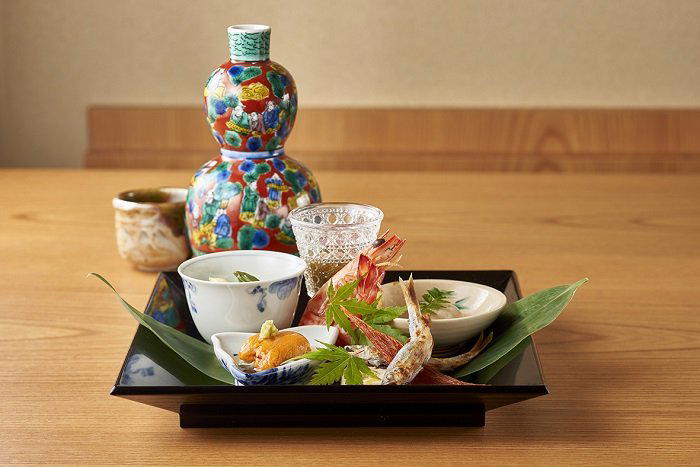
Details
- Elegant
- Intimate
- Classic
- Sophisticated
- Minimalist
- Special Occasion
- Date Night
- Business Dinner
- Chefs Counter
- Sake Program
- Local Sourcing
- Omakase
- Counter Dining
Current opening hours
- Monday
- 12–2:45 PM, 3:30–8:15 PM, 8:30–11 PM
- Tuesday
- 12–2:45 PM, 3:30–8:15 PM, 8:30–11 PM
- Wednesday
- 12–2:45 PM, 3:30–8:15 PM, 8:30–11 PM
- Thursday
- 12–2:45 PM, 3:30–8:15 PM, 8:30–11 PM
- Friday
- 12–2:45 PM, 3:30–8:15 PM, 8:30–11 PM
- Saturday
- 12–2:45 PM, 3:30–8:15 PM, 8:30–11 PM
- Sunday
- 12–2:45 PM, 3:30–8:15 PM, 8:30–11 PM
Hours can change for holidays and private events. Last verified .
Minimalist haven featuring crisp white-linen seats, curved hinoki wood sushi counter, and handpicked seasonal ceramics in a quiet nine-seat sanctuary.