


World's 50 Best #93 · Tabelog Silver #18
Our verdict
Dewa Ya holds a Tabelog Silver Award for 2025 and 2026, with a score of 4.49, and operates as a ryokan-restaurant hybrid in Nishikawa, Yamagata Prefecture. The dinner format centres on a chef's table available to one group per day, while a daytime soba service runs separately at lunch prices from JPY 1,000. For travellers combining mountain Japan with serious regional cooking, it represents one of the clearest arguments for leaving the city.

Pearl is the En Primeur Club membership app — saves, bookings, and concierge access live there. Same editors, same standards.
- Address
- 58 Masawa, Nishikawa-machi, Nishimurayama-gun, Yamagata-ken, 990-0703, Japan
- Phone
- +81 237 74 2323
- Website
- dewaya.com
- Directions
- Get directions
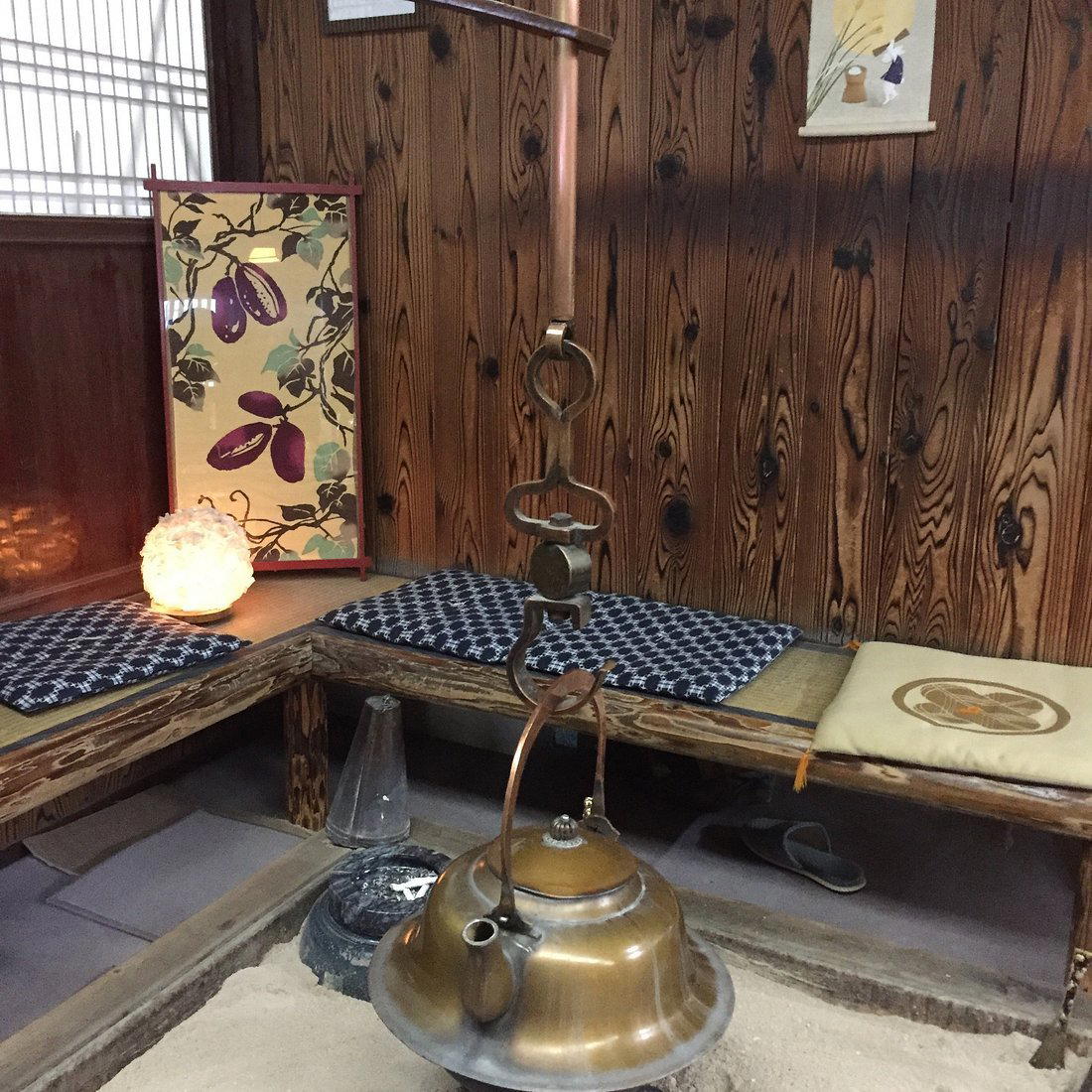
Mountain Yamagata and the Ryokan-Restaurant Tradition
Japan’s most compelling food experiences are increasingly found outside the urban centres that dominate international conversation. Yamagata Prefecture, tucked against the western slope of the Ou Mountains, has long operated as a self-sufficient culinary region: cold winters that demand preserving and fermenting, agricultural flatlands that produce distinctive rice and vegetables, and a mountain-worship tradition centred on Dewa Sanzan that has shaped the local relationship with land and ingredient for over a millennium. The ryokan-restaurant combination that Dewa Ya represents is not a contemporary invention but a continuation of a deep provincial pattern, where the inn and the kitchen have historically been inseparable.
Nishikawa, the small town in Nishimurayama District where Dewa Ya sits, occupies a valley position roughly four minutes by car from the Nishikawa Interchange on the Yamagata Expressway. It is emphatically not a destination that travellers pass through on the way to somewhere else. Coming here requires a decision: to approach the region on its own terms, at its own pace, through accommodation as much as through a restaurant reservation. That context is what gives a meal at Dewa Ya its particular weight. The journey, and the place itself, are part of what is being served.
Where Dewa Ya Sits in the Award Landscape
Tabelog, Japan’s largest restaurant review platform, does not distribute its higher-tier recognition widely. The Silver Award, which Dewa Ya has held for both 2025 and 2026 following a Bronze in 2024, sits above the vast majority of restaurants in the national ranking and signals consistent, high-level performance verified across a large volume of user-generated reviews. Dewa Ya’s score of 4.49 places it inside a very small cohort of rural Japanese restaurants operating at this level of recognition. For context: the Silver Award group at national level includes restaurants that, in urban settings, would carry Michelin stars or sustained recognition from publications like Brutus and Dancyu. Finding this tier in a town of Nishikawa’s scale is the kind of anomaly that rewards curiosity.
The practical implication is that Dewa Ya draws visitors from well outside Yamagata Prefecture. Travellers from Sendai and Tokyo have long treated the Yamagata Expressway connection as manageable for a dedicated visit, and the restaurant’s broader reach has grown as the Tabelog Award profile has risen through Bronze to Silver over consecutive years. This is a regional restaurant that now operates with a national and international audience, which makes the absence of city-level pricing all the more notable.
The Chef’s Table Format and the Mountain Kitchen Tradition
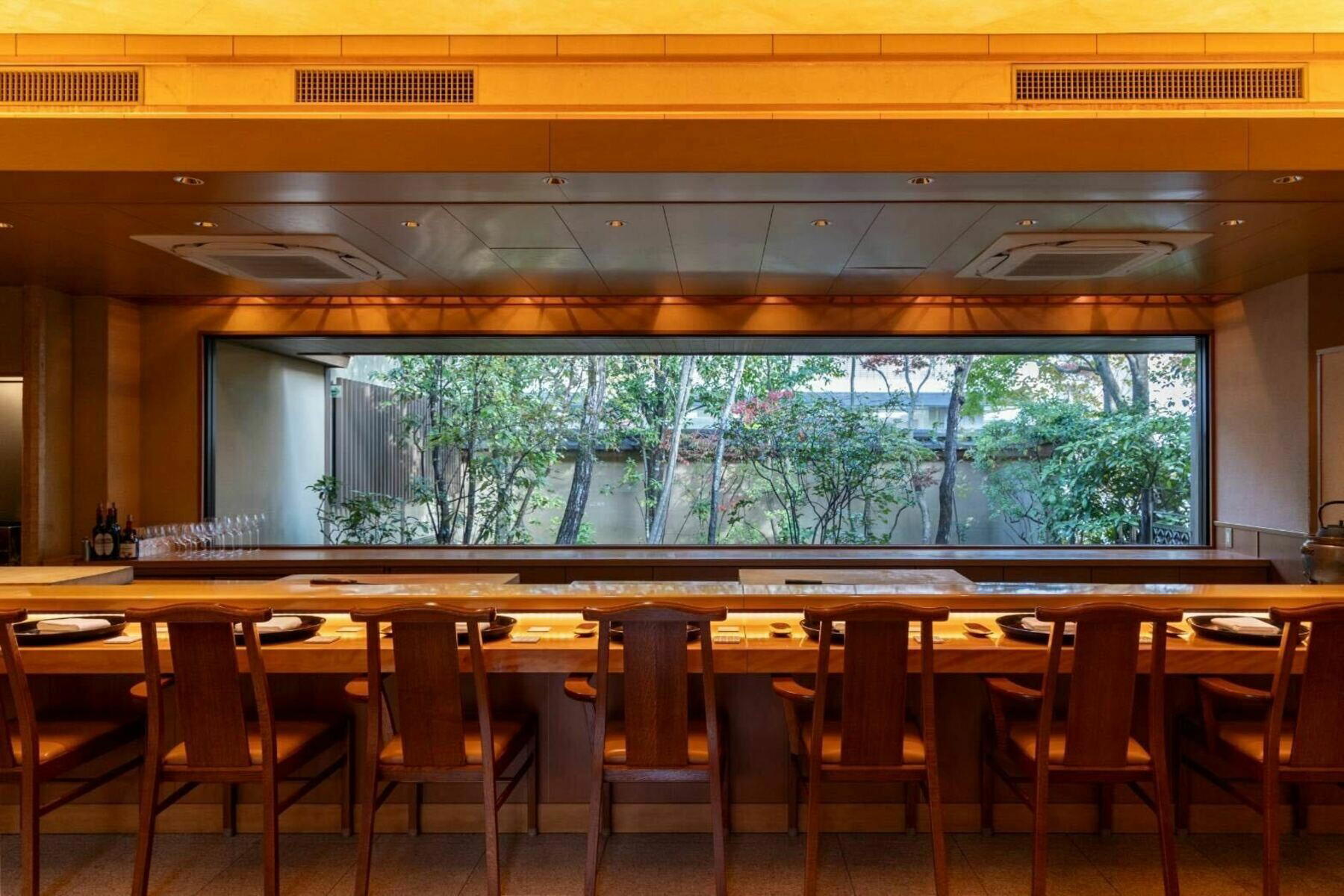
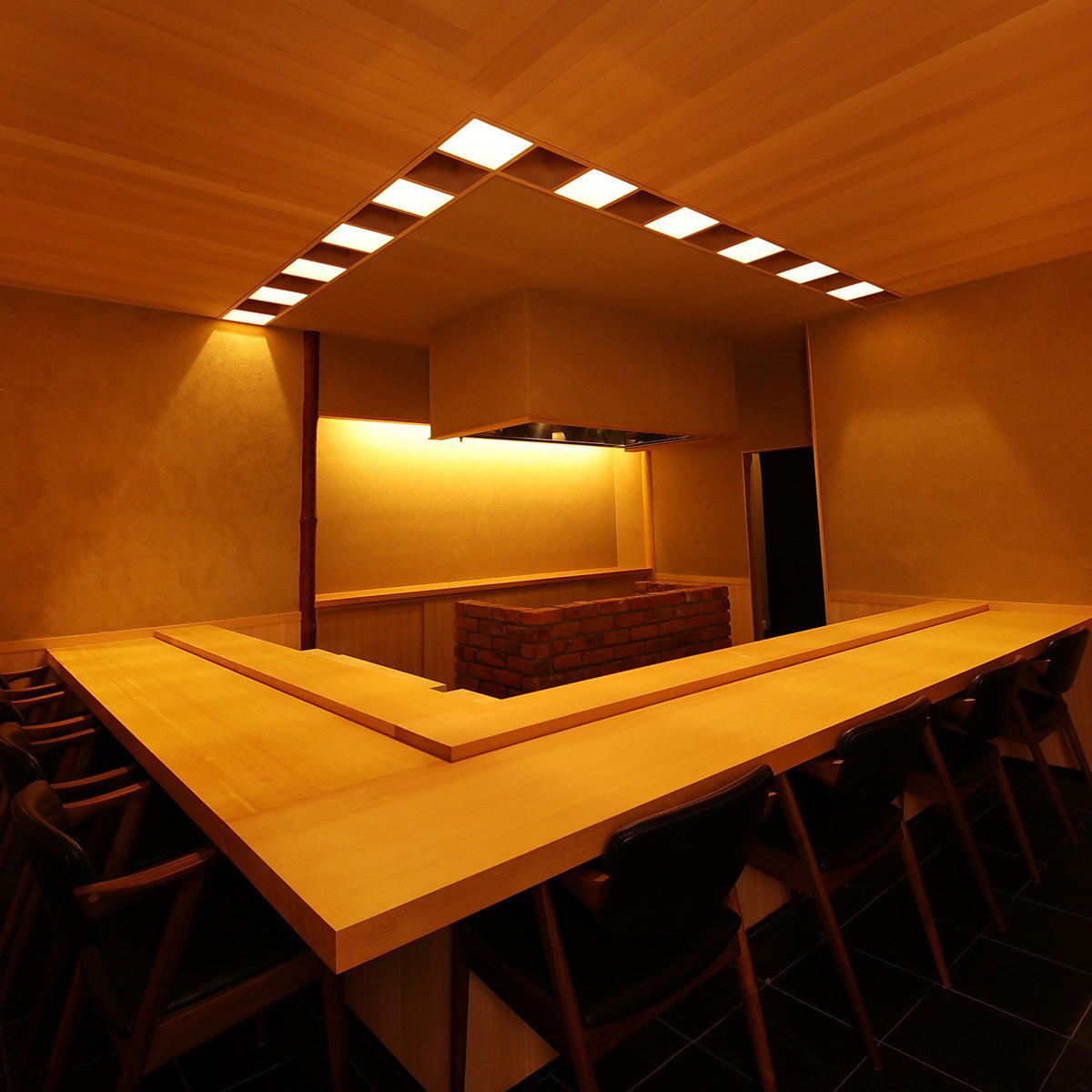
The structure that distinguishes Dewa Ya from a conventional ryokan dining room is the chef’s table format, offered to one group per day. This is a format that exists at some of Japan’s most discussed addresses, from HAJIME in Osaka to Gion Sasaki in Kyoto, but it carries a different meaning when the kitchen is working with the produce of a specific mountain valley rather than with produce sourced nationally or internationally. The limitation to one group per day creates a level of attention and specificity that a 120-seat room operating at full capacity could not deliver, even though that larger capacity exists and functions separately for the daytime soba service and general dining.
Broader cultural tradition at play here is satoyama cuisine: the cooking of the zone between mountain and farmland, drawing on foraged mountain vegetables, preserved ingredients built up through winter, and locally raised proteins. Yamagata sits squarely inside this tradition, and the prefecture’s mountain villages have historically been the places where this cooking survived most intact. Dewa Ya’s positioning within that tradition, in a house-restaurant setting rather than a contemporary urban interpretation of rural food, gives the experience a documentary as much as a purely gastronomic quality.
Comparable depth in different registers can be found at Goh in Fukuoka and akordu in Nara, both of which engage seriously with regional produce and cultural context. What separates Dewa Ya is the degree to which the physical location is inseparable from the argument the kitchen is making.
Soba, Sake, and the Drink Program
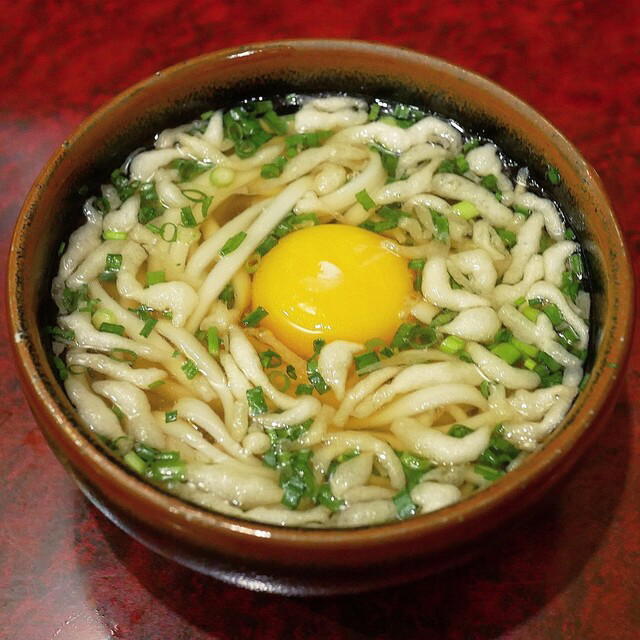
Soba in Yamagata occupies a different cultural position than in Tokyo or Nagano. The prefecture’s cold-climate buckwheat has a long production history, and soba restaurants here are not lunch-only stopgaps but serious culinary destinations in their own right. Dewa Ya’s daytime soba service, priced at JPY 1,000 to JPY 1,999 by listed rate, is a distinct program from the evening chef’s table: the soba shop operates three tables for four people and three tatami rooms for four people, with last orders at 14:00. The lunch price tier places this squarely in accessible territory, which is partly why reviewers’ actual spend at lunch, per the Tabelog data, runs significantly higher at JPY 20,000 to JPY 29,999, suggesting that the full experience extends well beyond soba alone.
On drinks, the kitchen notes particular focus on nihonshu and wine. Yamagata is one of Japan’s most consistently awarded sake-producing prefectures, with breweries in Kaminoyama, Tendo, and the Mogami valley producing junmai daiginjo that competes at national level. A regional sake selection at Dewa Ya is, in this context, not an amenity but an argument: the drink is as geographically specific as the food. Guests who bring their own bottles are accommodated, and the BYO policy reflects a practical flexibility consistent with a house-restaurant format outside the city.
Planning a Visit: Getting There and Staying
Dewa Ya operates Monday and Wednesday through Sunday, with lunch running from 11:30 to 14:00 (last order) and dinner from 18:00 to 20:00. Tuesday is closed, and the kitchen shuts over the Year-end and New Year holiday period. Accommodation check-in begins at 16:00.
Reaching Nishikawa by car from the Yamagata Expressway takes approximately four minutes from Nishikawa IC, or around 18 minutes from Gassan IC. For those arriving by public transport, express buses from both Sendai Station and Yamagata Station stop at Nishikawa Bus Stop, from where a local Nishikawa Town bus toward Gassan Shizu Onsenkyo connects to Mazawa station, which is approximately 83 metres from the address. The local bus runs roughly every two to three hours. The restaurant notes that advance contact may allow a pickup from Nishikawa IC, which is worth confirming directly by phone at +81-237-74-2323. Parking is available on site.
Payment is accepted by VISA, Mastercard, JCB, American Express, and Diners Club. Electronic money and QR code payments are not accepted. There is no service charge or additional fee. Private rooms are available for groups from two to over thirty people, and the full venue can be taken on a private-use basis. The space is wheelchair accessible, with tatami rooms available alongside Western-format seating.
For those building a broader Yamagata or Tohoku itinerary, Dewa Ya operates as a logical overnight anchor around which a wider regional exploration can be structured. The Dewa Sanzan pilgrimage routes, Zao Onsen, and the Gassan ski area are all accessible from the same valley base.
Dewa Ya in the Context of Miyazaki and National Comparisons
Visitors comparing Dewa Ya against the dining scene in Miyazaki city will find different registers entirely. Chinese Sen and Ranpu Tei operate within the city’s restaurant circuit at JPY 10,000 to JPY 14,999 and JPY 8,000 to JPY 9,999 respectively, while Hitotsu, Isshinzushi Koyo, and iwanaga represent different points on the city’s dining spectrum. Dewa Ya is not competing within that urban context: it is the argument for leaving it. The dinner price range of JPY 15,000 to JPY 19,999 by listed rate, with reviewer-reported spend reaching JPY 30,000 to JPY 39,999, places it in the same national price tier as serious urban kaiseki, but the format is completely different.
For a sense of where this places Dewa Ya in the national picture, consider that restaurants at the same Tabelog Silver tier in urban settings include addresses like Harutaka in Tokyo and 1000 in Yokohama. Internationally, the format of a geographically embedded chef’s table in a working inn invites comparison to destination dining programs associated with Le Bernardin in New York City or Atomix in New York City at the opposite end of the urban-rural spectrum. The reference points matter because they establish what kind of ambition is present here, even if the register is entirely its own.
For broader planning, see our full guides to Miyazaki restaurants, [Miyazaki hotels](), [Miyazaki bars](), [Miyazaki wineries](), and Miyazaki experiences.
Frequently asked questions
What's the overall feel of Dewaya?
Dewaya operates as a house-restaurant and traditional ryokan in Nishikawa Town, a small mountain settlement in Yamagata Prefecture. The setting is deliberate and unhurried: tatami rooms, 120 seats spread across private configurations for groups of 2 to 30-plus, and a kitchen that draws from the surrounding mountain region. Tabelog reviewers have pushed the average spend to JPY 20,000–39,999 at dinner, which reflects how seriously guests treat the occasion.
What are the opening hours for Dewaya?
Hours at Dewaya: Mon, Wed, Thu, Fri, Sat, Sun 11:30 - 14:00 18:00 - 20:00.
Does Dewaya have a Michelin star or similar recognition?
Dewaya has received recognition including: {"Year":"2026","Award Source":"Tabelog","Award Type":"The Tabelog Award","Award Group":"chefsgold","Award Group Rank":"3","Restaurant Name":"Dewa Ya","Score":"4.49","Budget":"Dinner: JPY 15,000 - JPY 19,999; Lunch: JPY 1,000 - JPY 1,999","B….
What's the must-try dish at Dewaya?
The chef's table format at dinner means the kitchen, not the diner, determines what is served — the menu follows what the mountain region produces. Soba is available at lunch and sits at the centre of Dewaya's identity, with Yamagata's cold-climate buckwheat having a long production history in the prefecture. Arriving at lunch for the soba at JPY 1,000–1,999 is a notably different commitment than the dinner chef's table at JPY 15,000–19,999.
What's the address for Dewaya?
Dewaya is located at Yamagata Nishi Village山 District Nishi川 Town間沢58, Miyazaki.
What's the signature at Dewaya?
The one-group-per-day chef's table is the format that earned Dewaya its Tabelog Silver Award in both 2025 and 2026, with a score of 4.49. This is not a broad restaurant programme: the kitchen dedicates its dinner service to a single party, drawing on mountain-region produce in a format closer to a private dining commission than a conventional restaurant booking. No other arrangement at the address carries the same weight.
Is Dewaya allergy-friendly?
Given the chef's table format, where the kitchen sets the menu in advance for a single group, contacting the restaurant directly before booking is the practical approach — the phone number on record is +81-237-74-2323. The website at dewaya.com may carry further details on dietary accommodations.
Pricing, Compared
Comparable venues nearby, for context on price, style, and recognition.
| Venue | Cuisine | Price | Awards | Notes |
|---|---|---|---|---|
| DewayaThis venue — the venue you are viewing | Regional Japanese Kaiseki with Seasonal Yamagata Ingredients | Not listed | World's 50 Best #93 · Tabelog Silver #18 | Not listed |
| Torisho Ishii | Michelin-Starred Yakitori Omakase | $100–150 | 1 Michelin Star · Tabelog Bronze #476 | Kita, Michelin-Starred Yakitori Omakase |
| Ajinokaze Nishimura | Michelin-Starred Kaiseki | $100–150 | 1 Michelin Star | Sakurai, Michelin-Starred Kaiseki |
| Gion Mamma | Michelin-Starred Kaiseki with Charcoal Grilling | $150–200 | 1 Michelin Star | Higashiyama, Michelin-Starred Kaiseki with Charcoal Grilling |
| Jiki Miyazawa | Modern Kaiseki | $100–150 | 1 Michelin Star | Nakagyō, Modern Kaiseki |
| Yunagibashi Takoyasu | Traditional Fugu (Pufferfish) | $200–300 | 1 Michelin Star | Minato, Traditional Fugu (Pufferfish) |
Recognition history
Dated appearances from independent guides and award organizations, with the underlying list record or original source where available.
World's 50 Best Asia's Best Restaurants #93
World's 50 Best
Tabelog Silver #18
Tabelog
The Japan Times Destination Restaurants Destination Restaurants Selection #2
The Japan Times Destination Restaurants
Full recognition history (5 entries)
Tabelog Chef's Gold #3
Tabelog
Tabelog Silver
Tabelog
Continue exploring
More in Nishikawa
Details
- Intimate
- Cozy
- Rustic
- Special Occasion
- Chefs Counter
- Open Kitchen
- Sake Program
- Local Sourcing
- Mountain
- Counter Dining
Graceful and quiet dining room with a well-suited, fuss-free family service and emphasis on seasonal ingredients.