Mesón Octavio



Michelin Bib Gourmand · Macarfi 7.5 Food Rating · Guía Repsol 1 Sol
Our verdict
Mesón Octavio holds back-to-back Michelin Bib Gourmand recognition (2024 and 2025) for its rigorous commitment to La Mancha tradition.

Pearl is the En Primeur Club membership app, where members save venues, book tables and use the concierge.
The menu
What to order
- Pisto manchego
- Migas del pastor
- Wild boar meatballs
- El Barquero cod
Where La Mancha Cooking Stays True to Itself
In a country whose restaurant conversation is dominated by the avant-garde ambitions of DiverXO in Madrid, the marine laboratory of Aponiente in El Puerto de Santa María, and the multi-decade creative programmes of Arzak in San Sebastián or El Celler de Can Roca in Girona, there is a quieter but equally serious current running through Spanish dining. It belongs to places that treat the cuisine of a specific region as a discipline worth mastering in full, rather than a springboard for transformation. The Michelin Guide has recognised it with the Bib Gourmand in both 2024 and 2025, a designation that signals cooking of notable quality at prices accessible within the mid-range bracket.
The address sits inside a provincial capital that most international visitors pass through without stopping, which means the room functions first for locals who understand what they are eating and why it matters. That audience applies a harder standard than any critic. Dishes that misrepresent the region's cooking are noticed immediately. The fact that the same three siblings have earned consistent Michelin recognition across consecutive years indicates the kitchen is meeting that standard rather than approximating it. Game cookery is central to the territory. Venison, red-legged partridge, and wild boar have been staples of Castilian tables for centuries, tied to the open dehesa and hunting estates that define the region's landscape. The partridge preparation in particular carries weight as a marker of whether a kitchen genuinely understands the tradition: the bird demands patience and specific handling to avoid toughness, and shortcuts register clearly on the plate.
Beef from the Sierra de San Vicente adds another regional anchor. This is cattle raised at elevation on terrain that produces lean, characterful meat, and the preparation it receives at Mesón Octavio places it within that regional identity rather than abstracting it toward a generic fine-dining idiom. The à la carte format, rather than a set tasting sequence, allows the kitchen to frame these ingredients according to the logic of Castilian eating, where dishes arrive as distinct expressions of a larder rather than movements in a composed narrative. You find a similar approach at Auga in Gijón and at Auberge Grand'Maison in Mûr-de-Bretagne, where the discipline is similarly about faithfulness to a specific larder rather than departure from it.
The Siblings and the Matrilineal Menu
The kitchen at Mesón Octavio operates under the joint direction of three siblings: Aurora, Belén, and José. The menu carries an explicit tribute to the female members of the family lineage, which positions the cooking not as an individual's signature but as an inheritance held collectively and transmitted forward. That framing aligns the restaurant with a category of Spanish dining that draws legitimacy from domestic continuity rather than professional credentialing.
The practical outcome is a menu that the Michelin Guide describes as containing dishes with strong character, among them the pisto manchego (the region's canonical vegetable stew), migas del pastor with egg (fried breadcrumbs, a shepherd's staple refined through careful execution), wild boar meatballs, and a cod preparation named El Barquero. The range across these dishes moves from the pastoral to the coastal, which is characteristic of a Castilian table that historically received dried and salted fish from the Atlantic trade routes even at considerable distance from the sea.
Reading the Price and the Recognition Together
Frequently asked questions
Is Mesón Octavio more mid-range or high-end?
Pricing at Mesón Octavio is listed as €€.
Has Mesón Octavio won any awards?
Mesón Octavio has received recognition including: It’s very rare to come across a restaurant such as this one where every mouthful reminds us of our mothers’ and grandmothers’ cooking! Impressively run by three siblings (Aurora, Belén and José), its focus is on traditional La Mancha dishes….
How It Stacks Up
| Venue | Cuisine | Price | Awards | Notes |
|---|---|---|---|---|
| Mesón OctavioThis venue (the venue you are viewing) | Traditional La Mancha | Not listed | Michelin Bib Gourmand · Macarfi 7.5 Food Rating | Not listed |
| Aponiente | Avant-Garde Marine Seafood | $200–300 | 3 Michelin Stars · World's 50 Best #84 | Progressive - Seafood, Creative |
| Arzak | Contemporary Basque Fine Dining | $300–500 | 3 Michelin Stars · World's 50 Best #31 | Modern Basque, Creative |
| DiverXO | Avant-Garde Spanish Tasting Menu | $300–500 | 3 Michelin Stars · World's 50 Best #4 | Progressive - Asian, Creative |
| El Celler de Can Roca | Creative Catalan Fine Dining | $300–500 | 3 Michelin Stars · World's 50 Best #2 | Progressive Spanish, Creative |
| Quique Dacosta | Avant-Garde Spanish Fine Dining | $300–500 | 3 Michelin Stars · World's 50 Best #65 | Creative |
Recognition history
Dated appearances from independent guides and award organizations, with the underlying list record or original source where available.
Michelin Bib Gourmand
Michelin
Guía Repsol 1 Sol
Guía Repsol
Macarfi 7.5 Food Rating
Macarfi
Full recognition history (5 entries)
Michelin Bib Gourmand
Michelin
Michelin Bib Gourmand
Michelin
Continue exploring
More in Ciudad Real
Restaurants in Ciudad Real
All restaurants in Ciudad Real →
Wineries in Ciudad Real
Browse all →
Details
- Rustic
- Cozy
- Classic
- Family
- Special Occasion
- Historic Building
- Local Sourcing
- A La Carte
- Vegetarian Friendly
- Gluten Free Options
Current opening hours
- Monday
- 2–5:30 PM
- Tuesday
- 2–5:30 PM
- Wednesday
- 2–5:30 PM
- Thursday
- 2–5:30 PM
- Friday
- 2–5:30 PM
- Saturday
- 2–5:30 PM
- Sunday
- Closed
Hours can change for holidays and private events. Hours as of .
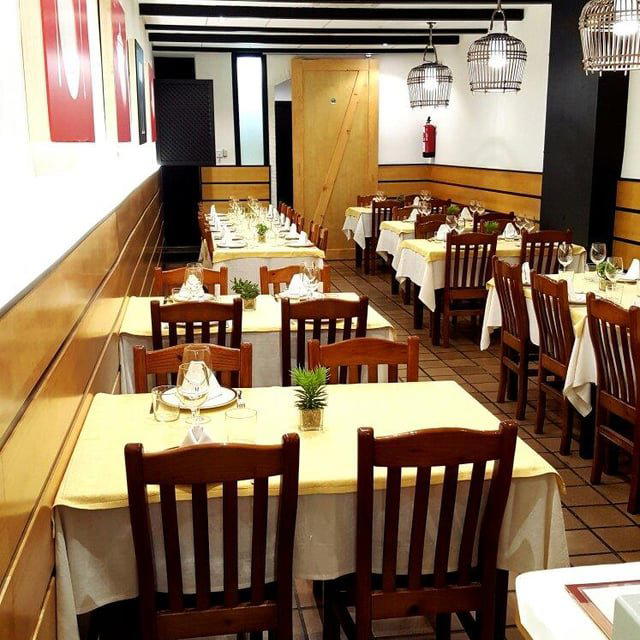
Cozy, charming rustic setting evoking home-cooked comfort with an elegant touch.