









Burnt Ends is Singapore’s benchmark for Australian barbecue, built around Dave Pynt’s command of wood fire and a room where the cooking is part of the tempo. Its recognition across Michelin, World’s 50 Best, OAD, La Liste, Black Pearl and Tatler places it in the city’s serious dining tier, but the appeal remains elemental: heat, smoke, meat, seafood and a kitchen that treats fire as a precise instrument.
Pearl is the En Primeur Club membership app — saves, bookings, and concierge access live there. Same editors, same standards.
- Address
- 7 Dempsey Rd, #01-02, Singapore 249671
- Phone
- +65 6224 3933
- Website
- burntends.com.sg
- Directions
- Get directions
 Saves & bookings on Pearl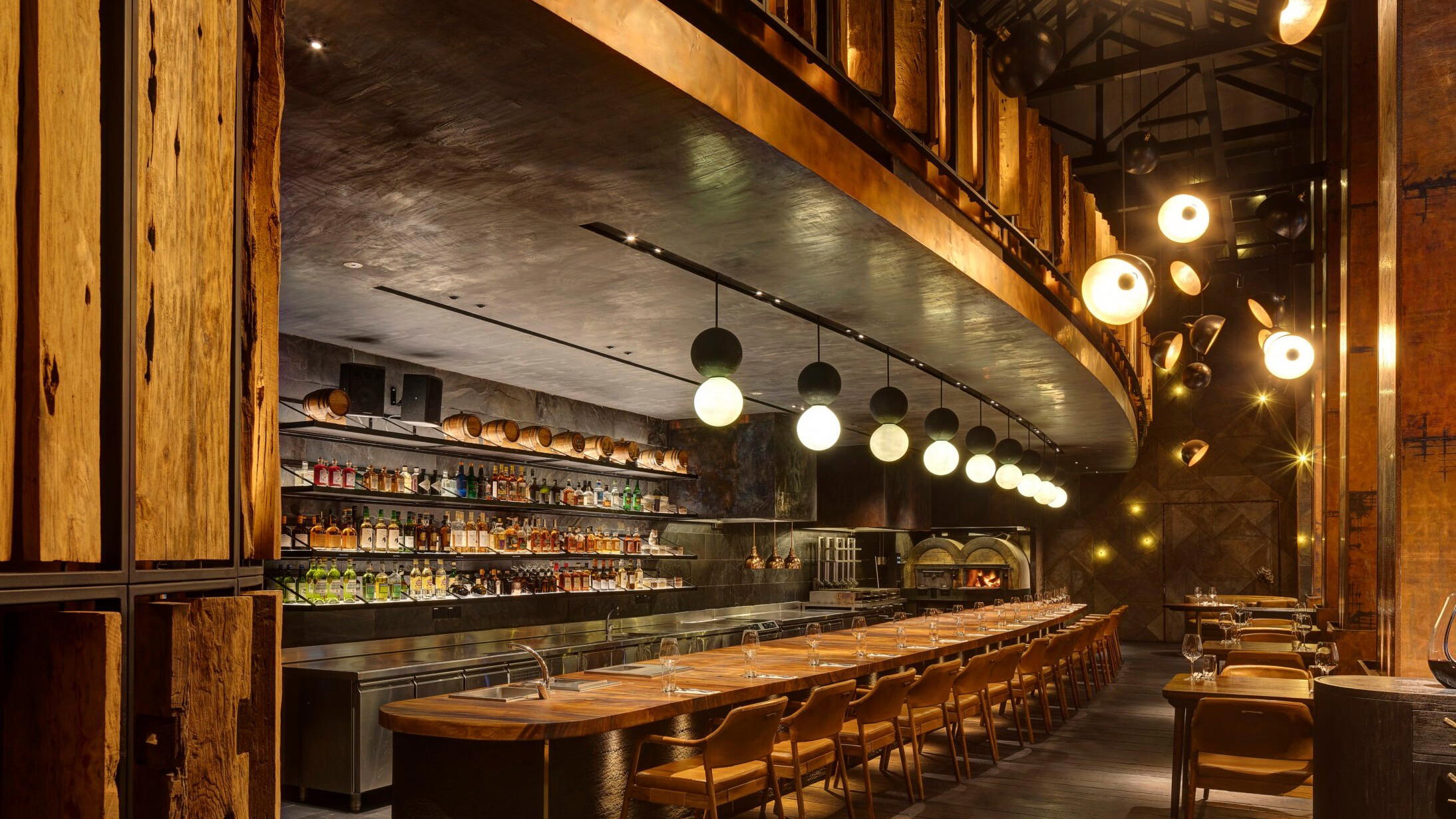
Burnt Ends is a Singapore restaurant from chef-owner Dave Pynt, listed for Australian Barbecue and Barbecue cuisine. The useful way to read it is through that category: a serious barbecue restaurant in a city where premium dining can range across many different restaurant formats.
Singapore gives this format useful contrast. The city supports restaurants such as Sushi Sato, Pangium and Roia, while also rewarding cooking built on heat, repetition and craft. Burnt Ends sits within that broader dining map as a $$$ barbecue address rather than a casual grill stop.
Wood fire treated as technique, not decoration
For a restaurant described as Australian Barbecue and Barbecue, the central question is control: how heat and timing give the meal its identity. Dave Pynt’s role matters because the restaurant is verified as being led by him as chef-owner.
What can be said plainly is that Burnt Ends is positioned as a serious barbecue restaurant in the $$$ bracket, with smart casual dress and service hours that include dinner on Tuesday through Saturday, plus lunch on Thursday, Friday and Saturday.
That matters because Singapore offers many ways to spend heavily on dinner. Restaurants such as Jiang-Nan Chun, Ce Soir and Roia use different approaches to premium dining. Burnt Ends competes from another angle: Australian barbecue as the defining cuisine rather than a secondary technique.
Recognition confirms the category shift
The confirmed recognition available for Burnt Ends is its inclusion as a one-diamond restaurant in the Black Pearl Restaurant Guide 2026. That is enough to place the restaurant in a premium conversation without relying on unverified rankings, scores or award claims.
Those signals place it beyond casual barbecue, even when the vocabulary remains elemental. The restaurant’s verified profile is lean but clear: Burnt Ends is in Singapore, led by Dave Pynt, priced at $$$, and identified with Australian Barbecue and Barbecue cuisine.
A broader dining trend is also visible. Premium restaurants can be highly format-specific, asking diners to choose a clear idiom before dishes. Burnt Ends belongs to that specialist tier through barbecue rather than through a broadly defined international fine-dining template.
How to read the meal within Singapore's dining map
Approach the restaurant by category rather than one headline dish. Readers should therefore treat current menus and booking details as something to confirm directly before visiting.
Price also shapes the decision. This is not a casual grill night in Singapore; it sits in the $$$ bracket and should be judged against other serious restaurants rather than street-food value. Within Singapore, it can be compared naturally with different premium formats such as Jiang-Nan Chun, Ce Soir, Pangium, Roia and Sushi Sato, each of which gives diners a different reason to commit a special meal to one address.
That spread is why Singapore rewards confident curation. Burnt Ends occupies a premium barbecue lane: $$$, smart casual, and defined by cuisine style more than by a single verified signature dish. The confirmed hours are Monday closed; Tuesday and Wednesday 6 PM-11 PM; Thursday, Friday and Saturday 12 PM-2:30 PM and 6 PM-11 PM; and Sunday closed.
For visitors, trip architecture matters as much as dinner. Build the evening around the restaurant’s confirmed basics: Singapore location, smart casual dress code, $$$ pricing, Dave Pynt as chef-owner, and Australian barbecue as the core cuisine. Wider comparisons can be made across other Singapore dining rooms, but Burnt Ends’ verified identity remains simple: a premium barbecue restaurant in Singapore.
How Burnt Ends Singapore compares with similar nearby venues.
| Venue | Cuisine | Price | Awards |
|---|---|---|---|
| Burnt Ends | Australian Barbecue, Barbecue | $$$ | Michelin 1 Star, World's 50 Best Asia's Best Restaurants #38 (2025), World's 50 Best Restaurants #34 (2021), Asia's Best Restaurants #38 (2025) |
| Sushi Sato | Sushi | $$$ | Not listed |
| Pangium | Peranakan | $$$ | Not listed |
| Roia | French Contemporary | $$$ | Not listed |
| Ce Soir | Asian Contemporary | $$$ | Not listed |
| Jiang-Nan Chun | Cantonese | $$$ | Not listed |
Recognition history
Dated appearances from independent guides and award organizations, with the underlying list record or original source where available.
Black Pearl 1 Diamond
Black Pearl
La Liste Top Restaurants
La Liste
Michelin Guide 1 Star
Michelin Guide
Opinionated About Dining Top Restaurants in Asia Ranked #38
Opinionated About Dining
Wine Spectator Award of Excellence
Wine Spectator
World's 50 Best Asia's Best Restaurants #59
World's 50 Best
World's Best Steaks 101 Best Steak Restaurants #9
World's Best Steaks
Black Pearl 1 Diamond
Black Pearl
La Liste Top Restaurants
La Liste
Michelin 1 Star
Michelin
Opinionated About Dining Top Restaurants in Asia Ranked #40
Opinionated About Dining
Tatler Listed in Best Restaurants Asia-Pacific
Tatler
Tatler Best Restaurants Singapore: Restaurant of the Year
Tatler
Tatler Restaurant of The Year
Tatler
The Best Chef Two Knives
The Best Chef
World's 50 Best Asia's Best Restaurants #38
World's 50 Best
World's 50 Best Best Restaurants #93
World's 50 Best
World's Best Steaks 101 Best Steak Restaurants #5
World's Best Steaks
World's Best Wine Lists Awards WBWL 3-Star
World's Best Wine Lists Awards
World's Best Wine Lists Awards WBWL Category Winner
World's Best Wine Lists Awards
Michelin 1 Star
Michelin
Opinionated About Dining Top Restaurants in Asia Ranked #32
Opinionated About Dining
World's 50 Best Best Restaurants #68
World's 50 Best
Opinionated About Dining Top Restaurants in Asia Ranked #28
Opinionated About Dining
World's 50 Best Best Restaurants #65
World's 50 Best
World's 50 Best Best Restaurants #34
World's 50 Best
Continue exploring
More in Singapore
Restaurants in Singapore
Browse all →
Bars in Singapore
Browse all →
At a Glance
- Trendy
- Lively
- Modern
- Industrial
- Date Night
- Special Occasion
- Group Dining
- Open Kitchen
- Chefs Counter
- Extensive Wine List
Current opening hours
- Monday
- Closed
- Tuesday
- 6–11 PM
- Wednesday
- 6–11 PM
- Thursday
- 12–2:30 PM, 6–11 PM
- Friday
- 12–2:30 PM, 6–11 PM
- Saturday
- 12–2:30 PM, 6–11 PM
- Sunday
- Closed
Hours can change for holidays and private events. Last verified .
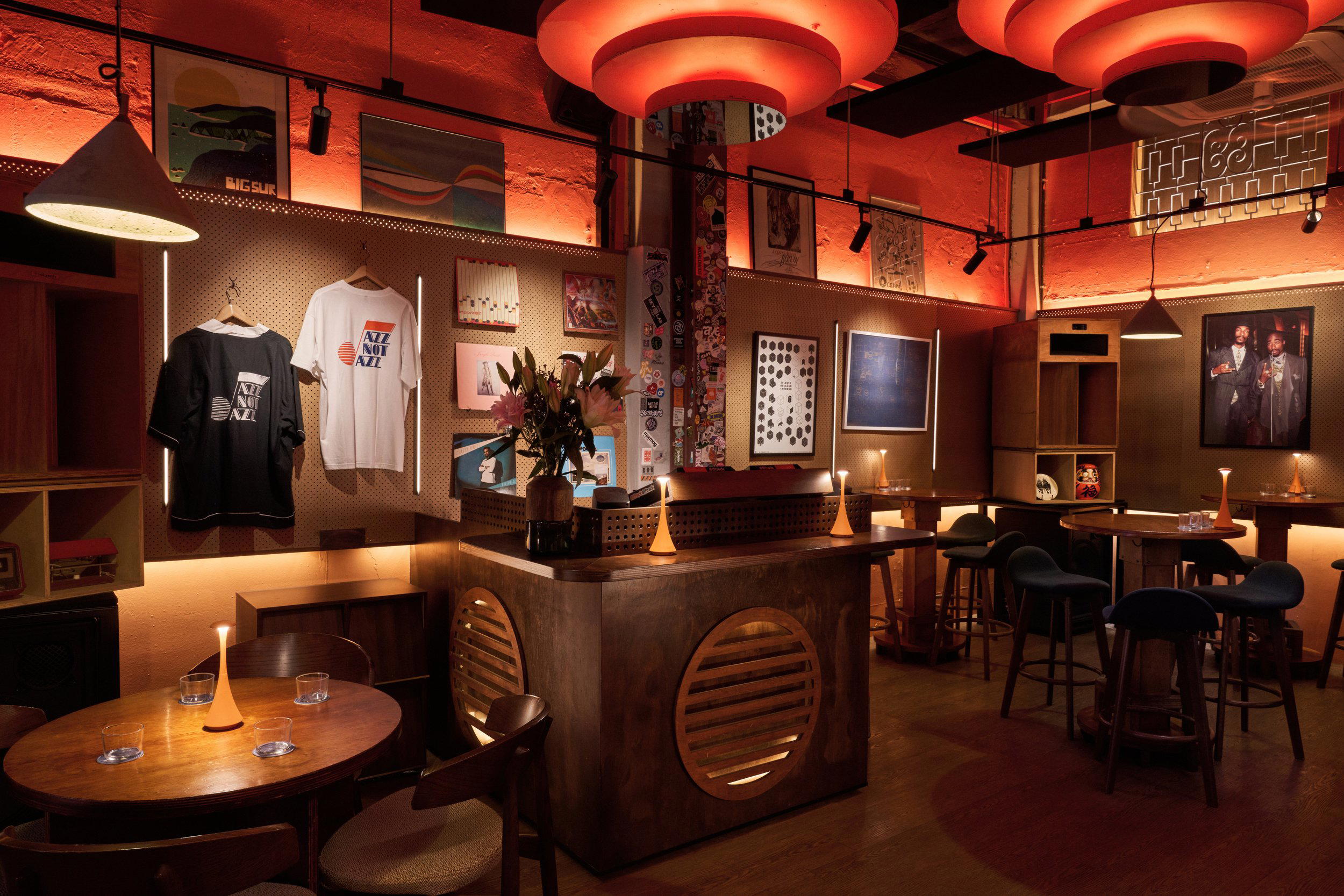
Lively and energetic with an open kitchen view, counter seating, and aromas of wood-fired grilling creating a lively yet sophisticated atmosphere.
Know Before You Go
- Reservations
- Essential
- Dress code
- Smart casual
- Getting there
- 7 Dempsey Rd, #01-02, Singapore 249671