Mapo Restaurants Gyudo
Located on Mapo-daero in Seoul's Mapo district, Gyudo occupies a stretch of the city where working-neighbourhood texture meets a growing appetite for serious Korean beef cookery. The restaurant draws from the gyudong tradition, slow-charcoal beef cookery rooted in Korean dining culture, and sits within a comparable set that values product quality and preparation over theatrical presentation.
Pearl is the En Primeur Club membership app — saves, bookings, and concierge access live there. Same editors, same standards.
- Address
- 33 Mapo-daero, Mapo-gu, Seoul, South Korea
- Phone
- +82269560949
- Website
- map.naver.com
- Directions
- Get directions
 Saves & bookings on Pearl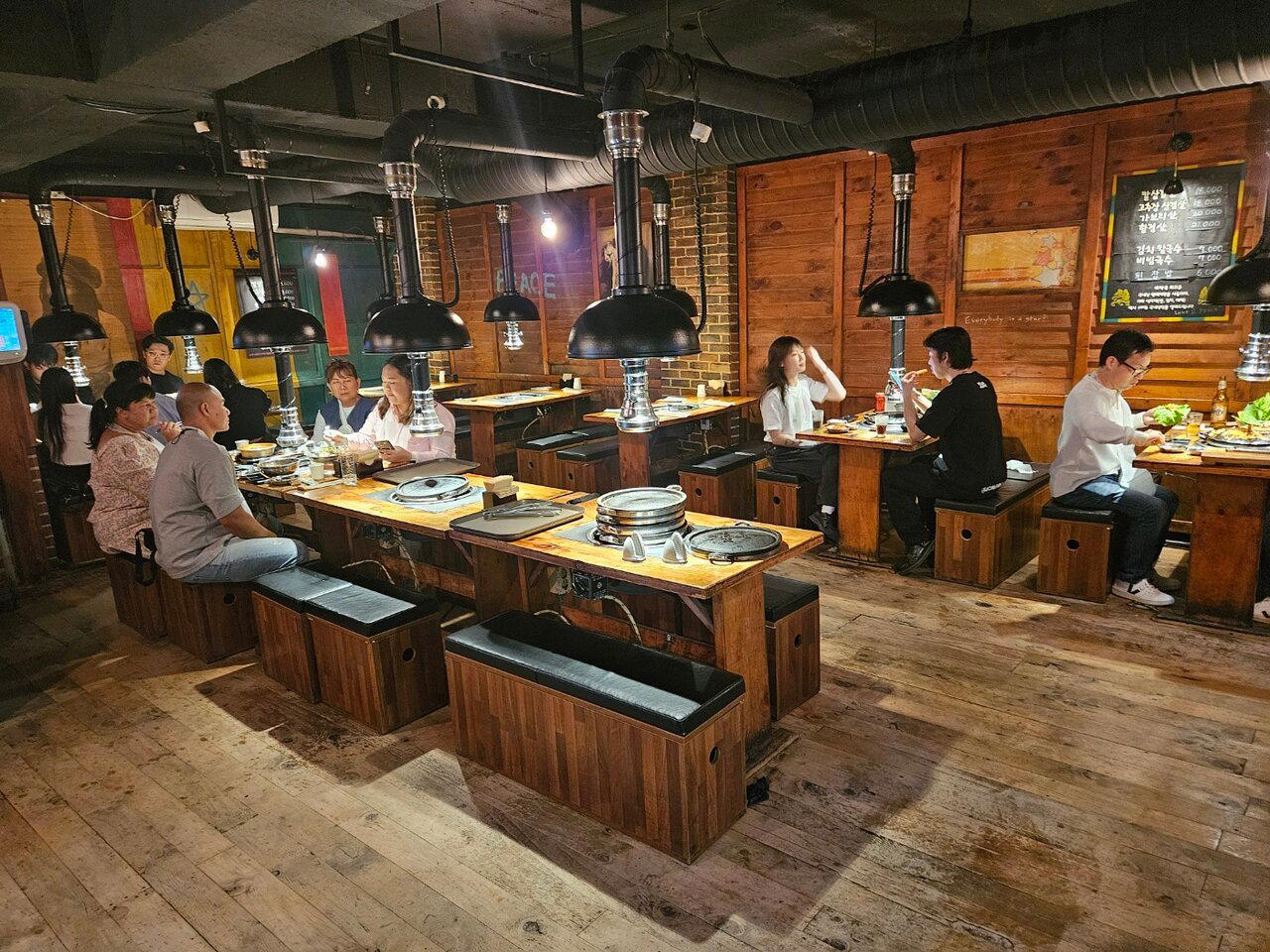
Mapo's Meat Counter: What the District Tells You Before You Sit Down
Mapo-gu announces its dining character before you reach the table. The district runs west from central Seoul along the Han River, and its restaurant strip on Mapo-daero has long operated outside the premium-dining corridors of Gangnam or the design-led lanes of Bukchon. That positioning matters. Venues here tend to earn their following through consistent product and repeat local custom rather than press-cycle attention, and the beef cookery tradition along this stretch reflects that sensibility: less spectacle, more substance.
Mapo Restaurants Gyudo, at 33 Mapo-daero, sits inside that tradition. The address places it in a part of Seoul where the smell of charcoal and rendered fat drifts across the pavement on cooler evenings, and the sound profile of a functioning Korean grill restaurant, the low roar of ventilation hoods, the crackle of meat over flame, the rhythm of table-side service, frames the approach long before you read the menu.
The Gyudong Tradition and Where It Stands in Seoul's Beef Culture
Korean beef cookery divides, roughly, into two registers. One is the premium hanwoo counter, where marbling grades, breed provenance, and cut hierarchy drive pricing toward the level of a tasting menu. The other is the neighbourhood gyudong format, where the emphasis falls on accessible cuts, high-throughput service, and the kind of communal table experience that has anchored Korean dining culture for generations. Gyudo's name and address position it closer to the latter, though the distinction between these registers has blurred in Seoul over the past decade as ingredient sourcing improved across the board.
For context, Seoul's most decorated Korean beef destinations, venues like Mingles and Jungsik, approach beef through a contemporary or fusion framework that repositions it within tasting-menu structures. Kwonsooksoo takes a different path, leaning into traditional Korean technique. Gyudo, by contrast, operates in the more direct grill-and-serve tradition, which in Mapo means cooking over real heat and letting the product carry the weight.
The Atmosphere: Grill Culture as Environment
Korean grill restaurants generate their own particular sensory world. The ventilation systems that draw smoke from table-level grills create a constant low hum that becomes ambient within minutes. The light in most Mapo-area grill rooms is warm and practical rather than mood-lit; these are spaces designed for eating rather than photography. The architecture of a gyudong table, the recessed grill, the surrounding spread of banchan, the soju and beer bottles positioned within reach, has a logic that feels designed by decades of use rather than by an interior brief.
At Gyudo, the experience is rooted in that physical grammar. The smoke carries the particular character of whatever fuel and fat combination the kitchen uses; in most serious Korean grill operations, this becomes recognisable across a meal, shifting as different cuts hit the grate. The service pace in a Mapo grill setting is typically brisk without being rushed, tables turn on appetite rather than on a clock, and the staff-to-table ratio in these neighbourhood operations tends to favour efficiency over ceremony.
This contrasts sharply with the highly constructed atmosphere of Seoul's premium innovative restaurants. Soigné and alla prima operate in a register where silence, pacing, and spatial design carry as much weight as the food itself. Gyudo's environment makes a different argument: that the act of cooking at the table, in the company of others, is the atmosphere.
Situating Gyudo Within the Broader Korean Grill Scene
South Korea's grill tradition extends well beyond Seoul. On Jeju Island, 88돼지 and Black Pork BBQ in Seogwipo represent the pork-dominant tradition that defines the island's grill culture, where black pig is the default protein rather than beef. In Suwon, Gobojeong Galbi has built a reputation specifically around galbi, short ribs cut and marinated to a local standard that Suwon residents will defend with some conviction. Doosoogobang in Suwon represents yet another local variation on slow-cooked beef.
What Mapo-daero specifically offers is proximity to a dense Seoul residential and commercial population that eats out frequently and sets quality expectations through repetition rather than occasion. A restaurant on this strip that has maintained a presence earns its standing through that daily test, which is a different credential from a single high-profile review.
For those exploring the broader Korean dining spectrum beyond grills, the contrast with venues like Mori in Busan or the traditional patisserie format at Hwangnam Bread and Busan Steamed Bun in Gyeongju illustrates how regional and format-specific Korean food culture remains. Gyeongju Wonjo Kongguk in Gyeongju takes a completely different direction with its soy milk-based soups. Our full Seoul restaurants guide maps these distinctions across the city's neighbourhoods.
How Gyudo Compares to Seoul's Contemporary Korean Tier
Seoul's contemporary Korean scene, represented by venues like Mingles, which holds two Michelin stars and operates a full tasting menu structure, or the Korean-French hybrid format at Zero Complex, occupies a different price tier and a different dining occasion. Those meals run across multiple courses, require advance booking measured in weeks or months, and carry a dress expectation. A Mapo grill operation operates on a different rhythm: walk-in or short-notice booking, a meal measured in shared plates rather than sequential courses, and a bill that reflects neighbourhood pricing rather than tasting-menu economics.
For international visitors familiar with Korean dining through New York's interpretation of the cuisine, the comparison is instructive. Atomix in New York City and Le Bernardin represent what happens when Korean-influenced or luxury-tier dining reaches a global metropolitan context. Gyudo's Mapo address is, in that sense, the opposite of the export version, this is the source format, operating for a local audience on local terms.
Planning Your Visit
Mapo-daero is accessible via Seoul's subway network; the Mapo station on Line 5 places the address within a short walk. As with most neighbourhood grill operations in Seoul, the peak hours run from early evening through late night, with the busiest periods typically falling between 7pm and 9pm on weekdays and extending later on weekends. Korean grill restaurants in this tier generally do not require the weeks-ahead booking windows of the city's tasting-menu establishments, but arriving without any confirmation during peak hours on a weekend carries risk.
For those spending time across multiple dining registers in Seoul, Gyudo sits comfortably in an itinerary alongside visits to Badang Lounge in Jeju for a different regional perspective, or Dining Room (다이닝룸) in Busan for a contemporary counterpoint. Hinode (히노데) in Seogwipo offers yet another angle on how Korean dining absorbs and adapts adjacent culinary traditions.
Accolades, Compared
Comparable venues nearby, for context on price, style, and recognition.
| Venue | Cuisine | Price | Notes |
|---|---|---|---|
| Mapo Restaurants GyudoThis venue — the venue you are viewing | Japanese Gyudon & Teishoku | $$ | Not listed |
| 해목 | Nagoya-Style Hitsumabushi (Grilled Eel Rice Bowl) | $$$ | Nonhyeon-dong, Gangnam-gu (Seoul location) |
| 영동설렁탕 | Traditional Korean Seolleongtang | $$ | Jamwon-dong, Seocho-gu |
| Plant Cafe Seoul (Itaewon) | 100% Plant-Based Vegan Cafe | $$ | 이태원동 |
| íë í¼ì¤ ë¤ì´ì´í¸ í¸ë ííìì (Preppers Diet Food Hyehwa) | Diet Japanese | $$ | 혜화동 |
| ë´ì°ì¥ ìì´ë본ì | Korean | Not listed | 서초동 |
Continue exploring
More in Seoul
Restaurants in Seoul
Browse all →
At a Glance
- Casual Hangout
- Standalone
Current opening hours
- Monday
- 11:30 AM–9 PM
- Tuesday
- 11:30 AM–9 PM
- Wednesday
- 11:30 AM–9 PM
- Thursday
- 11:30 AM–9 PM
- Friday
- 11:30 AM–9 PM
- Saturday
- 11:30 AM–9 PM
- Sunday
- 11:30 AM–9 PM
Hours can change for holidays and private events. Last verified .
Casual syokudo-style atmosphere focused on comforting Japanese rice bowls.