

Tabelog Bronze
Our verdict
Makino in Tokyo's Taito Ward holds a Tabelog Bronze Award (2025, score 3.84) and an OAD Highly Recommended listing, placing it among the credible mid-tier tempura counters operating in the Kanto tradition. Running evenings only from 5 to 10 pm under chef Toshiyuki Suzuki, it draws a local following in Matsugaya, a neighbourhood removed from the central-Tokyo tempura circuit but worth the detour for that reason.

Pearl is the En Primeur Club membership app, where members save venues, book tables and use the concierge.
The menu
What to order
- Fugu nikogori
- Crab daikon hot pot
- Fugu kara-age
Kanto Tempura in the Shitamachi Grain
Tokyo's tempura tradition diverges from Osaka's in ways that have mattered for centuries. The Kanto school, codified in the old shitamachi districts of Edo, fries in sesame oil at high heat and serves each piece directly to the diner as it leaves the oil, timing and temperature are non-negotiable. Osaka's approach has historically been softer, slower, with vegetable-forward sequences and a lighter hand on the batter. Makino, operating in Matsugaya in Taito Ward, sits squarely within the Kanto lineage: an evenings-only counter in a neighbourhood that retains more of old Edo's residential texture than the polished addresses near Ginza or Roppongi that now anchor the city's most decorated tempura rooms.
Taito Ward is not where most international visitors look for serious cooking. That oversight is the district's quiet advantage. Asakusa draws crowds for its temples and tourist infrastructure, but the streets that fan out from it, Matsugaya among them, house a more durable kind of restaurant: places that have built their reputation on repeat local custom rather than guidebook placement. Makino fits that pattern. Its Tabelog score of 3.84 and a Bronze Award in 2025 indicate a kitchen operating at a level that earns sustained critical attention without the volume-driven dilution that afflicts more prominently located addresses.
What OAD Recognition Signals in a Japanese Context
OAD rankings for Japan are built substantially on the input of well-travelled specialists, which means a Highly Recommended listing in this market carries weight beyond its modest-sounding descriptor. It places Makino in the same national conversation as Kanto tempura rooms operating at higher price points, the distinction being format, location, and accessibility rather than technical seriousness.
For context, the Kanto tempura tier above Makino includes counters such as Tempura Kondo, which holds Michelin recognition and prices accordingly, and Tempura Motoyoshi, another critically regarded address in the city's tempura circuit. Tempura Ginya and Fukamachi represent further points on the spectrum. Makino occupies a different register, recognised by both Tabelog's domestic scoring system and an international critical index, but operating in a neighbourhood and format that keeps it from the premium-tier pricing those Ginza-area addresses command.
The Kanto Method: Oil, Sequence, and the Logic of Immediacy
In the Kanto tradition, tempura is fundamentally about restraint applied at high velocity. The batter is mixed minimally, cold water, flour, the occasional egg, to avoid gluten development, and the frying temperature is calibrated to the ingredient. Seafood goes in at higher heat; delicate vegetables require a cooler environment. The sequence typically moves from lighter, more neutral flavours toward richer, more assertive ones, so that the palate builds rather than fatigues. This structure separates Kanto tempura from the Osaka school, where the sequencing logic and the frying medium have historically diverged.
Chef Toshiyuki Suzuki operates within this tradition at Makino. What the awards record does confirm is that the output sustains critical scrutiny from both domestic and international evaluators, two indices that apply different methodologies and occasionally disagree. When they converge, as they do here, it suggests consistent execution rather than a single exceptional performance.
Seafood sourcing in Tokyo's serious tempura rooms tends to trace back to the Toyosu market supply chain, with supplementary sourcing from fishing ports across the Kanto and Tohoku regions depending on season. Spring brings megrims and firefly squid; autumn pushes matsutake and sweet potato through the batter.
Matsugaya and the Logic of the Shitamachi Counter
The address, 3 Chome-8-1 Matsugaya, Taito City, places Makino in a part of Tokyo that resisted the post-war reconstruction impulse to replace everything at once. Shitamachi, the old low city, survived the 1923 earthquake and the 1945 firebombing in fragments, and what remained has in many blocks held its grain: narrow streets, low building lines, a rhythm of small shops and residential blocks that Ginza and Marunouchi no longer carry. The restaurant addresses that survive here tend to be owner-operated, evening-focused, and oriented toward a neighbourhood clientele rather than a tourist circuit.
That context shapes the experience of visiting Makino in ways that the awards designations don't fully capture. A Tabelog Bronze score in Matsugaya means something different from the same score in Ginza: the surroundings, the walk from the station, the texture of the block all contribute to a reading of the meal that is harder to quantify. Visitors looking for that kind of experience, serious cooking in an unreconstructed urban setting, will find Makino fits the brief more naturally than its more famous counterparts deeper in the centre.
For readers exploring Tokyo's broader dining spectrum, our full Tokyo restaurants guide maps the city's current scene across cuisine types and price tiers. The Tokyo hotels guide, Tokyo bars guide, Tokyo wineries guide, and Tokyo experiences guide round out planning for a longer stay.
Placing Makino in the Wider Japan Tempura Circuit
Tempura as a serious restaurant format has spread well beyond Tokyo. Numata in Osaka represents the Kansai approach to the same ingredient, lighter oil, softer batter, a different sequencing logic. Internationally, Mudan Tempura in Taipei shows how the format has exported across East Asia, with sourcing and technique adapted to local supply chains. Edomae-tradition practitioners like Edomae Shinsaku occupy an adjacent but distinct space in Tokyo's seafood-forward dining culture.
Japan's broader fine-dining circuit, anchored in kaiseki houses such as Gion Sasaki in Kyoto and HAJIME in Osaka, sets the reference frame within which single-technique specialists like Makino are understood. Further afield, akordu in Nara, Goh in Fukuoka, 1000 in Yokohama, and 6 in Okinawa illustrate how Japan's serious restaurant culture has distributed itself across the archipelago rather than concentrating entirely in Tokyo.
Planning a Visit
Makino operates Monday through Sunday, 5 pm to 10 pm. The Matsugaya address is accessible from Iriya Station on the Tokyo Metro Hibiya Line, which puts it within reasonable reach of central Tokyo without requiring a taxi.
Frequently asked questions
Is Makino suitable for children?
Makino is a specialist tempura counter in the Kanto tradition, and in Tokyo's mid-tier dining context that typically means a quieter, focused environment where the evening runs at the pace of the kitchen, younger children accustomed to that kind of setting will be fine, but it is worth calling ahead to confirm.
What is the atmosphere like at Makino?
If you are arriving from a Ginza or Marunouchi tempura room, recalibrate: Makino's Matsugaya address puts it in shitamachi Tokyo, which means a neighbourhood-scale setting rather than a curated premium environment. The Tabelog Bronze score and OAD Highly Recommended listing confirm the kitchen's seriousness, but the surroundings are residential and low-key. If that trade-off, focused cooking, unfussy setting, a price point below the central-Tokyo premium tier, suits your priorities, Makino is a sensible choice.
What do regulars order at Makino?
Book the counter and let Chef Toshiyuki Suzuki's kitchen set the sequence: Makino's OAD Highly Recommended status and Tabelog Bronze Award both reflect the output of a kitchen working within the Kanto tempura tradition, where the chef's judgment about ingredient order and temperature matters more than individual dish selection.
The Short List
| Venue | Cuisine | Price | Awards | Notes |
|---|---|---|---|---|
| MakinoThis venue (the venue you are viewing) | Fugu (Pufferfish) Specialist | Not listed | Tabelog Bronze | Not listed |
| Harutaka | Edo-Style Omakase Sushi | $200–300 | 3 Michelin Stars · World's 50 Best #76 | Sushi |
| RyuGin | Modern Kaiseki | $500+ | 3 Michelin Stars · World's 50 Best #41 | Kaiseki, Japanese |
| L'Effervescence | Modern French with Japanese Influences | $200–300 | 3 Michelin Stars · World's 50 Best #69 | French |
| HOMMAGE | Modern French with Japanese Influences | $150–200 | 2 Michelin Stars · World's 50 Best #78 | Innovtive French, French |
| MAZ | Innovative Peruvian-Japanese Fusion | $150–200 | 2 Michelin Stars · World's 50 Best #28 | Innovative |
Recognition history
Dated appearances from independent guides and award organizations, with the underlying list record or original source where available.
Opinionated About Dining Top Restaurants in Japan Recommended
Opinionated About Dining
Tabelog Bronze
Tabelog
Full recognition history (3 entries)
Opinionated About Dining Top Restaurants in Japan Highly Recommended
Opinionated About Dining
Continue exploring
More in Tokyo
Restaurants in Tokyo
All restaurants in Tokyo →




Details
- Classic
- Intimate
- Cozy
- Special Occasion
- Private Dining
- Sake Program
- A La Carte
- Sake
Current opening hours
- Monday
- 5–9:30 PM
- Tuesday
- 5–9:30 PM
- Wednesday
- 5–9:30 PM
- Thursday
- 5–9:30 PM
- Friday
- 5–9:30 PM
- Saturday
- 5–9:30 PM
- Sunday
- 5–9:30 PM
Hours can change for holidays and private events. Hours as of .
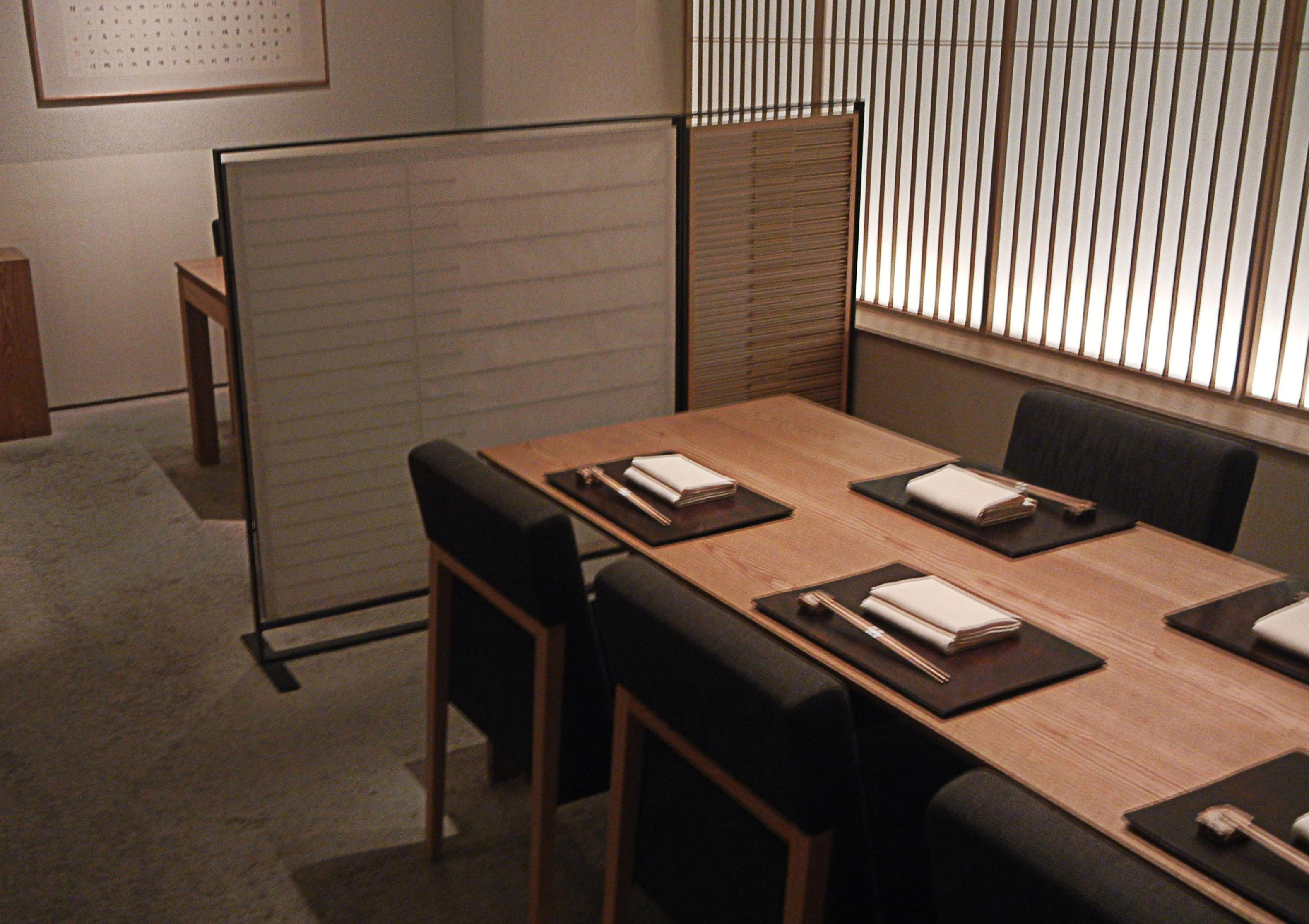
Unostentatious tatami mat seating with fugu-centric conceptual art, well-stocked sake shelves, and a tasteful, cool atmosphere.