Our verdict
Positioned on the slopes of Mount Hiei in Kyoto's Sakyo Ward, L'Oiseau Bleu occupies a corner of the city where the urban grid gives way to forest trails and temple precincts. The address alone signals a deliberate remove from Kyoto's central dining circuit, placing the restaurant in a tradition of destination dining that prizes setting as seriously as the plate.

Pearl is the En Primeur Club membership app, where members save venues, book tables and use the concierge.
Where the City Ends and the Mountain Begins
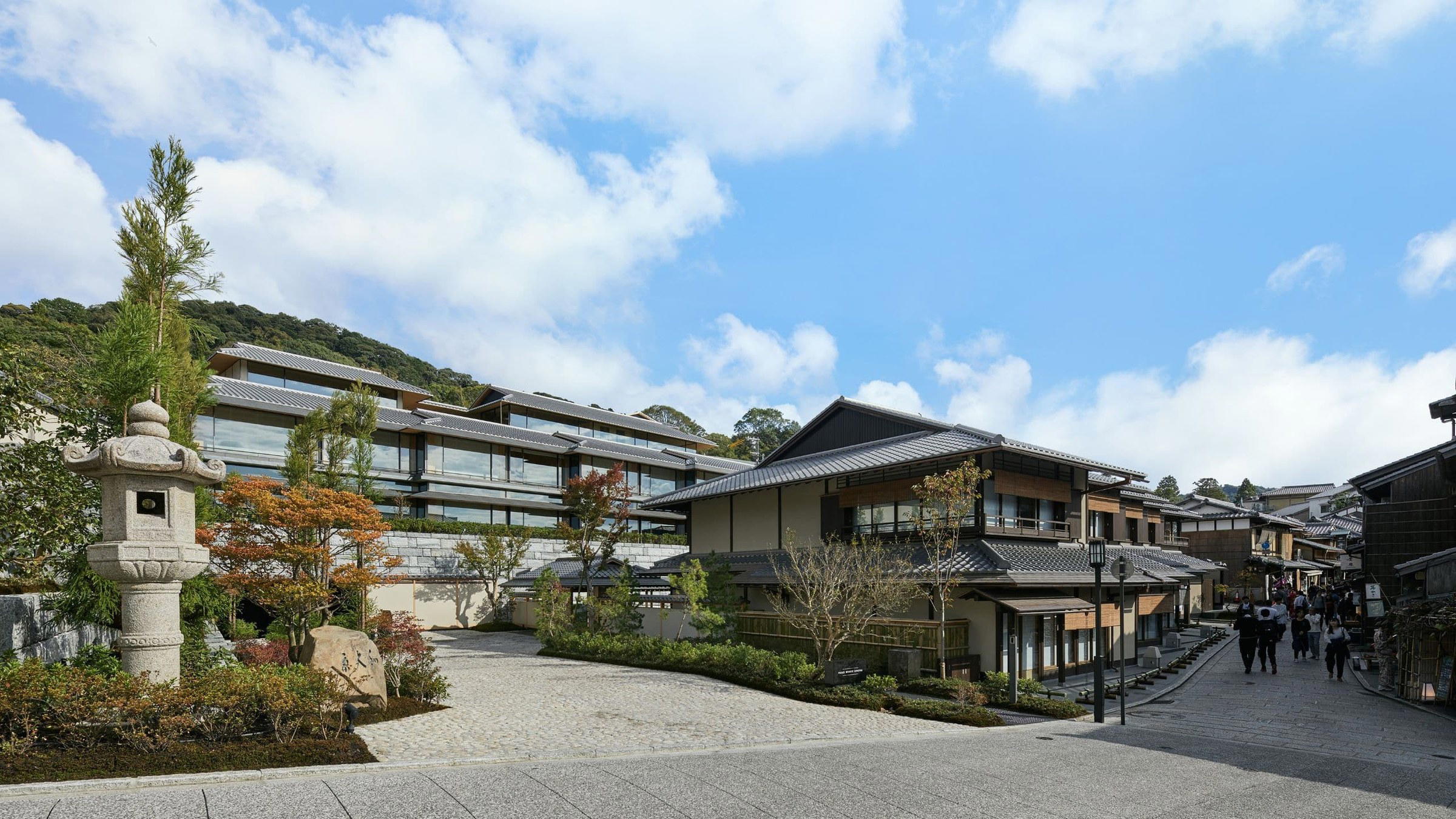
Kyoto's dining geography divides more sharply than most cities. The central wards, Nakagyo and Higashiyama, concentrate the kaiseki institutions that fill international reservation queues: Gion Sasaki, Hyotei, Kikunoi Honten. Then there is Sakyo Ward, stretching north and east toward Mount Hiei, where the residential fabric thins, the cedar canopy thickens, and a different kind of restaurant finds its logic. L'Oiseau Bleu sits on the hillside approach to Hiei, an address that functions less as a location and more as a commitment: guests arrive here because they chose to.
The physical approach matters in Kyoto in a way it does not in Tokyo. Walking or riding toward the Hiei foothills, the shift in atmosphere is gradual and then sudden, the street noise drops, the light changes quality through the tree cover, and the sense of altitude, modest as it is, creates a real separation from the city below. Restaurants that occupy this kind of position in Japan's older cities rarely rely on foot traffic. Their clientele comes with intention, and the room is built around that assumption of deliberateness.
The Sourcing Logic of the Mountain Fringe
Across Japan's premium dining tier, the most consequential divide is not between cuisines but between sourcing philosophies. The kaiseki houses that anchor Kyoto's reputation, places like Mizai and Isshisoden Nakamura, built their identities on shun, the Japanese principle of cooking in strict seasonal alignment with what regional producers and foragers can supply at peak moment. That principle did not originate as an aesthetic preference; it was a practical response to Kyoto's landlocked position and its specific agricultural microclimate, where the basin's humidity and the surrounding mountain watersheds produce vegetables of unusual intensity.
A restaurant on the Hiei slope operates within that same microclimate but from a slightly different vantage point. Mountain-adjacent sites in the Kinki region have historically had access to specific products that lower-city addresses do not: foraged mountain vegetables in spring, named sansai that vary by altitude and forest type, mushrooms whose season compresses to a narrow window in autumn, and the particular clarity of highland water sources. Whether a kitchen at this address uses those adjacencies actively or simply benefits from proximity, the ingredient logic of the location is different from a Gion or Fushimi address. Sourcing at elevation is a constraint and an advantage simultaneously.
This is a pattern visible across Japan's highland dining circuit. Restaurants in Takashima, on the western shore of Lake Biwa, and houses in the Noto Peninsula have built reputations precisely because their sourcing is geographically specific in ways that city-center addresses cannot replicate. The ingredient becomes an argument for the address, not the other way around.
Name, Language, and the French-Japanese Register
The name itself carries information. L'Oiseau Bleu, French for the blue bird, appears in a city where French nomenclature in dining has specific connotations. Kyoto's small cluster of French-influenced restaurants sits in a different competitive bracket from the kaiseki mainstream. They tend toward smaller covers, higher labor intensity per plate, and a sourcing approach that draws on French technique applied to Kyoto-basin and Kinki-region produce. This is a format that has produced some of the more interesting cooking in western Japan, and one that requires no apology for the apparent cultural friction: French culinary grammar has been applied to Japanese ingredients with enough seriousness and duration in this country that the hybrid deserves assessment on its own terms.
At the level of Japan's broader fine-dining circuit, the French-Japanese register now spans a wide range. HAJIME in Osaka operates at the three-Michelin-star tier with rigorous French structure. Harutaka in Tokyo and akordu in Nara approach the intersection from different angles. Goh in Fukuoka demonstrates that regional sourcing framed through non-Japanese culinary structure can achieve recognition independent of the Tokyo or Kyoto axis. L'Oiseau Bleu's positioning on the Hiei slope places it in the same register of intention: a kitchen working with a specific geographic logic and a culinary language that is not purely native to it.
Destination Dining and the Geography of Commitment
The decision to eat in Sakyo Ward rather than Higashiyama is not a casual one for most visitors to Kyoto. The ward covers a large area and its restaurant density is lower than the central zones. That thinness of competition creates conditions where a single address can define a district's dining identity rather than competing within an established cluster. It is the dynamic that operates in places like the Nishikawa Machi river valley, where 一軒宿 style dining consolidates around the logic of the journey rather than the convenience of arrival, or in Sapporo's outer residential districts, where address-specific restaurants serve communities that do not require a dense dining neighborhood to sustain serious cooking.
For international visitors building a Kyoto itinerary, the Hiei address requires a transport decision. The Eizan Railway reaches Yase-Hieizanguchi station at the mountain's base, and the route from central Kyoto takes under thirty minutes. That accessibility makes the remove feel intentional rather than inconvenient: close enough to reach without difficulty, far enough to feel like a separate experience from the city's main dining circuit. Readers building broader Japan itineraries can find context for how Kyoto's premium restaurants sit relative to each other in our full Kyoto restaurants guide.
Reading the Autumn and Spring Windows
Sakyo Ward has two sharp seasonal peaks. In spring, the Hiei slopes and the Ohara valley to the north carry cherry blossom sequences that run slightly later than the city center due to altitude, extending the viewing window for visitors who plan carefully. In autumn, the maple cover on the mountain approach produces color that arrives a week or two ahead of the basin below. Both windows compress the available reservation period significantly: a restaurant at this address, whatever its format, is subject to the seasonal crowding that affects all of Kyoto's northern districts at peak foliage and blossom time. Visiting outside those windows, in the quieter stretches of early summer or late winter, typically means better access and a more considered pace.
Comparative reference points outside Japan illuminate the pattern. Restaurants at Le Bernardin in New York or Atomix operate in environments where seasonal ingredient logic is present but the physical setting is fixed urban. In Kyoto's outer wards, the setting itself participates in the seasonal argument: the ingredients, the light, the approach through the trees, and the temperature of the air are all part of what the meal is about. That totality is harder to replicate in a city-center address, and it is what justifies the journey up the hill.
For readers with appetite for Japan's wider mountain-adjacent dining circuit, the connections extend to Bistro Ange in Toyohashi and the yakitori traditions explored at Birdland in Sakai, both of which operate on the principle that sourcing specificity at the regional level produces cooking that city-center density cannot.
Planning Your Visit
The Sakyo Ward address on the Hiei hillside is reached most directly via the Eizan Railway from Demachiyanagi station in central Kyoto, a route of under thirty minutes that deposits visitors at the mountain's base. For those building a broader Kyoto fine-dining itinerary, the ward's distance from the kaiseki concentration of Higashiyama makes it a natural complement rather than an alternative: pair an outer-district dinner with a central-city lunch to understand the full range of what this city's food geography offers.
Frequently asked questions
Where do I go for L'Oiseau Bleu?
L'Oiseau Bleu is located at 左京区比叡山一本杉, 京都市, 京都府, Kyoto.
Is L'Oiseau Bleu worth the trip out to Sakyo Ward for visitors staying in central Kyoto?
The Eizan Railway from Demachiyanagi makes the Hiei hillside address more accessible than the ward's size suggests, putting the journey under thirty minutes from central Kyoto. Restaurants at this remove in Sakyo Ward typically operate on the assumption that the trip itself is part of the decision, so the diner arriving here has already self-selected for commitment. For visitors with only one or two evenings in Kyoto, the calculus depends on appetite for destination dining over convenience; for those with a third or fourth night, the geographic and culinary contrast with the central wards is the point.
What's the must-try dish at L'Oiseau Bleu?
Specific menu details for L'Oiseau Bleu are not published through standard channels, which is consistent with the positioning of destination restaurants on Kyoto's Hiei hillside that change their offering around seasonal sourcing windows. The Sakyo Ward address and mountain proximity suggest the kitchen draws on produce from the Hiei slopes and Ohara valley to the north. Visiting during the spring or autumn peak seasons, when local harvests are at their most distinct, gives the best read of what the kitchen is actually doing.
What's the best way to book L'Oiseau Bleu?
No direct booking website or phone number is publicly listed for L'Oiseau Bleu, which places it among Kyoto's reservation-by-introduction or walk-in-only dining establishments. Guests staying at high-end ryokan or hotels in central Kyoto often have the best success securing a table through concierge networks familiar with Sakyo Ward venues. Planning around the Eizan Railway from Demachiyanagi, which serves the hillside address, is the practical first step once a booking is confirmed.
What's the standout thing about L'Oiseau Bleu?
The address itself is the sharpest differentiator. Sitting on the Hiei hillside in Sakyo Ward rather than in Higashiyama or central Kyoto requires deliberate intent from the diner, filtering out casual foot traffic entirely. The French name in a city where French nomenclature carries a specific connotation signals a kitchen working in the French-Japanese register rather than classical kaiseki. That combination of geographic remove and culinary framing is relatively rare in Kyoto's dining geography.
Comparable Options
| Venue | Cuisine | Price | Awards | Notes |
|---|---|---|---|---|
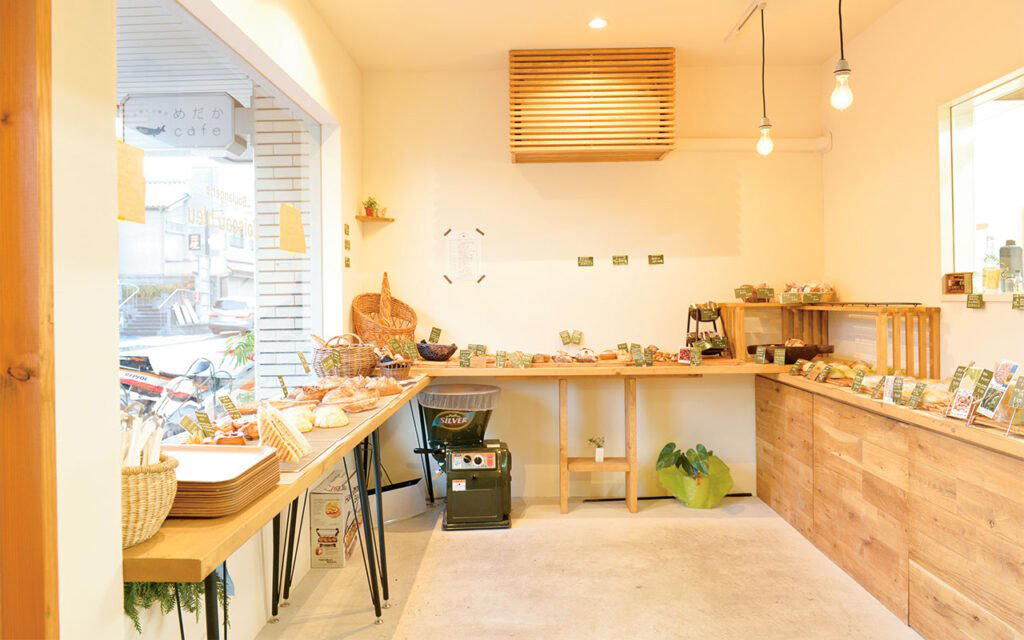
| L'Oiseau BleuThis venue (the venue you are viewing) | Vegan French Bakery | Not listed | Not listed | Not listed |
| Gion Sasaki | Modern Kaiseki | $300–500 | 3 Michelin Stars · La Liste Top Restaurants | Kaiseki, Japanese |
| cenci | Innovative Italian-Japanese Fusion | $100–150 | 1 Michelin Star · World's 50 Best #76 | Italian |
| Ifuki | Sumibi Kappo Kaiseki | $200–300 | 2 Michelin Stars · La Liste Top Restaurants | Kaiseki |
| Kyokaiseki Kichisen | Kyoto Kaiseki | $200–300 | 2 Michelin Stars · La Liste Top Restaurants | Japanese |
| Kyo Seika | Modern Chinese Fine Dining | $150–200 | 1 Michelin Star · Tabelog Bronze #216 | Chinese |