Le Kiosk sits at the Hippodrome Moulay Kamel on the edge of Fes, where the city's ancient medina gives way to open ground and afternoon light. The setting alone positions it apart from the riad-courtyard dining that defines most of the city's better-known addresses. For visitors working through Fes's dining options, it represents a different register entirely.
Pearl is the En Primeur Club membership app — saves, bookings, and concierge access live there. Same editors, same standards.
- Address
- Hippodrome Moulay Kamel, Fes 30050, Morocco
- Phone
- +212 5356 22574
- Directions
- Get directions
 Saves & bookings on Pearl
Where the City Opens Up
Most dining in Fes happens behind walls. The riad model, refined over centuries, pulls guests inward through carved doorways into tiled courtyards where light arrives from above and the street disappears entirely. Le Kiosk is a restaurant serving wood oven pizza at Hippodrome Moulay Kamel in Fes, Morocco, with a casual dress code and a walk-in-friendly policy. Le Kiosk operates on a different logic. Positioned at the Hippodrome Moulay Kamel, it sits at a point where the city exhales, where the compressed geometry of the medina gives way to open ground, wider sky, and the kind of spatial relief that makes you recalibrate how you've been reading Fes all day. That shift in physical register is the first thing you notice, and it sets the terms for everything that follows.
Fes has a dining scene that splits cleanly between two poles. At one end sit the medina's traditional houses, places like Dar Roumana and Dar Tagine, where the architecture is the experience and centuries of Fassi culinary tradition arrive in formal, often candlelit rooms. At the other end, addresses like Cafe Clock have built their reputation on informality and cultural crossover, drawing a mixed crowd of travellers and younger locals. Le Kiosk's hippodrome address places it outside both categories, which is precisely what makes it worth tracking down when you're building a week in the city.
The Sensory Logic of an Open Setting
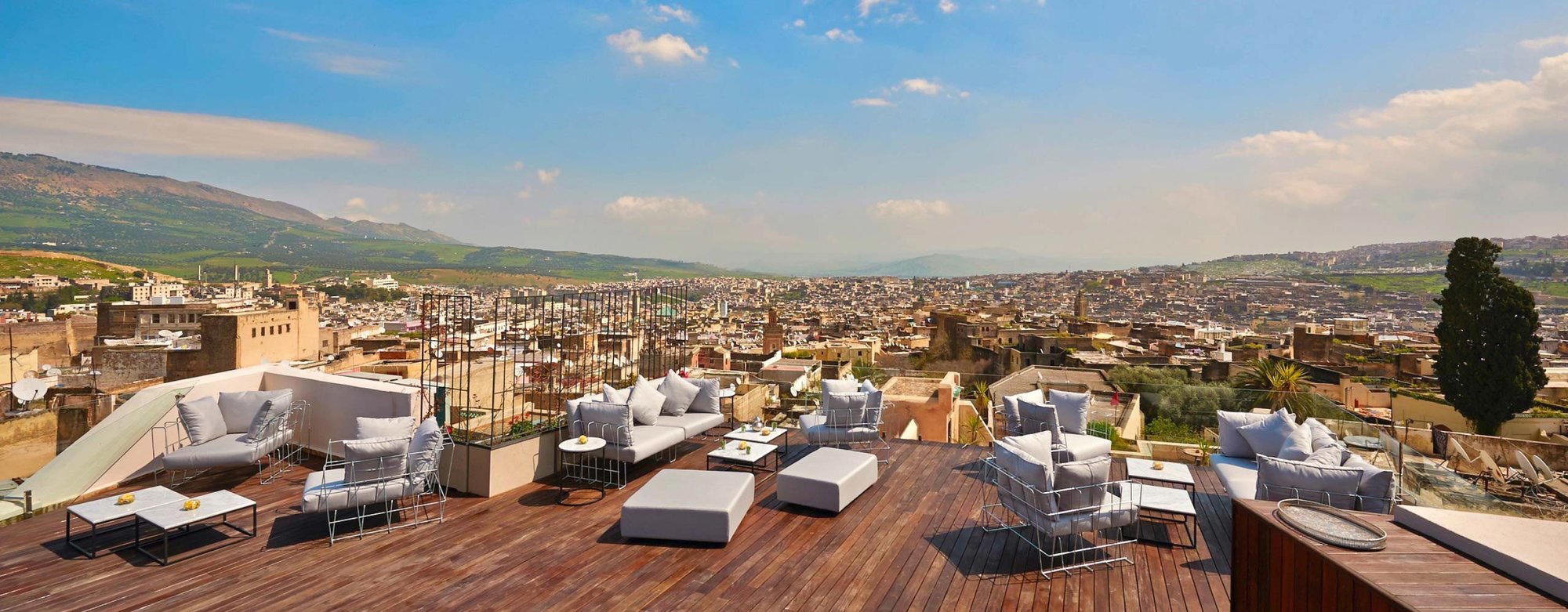
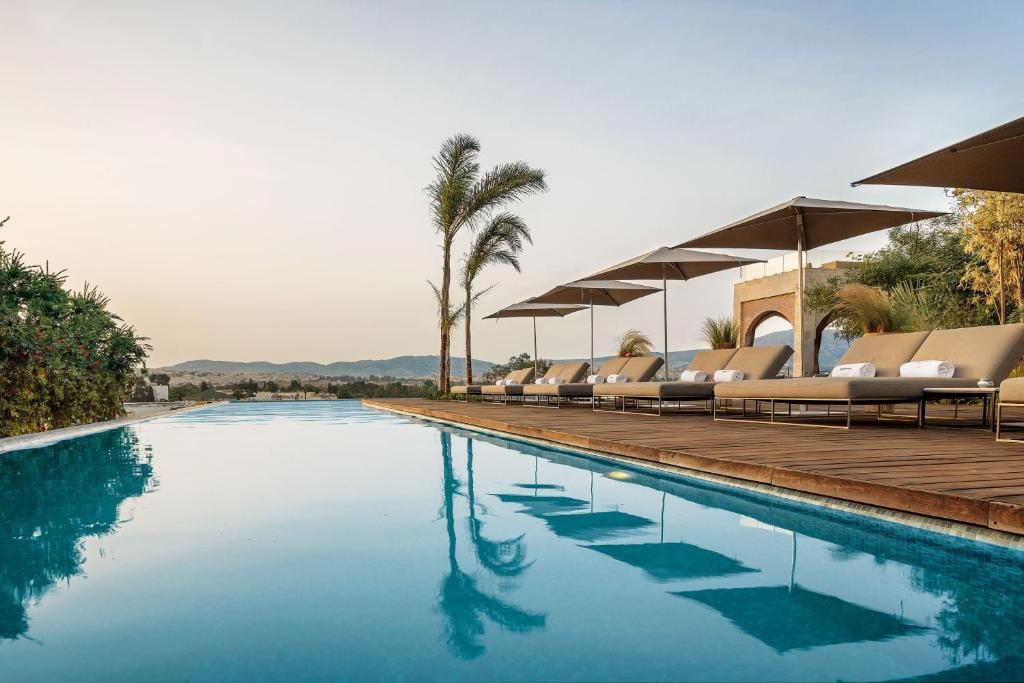
The hippodrome location does more than provide a change of scenery. Open-air dining in Morocco carries its own seasonal architecture. In spring and early autumn, when afternoon temperatures in Fes settle into the low twenties and evening air carries the faint mineral trace of the surrounding hills, an outdoor setting reads differently than it does at the height of July, when the city's interior stone becomes the only rational refuge. The period from late March through May and again from September into November represents the window when Le Kiosk's exposed position becomes a genuine asset rather than a compromise. Visitors planning around that seasonal logic will find the experience substantially different from a midsummer visit.
Morocco's open-air dining tradition has always been tied to the rhythm of the day. The long afternoon meal, the gradual cooling of early evening, the way sound carries differently once the heat breaks, these are not incidental details but structural parts of how Moroccan dining culture works at its least pressured. An address at the hippodrome, with its attendant space and air movement, slots into that tradition more directly than a riad courtyard, however beautiful the latter might be. It is a different kind of Moroccan dining experience, not a lesser one.
Fes in Its Broader Moroccan Context
Understanding the restaurant means understanding where Fes sits in the wider Moroccan dining picture. The country's most formally recognised culinary addresses have tended to cluster elsewhere. La Grande Table Marocaine at Royal Mansour in Marrakesh occupies the upper tier of Morocco's prestige dining, while Casablanca's Royal Mansour outpost anchors the commercial capital's premium offer. Tangier has its own strand of Mediterranean-influenced dining, represented by addresses like Andalus. Fes, by contrast, has remained more inward-looking, its culinary identity rooted in the medina's domestic cooking traditions rather than in the kind of outward-facing presentation that attracts international press.
That insularity is part of what makes Fes interesting to serious travellers. The city's food culture is less performed and more embedded, which means the leading experiences here tend to reward patience and local knowledge more than they reward the kind of research that works in Marrakesh. Within Fes itself, a range of addresses covers the main registers: Berrada, Darori, and Gayza each represent distinct positions in the city's dining spectrum, from traditional Fassi cooking to more contemporary interpretations. The restaurant's hippodrome setting puts it in a separate category from all of them, defined less by cuisine register than by its relationship to outdoor space and the slower pace that comes with it.
Moroccan dining more broadly has seen a growing interest in terroir-led thinking, partly driven by the wine sector. Château Roslane in the Middle Atlas represents that agricultural seriousness applied to viticulture, while the coastal south produces its own distinct dining rhythms, visible in places like the Hyatt Place Taghazout Bay in Agadir. Essaouira's slower, Atlantic-facing character shows up in an address like Le Salon Oriental. The inland agricultural zone around El Hajeb, close to Fes, has its own story to tell through places like L'Oliveraie. Fes, sitting at the intersection of the Saharan trade routes and the Rif foothills, has always been a city where these wider Moroccan threads converge.
Planning a Visit
The hippodrome address at Moulay Kamel is the reliable anchor point. Visitors arriving in Fes's ville nouvelle will find it more accessible than the deeper medina addresses; those coming from the old city should allow time for the transition, which is part of the experience rather than a logistical inconvenience. For particularly comfortable conditions, the spring and early autumn windows are the ones to target, when the outdoor setting works with the climate rather than against it.
Internationally, the contrast between immersive outdoor dining and tightly controlled indoor formats has sharpened as a point of differentiation. The kind of considered, format-driven experience you find at Lazy Bear in San Francisco or the precise technical execution of Le Bernardin in New York City represents one pole of that spectrum. The restaurant sits at the opposite pole, not in terms of quality aspiration, but in terms of the register it operates in. The hippodrome setting speaks to a version of dining where space, light, and the texture of a specific Moroccan afternoon do more work than any single dish could manage on its own. For visitors whose Fes itinerary has been heavy on interior drama, that trade-off is worth making deliberately and at least once. Equally, the informal energy of BÔ ZIN near Marrakesh shows how outdoor settings across Morocco can shift the entire social temperature of a meal in ways that enclosed venues rarely manage.
Peers You’d Cross-Shop
Comparable venues nearby, for context on price, style, and recognition.
| Venue | Cuisine | Price | Notes |
|---|---|---|---|
| Le KioskThis venue — the venue you are viewing | Wood Oven Pizza | $$ | Not listed |
| Cafe Clock | Moroccan Fusion Cafe | $$ | Medina |
| L'Amandier | Refined Fassi Moroccan | $$$$ | Quartier Ziat |
| Dar Roumana | Franco-Moroccan Fusion | $$$$ | Medina |
| Riad Fès | Moroccan-French Fusion Fine Dining | $$$$ | Medina |
| NUR | Modern Moroccan Fine Dining | $$$$ | Medina |
At a Glance
- Casual
- Casual Hangout
- Standalone
- Street Scene
Current opening hours
- Monday
- 11 AM–11 PM
- Tuesday
- 11 AM–11 PM
- Wednesday
- 11 AM–11 PM
- Thursday
- 11 AM–11 PM
- Friday
- 11 AM–11 PM
- Saturday
- 11 AM–11 PM
- Sunday
- 11 AM–11 PM
Hours can change for holidays and private events. Last verified .