


A 14th-century Hispano-Moorish palace in the heart of Fès el-Bali, Riad Fès operates as a Relais & Châteaux property with 30 rooms and a formal restaurant, Gayza, that merges Moroccan technique with French haute cuisine traditions. Moroccan-owned and architect-designed, it sits at the upper end of the medina's riad accommodation tier, with rates from US$226 per night.
Pearl is the En Primeur Club membership app — saves, bookings, and concierge access live there. Same editors, same standards.
- Address
- 5 Derb Zerbtana, Fès 30100
- Phone
- +212 5 35 74 12 06
- Website
- riadfes.com
- Directions
- Get directions
 Saves & bookings on Pearl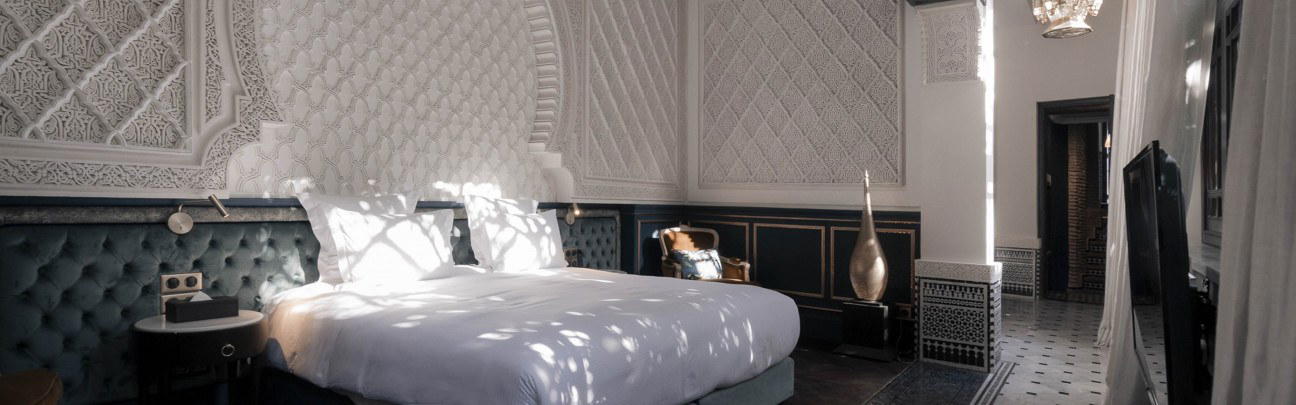
Arriving in the Medina
The approach to any riad in Fès el-Bali requires a certain surrender. Streets narrow to shoulder-width, mule traffic competes with foot traffic, and the sensory register shifts completely from anything resembling a conventional hotel arrival. Riad Fès, at 5 Derb Zerbtana in the Batha quarter, is reached on foot from Sidi El-Khayat square, a walk of roughly two minutes from the point where cars can no longer follow. That threshold crossing is not incidental to the experience; it is the experience. The city beyond the walls is loud, layered, and relentlessly medieval. The moment you step into a riad's internal courtyard, the contrast is absolute.
What distinguishes Riad Fès from the large number of renovation projects that have transformed Fès el-Bali's property stock over the past two decades is the background of its ownership. The property is Moroccan-owned and was overseen by an architect, and that combination shows in the confidence of the interiors: proportions respected, ornamental detail contextualised, nothing apologetically rustic or self-consciously exotic. The rehabilitation of this 14th-century palace was framed explicitly as an act of cultural stewardship, restoring a former notable's residence in a manner consistent with the Hispano-Moorish tradition it came from. The result reads less like a boutique hotel project and more like a serious piece of architectural conservation that happens to accommodate guests.
What Riad-Scale Hospitality Delivers Here
Morocco's premium riad market has stratified considerably. At one end sits the small, foreign-owned maison d'hôte, typically six to twelve rooms, intimate to the point of sparse, where food service is often improvised. At the other end, a handful of larger properties operate at something closer to small hotel density while preserving the courtyard-and-patio spatial logic that defines the riad typology. Riad Fès sits firmly in the latter group, with 30 rooms and suites, a hammam, a spa operation run in partnership with Cinq Mondes and marocMaroc, and shuttle access to the Fès Royal Golf Club.
That fuller-service footprint matters for guests who want medina immersion without trading away amenity depth. Properties like Karawan Riad and Riad Laaroussa offer more intimate scales with their own distinct characters. For those who prefer a larger, internationally branded footprint in Fès, the Fes Marriott Jnan Palace occupies a different tier entirely, positioned outside the medina walls. Riad Fès sits between those poles: architecturally and culturally embedded in the old city, operationally equipped like a proper hotel.
The service approach aligns with the property's service standards, which place significant weight on personalisation and host-guest relationship rather than standardised procedure. In this context, that membership signals something specific: a commitment to anticipatory service calibrated to the individual rather than the category of traveller. At the hotel, that means the guest experience extends from room assignment through to dining guidance and city orientation, the staff function less as hotel operatives and more as informed local intermediaries. For guests arriving in Fès for the first time, that distinction matters more than it would in a city with an established tourist infrastructure of the Marrakesh variety.
Gayza: French Technique, Moroccan Ingredient
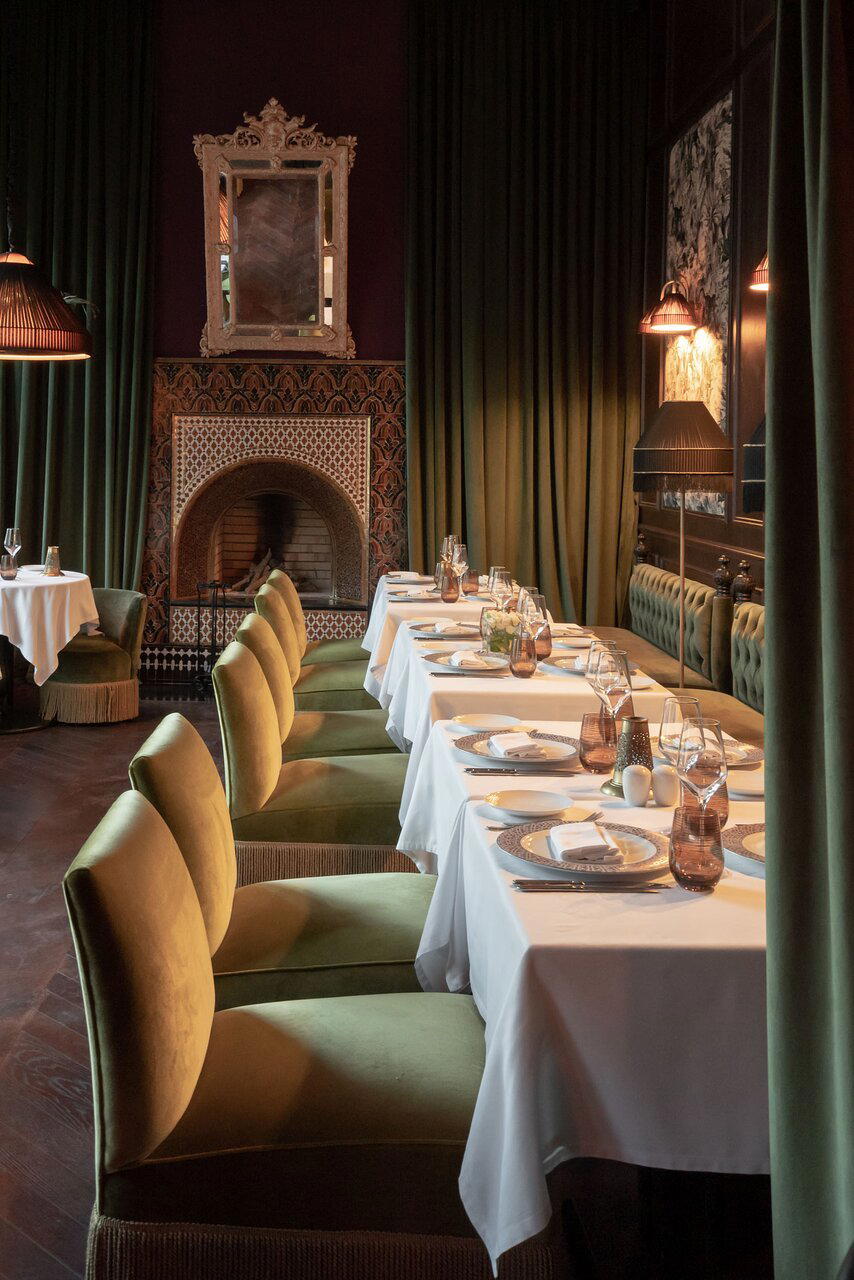
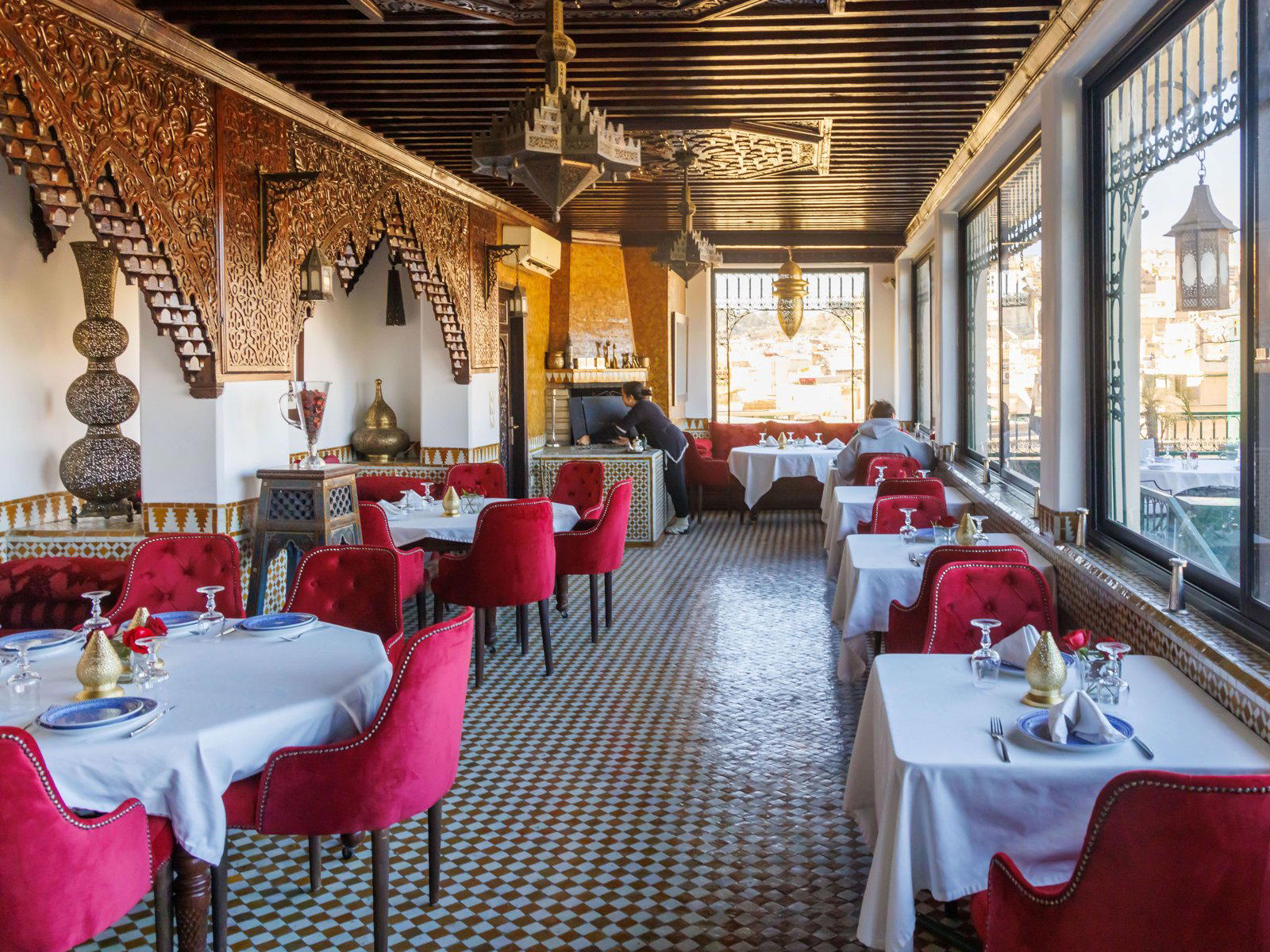
The restaurant question in riad hotels is frequently an afterthought. Many properties of this type treat food service as a courtesy function, breakfast buffet, occasional tagine, that's the extent of it. The hotel invested differently. Gayza, the in-house restaurant, operates with three distinct dining rooms and a menu that positions itself within the tradition of the Disciples of Escoffier, the international culinary society with French haute cuisine at its foundation, while drawing on Moroccan ingredients and technique.
Franco-Moroccan fusion register is well-trodden territory in Morocco's premium dining sector, but the framing here is specific: this is French method applied to Moroccan flavour, not the reverse. Dishes such as Quail Pastilla and Monkfish Medallion with Chermoula, named in the property's own materials, demonstrate a willingness to engage the classic Moroccan canon at the technique level rather than just deploying it as flavour colouring. The dining rooms overlook the new pool and its green-walled surround, creating a setting calibrated for the kind of slow dinner that requires no particular destination after it.
Architecture and Atmosphere
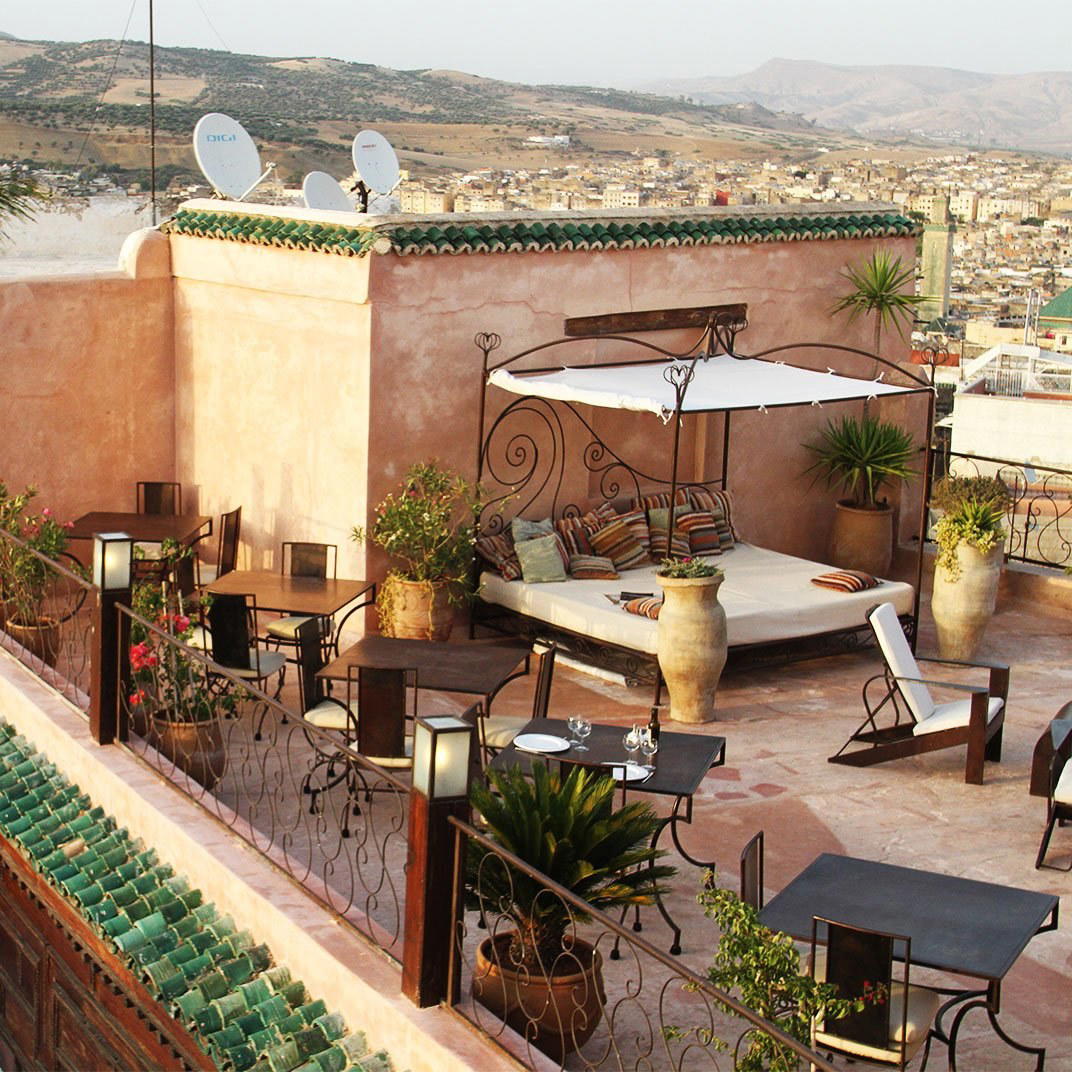
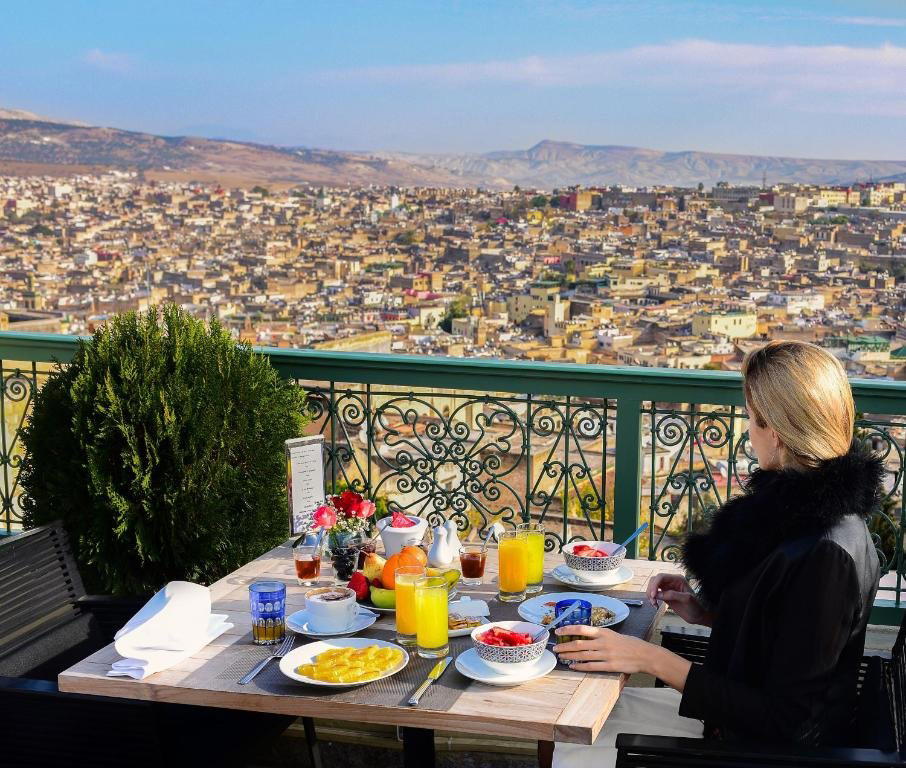
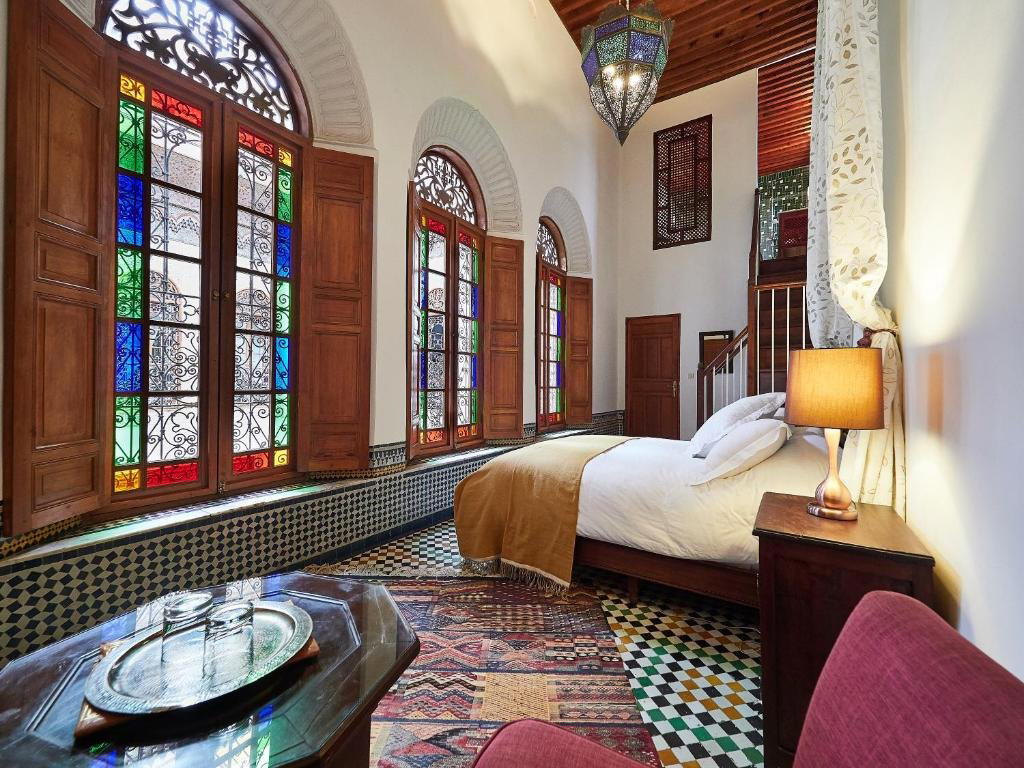
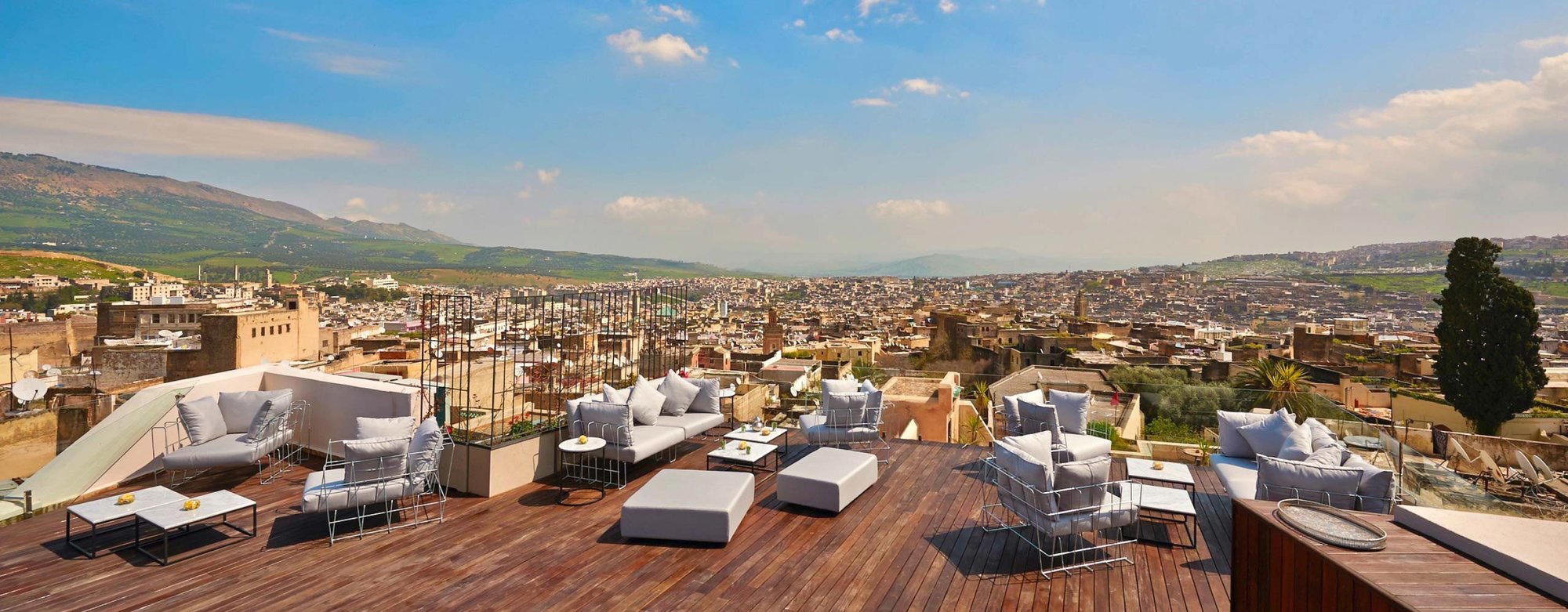
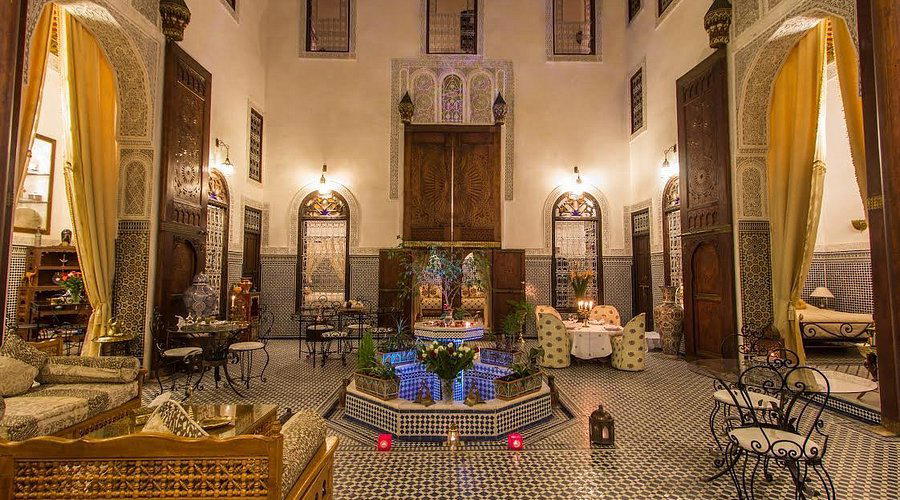
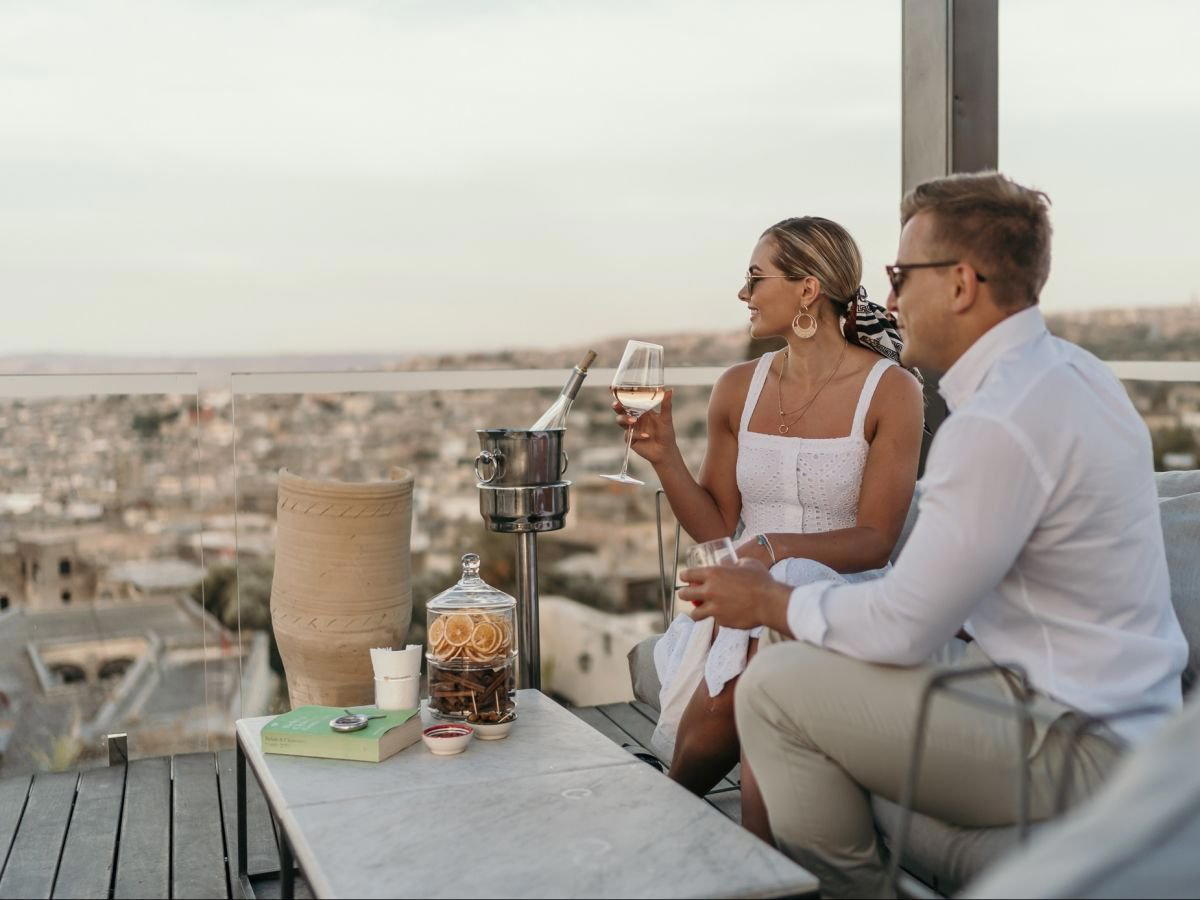
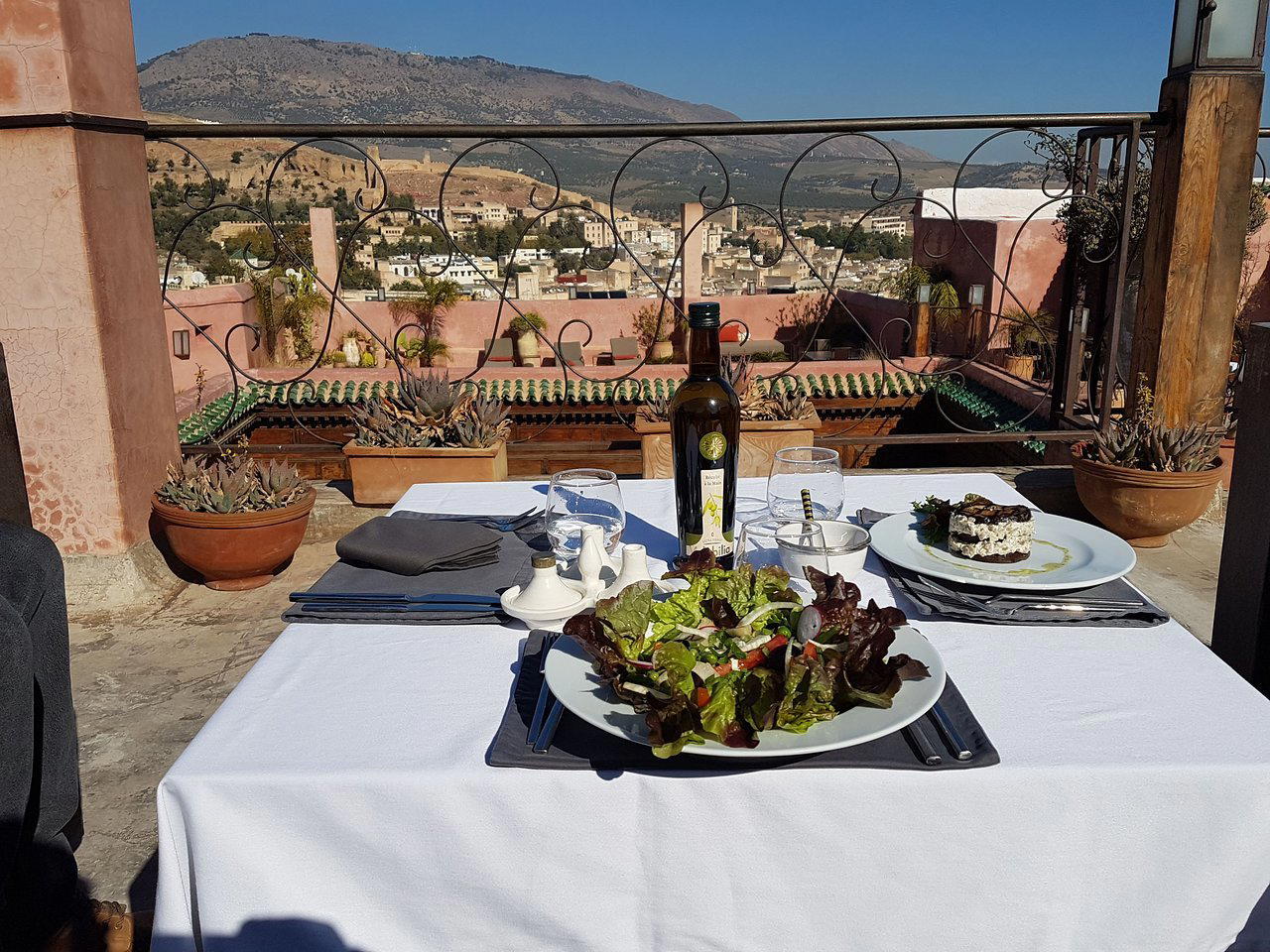
Physical language of the hotel is Hispano-Moorish: zellige tilework, carved plaster, cedar woodwork, internal patios organised around water. These are not decorative choices; they are the structural grammar of the building, which dates to the 14th century. The restoration respected that grammar while integrating contemporary comfort, rooms carry a mix of traditional and contemporary styling, with modern facilities throughout. The rooftop provides an unobstructed view across the medina, a vantage point that gives physical context to what remains among the more intact medieval urban environments anywhere in the world.
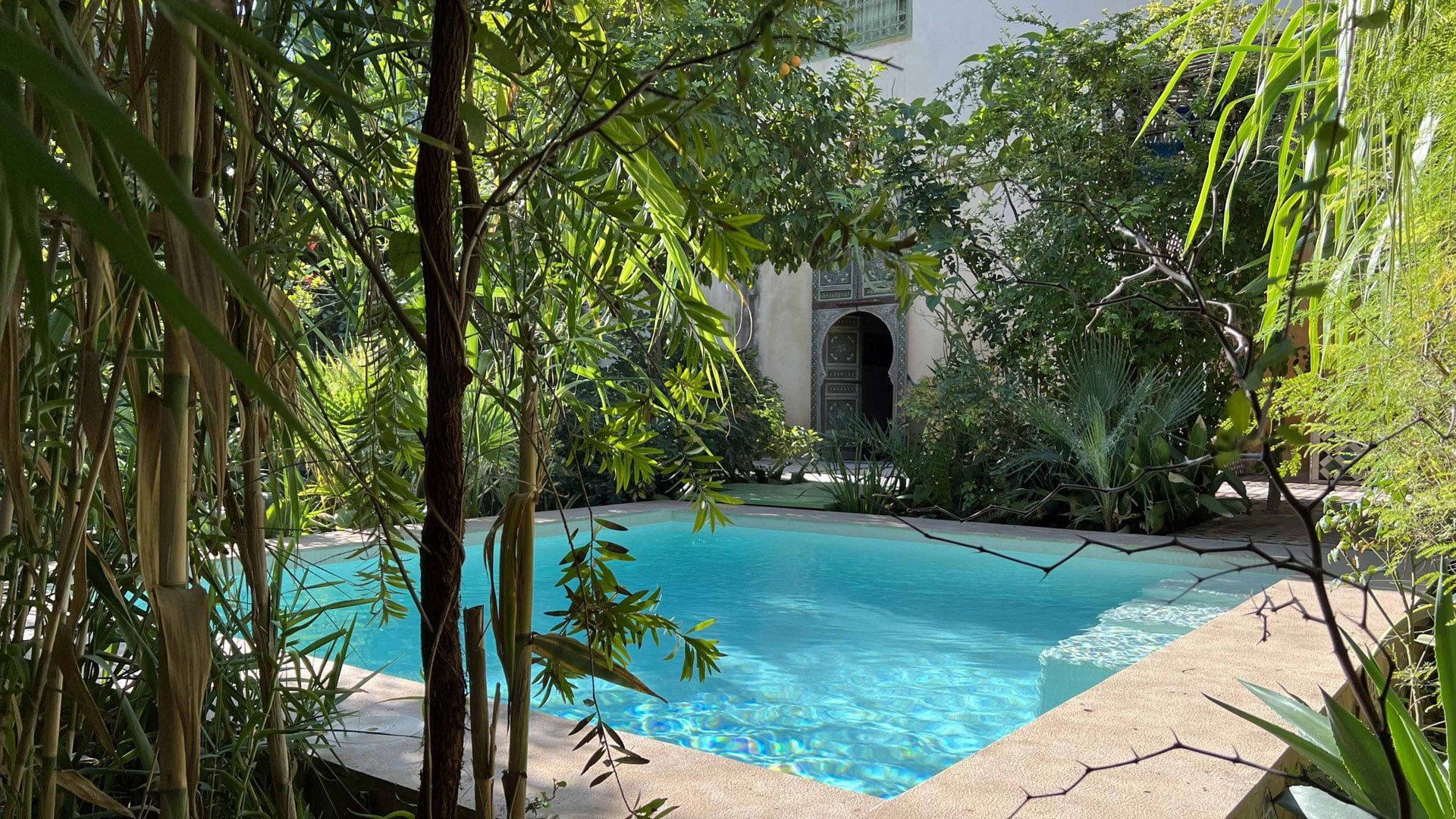
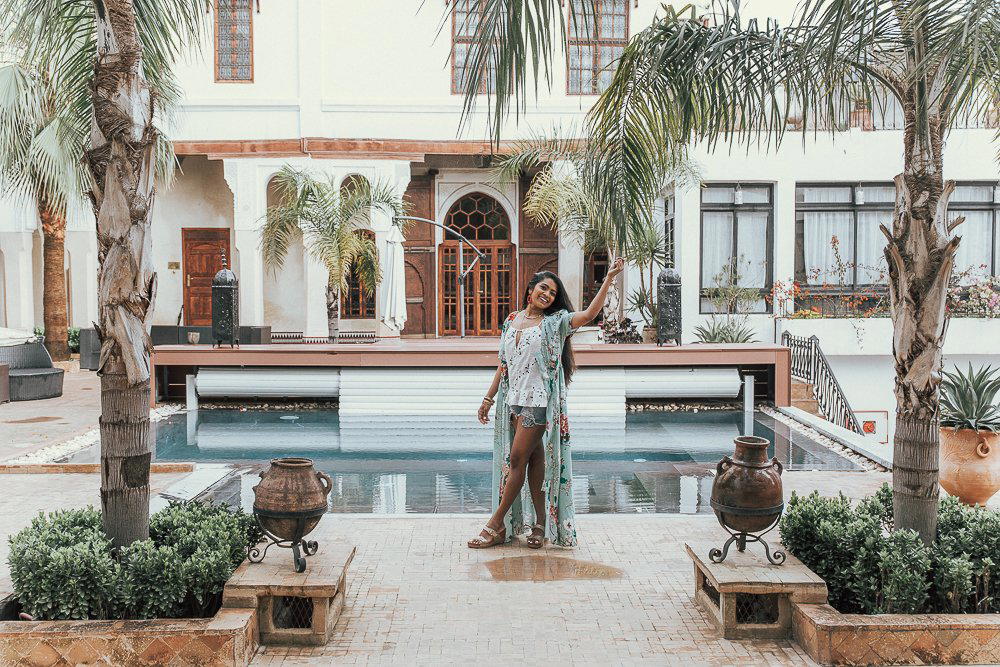
Spa, designed by Christophe Pillet, occupies a separate register from the architecture: cleaner lines, a more controlled atmosphere, calibrated for the kind of silence that a day in the medina makes genuinely appealing. The patios with their pool add a spatial dimension that many smaller riads cannot offer, a place to reset between excursions into the city without requiring departure from the property.
Fès in the Morocco Itinerary
Morocco's premium accommodation market concentrates heavily in Marrakesh, where properties like La Mamounia and Jnane Tamsna anchor a large, sophisticated hospitality offer. Fès occupies a different position: smaller international footprint, less tourist-industry infrastructure, and a medina that UNESCO designated a World Heritage Site and that functions, practically speaking, as a living medieval city rather than a preserved monument. The argument for Fès over Marrakesh is architectural and historical depth. The argument for the hotel specifically is that it provides the logistical reliability of a Relais & Châteaux operation in a city where that level of operational consistency is considerably less common.
For broader Morocco travel, the country's premium hotel market extends beyond its major cities. Properties like Hotel Sahrai, an SLH Hotel in Fes, offer design-led contemporary alternatives within the city. Further afield, options include Dar Ahlam in Ouarzazate, Dar Maya in Essaouira, Kasbah Tamadot in Asni, La Sultana Oualidia, Michlifen Resort & Golf in Ifrane, Banyan Tree Tamouda Bay in Fnideq, Dar al Hossoun in Taroudant, Fairmont La Marina Rabat Salé, Fairmont Tazi Palace Tangier, Hilton Taghazout Bay, La Fiermontina Ocean in Larache, Rabat Marriott Hotel, Hyatt Regency Casablanca, and Château Roslane in Icr Iqaddar for wine-focused travellers.
Planning Your Stay
Cuisine Context
Comparable venues nearby, for context on price, style, and recognition.
| Venue | Cuisine | Price | Awards | Notes |
|---|---|---|---|---|
| Riad Fès | Restored 19th-century family residence spanning five riads with Moorish grandeur. | $$$$ | Michelin 1 Key | Fes El Bali |
| Riad Laaroussa | 17th-century Moroccan palace riad with authentic restoration | $$$ | Michelin 1 Key | Fes Medina |
| Fes Marriott Jnan Palace | Luxurious urban palace with beautiful gardens and modern Moroccan elegance. | $$$$ | 5-Star | Ville Nouvelle |
| Palais Faraj Suite & Spa | Luxury boutique palace hotel blending 19th-century Moroccan architectural heritage with contemporary comfort and service. | $$$$ | 5-Star | Bab Ziat, Fes El Bali |
| Karawan Riad | Luxury boutique riad in a 17th-century building renovated in 2014 with traditional Moroccan architecture. | $$$$ | Michelin 1 Key | Fes El Bali |
| Riad El Amine Fes | traditional Moroccan palace | $$$$ | 5-Star | Fes El Bali |
Recognition history
Dated appearances from independent guides and award organizations, with the underlying list record or original source where available.
Mr & Mrs Smith Smith Seal of Approval
Mr & Mrs Smith
Relais Chateaux Award
Relais Chateaux
Virtuoso Luxury Hotel Partner
Virtuoso
Michelin 1 Key
Michelin
Relais Chateaux Award
Relais Chateaux
At a Glance
- Elegant
- Romantic
- Intimate
- Sophisticated
- Ornate
- Honeymoon
- Romantic Getaway
- Anniversary
- Historic Building
- Panoramic View
- Terrace
- Pool
- Spa
- Wi Fi
- Room Service
- Concierge
- Fitness Center
- Restaurant
- Mountain
- Skyline
- Pool
- Spa
- Wi Fi
- Room Service
- Concierge
- Fitness Center
- Restaurant
Softly lit courtyards with ornate zellige tiles, carved wood, and elegant drapery create a serene, timeless Arabian Nights atmosphere.