Château Roslane

Relais Chateaux Award
Our verdict
Set on the Celliers de Meknès wine estate beneath the Middle Atlas, Château Roslane operates at the intersection of French technique and Moroccan tradition. The Hispano-Moorish architecture frames a dining experience shaped by estate-grown wine and the cooking of Chef Marco Offidani. For those moving through Morocco's imperial cities, it represents one of the more considered stops in the Meknès corridor.

Pearl is the En Primeur Club membership app, where members save venues, book tables and use the concierge.
Wine Country Dining in Morocco's Most Overlooked Imperial City
Meknès sits in a strange position in the Moroccan travel circuit. It carries the full weight of imperial history, the Bab Mansour gate, the medina, the granaries of Moulay Ismail, yet the city rarely receives the same editorial attention as Marrakesh or Fès. That neglect extends to its table. Which makes the dining room at Château Roslane, set within the Celliers de Meknès estate on the eastern approach to the city, a more interesting proposition than it might appear from the outside. This is estate dining as it tends to work in wine-producing regions worldwide: the kitchen and the cellar are in direct conversation, and the setting does considerable work before a plate arrives. For those exploring our full Icr Iqaddar restaurants guide, Château Roslane occupies a category of its own.
The Architecture Does the First Impression
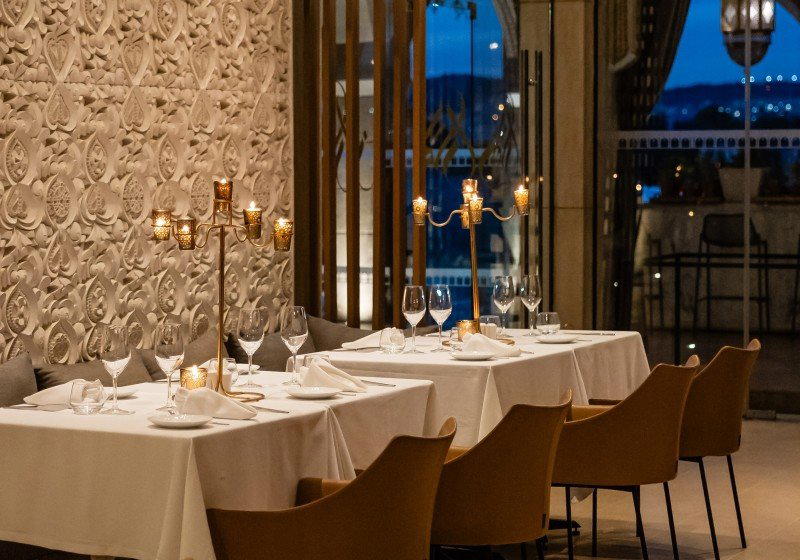
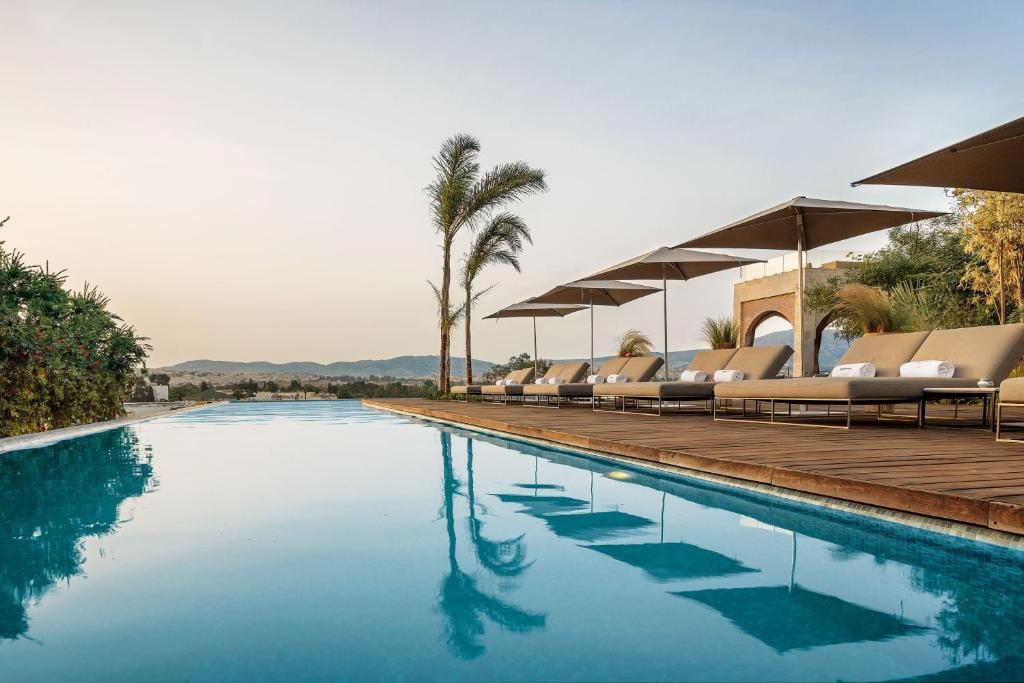
Approaching from the Meknès Est autoroute exit, the GPS coordinates place you at 33.7581, -5.4331, the estate's Hispano-Moorish architecture comes into view against the Atlas foothills backdrop. This is a style that draws on both Andalusian and North African decorative traditions: horseshoe arches, zellige tilework, carved plasterwork registers that read as simultaneously Islamic and Mediterranean. The effect is common enough in Morocco's grand properties that it risks feeling formulaic, but at Château Roslane the estate context gives it a different function. This is not a riad hotel styling itself as historic. It is a working wine property that happens to have been built with architectural ambition, and the views toward the Middle Atlas give the dining experience a territorial logic that properties in dense medinas cannot replicate.
The French-Moroccan Kitchen in Regional Context
The cuisine type listed for Château Roslane is French Moroccan, the same classification that applies to L'Italien par Jean-Georges in Marrakesh, though the two kitchens operate in entirely different registers. In Marrakesh, French-Moroccan fusion tends to track the international hotel dining market, calibrating to the expectations of guests already familiar with the city's reputation. In Meknès, the frame shifts. The agricultural hinterland around the city, olives, cereals, fruits, the vines of the Meknes appellation itself, provides a more specific larder, and the French technical tradition here serves as a structural approach rather than a marketing category.
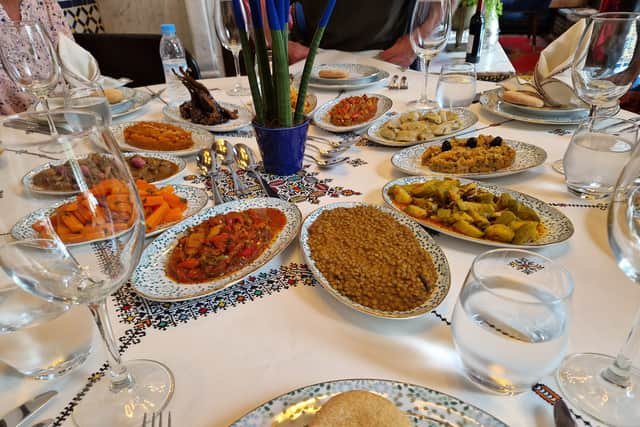
Chef Marco Offidani leads the kitchen. In an estate dining context, the chef's role is partly curatorial: the wine program from Celliers de Meknès sets parameters that the menu works within, rather than the reverse. The French-Moroccan approach at this kind of property tends to express itself through a starting spread, the opening courses that in Moroccan tradition function as a display of hospitality and abundance before the central dish arrives. Think preserved lemons alongside a richer preparation; olive oil from the region used as a dressing and a cooking medium simultaneously; the kind of dips and spreads that collapse the distinction between French mise en place and Moroccan kemia. Where a Parisian kitchen might send out a single amuse-bouche to signal restraint, a Moroccan opening course signals generosity, and the leading kitchens in this tradition use that difference deliberately. For comparison, the coastal approach to the same French-Moroccan framework plays out quite differently at Heure Bleue Palais in Essaouira, where the Atlantic context shapes the larder in an entirely different direction.
The opening spread format, hummus-adjacent preparations, roasted vegetable dips, herb salads dressed simply with local oil and lemon, is where the Moroccan table tends to be most legible to visitors arriving without prior context. The kemia tradition in the Meknès region draws on Andalusian culinary memory, reflecting the history of communities expelled from Spain who settled in Meknès and Tétouan. That history is embedded in the flavor vocabulary: the preference for vinegar-and-herb marinades, for fried small fish, for the sweet-sour combinations that read as distinctly North African but carry a Mediterranean structure underneath. At an estate property like Château Roslane, the wine from the cellar, the Meknes appellation produces Cabernet Sauvignon, Syrah, and white varieties under altitude conditions that give the wines more structure than Moroccan wine's modest international reputation suggests, provides an anchor for that opening spread that a dry table cannot offer.
Placing Château Roslane in the Moroccan Fine Dining Map
Morocco's premium dining tier is small and geographically concentrated. The most documented examples cluster in Marrakesh and Casablanca: the Royal Mansour's La Grande Table Marocaine in both cities, the fine hotel restaurants of Casablanca's business district (see Hôtel Le Doge in Casablanca), and the destination restaurants of the southern medinas. The imperial cities of the north, Meknès, Fès, have historically played a supporting role in that hierarchy, despite the fact that Fès in particular has a documented claim to being the origin of several dishes now considered foundational to Moroccan cuisine. Meknès adds a further dimension: it is the country's primary wine-producing zone, and the integration of estate wine into a restaurant experience is more naturally expressed here than anywhere else in Morocco. Gayza in Fès represents the neighboring city's interpretation of that same regional tradition.
For travelers who have already worked through the established Marrakesh circuit, perhaps including Le Petit Cornichon or +61, the Meknès corridor offers a different register entirely. The pace is slower, the tourist infrastructure thinner, and the connection between landscape and table more direct. The proximity to L'Oliveraie in El Hajeb, roughly 30 kilometers southeast along the same mountain axis, suggests a logical day-itinerary for those moving between Meknès and the Middle Atlas.
Getting There and Planning Your Visit
The estate is accessible by car from the Meknès Est autoroute exit, following the fast road toward El Hajeb. The address, 11 Rue Ibn Khaldoune, Meknès 50000, places it within the Celliers de Meknès complex. By air, the nearest international airport is Fès-Saïss, approximately 60 kilometers from the estate; this makes Château Roslane a logical stop on a Fès-to-Meknès itinerary rather than a standalone destination requiring a separate base. Train connections into Meknès central station are available from Casablanca, Rabat, and Fès, with the estate reachable by taxi from the station. Travelers staying in the area should consult our full Icr Iqaddar hotels guide for accommodation options, and our experiences guide for what else the region offers beyond the table.
Frequently asked questions
Where is Château Roslane located?
Château Roslane is located at 50 000، Les Celliers de Meknès، 11 Rue Ibn Khaldoune، Meknès 50000, Morocco, Icr Iqaddar.
Comparable Venues
Comparable venues nearby, for context on price, style, and recognition.
| Venue | Cuisine | Price | Awards | Notes |
|---|---|---|---|---|
| Château RoslaneThis venue (the venue you are viewing) | Organic Gourmet Cuisine | Not listed | Relais Chateaux Award | Not listed |
| Le Kiosk | Wood Oven Pizza | $20–30 | Not listed | Ville Nouvelle |
| Iloli | Modern Japanese Gastronomy | $30–50 | La Liste Top Restaurants | Gauthier |
| Farasha Farmhouse-Mouton Noir | Mediterranean Farm-to-Table | Not listed | The Best Chef One Knife | Route to Fez |
| Le Jardin d'Hiver | Moroccan-Mediterranean Fusion Fine Dining | $50–100 | Relais Chateaux Award | Palmeraie |
| Luminà Restaurant | Moroccan-inspired International Fusion | Not listed | Not listed | Anfa |
Recognition history
Dated appearances from independent guides and award organizations, with the underlying list record or original source where available.
Relais Chateaux Award
Relais Chateaux
Continue exploring
More in Icr Iqaddar
Restaurants in Icr Iqaddar
All restaurants in Icr Iqaddar →
Bars in Icr Iqaddar
Browse all →
Hotels in Icr Iqaddar
All hotels in Icr Iqaddar →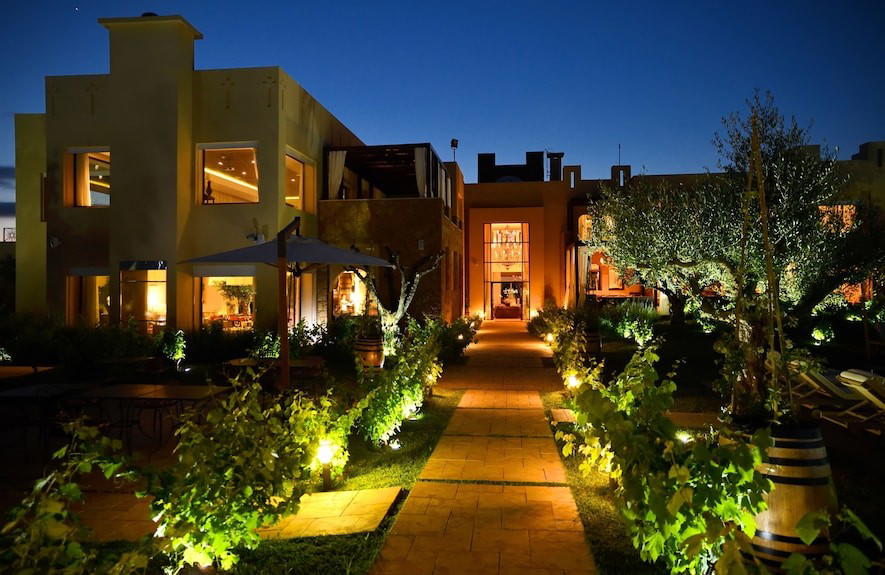
Wineries in Icr Iqaddar
Browse all →
Château Roslane
The wine
- Wine program
- Deep wine list
- Extensive wine list
Details
- Romantic
- Elegant
- Scenic
- Intimate
- Sophisticated
- Date Night
- Special Occasion
- Garden
- Historic Building
- Hotel Restaurant
- Extensive Wine List
- Organic
- Local Sourcing
- Mountain
- Vineyard
- Garden
- A La Carte
- Wine
- Organic Focus
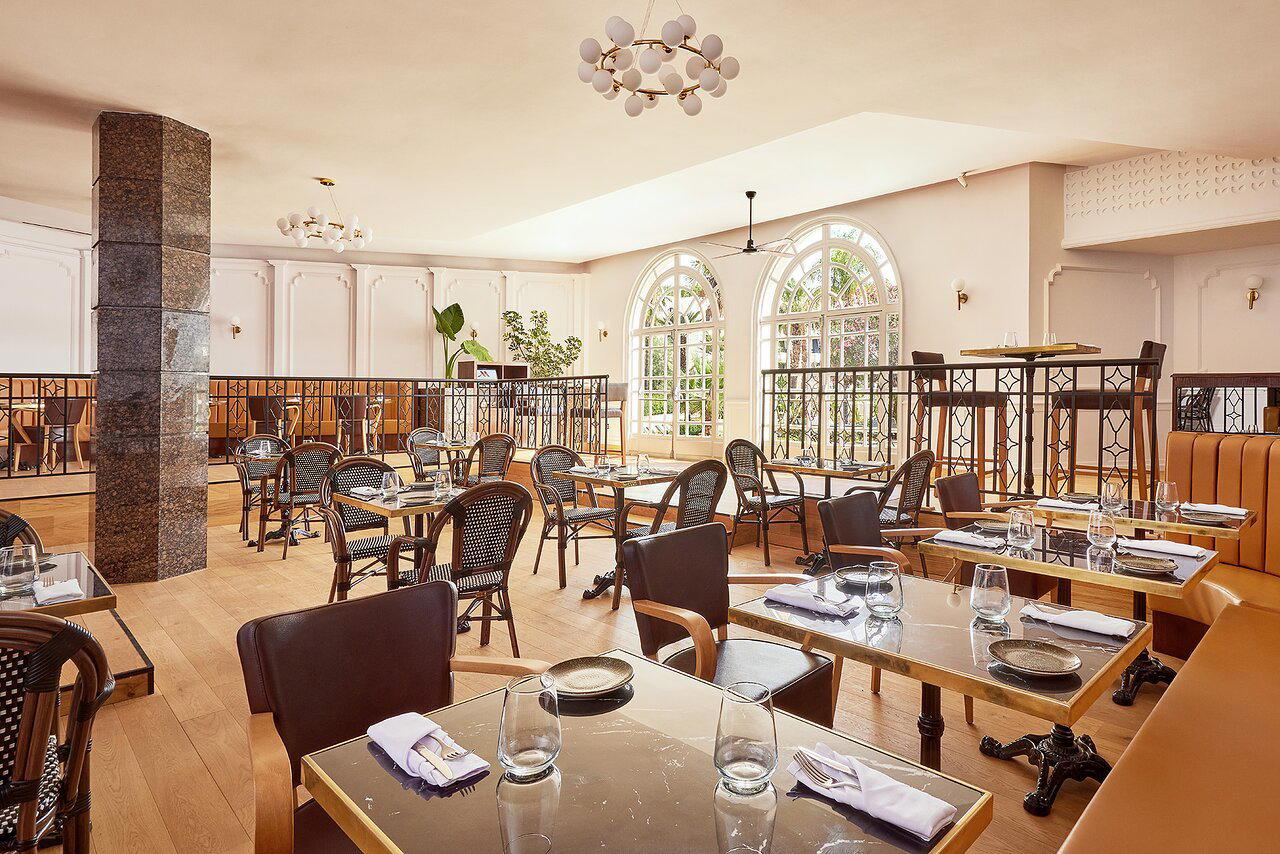
Luminous rooms blending contemporary decor with Spanish-Moorish architecture, noble materials, balconies overlooking mountains, vineyards, and lavender fields for complete relaxation.