

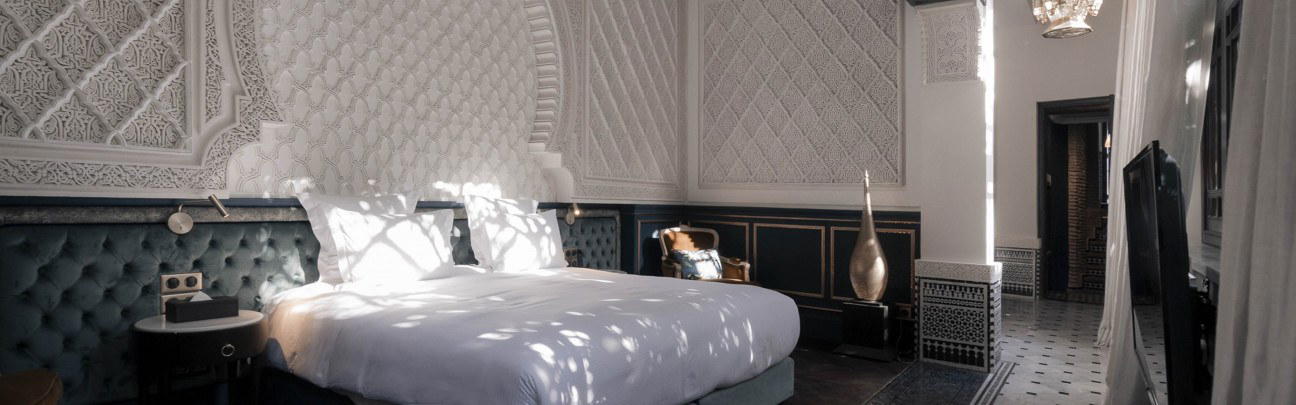
Palais Faraj Suites & Spa occupies a hillside position at the edge of Fez's medina, offering 31 suites decorated in 19th-century Moroccan palace style. The dining programme spans Restaurant L'Amandier, a rooftop garden, and the Golden Bar, all framing medina views. For travellers approaching Fez's imperial architecture through its food and interiors, this is a considered base.
Pearl is the En Primeur Club membership app — saves, bookings, and concierge access live there. Same editors, same standards.
- Address
- Bab Ziat
- Phone
- +212535635356
- Directions
- Get directions
 Saves & bookings on Pearl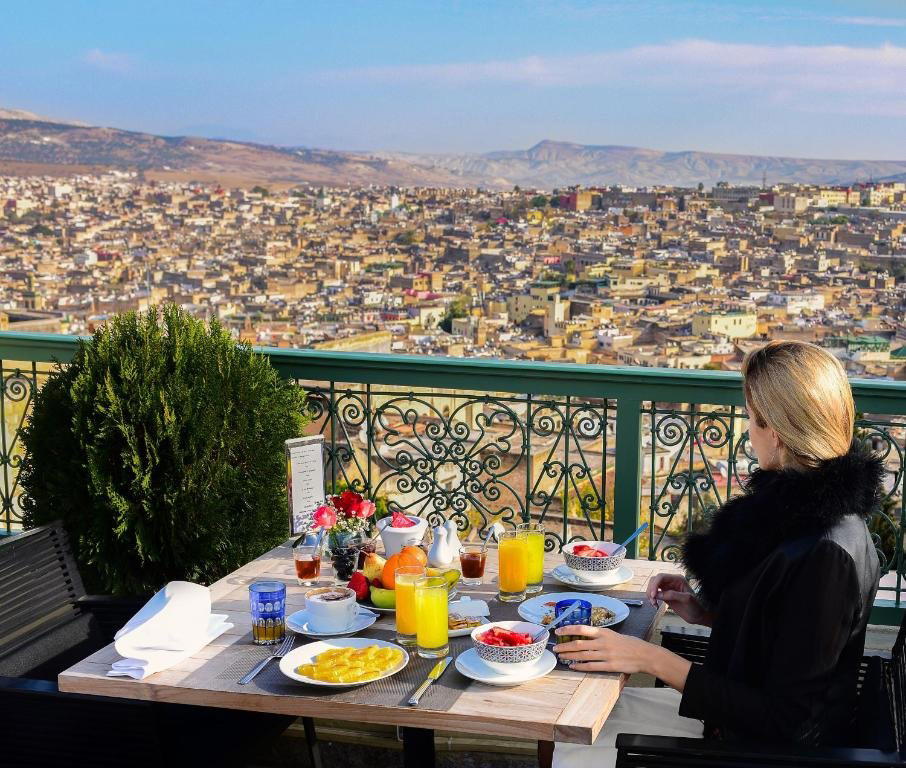
Where the Medina Meets the Hillside
Approaching Palais Faraj from the Bab Ziat quarter, the shift from medina noise to refined stillness is abrupt and deliberate. The property sits on a ridge above the old city, positioned so that the visual panorama of Fez el-Bali — minarets, tiled rooftops, the faint haze above the tanneries — becomes part of the architecture itself. This is not incidental geography. Among the premium properties in Fez, the hillside position is a defining competitive advantage, separating Palais Faraj from riad-format hotels that sit within the medina's interior and trade views for immersion. Properties like Riad Mayfez Suites & Spa offer the enclosed courtyard experience; Palais Faraj offers the panorama.
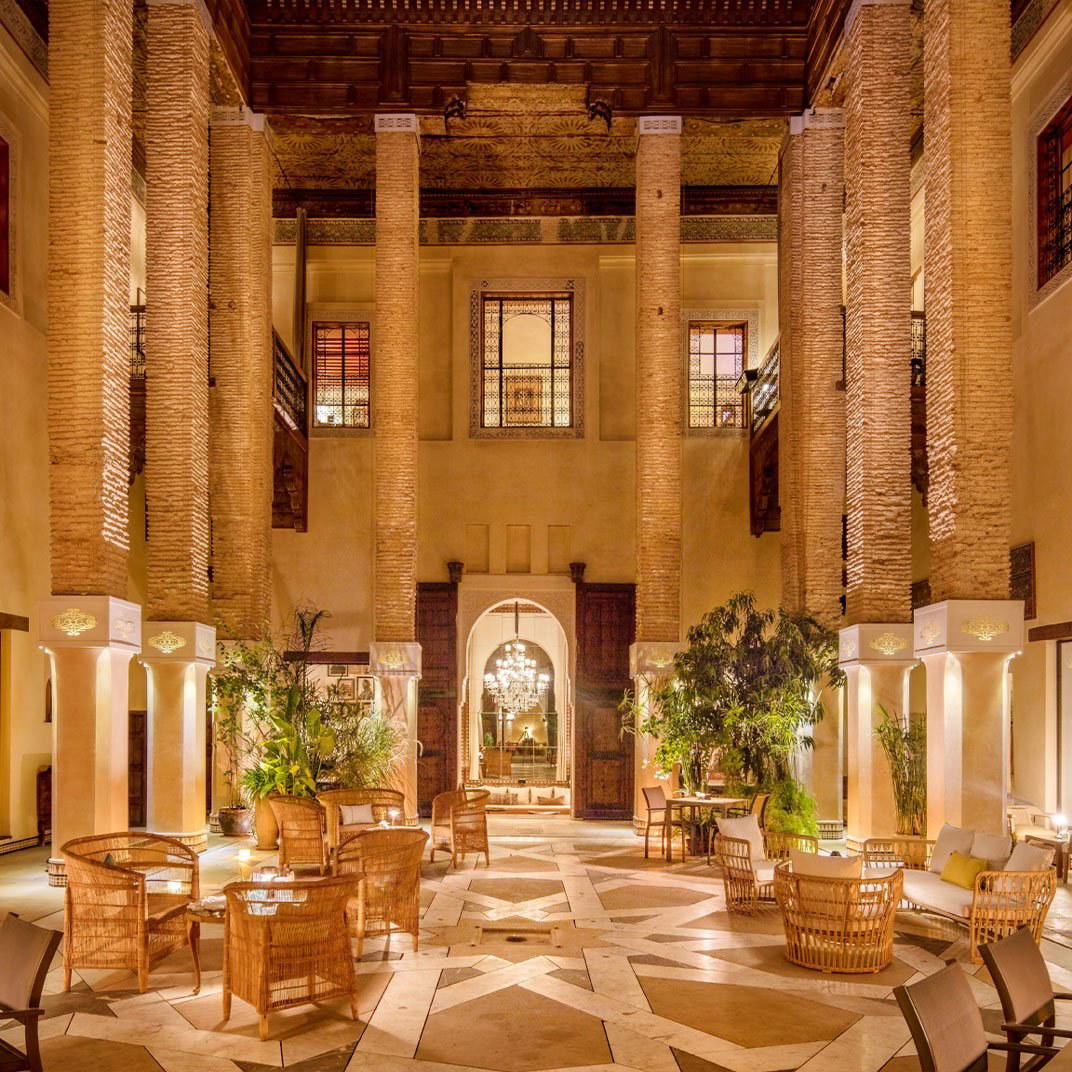
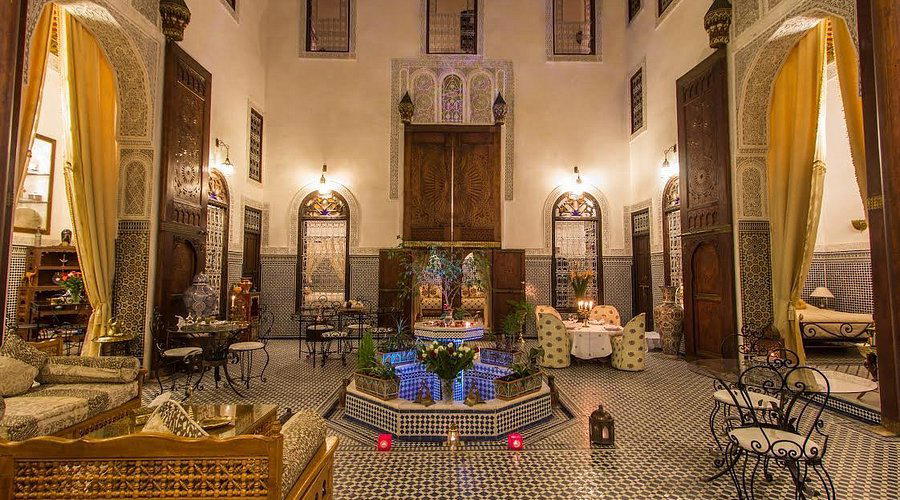
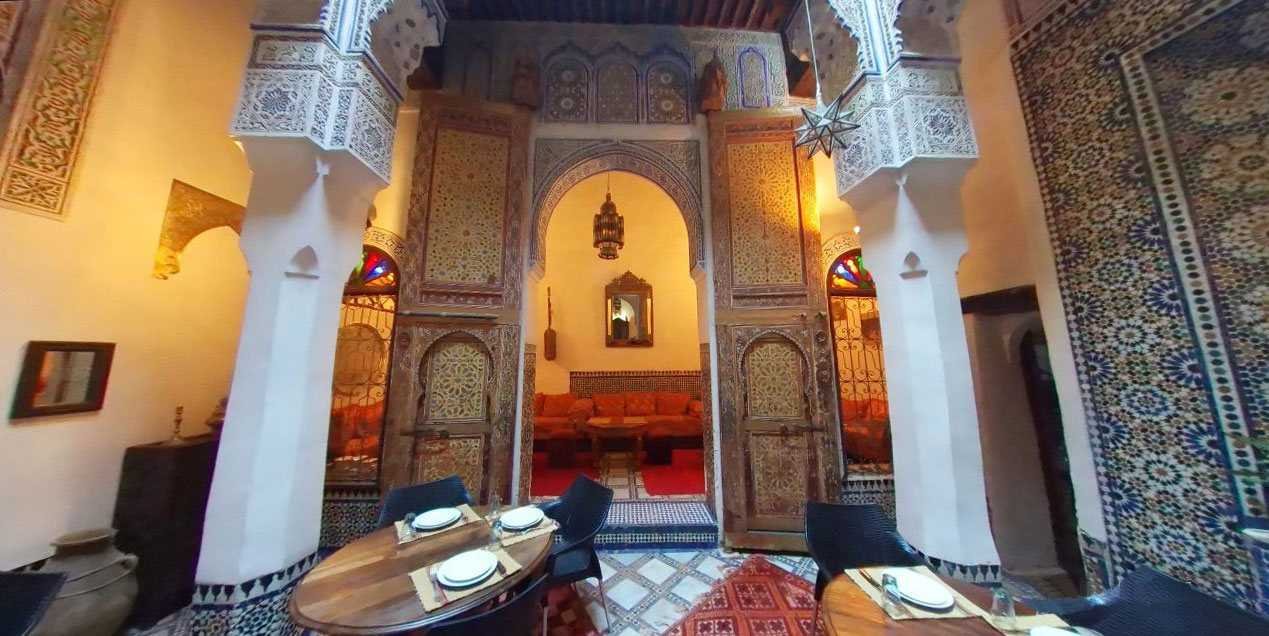
The building itself draws from the formal tradition of 19th-century Moroccan palace architecture: carved plasterwork, zellij tiling, cedarwood ceilings, and proportioned reception spaces that signal status through craftsmanship rather than scale. Opened in 2012, the property was conceived as a deliberate engagement with Fez's historical and material culture, and the interiors are assembled with that intent visible in the detail work rather than merely decorative.
The Dining Programme: Fez's Kitchen Through a Refined Filter
Fez occupies a specific position in Moroccan culinary history. The city's cooking tradition is widely regarded among food historians as the most technically elaborate in the country, shaped by centuries of Arab, Berber, Jewish, and later French influences that converged in a medina that once functioned as North Africa's intellectual and commercial centre. Dishes that became national standards, bastilla, rfissa, slow-braised lamb with preserved lemon, have Fassi origins or their most refined regional expression here. For a hotel of this category to take that heritage seriously in its food programme is both an opportunity and an obligation.
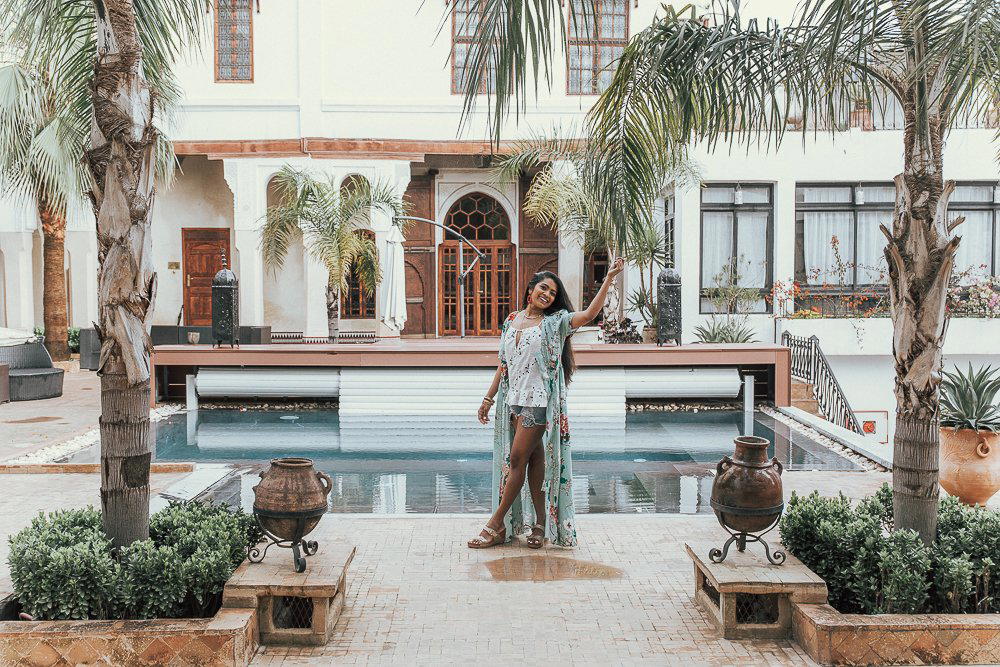
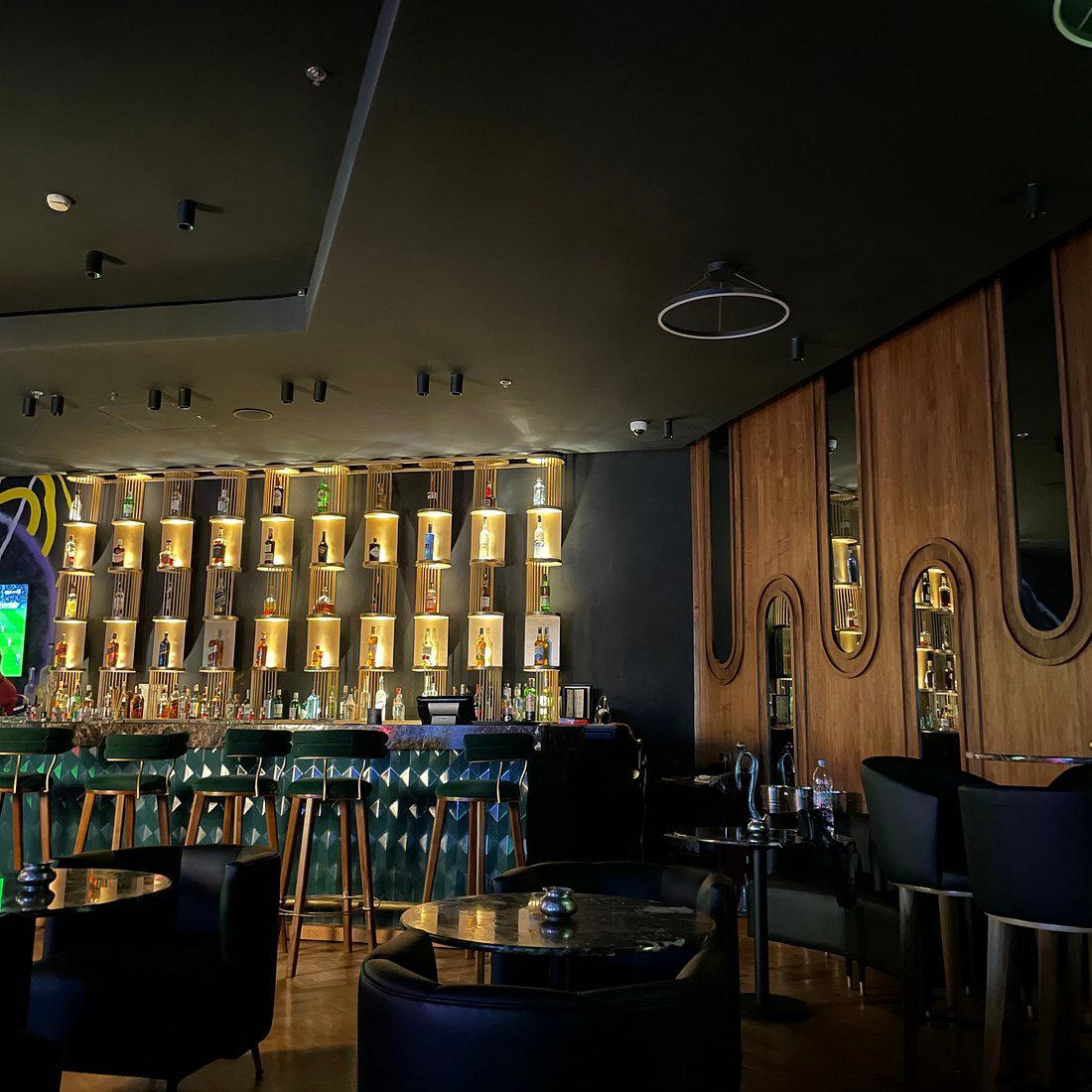
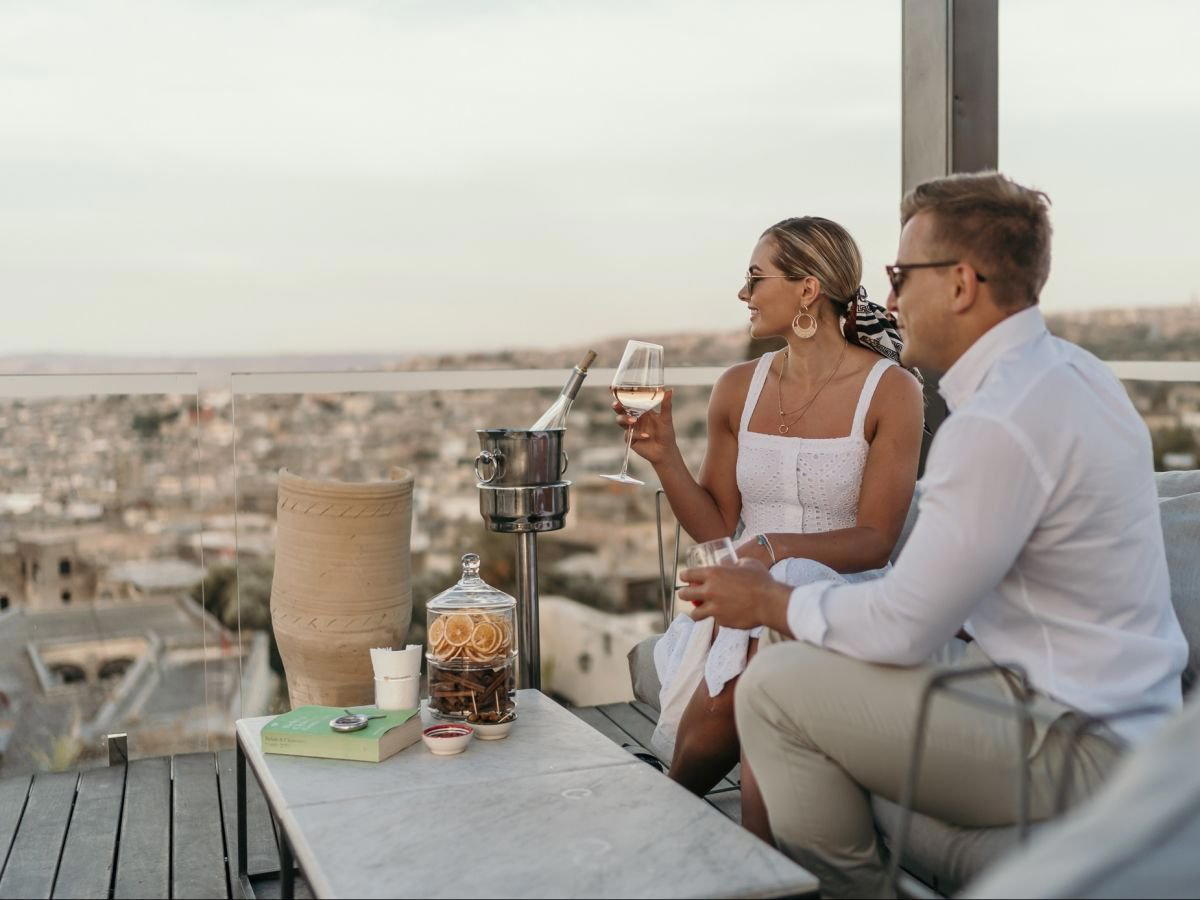
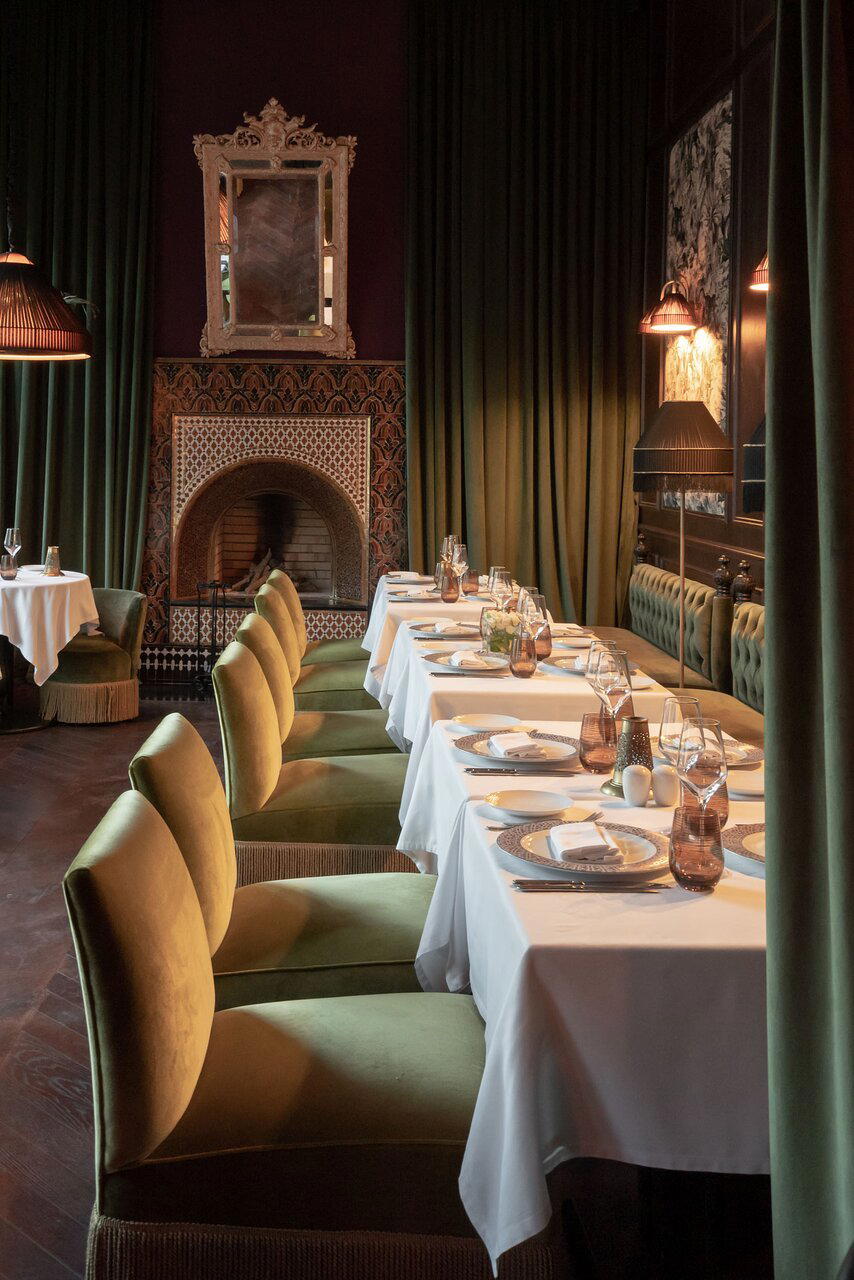
Palais Faraj's dining is structured across several distinct formats. Restaurant L'Amandier operates as the primary dining room, framing Moroccan and Mediterranean cooking in a formal setting. The Rooftop Garden functions as the al fresco counterpart, with medina views as a consistent element of the meal. The Golden Bar and the Grand Patio & Pool Tea Room complete the offer, the latter positioned near the pool and oriented toward the medina outline. The layering of formats, from structured dining to terrace drinking to afternoon tea beside the pool, reflects the approach of properties that understand guests divide their time between meals and more casual grazing, especially in a city where the afternoons are leading spent watching the light change over the old city.
The menu direction, combining Moroccan and Mediterranean references, places Palais Faraj in a tier of hotel restaurants that treat Moroccan cuisine as a serious foundation rather than a decorative gesture toward local identity. Whether that means bastilla presented at the weight it deserves, or Fassi-spiced lamb interpreted with restraint, the framework exists for cooking of genuine depth. For comparison, hotels operating in the broader luxury tier in Morocco, from La Mamounia in Marrakesh to Jnane Tamsna in Marrakech, have each developed a distinct culinary identity alongside their accommodation offer. In Fez, where the food tradition is arguably deeper than Marrakesh's, the expectation for kitchen seriousness is correspondingly higher.
Suites, Scale, and the Logic of 31 Keys
At 31 suites, Palais Faraj operates at a scale that keeps the guest-to-staff ratio manageable for attentive service without tipping into the ultra-exclusive territory of single-digit key counts. Morocco's luxury hotel sector has bifurcated between large resort-format properties and small intimate riads; Palais Faraj sits in a middle register that allows it to offer consistent service infrastructure alongside a sense of residential privacy.
The suites are individually detailed with reference to Moroccan craft traditions: hand-painted wood panels, woven textiles, and artisan plasterwork that reflect Fez's active artisan economy. Some suites carry direct medina views, which in practical terms means the east-facing rooms are the booking priority for first-time visitors. The property's position above the medina means those views are unobstructed, a geometry unavailable to street-level riads regardless of their courtyard quality.
Among Fez's hotel options in this tier, the comparison set includes Hotel Sahrai and the Fes Marriott Jnan Palace, both operating in the luxury segment with different character signatures. Hotel Sahrai, an SLH Hotel in Fes, carries the Small Luxury Hotels affiliation and a design-forward identity. Palais Faraj positions itself through heritage authenticity and medina proximity rather than contemporary design codes.
Fez as a Context for This Kind of Stay
Fez el-Bali is a UNESCO-listed medina and one of the most intact medieval urban environments anywhere in the world. Navigating it requires time and tolerance for disorientation; the medina's street grid predates urban planning as a discipline, and meaningful visits reward multiple days rather than a single afternoon. A hotel that provides a composed retreat above that density, views of it, access to it, but physical separation from its noise, serves a legitimate function for travellers who want depth without exhaustion.
For those building a Moroccan itinerary beyond Fez, properties that triangulate well from here include Dar Ahlam in Ouarzazate for the southern desert transition, Dar Maya in Essaouira on the Atlantic coast, and Kasbah Tamadot in Asni near the Atlas foothills. Each represents a different register of Moroccan landscape and vernacular architecture. For coastal alternatives in the north, Fairmont Tazi Palace Tangier and Banyan Tree Tamouda Bay in Fnideq extend the circuit. Further options across the country include Dar al Hossoun in Taroudant, La Sultana Oualidia, Rebali Riads in Sidi Kaouki, and Michlifen Resort & Golf in Ifrane, a short drive from Fez itself. For urban Morocco, Rabat Marriott Hotel, Fairmont La Marina Rabat Salé, and Hyatt Regency Casablanca anchor the Atlantic coast cities. Wine-focused itineraries can extend to Château Roslane in Icr Iqaddar for the Meknes wine region, less than two hours from Fez. For the full Fez dining picture beyond the hotel's own programme, see our full Fez restaurants guide.
Planning Your Stay
Palais Faraj is located at Bab Ziat on the medina perimeter. Fez-Saïss Airport handles direct European connections, and the property's edge-of-medina position means access by car is possible, a practical consideration given that most interior riad addresses are pedestrian-only. Spring (March to May) and autumn (September to November) are the periods when Fez's temperatures sit in a range that makes extended medina walking viable; summer heat in the valley can be significant. The spa and pool provide meaningful on-property respite during warmer months, and the rooftop garden format works well in the long evenings of late spring and early autumn when the light over the medina holds into dinner.
How Palais Faraj Suites & Spa Fez compares with similar nearby venues.
| Venue | Awards |
|---|---|
| Palais Faraj Suites & Spa | Virtuoso Luxury Hotel Partner (2026) |
Recognition history
Dated appearances from independent guides and award organizations, with the underlying list record or original source where available.
Virtuoso Luxury Hotel Partner
Virtuoso
Michelin Selected
Michelin
Continue exploring
More in Fès
Hotels in Fès
Browse all →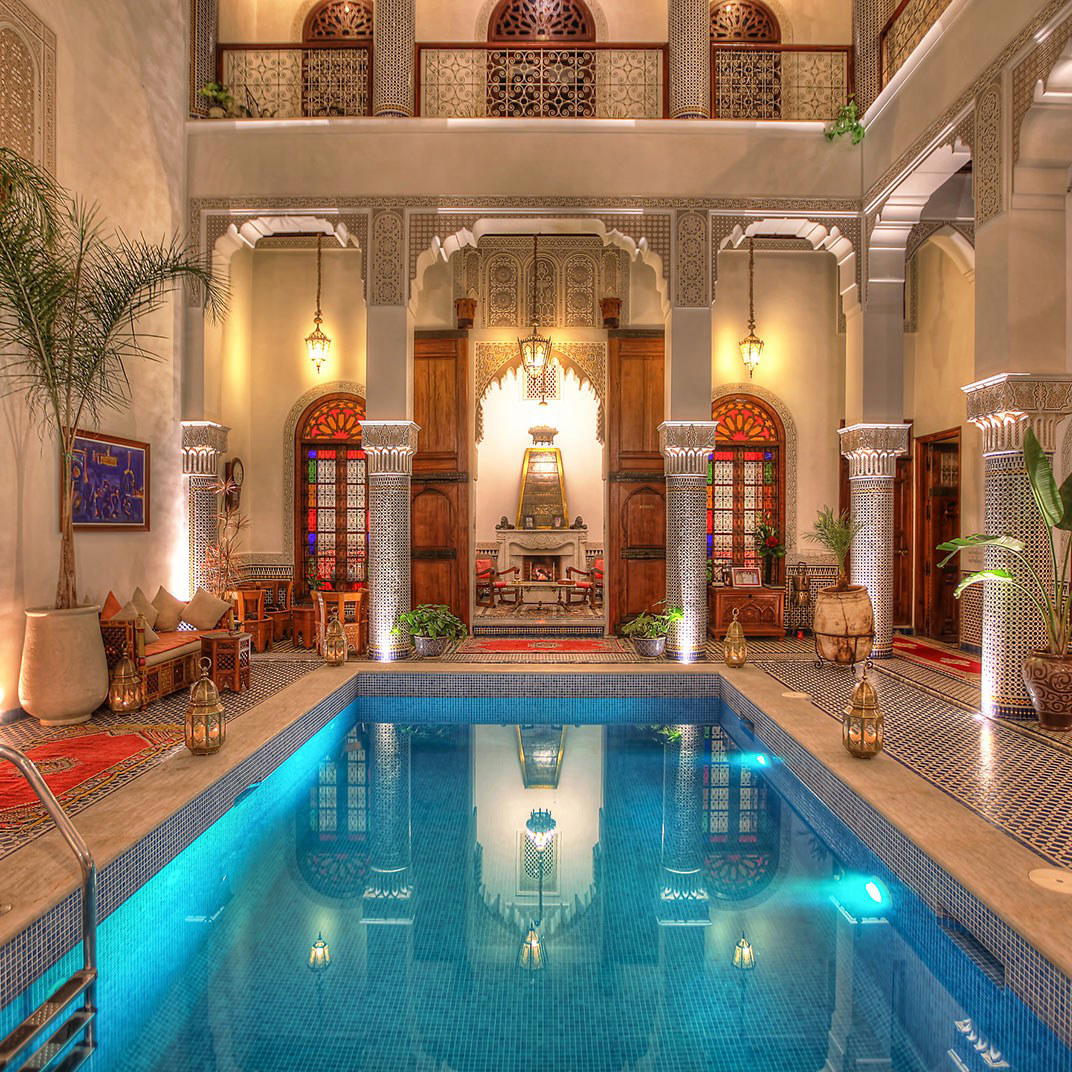
Bars in Fès
Browse all →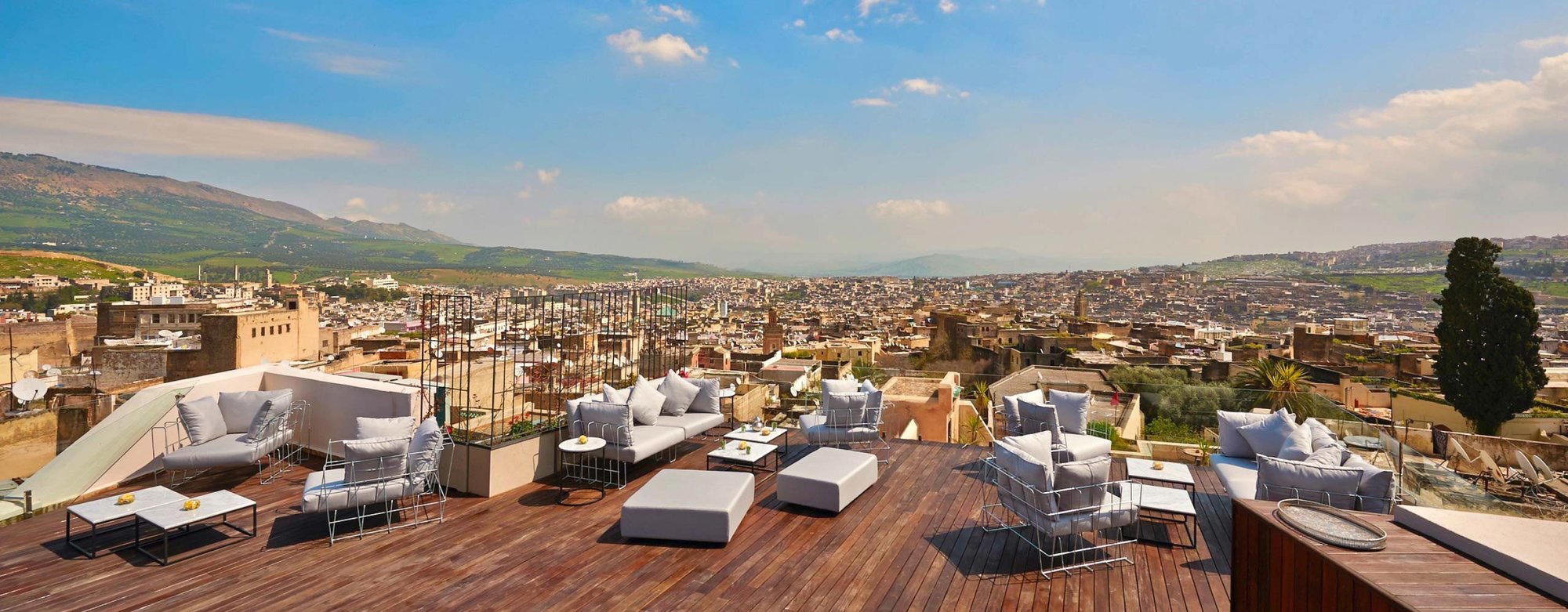
Restaurants in Fès
Browse all →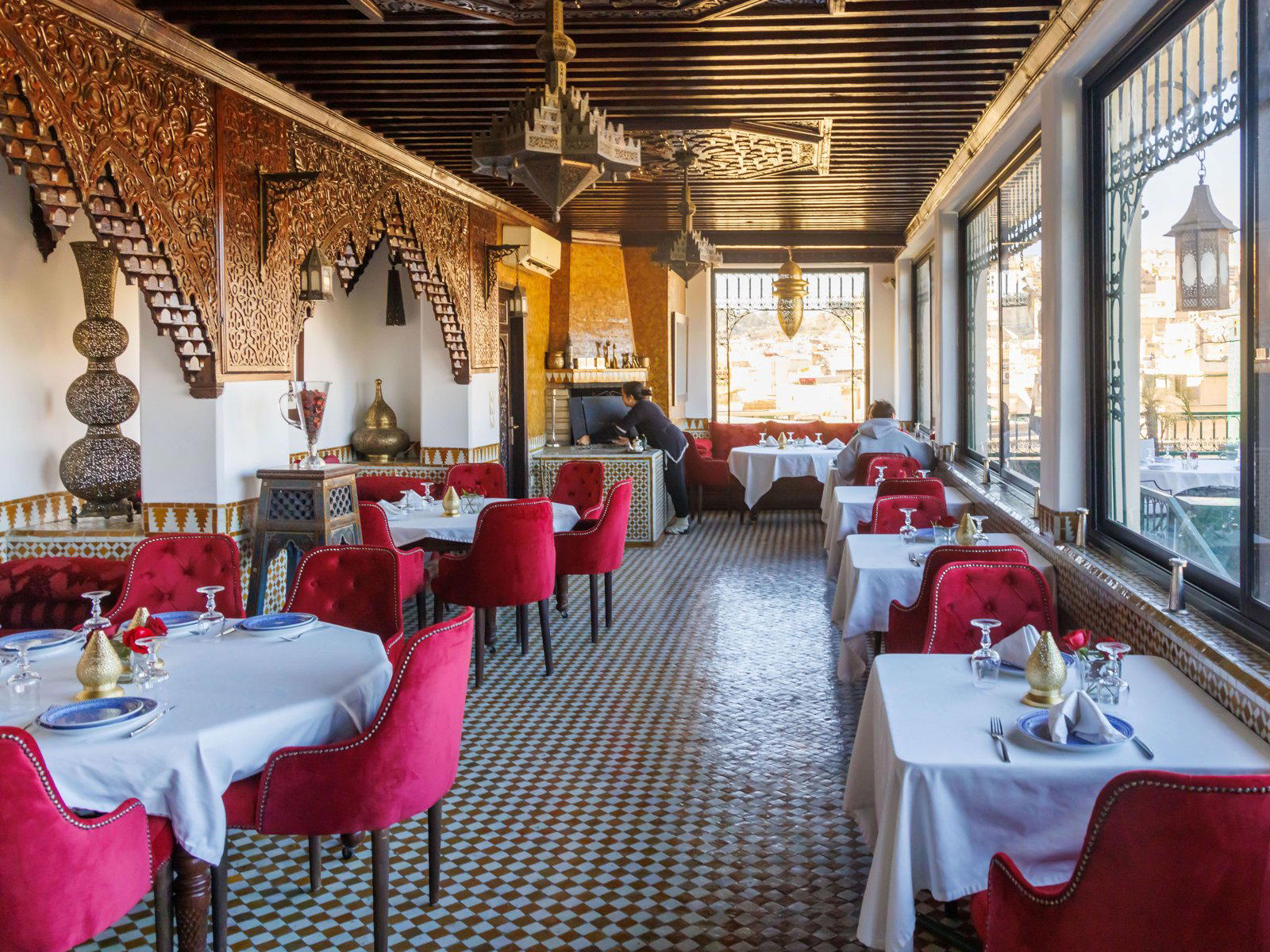
At a Glance
- Romantic
- Elegant
- Sophisticated
- Ornate
- Intimate
- Honeymoon
- Romantic Getaway
- Wellness Retreat
- Anniversary
- Historic Building
- Panoramic View
- Terrace
- Wi Fi
- Pool
- Spa
- Fitness Center
- Room Service
- Concierge
- Mountain
- Street Scene
- Wi Fi
- Pool
- Spa
- Fitness Center
- Room Service
- Concierge
Serene and refined with warm lighting, intricate tilework, high carved ceilings, and panoramic views creating an oasis of oriental sophistication amid the medina.
Know Before You Go
- Getting there
- Bab Ziat