
Michelin Bib Gourmand
Our verdict
A Michelin Bib Gourmand bistro in Shibuya's Motoyoyogi neighbourhood, Le cabaret operates around an organic wine program and a blackboard menu of classic French bistro fare. Charcuterie, crudités, and steak frites arrive in generous portions designed for sharing, while signatures from visiting wine growers line the walls. Chef Sylvie Grucker positions the room firmly within Paris's natural wine–bistro tradition, transplanted intact to Tokyo.

Pearl is the En Primeur Club membership app, where members save venues, book tables and use the concierge.
The Blackboard as a Philosophy
Tokyo's French dining scene splits along a clear fault line. At one end sit the city's formal French houses: multi-course tasting menus, Michelin stars, and price points that place them alongside their Paris counterparts in the ¥¥¥¥ bracket. Venues like L'Effervescence, Sézanne, ESqUISSE, and Château Restaurant Joël Robuchon define that register. At the other end, smaller, louder, chalk-written, sits the French bistro, a format that has taken hold in Tokyo precisely because the city's diners understand, and demand, technical precision even at casual price points.
Le cabaret, on a quiet Motoyoyogi street in Shibuya, occupies that second category without apology. The menu arrives not as a printed document but as a blackboard: charcuterie boards of salami and rillettes, a plentiful crudités arrangement, steak frites. The decision to use a blackboard is not incidental decor. In French bistro culture, the ardoise signals that the kitchen is cooking to what arrived that morning, from producers the chef has chosen deliberately. Here, that means a natural and organic wine selection that frames everything else on the menu.
Michelin's 2024 Bib Gourmand recognition places Le cabaret in a peer group defined by quality-to-price ratio rather than formal ambition. The Bib Gourmand is specifically awarded to restaurants where inspectors find good cooking for a reasonable price, and in Tokyo's French category that designation carries weight: the city's restaurant density is high enough that Michelin's selection is genuinely competitive.
Menu Architecture and What It Signals
The structure of Le cabaret's blackboard menu tells you something precise about the kitchen's priorities. Charcuterie leads, which is a statement about sourcing: salami and rillettes require good raw material and patience, and in a restaurant operating at the ¥¥ price range, choosing to feature them prominently signals that the charcuterie itself is worth the attention. These are not afterthoughts or bar snacks; they are the opening argument.
The crudités course, described in the venue's own language as "plentiful", reinforces an aesthetic of generosity over refinement. The French bistro tradition has always prioritised the act of sharing over presentation for its own sake, and a generous crudités plate at the centre of a table invites the meal to move slowly, with wine poured repeatedly across the table. That rhythm is the point.
Steak frites anchors the menu as the canonical bistro main: a dish whose quality depends entirely on the sourcing of the beef and the temperature precision of the kitchen, not on technique that can hide behind complexity. Restaurants that do steak frites well do so because they have to, there is nowhere to conceal a mediocre product. At Le cabaret, the dish is listed without elaboration, which in bistro culture reads as confidence rather than omission.
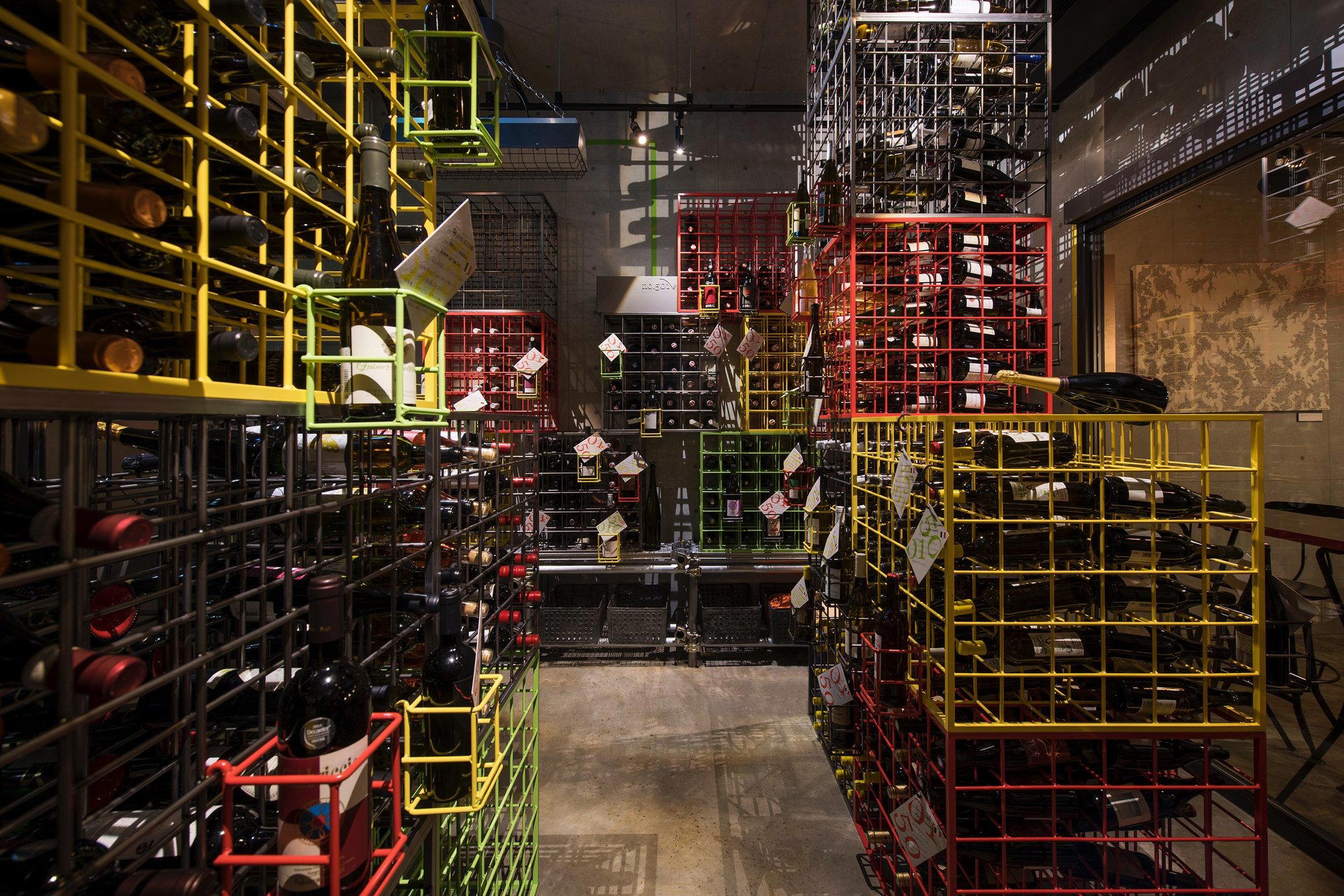
The organic wine program functions as a second menu running in parallel. Wine growers who have visited the restaurant have left their signatures on the wall, a record of the relationships Le cabaret has built with producers over time. In the natural wine world, these kinds of producer relationships are a form of credential: growers choose which venues to visit and which to support, and a wall of signatures represents years of trust built through consistent purchasing, promotion, and care in how the wine is served.
Shibuya's Quieter Margin
Motoyoyogi sits at the edge of Shibuya Ward where the commercial density of the main station area begins to thin into residential streets. It is not a neighbourhood that attracts the dining tourism that Roppongi or the central Ginza corridor do, which means Le cabaret's primary audience is local: residents, nearby workers, and the dedicated wine crowd that follows natural wine lists across the city rather than chasing formal restaurant accolades.
This location pattern is common among Tokyo's better natural wine bistros. The economics of organic wine programs and generous portions at ¥¥ pricing require rent that central neighbourhoods rarely allow. Motoyoyogi provides the footprint; regulars provide the volume. The address, 1F, 8-8 Motoyoyogi-cho, puts the restaurant at street level, consistent with the bistro format's accessibility principle.
For visitors travelling between Tokyo's broader dining circuit and other Japanese cities, the contrast between Le cabaret and the formal French registers is instructive. The ¥¥¥¥ tasting-menu format at venues like Florilège and the Bib Gourmand bistro format occupy genuinely different roles in the city's French ecosystem. Neither is a lesser version of the other; they answer different questions about what a meal should do.
Further afield, those tracing French cooking across Japan might compare the approach here with HAJIME in Osaka, where French technique operates at a very different scale and formality, or with akordu in Nara, where European bistro sensibility meets a smaller, quieter city context. In Fukuoka, Goh and in Kyoto, Gion Sasaki represent entirely different registers of Japanese fine dining, useful anchors for calibrating where Le cabaret sits within the wider range of restaurants worth knowing across the country.
For those extending their research to the global French bistro tradition, Hotel de Ville Crissier in Switzerland and Les Amis in Singapore represent the formal French dining pole that Le cabaret explicitly sidesteps.
Planning a Visit
Le cabaret is located at 1F, 8-8 Motoyoyogi-cho, Shibuya, Tokyo 151-0062. The ¥¥ price range makes it accessible relative to the formal French houses in the city, and the Bib Gourmand designation suggests Michelin's inspectors found consistent value at that price point. The blackboard format means the menu changes with availability, so arriving with openness rather than fixed expectations suits the format.
The natural wine focus means the list rewards curiosity rather than brand recognition: if you know the growers whose signatures are on the wall, the wine selection becomes a conversation with the room itself. If you are new to the natural wine world, this is a low-stakes entry point, the pricing and the sharing format remove the pressure that formal wine service can carry.
For broader context on eating and drinking in the city, our full Tokyo restaurants guide covers the range from counters to bistros. Complementary resources include our Tokyo bars guide, our Tokyo hotels guide, our Tokyo wineries guide, and our Tokyo experiences guide. For restaurants across the broader Kanto region, 1000 in Yokohama and 6 in Okinawa extend the circuit further.
What Should I Order at Le Cabaret?
The charcuterie board, salami and rillettes, is the correct opening move, both as an expression of the kitchen's sourcing priorities and as the natural companion to the organic wine list. The crudités, served generously, are designed for the table to share across the meal rather than as a starter to be dispatched quickly. Steak frites is the anchor main, and in a bistro format operating at this price point with a Bib Gourmand citation, it represents the dish against which the kitchen measures itself. On the wine side, following the server's recommendation rather than defaulting to recognisable labels will make the most of a list that has been built through direct producer relationships rather than through a standard distributor catalogue.
Frequently asked questions
Is Le cabaret more mid-range or high-end?
Pricing at Le cabaret is listed as ¥¥.
What awards or recognition does Le cabaret have?
Le cabaret has received recognition including: A place to enjoy organic wine and bistro fare. The blackboard menu is filled with charcuterie such as salami and rillettes, a plentiful serving of crudités, and steak frites. Portions of this classic French cuisine are generous, perfect for….
What should I order at Le cabaret?
Start with the charcuterie: the salami and rillettes are central to the kitchen's identity and a direct expression of what the Bib Gourmand recognition is based on. The crudités arrive in generous portions, suited to sharing. Steak frites rounds out the short list of classics the blackboard returns to, portion sizes here are built for the table rather than the individual plate.
What part of town is Le cabaret in?
Le cabaret is located at 1f, 8-8 Motoyoyogicho, Shibuya, Tokyo 151-0062, Japan, Tokyo.
Who is the chef at Le cabaret?
The chef associated with Le cabaret is Sylvie Grucker.
Where the Accolades Land
| Venue | Cuisine | Price | Awards | Notes |
|---|---|---|---|---|
| Le cabaretThis venue (the venue you are viewing) | Parisian Bistro | $50–100 | Michelin Bib Gourmand | Not listed |
| Harutaka | Edo-Style Omakase Sushi | $200–300 | 3 Michelin Stars · World's 50 Best #76 | Sushi |
| RyuGin | Modern Kaiseki | $500+ | 3 Michelin Stars · World's 50 Best #41 | Kaiseki, Japanese |
| L'Effervescence | Modern French with Japanese Influences | $200–300 | 3 Michelin Stars · World's 50 Best #69 | French |
| HOMMAGE | Modern French with Japanese Influences | $150–200 | 2 Michelin Stars · World's 50 Best #78 | Innovtive French, French |
| MAZ | Innovative Peruvian-Japanese Fusion | $150–200 | 2 Michelin Stars · World's 50 Best #28 | Innovative |
Recognition history
Dated appearances from independent guides and award organizations, with the underlying list record or original source where available.
Michelin Bib Gourmand
Michelin
Full recognition history (2 entries)
Michelin Bib Gourmand
Michelin
Continue exploring
More in Tokyo
Restaurants in Tokyo
All restaurants in Tokyo →



Bars in Tokyo
All bars in Tokyo →



Details
- Cozy
- Elegant
- Intimate
- Classic
- Date Night
- Casual Hangout
- Open Kitchen
- Natural Wine
- Organic
- A La Carte
- Small Plates
- Natural Wine
Current opening hours
- Monday
- Closed
- Tuesday
- Closed
- Wednesday
- 5–11 PM
- Thursday
- 5–11 PM
- Friday
- 5–11 PM
- Saturday
- 5–11 PM
- Sunday
- 5–11 PM
Hours can change for holidays and private events. Last verified .
Cozy Parisian bistro atmosphere featuring red sofas, gold-rimmed mirrors, French wall writing, background music, and relaxed informal service.