

Michelin Plate · Tabelog 100 #74
Our verdict
A prix fixe French restaurant in Shirokanedai, Minato, L'allium holds a Michelin Plate for 2024 and 2025. Chef Yoshiaki Shindo runs a basement dining room designed around the visual theatre of an open kitchen, with foie gras as the menu's centrepiece. Guests choose their own fish and meat courses, making it an unusual point of flexibility at this price tier in Tokyo.

Pearl is the En Primeur Club membership app, where members save venues, book tables and use the concierge.
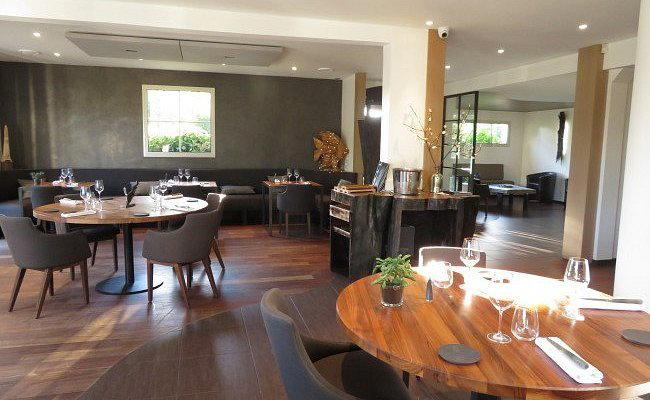
A Stage Below Street Level
Tokyo's French dining scene has long rewarded the counter format and the basement room. The city's geology of converted cellars and sub-grade dining floors suits a certain theatrical intimacy that above-ground spaces struggle to replicate. L'allium, in Shirokanedai, Minato City, occupies exactly that register: a basement room in a residential neighbourhood that sits well clear of the Ginza and Roppongi corridors where the city's most decorated French kitchens tend to cluster. The distance is not a liability. In Tokyo, the leading French addresses often announce themselves through reputation alone, with no street-level signage required.
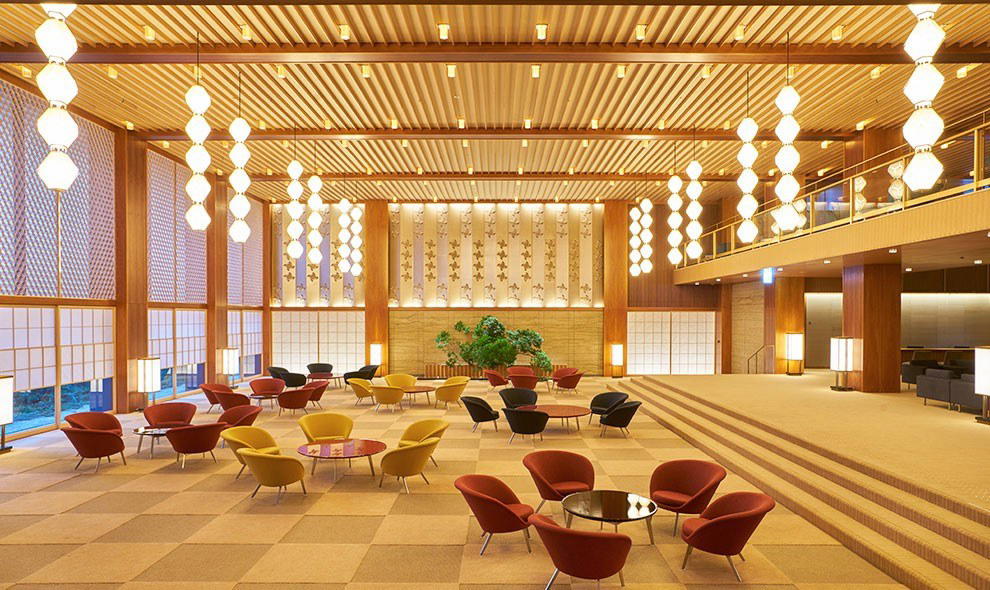
The room has been described as having the air of a concert hall, an analogy that holds architecturally and operationally. The kitchen, brightly lit and open to the dining room, functions as the stage. Chef Yoshiaki Shindo works within it in full view, and the arrangement is deliberate: the kitchen's visibility is the room's primary design statement. Where many contemporary restaurants treat the open kitchen as ambient texture, here it is structural. The spatial logic tells you before the first course arrives that the cooking is the event.
French Orthodoxy in a City That Reshapes Every Cuisine It Touches
Tokyo has a complicated relationship with classical French cuisine. The city absorbed French technique in the 1970s and 1980s with extraordinary seriousness, producing a generation of Japanese chefs trained in Paris and Lyon who returned to cook French food with technical rigour that often matched or exceeded what was happening in France itself. That lineage feeds today's competitive tier, where addresses like L'Effervescence, Sézanne, and ESqUISSE occupy the upper bracket with multiple Michelin stars and international press attention.
L'allium does not sit in that starred bracket. That positioning matters for how you read the room. This is a restaurant that maintains French orthodoxy, caviar, foie gras, and truffles appear as staples rather than special-occasion additions, at a ¥¥¥ price point that makes it considerably more accessible than the ¥¥¥¥ addresses competing at the top of the same category.
The classical ingredient list is not nostalgia. In a dining culture that increasingly pulls French cooking toward Japanese produce and fusion inflection, a kitchen that holds firmly to the canonical luxury triad communicates something deliberate about its identity. L'allium is making a statement about the kind of French restaurant it intends to be, and it is a statement that finds fewer and fewer advocates as Tokyo's French scene evolves.
The Prix Fixe Structure and the Freedom Within It
Prix fixe is the standard format at this level of French dining in Tokyo, and L'allium follows it. What distinguishes the structure here is the explicit guest choice embedded in the meat and fish courses. Diners are encouraged to select from options at those stages, a format that introduces personalisation into what might otherwise be a fully predetermined sequence. In a genre defined by chef authority, that degree of guest agency is a considered structural choice, not a concession.
The foie gras course anchors the menu. A poêle of foie gras functions as the centrepiece, the dish the kitchen treats as its clearest expression of intent. It appears consistently as a signature reference, which in a prix fixe context means the kitchen has decided this is the dish that most accurately represents what it is doing. The surrounding courses, built around caviar and truffle at various points, frame the foie gras within a menu that maintains consistent luxury weight throughout rather than building to a single climax.
The ¥¥¥ pricing places L'allium below the top tier of Tokyo French dining by at least one category, which changes the calculus for a certain kind of reader. If the relevant comparison is the city's starred French rooms, L'allium represents a materially lower entry cost. If the comparison is the broader ¥¥¥ market across cuisines, the classical French format with luxury staple ingredients positions it toward the upper end of that band.
Shirokanedai as a Dining Neighbourhood
Address in Shirokanedai, a residential district in Minato City, places L'allium in a neighbourhood better known for its proximity to the Platinum Mile retail corridor and a quiet, well-heeled residential character than for a dense concentration of destination restaurants. That context reinforces the concert hall analogy. You travel specifically to the room; the neighbourhood does not generate foot traffic or tourist concentration that would make discovery accidental.
Minato City's dining geography is spread across several distinct pockets, Roppongi, Azabu-Juban, Hiroo, and Shirokanedai each operate as self-contained dining zones. The basement location on a residential side street in Shirokanedai reads as a considered positioning choice: a room for people who already know where they are going, not one that competes for visibility. For context on the broader Tokyo restaurant scene, see our full Tokyo restaurants guide.
Positioning Within Japan's Wider French Scene
Tokyo is not the only Japanese city with serious French dining. HAJIME in Osaka operates at three Michelin stars and represents Osaka's claim on the top end of the French format. Gion Sasaki in Kyoto, akordu in Nara, Goh in Fukuoka, and 1000 in Yokohama each define the French or contemporary register in their respective cities. Further afield, 6 in Okinawa takes a more individual approach to the format. Within the global French canon, comparison addresses like Hotel de Ville Crissier in Switzerland and Les Amis in Singapore show how the tradition travels and what Tokyo's practitioners are measuring themselves against.
L'allium's Michelin Plate status in two consecutive years confirms that it occupies a stable, recognised position within this context rather than a peripheral one. It is a kitchen Michelin considers credible; whether it moves into starred territory depends on decisions the kitchen and the guide make independently over time.
For more on Tokyo's hotels, bars, wineries, and experiences, see our full Tokyo hotels guide, our full Tokyo bars guide, our full Tokyo wineries guide, and our full Tokyo experiences guide.
Planning Your Visit
L'allium is located at 4 Chome-9-23 B1F, Shirokanedai, Minato City, Tokyo. The address is residential, and the basement-level entry means it is worth confirming the exact building before arriving. Pricing sits in the ¥¥¥ range. The format is prix fixe with guest selection at the meat and fish stages. The Michelin Plate has been awarded consecutively for 2024 and 2025.
Quick reference: Shirokanedai, Minato City, Tokyo | French prix fixe | ¥¥¥ | Michelin Plate 2024, 2025 | Foie gras centrepiece | Guest choice at meat and fish courses.
Frequently asked questions
What do people recommend at L'allium?
The foie gras course is the consistent reference point. A poêle of foie gras serves as the prix fixe centrepiece, and the surrounding menu incorporates caviar and truffles as recurring elements rather than optional extras. Diners who have chosen the meat and fish courses themselves report that the guest-choice format at those stages is a distinguishing feature of the meal's structure. The kitchen's Michelin Plate recognition for 2024 and 2025 reflects consistent quality across the menu rather than a single standout dish.
Do I need a reservation for L'allium?
At a ¥¥¥ prix fixe French restaurant with Michelin Plate recognition in central Tokyo, a reservation is the baseline assumption rather than a precaution. The Shirokanedai address is not a walk-in neighbourhood, and the format does not accommodate spontaneous dining easily. For a broader view of Tokyo's restaurant booking conditions across price tiers, see our full Tokyo restaurants guide.
What makes L'allium worth seeking out?
The combination of deliberate classical French positioning, a room designed around the visual theatre of the open kitchen, and a ¥¥¥ price tier that sits below most of Tokyo's starred French competition makes L'allium a specific kind of proposition. It is a kitchen that holds to canonical luxury ingredients, foie gras, caviar, truffle, at a price point that starred peers in the same city do not offer. Consecutive Michelin Plate recognition in 2024 and 2025 confirms that this is a considered, stable restaurant, not a work in progress. If the classical French format matters to you and the starred tier is out of budget or unavailable, this is a credible alternative within the same city.
Price and Recognition
A quick peer check to anchor this venue’s price and recognition.
| Venue | Cuisine | Price | Awards | Notes |
|---|---|---|---|---|
| L'alliumThis venue (the venue you are viewing) | Classic French with Seasonal Japanese Influences | $150–200 | Michelin Plate · Tabelog 100 #74 | Not listed |
| Harutaka | Edo-Style Omakase Sushi | $200–300 | 3 Michelin Stars · World's 50 Best #76 | Sushi |
| RyuGin | Modern Kaiseki | $500+ | 3 Michelin Stars · World's 50 Best #41 | Kaiseki, Japanese |
| L'Effervescence | Modern French with Japanese Influences | $200–300 | 3 Michelin Stars · World's 50 Best #69 | French |
| HOMMAGE | Modern French with Japanese Influences | $150–200 | 2 Michelin Stars · World's 50 Best #78 | Innovtive French, French |
| MAZ | Innovative Peruvian-Japanese Fusion | $150–200 | 2 Michelin Stars · World's 50 Best #28 | Innovative |
Recognition history
Dated appearances from independent guides and award organizations, with the underlying list record or original source where available.
Michelin Plate
Michelin
Tabelog 100 #74 · No. 74
Tabelog · Tabelog 100 - French - TOKYO - 2025
Full recognition history (4 entries)
Michelin Plate
Michelin
Michelin Plate
Michelin
Continue exploring
More in Tokyo
Restaurants in Tokyo
All restaurants in Tokyo →

Bars in Tokyo
All bars in Tokyo →





L'allium
The wine
- Wine program
- Deep wine list
- Extensive wine list
- Sommelier-led
Details
- Elegant
- Sophisticated
- Classic
- Intimate
- Date Night
- Business Dinner
- Special Occasion
- Open Kitchen
- Private Dining
- Extensive Wine List
- Sommelier Led
- Prix Fixe
- Wine
Current opening hours
- Monday
- Closed
- Tuesday
- 12–2:30 PM, 6–10:30 PM
- Wednesday
- 12–2:30 PM, 6–10:30 PM
- Thursday
- 12–2:30 PM, 6–10:30 PM
- Friday
- 12–2:30 PM, 6–10:30 PM
- Saturday
- 12–2:30 PM, 6–10:30 PM
- Sunday
- 12–2:30 PM, 6–10:30 PM
Hours can change for holidays and private events. Last verified .
Nostalgic basement dining room resembling a concert hall with a brightly lit open kitchen, evoking historical elegance and classic French atmosphere.