La Famille occupies a traditional riad address at 34 Derb Jdid in Marrakech's medina, placing it within the city's growing tier of courtyard dining rooms that trade on domestic Moroccan cooking rather than tourist-facing adaptations. The setting draws visitors and residents alike looking for an unhurried meal in a genuinely residential part of the old city.
Pearl is the En Primeur Club membership app — saves, bookings, and concierge access live there. Same editors, same standards.
- Address
- 34 Derb Jdid, Marrakech 40040, Morocco
- Phone
- +212 5243 85295
- Website
- lafamillemarrakech.com
- Directions
- Get directions
 Saves & bookings on Pearl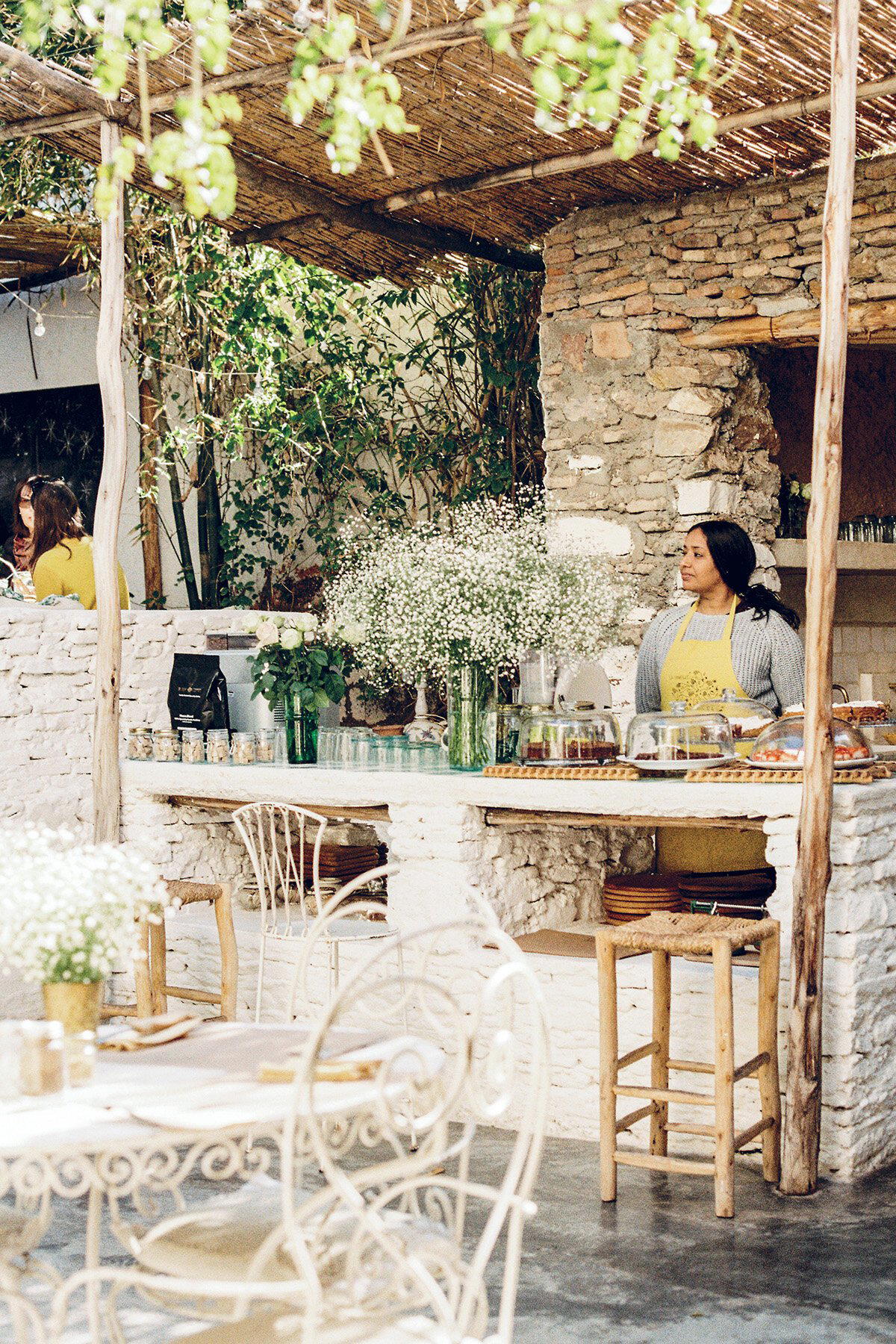
A Courtyard in the Medina's Residential Core
The derbs of Marrakech's medina are not designed for discovery. These narrow, dead-end lanes were built for residential privacy, not foot traffic, and the city's most interesting eating and drinking has long threaded itself through exactly these kinds of addresses. La Famille sits at 34 Derb Jdid, Marrakech, inside the medina. Arriving here requires a guide or a driver who knows the quarter. That physical approach sets the register for the meal before anyone sits down.
Riad courtyard dining has become a format in its own right across Marrakech, but it spans a wide range. At one end sit the luxury palace addresses, La Grande Table Marocaine at Royal Mansour being the reference point for formal, high-production Moroccan cooking, and at the other sit simpler neighbourhood spots where the food is closer to what a Moroccan household might actually prepare. La Famille positions itself firmly in the latter tradition: a garden-centred space where the emphasis is on cooking that draws from domestic Moroccan repertoire rather than the theatrical version that tends to accompany lanterns and tiled floors staged for visitors.
What the Moroccan Kitchen Actually Looks Like
Moroccan cooking is among the more codified domestic traditions in North Africa, rooted in Amazigh, Arab, Andalusian, and sub-Saharan influences that accumulated across centuries of trade and migration. The cuisine's formal complexity, the layering of warm spice with preserved citrus, the long-braised tagines, the grain dishes that precede the main course, developed inside the home kitchen, not in restaurants, which is a relatively recent format in Morocco's food culture. The country has historically communicated its cuisine through household hospitality, and the strongest Moroccan restaurants tend to understand that rhythm.
The vegetable-forward approach that La Famille is associated with sits comfortably within a broader shift happening across Moroccan cities, where younger kitchens are paying more attention to the produce-driven, herb-intensive side of the tradition: dishes built on seasonal vegetables, legumes, and the kind of careful spice work that does not require meat to make sense. Across the medina, you can track this same sensibility at Le Jardin Restaurant in the medina, where the courtyard garden format and fresh-produce emphasis share similar instincts. It reflects a wider pattern in Moroccan dining, a return to the vegetable, grain, and legume backbone that was always there in the domestic kitchen but rarely foregrounded in restaurants targeting international visitors.
For comparison across Morocco's other medina cities, Cafe Clock in Fes has carved out a similar niche, local cooking formats made accessible without being diluted, while Andalus in Tangier represents the northern variation on the same tradition, where Andalusian influence in the cooking is more explicit. The country's culinary geography is more varied than the tagine-and-couscous shorthand suggests, and the restaurant's Marrakech address is one point on that wider map.
The Garden as Dining Room
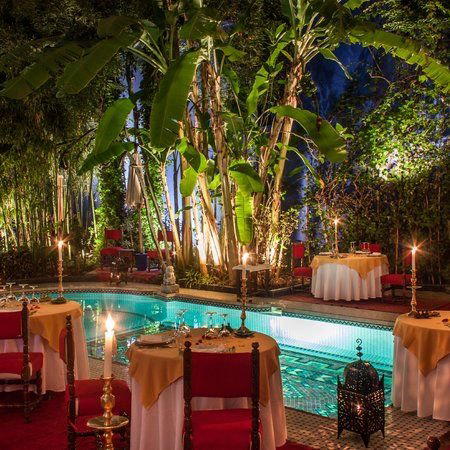
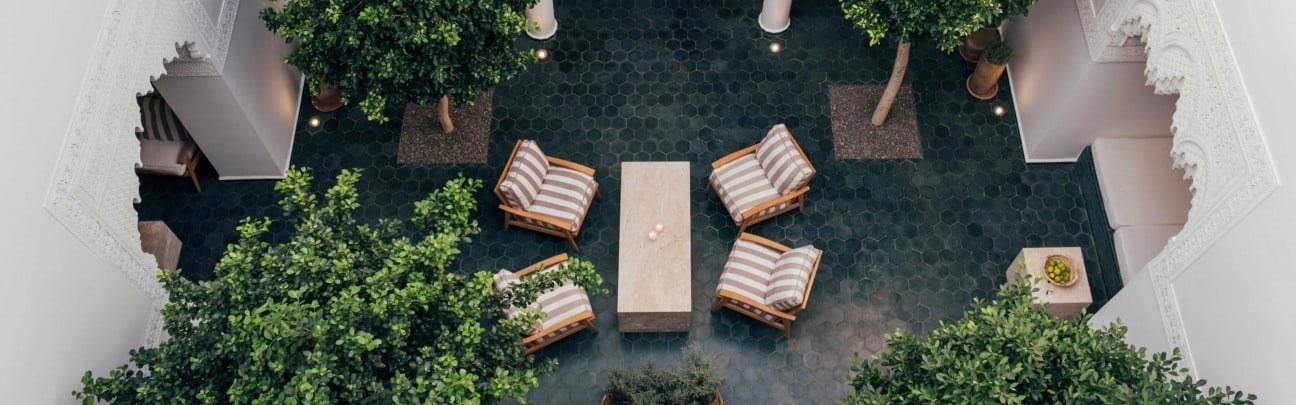
The outdoor courtyard or garden is not merely decorative in the Moroccan riad tradition; it is the structural centre of the house, designed to regulate temperature and light in a climate where both matter. Eating in a riad garden in Marrakech is eating inside a building type, the experience is architectural before it is gastronomic. The filtering of afternoon light, the cooling that the enclosed green space provides against the medina heat, the relative quiet compared to the street outside: these are properties of the building form, not restaurant design choices. The restaurant's garden setting follows this logic and benefits from it in a way that purpose-built restaurant terraces elsewhere in the city cannot replicate.
This places it in a small peer group of Marrakech addresses where the physical space does real work. Grand Café de la Poste in Gueliz represents a different architectural tradition, French protectorate-era colonial building, and a different mood entirely. Le Bistro Arabe in the medina brings music programming into the riad format, shifting the atmosphere significantly. The restaurant, by contrast, keeps the setting straightforwardly domestic in character: a garden, shade, a paced lunch format, and cooking that suits the unhurried midday tempo of a city that largely closes its shutters in the afternoon heat.
Placing La Famille in Marrakech's Dining Tiers
Marrakech's restaurant offering has diversified significantly over the past decade. The city now runs from street food and food-as-social-mission projects, Amal Gueliz Center, which trains disadvantaged women in Moroccan culinary arts, sits at one end of that spectrum, through to the full luxury-hotel dining format represented by La Grande Table Marocaine. The restaurant occupies a middle tier that prioritises ingredient quality and cooking integrity over production value, which is a reasonable trade for visitors who are less interested in occasion dining and more interested in eating something that reflects how this city actually feeds itself.
That same tier is growing across Moroccan cities. Le Salon Oriental in Essaouira operates a comparable model on the Atlantic coast. Gayza in Fès has developed a similar reputation in the imperial city to the north. The pattern suggests that domestic-register Moroccan cooking, served in architecturally genuine spaces without the theatrical overlay that characterised earlier waves of tourist-facing restaurants, is finding consistent demand across the country's main destinations.
For visitors building a wider picture of Moroccan wine and food culture, the country's appellations offer context: Château Roslane in the Meknes region represents one structured end of Moroccan wine production, a useful counterpart to the food tradition that restaurant sits within. And beyond Morocco entirely, for calibration against international benchmarks, restaurants like Le Bernardin in New York and Lazy Bear in San Francisco illustrate how far the fine-dining register sits from what the restaurant is attempting, deliberately and appropriately.
Planning a Visit
The restaurant operates at 34 Derb Jdid in the medina, which means arriving on foot or by moped through lanes that do not accommodate cars. Sharing the address with a riad host or local driver before setting out is sensible. The restaurant serves lunch only.
Pricing, Compared
Comparable venues nearby, for context on price, style, and recognition.
| Venue | Cuisine | Price | Notes |
|---|---|---|---|
| La FamilleThis venue — the venue you are viewing | Not listed | $$ | Not listed |
| Eloomm | Not listed | $$ | Méchouar-Kasba, Mediterranean with Moroccan Influences |
| Amal Gueliz Center - Restaurant | Gueliz, Authentic Moroccan | $$ | Not listed |
| Al Fassia | Gueliz, Traditional Fez Moroccan | $$ | Not listed |
| G-Bombay By Zahid | Gueliz, Authentic Indian | $$ | Not listed |
| Le Jardin Restaurant Marrakech Medina | Not listed | $$$ | Marrakech-Médina, Moroccan with European Fusion |
Continue exploring
More in Marrakech
Restaurants in Marrakech
Browse all →
Bars in Marrakech
Browse all →

Hotels in Marrakech
Browse all →
Wineries in Marrakech
Browse all →
At a Glance
- Cozy
- Scenic
- Quiet
- Casual Hangout
- Garden
- Courtyard
- Local Sourcing
- Garden
Current opening hours
- Monday
- 12–4 PM
- Tuesday
- 12–4 PM
- Wednesday
- 12–4 PM
- Thursday
- 12–4 PM
- Friday
- 12–4 PM
- Saturday
- 12–4 PM
- Sunday
- Closed
Hours can change for holidays and private events. Last verified .
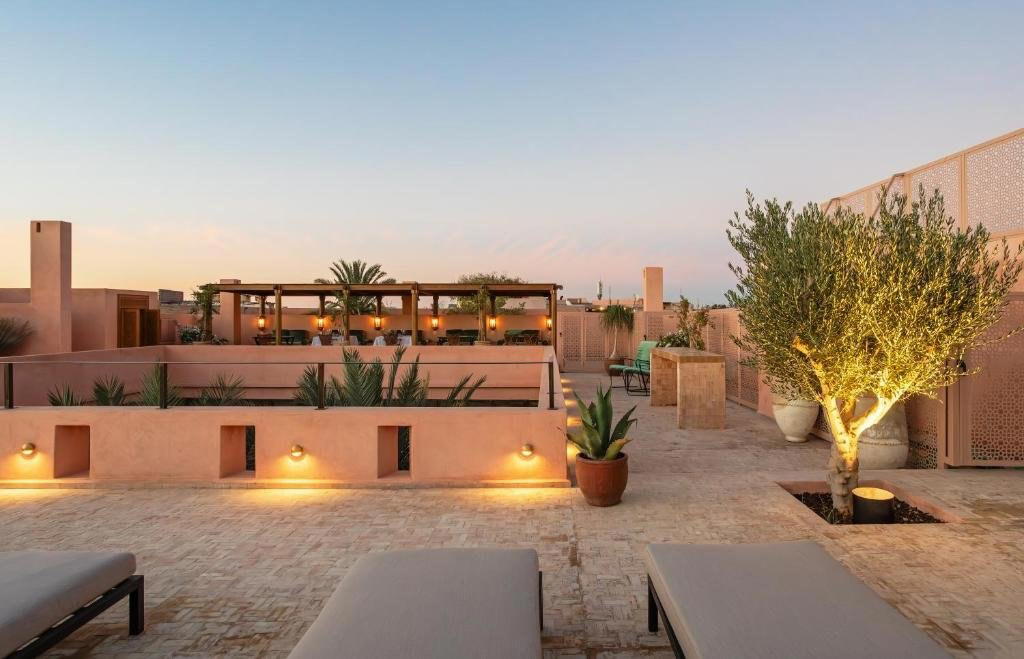
Tranquil and serene courtyard with shady terrace, providing a peaceful escape from the bustling medina.