
Le Marocain sits inside La Mamounia, the grande dame of Marrakesh palace hotels, and delivers a Moroccan French menu in a setting that draws as much from the hotel's 1920s heritage as from the city's medina traditions. Rated 87.5 points by La Liste in 2025 and 86 points in 2026, it occupies a specific tier in the Marrakesh fine dining conversation, where palace dining and classical technique converge.
Pearl is the En Primeur Club membership app — saves, bookings, and concierge access live there. Same editors, same standards.
- Address
- J2C3+7J3, Avenue Bab Jdid, Marrakesh 40040, Morocco
- Phone
- +212 5 24 38 86 00
- Website
- mamounia.com
- Directions
- Get directions
 Saves & bookings on Pearl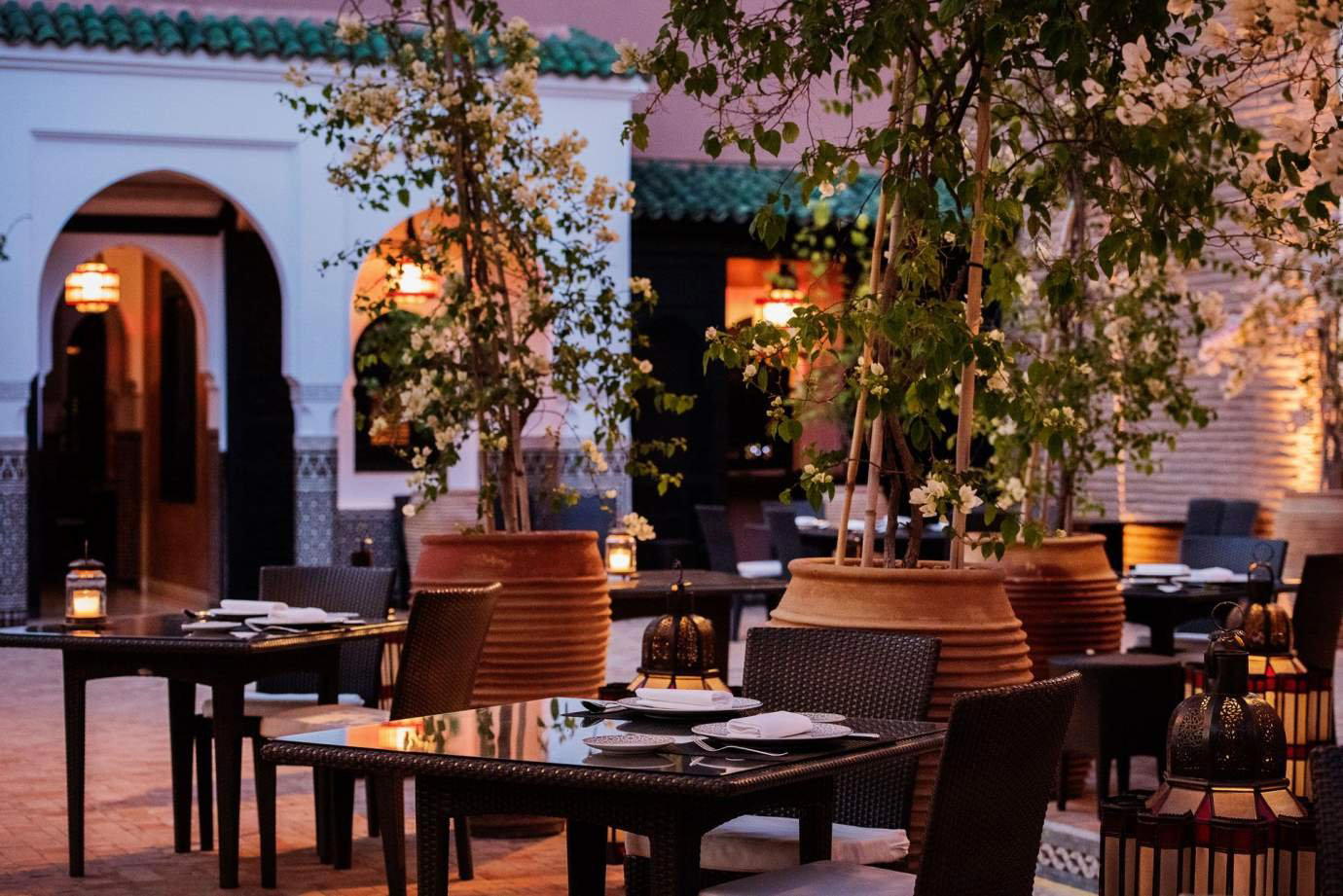
Where Palace Architecture Meets the Plate
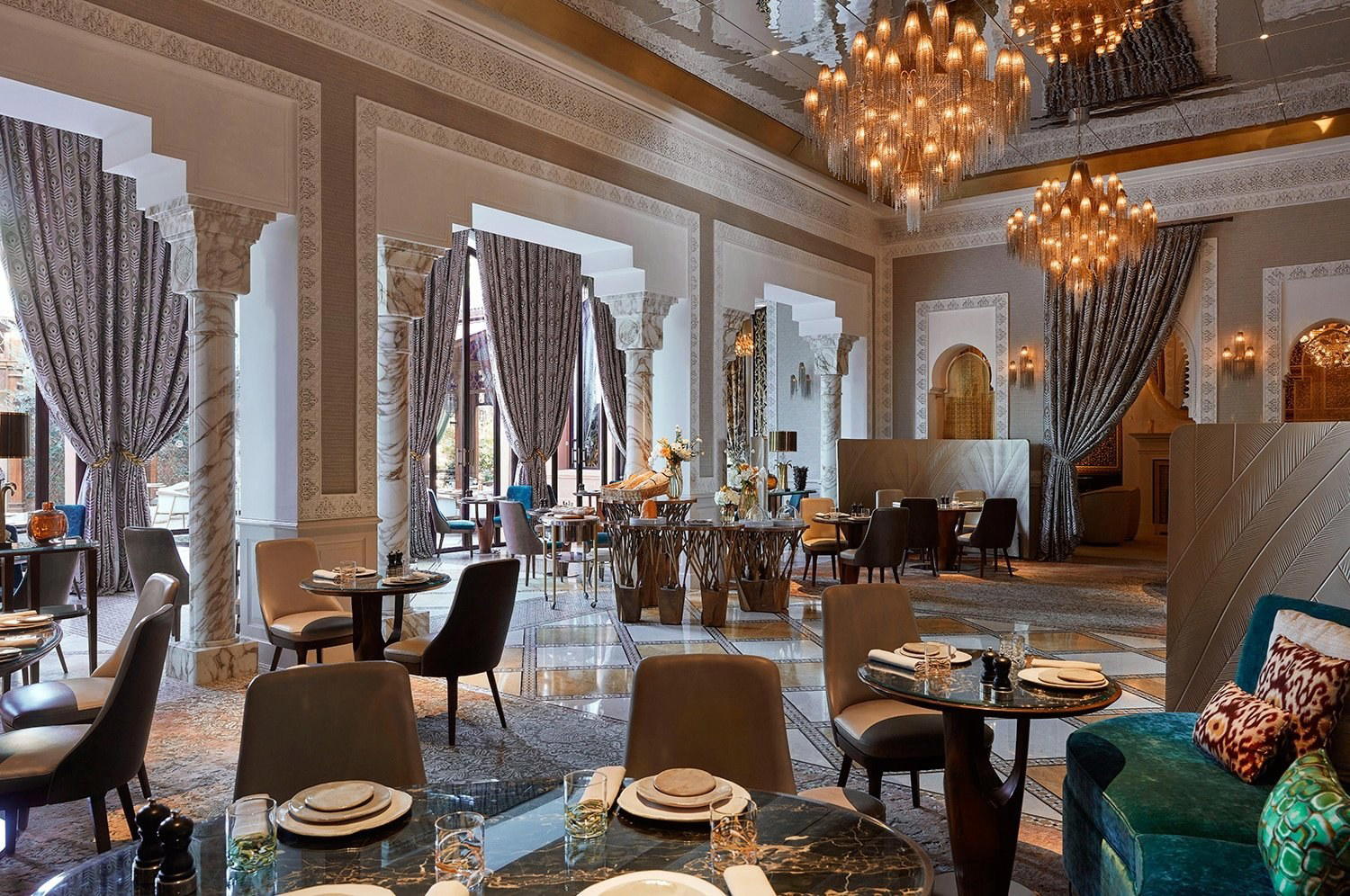
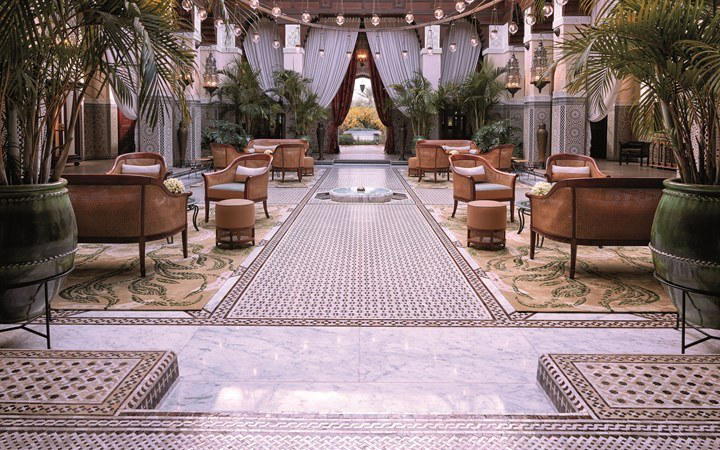
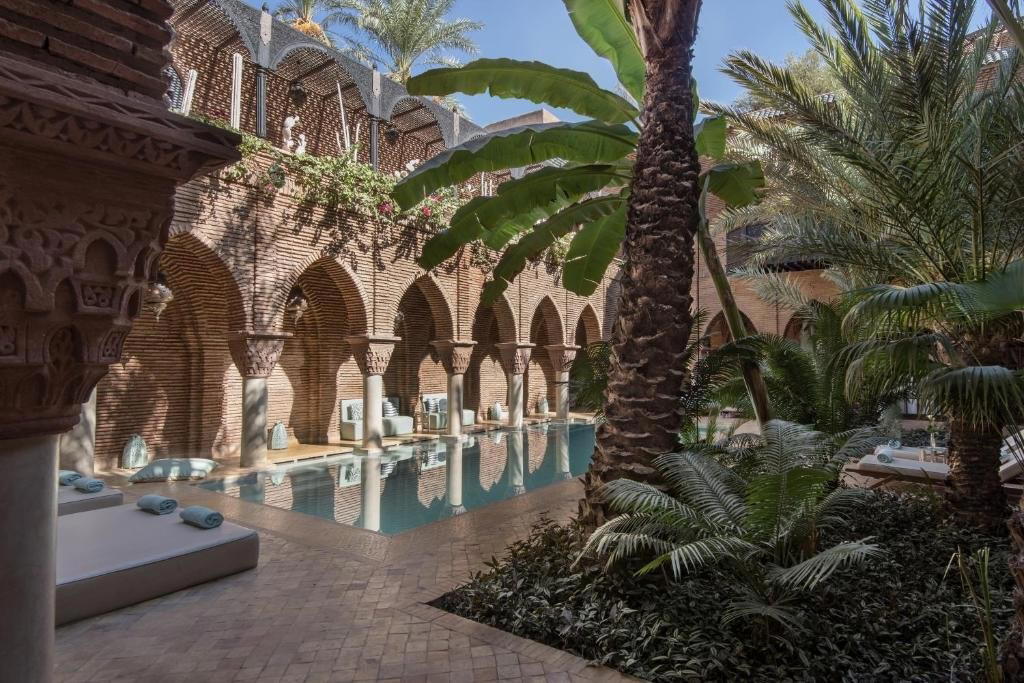
There is a particular category of dining room in North Africa that has no real equivalent elsewhere: the grand hotel restaurant housed within a palace property of genuine historical weight, where the physical environment is not decorative backdrop but active participant in the meal. Le Marocain, operating inside La Mamounia on Avenue Bab Jdid, sits squarely in that category. The hotel's Andalusian gardens, dating to the 18th century, and its art deco interiors, restored across major renovation cycles, frame a dining experience that is inseparable from its container. You are not simply choosing a restaurant here; you are choosing a particular version of Marrakesh — one that has been receiving kings, heads of state, and artists since the 1920s.
That context matters when assessing the kitchen's work. Moroccan French cuisine, as a category, is not a novelty. It describes a culinary tradition shaped by the intersection of French classical training and indigenous Moroccan ingredients, spice knowledge, and slow-cooking techniques. Le Marocain operates within that tradition alongside a handful of comparable addresses in the city, including Palais Ronsard and the reliably ambitious La Grande Table Marocaine at the Royal Mansour, which represents the main competitive reference point in the palace-dining tier.
Sourcing Inside the Atlas Shadow
The ingredient question is where Moroccan fine dining gets genuinely interesting, and where Le Marocain's position inside a major hotel becomes both an advantage and a challenge. Morocco's agricultural geography is remarkably compressed. Within a few hours of Marrakesh, you have High Atlas mountain valleys producing herbs and legumes at altitude, the Ourika Valley with its stone-fruit orchards, and argan-producing regions to the southwest where the oil comes from pressed kernels still largely processed by cooperative networks of Berber women. The Souss plain feeds the country's citrus and vegetable exports, while the Atlantic coast at Essaouira and Agadir provides fish that moves quickly inland to city kitchens.
For a kitchen operating at the level La Liste recognises, 86 to 87.5 points across its 2025 and 2026 editions, the sourcing decisions are where differentiation becomes possible. Morocco's spice infrastructure is not simply a cultural inheritance; it is a living supply chain centred on the medina souks, where ras el hanout blends are assembled to specification and preserved lemons cure in earthenware at shop level. A kitchen drawing on that directly, rather than through consolidated wholesale channels, produces food that reads differently on the palate. Whether Le Marocain sources at that granular level is not documented in publicly available detail, but the broader point holds: the ingredient geography surrounding Marrakesh is one of the most varied of any city in the Mediterranean-adjacent world, and the Moroccan French format is well-positioned to make that legible on the plate.
For broader regional context on Moroccan ingredient culture, the wine-adjacent food traditions at Château Roslane in Icr Iqaddar and the coastal sourcing approach at Heure Bleue Palais in Essaouira offer useful comparison points for how Moroccan kitchens handle provenance at the fine dining register.
The La Liste Signal and What It Means Here
An 87.5 in 2025, edging down fractionally to 86 in 2026, places Le Marocain in the upper band of recognised Moroccan fine dining without reaching the very top tier occupied by addresses like the Royal Mansour's table. The slight year-on-year movement is worth noting: it is neither a dramatic decline nor consolidation, but it does suggest the kitchen is operating in a competitive bracket where consistency is closely tracked.
Grand hotel dining rooms in major tourist cities often attract visitors whose expectations are calibrated more to the room's reputation than to the food itself, which can produce polarised review distributions. The La Liste scores represent a more calibrated assessment framework for what the kitchen is actually doing.
For other Marrakesh addresses that La Liste or comparable bodies have recognised, La Grande Brasserie by Hélène Darroze and Sesamo represent different points on the city's fine dining spectrum. The +61 address adds an international-fusion register that positions differently from the classical Moroccan French frame.
Le Marocain in the Moroccan Fine Dining Map
The Moroccan French format has parallels across the country, from the medina-rooted kitchens of Fès, where Gayza works a distinct northern Moroccan tradition, to the Casablanca dining room at Hôtel Le Doge and the Franco-Moroccan crossover at Iloli in Casablanca. The ingredient-focused approach also surfaces at L'Oliveraie in El Hajeb, where the agricultural setting frames the sourcing narrative directly. Within Marrakesh, Le Petit Cornichon occupies a more casual, bistro-inflected corner of the French-Moroccan conversation.
What distinguishes Le Marocain from most of these addresses is not the cuisine category but the container. Very few restaurants in Morocco operate from a physical space with La Mamounia's historical density and maintained grandeur.
Planning a Visit
Le Marocain sits on Avenue Bab Jdid, accessible from the Kasbah edge of the medina and a short distance from Jemaa el-Fna by taxi or hotel transfer. La Mamounia operates as a full-service palace hotel, and dining at Le Marocain does not require a room booking, though reservations through the hotel's channels are advisable given the property's occupancy patterns, particularly during peak season from October through April, when Marrakesh's climate draws heavy international visitor traffic. Dress code expectations at this tier of palace dining in Marrakesh run formal to smart-formal; arriving in medina-touring attire is likely to create friction at the door. For those building a wider picture of what Marrakesh offers at table, our full Marrakesh restaurants guide maps the full range, while our hotels guide, bars guide, experiences guide, and wineries guide cover the rest of the city's hospitality offer.
Reputation Context
| Venue | Cuisine | Awards |
|---|---|---|
| Le Marocain - La MamouniaThis venue — the venue you are viewing | Moroccan French | Not listed |
| La Grande Table Marocaine - Royal Mansour | Moroccan Cuisine | World's 50 Best |
| L’Italien par Jean-Georges | French Moroccan | French Moroccan |
| La Villa des Orangers | Moroccan Cuisine | Moroccan Cuisine |
| Le Jardin d'Hiver | Moroccan Traditional | Moroccan Traditional |
| Palais Ronsard | Moroccan French | Moroccan French |
Recognition history
Dated appearances from independent guides and award organizations, with the underlying list record or original source where available.
La Liste Top Restaurants
La Liste
La Liste Top Restaurants
La Liste
Continue exploring
More in Marrakech
Restaurants in Marrakech
Browse all →
Bars in Marrakech
Browse all →
Hotels in Marrakech
Browse all →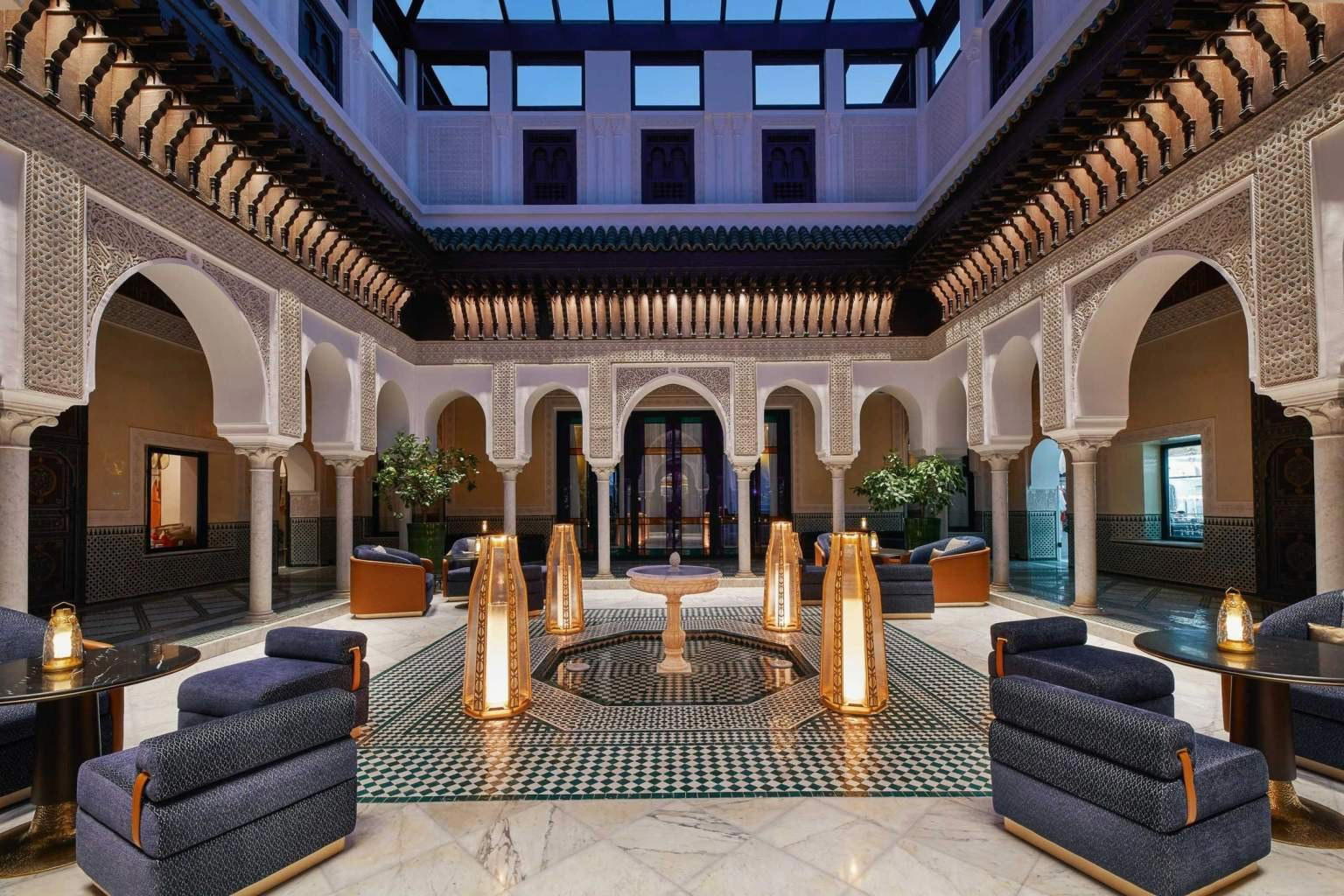
Wineries in Marrakech
Browse all →
At a Glance
- Elegant
- Classic
- Well Known
- Ornate
- Sophisticated
- Special Occasion
- Celebration
- Date Night
- Hotel Restaurant
- Historic Building
- Live Music
- Extensive Wine List
- Garden
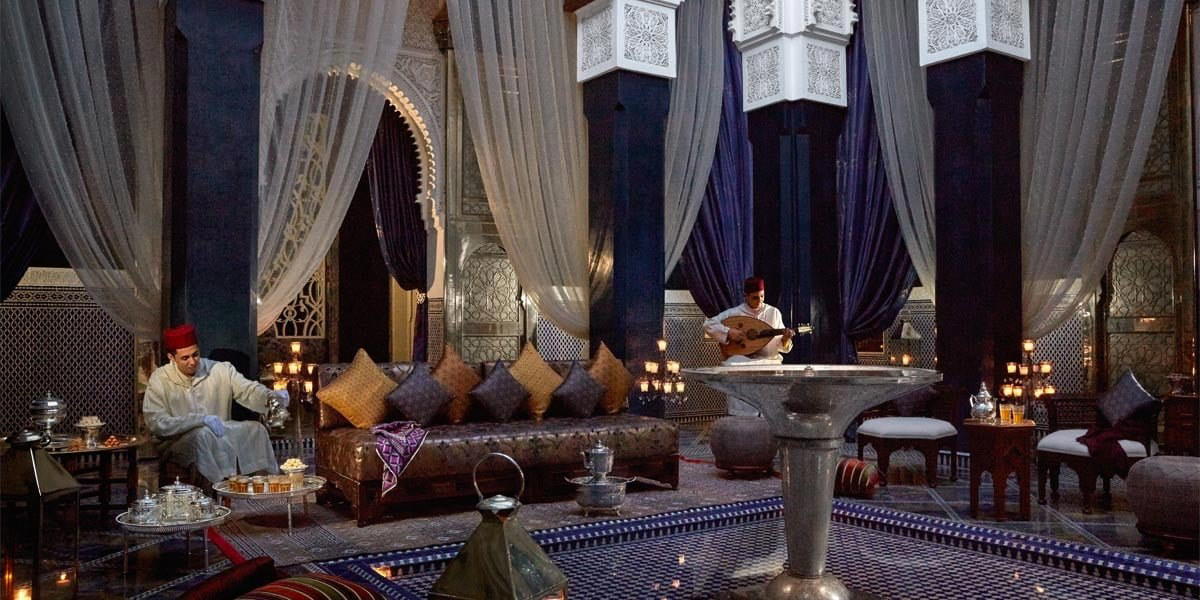
Intimate alcoves with low lighting, comfortable sofa seating, live music, and an atmosphere evoking a 1001 nights experience amid beautiful historic surroundings.
Know Before You Go
- Getting there
- J2C3+7J3, Avenue Bab Jdid, Marrakesh 40040, Morocco