
The kitchen draws on classical Moroccan technique under chefs Jean-Claude Olry and Abdelilah Ighiri, anchored within a riad property whose 8,600 sq.ft. spa and private pool suites place it firmly in the city's luxury hospitality tier.
Pearl is the En Primeur Club membership app — saves, bookings, and concierge access live there. Same editors, same standards.
- Address
- 6 Rue Sidi Mimoun، Place Ben Tachfine, Marrakesh 40000, Morocco
- Phone
- +212 5 24 38 46 38
- Website
- villadesorangers.com
- Directions
- Get directions
 Saves & bookings on Pearl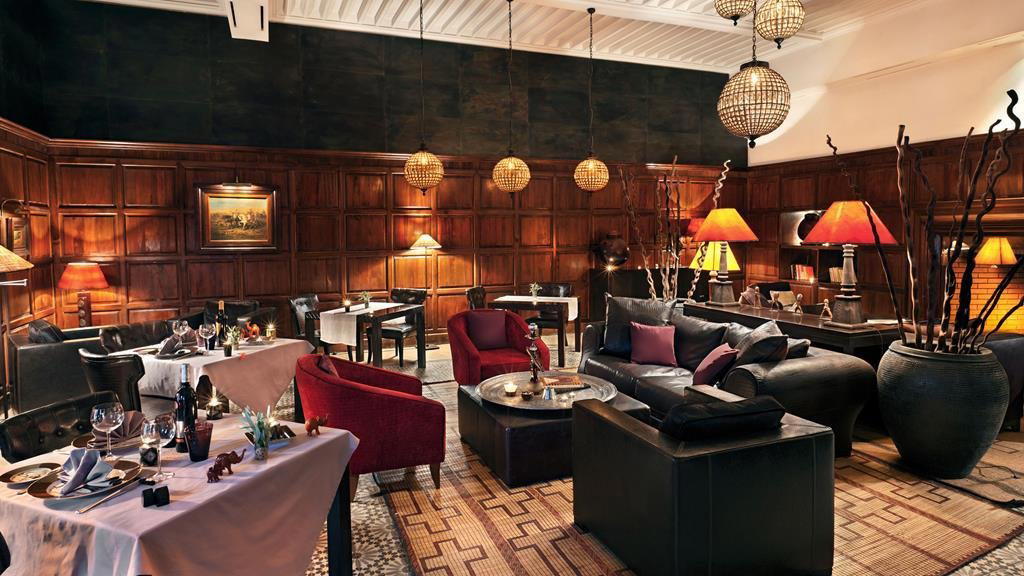
Where the Medina Ends and the Table Begins
Approaching La Villa des Orangers from the Bab Jdid gate, the shift in register is immediate. The noise and compression of the medina streets give way to a stillness that Marrakesh's better riad properties have long understood: architecture as decompression. The property sits on Rue Sidi Mimoun, roughly 100 metres from the first traffic lights past the ramparts, which places it at an address that is technically inside the city's historic core while offering the kind of remove that most medina restaurants cannot. That tension — between deep immersion and deliberate calm — shapes the dining experience here in ways that a direct city-centre address would not.
In a city where premium dining has increasingly consolidated around large hotel dining rooms, La Villa des Orangers occupies a specific position: a riad-format property whose food program is taken as seriously as its accommodation. For context, La Grande Table Marocaine at Royal Mansour sets the ceiling for formal Moroccan fine dining in the city, while La Cour des Lions at Es Saadi and La Grande Brasserie by Hélène Darroze represent the European-trained chef model grafted onto Moroccan hospitality. La Villa des Orangers sits between those poles, drawing on classical Moroccan culinary language without the institutional scale of a palace hotel.
The Moroccan Pastry Tradition at the Table
To understand what the kitchen here is doing, it helps to understand what Moroccan dessert tradition actually demands of a serious restaurant. Moroccan sweets are not an afterthought appended to a savoury menu, they are a distinct culinary discipline, one that draws on centuries of Andalusian, Berber, and Arab influences and that requires the same precision as the bastilla or the tagine that precedes them. The pastry table in a Moroccan household or a well-run Marrakshi riad is a statement of hospitality philosophy: cornes de gazelle filled with almond paste and orange blossom, briouats fried to a shattering crispness and soaked in honey, chebakia twisted into elaborate shapes before their sesame-seed coating sets, and the slow-cooked m'hanncha, the snake cake, that arrives coiled and warm, its almond and cinnamon filling scented with rosewater.
What separates a competent Moroccan dessert course from a genuinely considered one is the sourcing of the underlying ingredients and the restraint applied to sweetness. Moroccan pastry, done properly, walks a precise line: honey-forward but not cloying, aromatic from orange blossom or rosewater but not perfumed into abstraction. The almond content in cornes de gazelle or m'hanncha should carry the weight of the dish, with sugar as a supporting note rather than the whole chord. At the level La Villa des Orangers operates, a property with private riad suites, a dedicated 8,600 sq.ft. spa, and a kitchen led jointly by Jean-Claude Olry and Abdelilah Ighiri, the expectation is that this calibration is understood. The dual-chef structure, pairing a European sensibility with deep local knowledge, is a model that Marrakesh's premium dining tier has found productive: it tends to produce kitchens that can serve the classical canon with precision while being able to read an international room.
The tea service that frames the dessert course in Moroccan tradition deserves its own attention. Atay, the heavily sweetened mint tea poured from a height to produce its characteristic froth, is not simply a digestif but the closing ceremony of a Moroccan meal, and the quality of the pour and the ratio of gunpowder tea to fresh mint tells you something about how seriously the full dining arc is being considered. At a riad property operating at this rating level, the tea service is expected to match the ambition of what precedes it.
The Riad Format and Its Culinary Logic
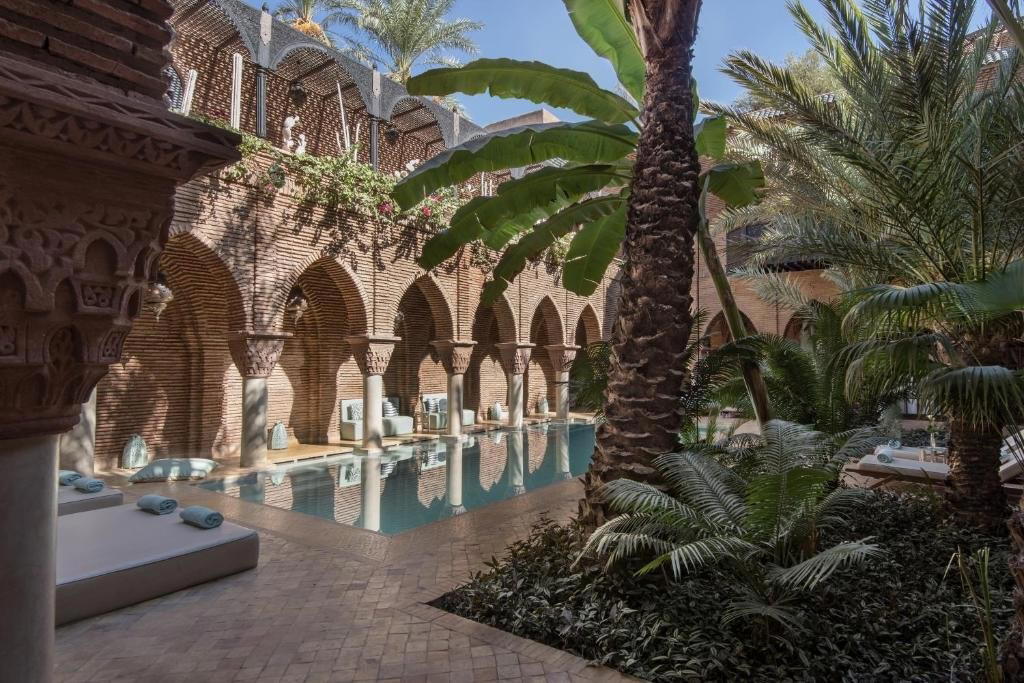
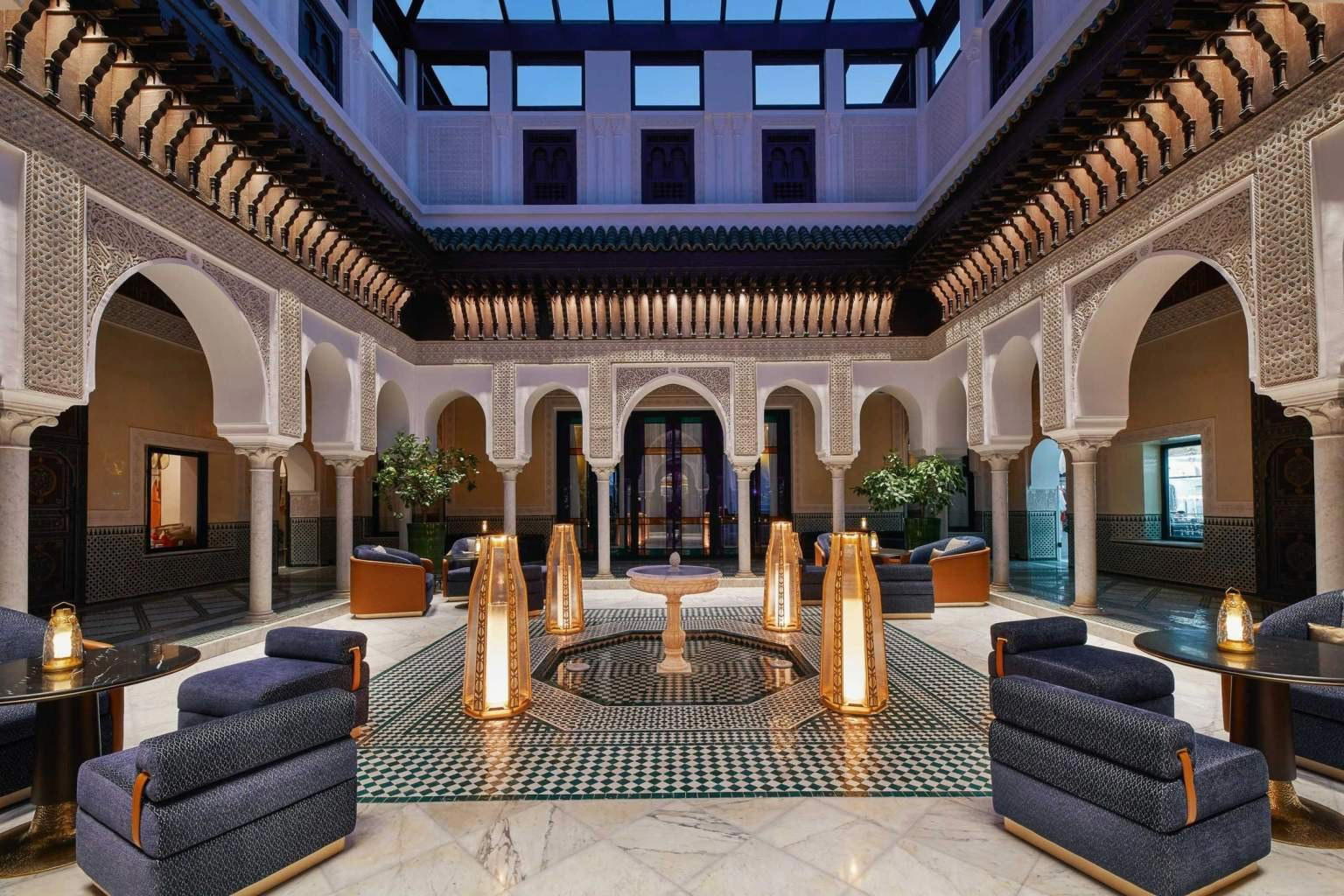
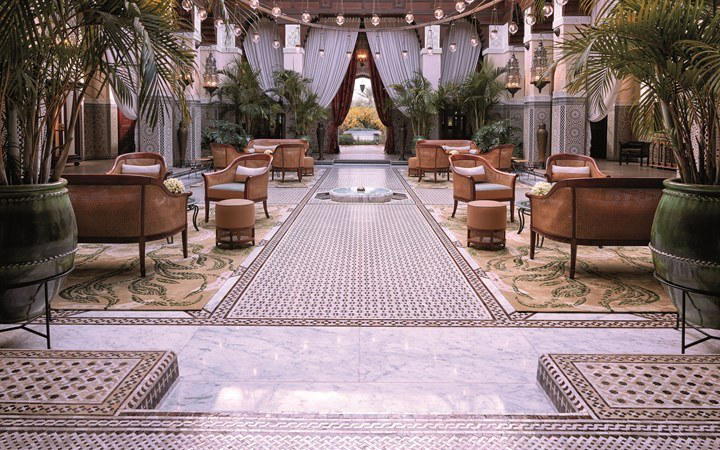
Marrakesh's dining scene has long operated on a riad logic that does not translate directly to other cities. A riad is not simply a restaurant set inside a historic house, it is a hospitality format in which the architecture, the courtyard, the garden, and the table are understood as a single experience. The orange trees that give La Villa des Orangers its name are not decorative; they contribute to a sensory vocabulary in which scent, shade, and seasonal produce connect the kitchen to the specific geography of Marrakesh's Palmeraie and the orchards of the Ourika valley nearby. That connection between garden and table is what distinguishes the better riad dining rooms from their city-hotel counterparts, where the kitchen is necessarily working at a remove from the local agricultural calendar.
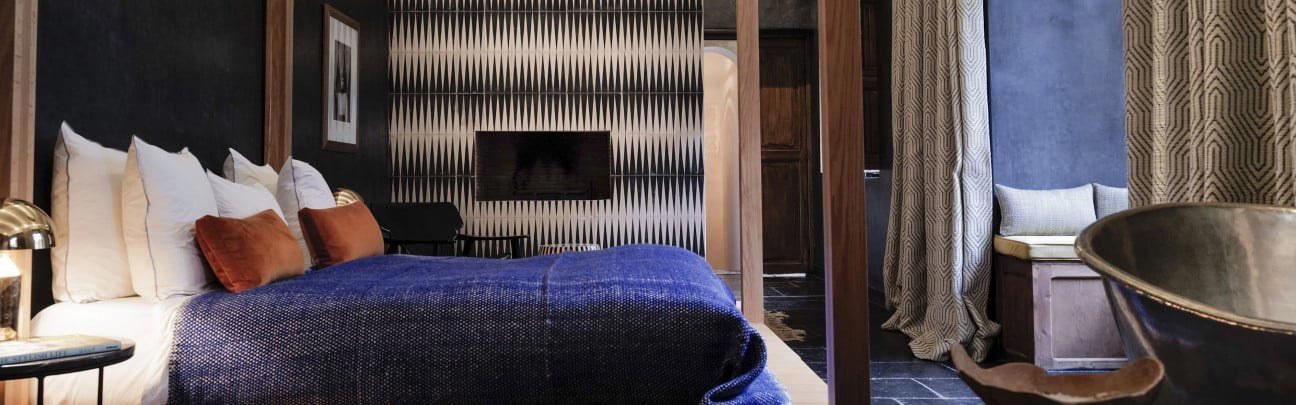
The private pool suites on the property position La Villa des Orangers within Marrakesh's upper accommodation tier, which matters for the dining context because it determines the likely composition of the room on any given evening. Properties at this level tend to attract a guest profile that is eating multiple meals on site across a stay, which in turn requires the kitchen to sustain interest across repeated visits. That is a different operational challenge from a destination restaurant that sees guests once, and it tends to produce menus that reward sustained attention rather than single-visit spectacle. For those staying off-property, dinner reservations are advisable well in advance, particularly during the high season running from October through April, when Marrakesh's cooler temperatures make courtyard dining genuinely comfortable. The summer months, when temperatures regularly exceed 38°C, shift the dynamic toward evening service and interior spaces.
Where La Villa des Orangers Sits in the Broader Scene
Marrakesh has seen its premium dining tier expand and diversify over the past decade. Addresses like +61 and Sesamo represent the city's appetite for non-Moroccan formats at a premium price point, while the classical Moroccan fine dining tradition is maintained by a small cohort of riad properties and palace hotel dining rooms. The competitive set for La Villa des Orangers is not the entire Marrakesh restaurant market but that smaller group: properties where the food program is a primary draw rather than a hotel amenity, where the architectural context contributes to the experience, and where the ratings history suggests genuine consistency.
For travellers moving across Morocco, the comparison with other established addresses is instructive. Heure Bleue Palais in Essaouira operates a similar riad-hotel dining model on the Atlantic coast, and Gayza in Fès represents the northern Moroccan culinary tradition at a comparable register. Internationally, the dual-chef model pairing European and local expertise has parallels at addresses like Atomix in New York City, where the tension between classical European technique and a distinct culinary heritage is the productive engine of the kitchen. The contexts are entirely different, but the structural logic is recognisable.
The full scope of Marrakesh dining, from medina address to New Town brasserie, is covered in our full Marrakesh restaurants guide. For those planning a broader stay, our Marrakesh hotels guide, bars guide, and experiences guide cover the full city picture. Elsewhere in Morocco, Château Roslane in Icr Iqaddar and L'Oliveraie in El Hajeb are worth noting for travellers who want to extend beyond Marrakesh into the wine and olive country of the Middle Atlas.
Planning Your Visit
La Villa des Orangers sits at 6 Rue Sidi Mimoun, just inside the medina walls near Place Ben Tachfine. By car, the approach is through the Bab Jdid gate, turning right at the first lights and continuing approximately 100 metres, the property is the first building on the left. From Marrakech Menara International Airport, the drive runs roughly 8 kilometres, and the city's train station is approximately 2 kilometres away, making the property accessible without a long transfer. GPS coordinates 31.6205, -7.9916 will bring you directly to the address.
How La Villa des Orangers Marrakech compares with similar nearby venues.
| Venue | Cuisine | Awards |
|---|---|---|
| La Villa des Orangers | Moroccan Cuisine | Relais Chateaux Award (2026) |
| Le Marocain - La Mamounia | Moroccan French | Not listed |
| La Grande Table Marocaine - Royal Mansour | Moroccan Cuisine | Not listed |
| La Cour des Lions - Es Saadi | Moroccan Cuisine | Not listed |
| L'Oliveraie | Moroccan Cuisine | Not listed |
Recognition history
Dated appearances from independent guides and award organizations, with the underlying list record or original source where available.
Relais Chateaux Award
Relais Chateaux
Continue exploring
More in Marrakech
Restaurants in Marrakech
Browse all →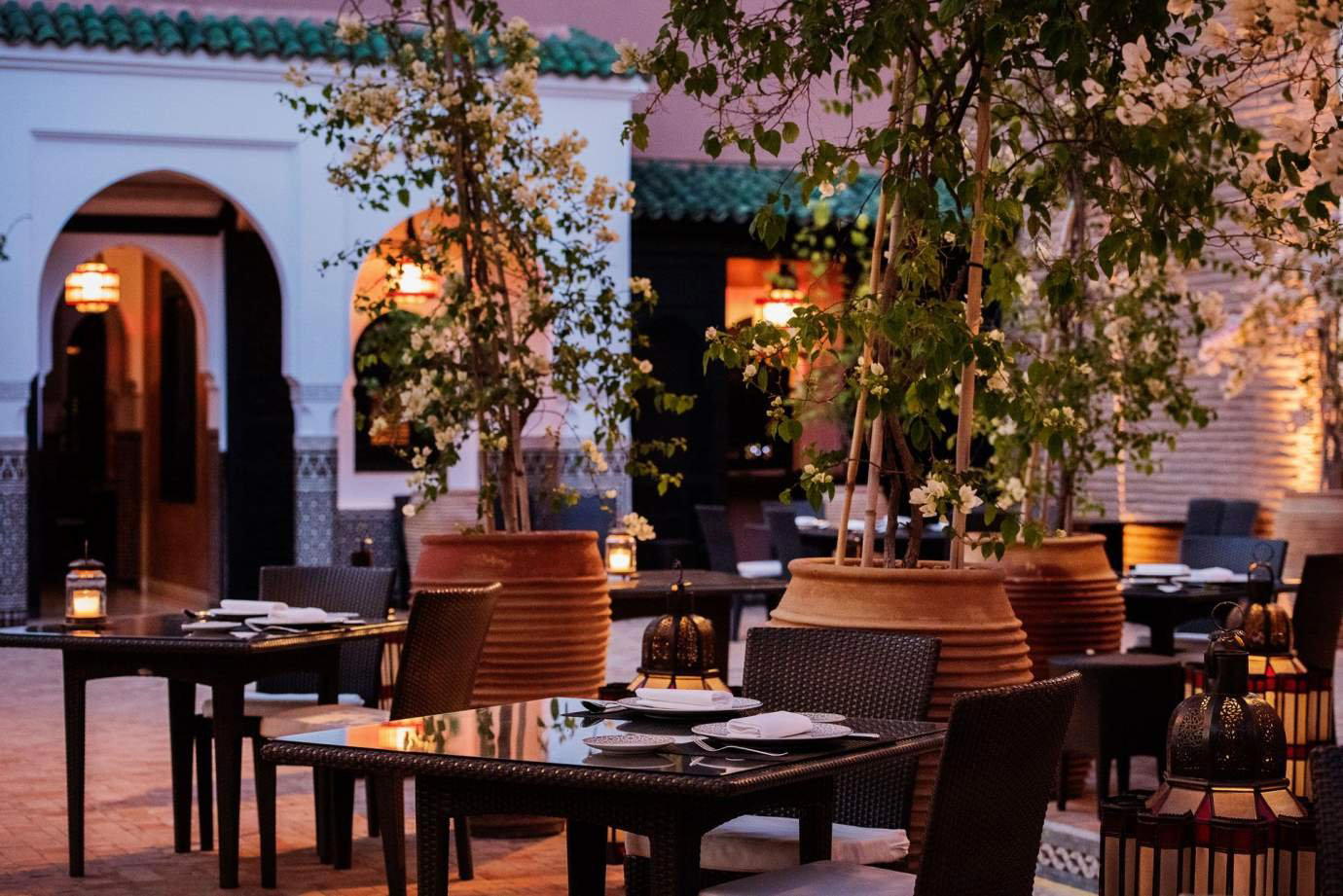
Bars in Marrakech
Browse all →

Hotels in Marrakech
Browse all →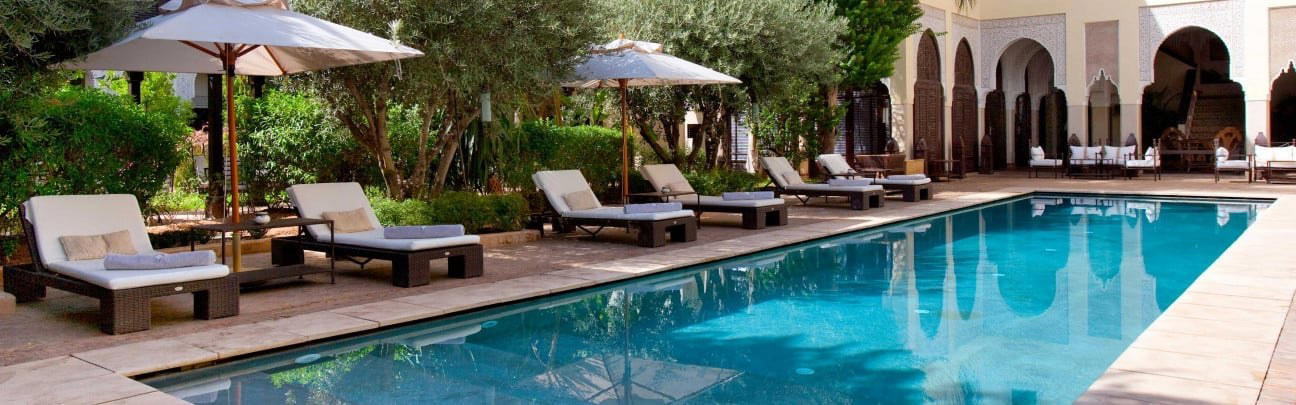
Wineries in Marrakech
Browse all →
At a Glance
- Romantic
- Elegant
- Intimate
- Sophisticated
- Cozy
- Date Night
- Special Occasion
- Celebration
- Courtyard
- Hotel Restaurant
- Terrace
- Extensive Wine List
- Local Sourcing
- Organic
- Garden
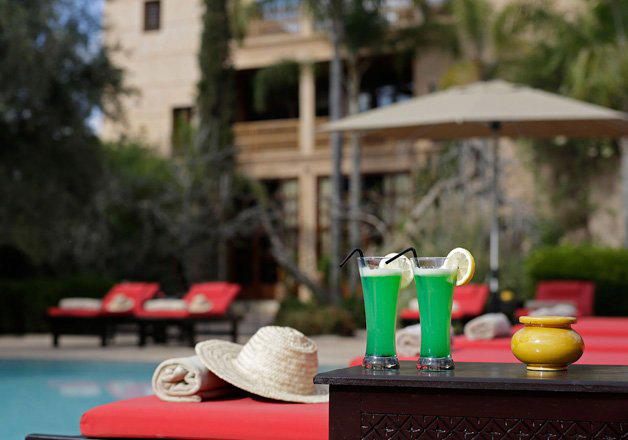
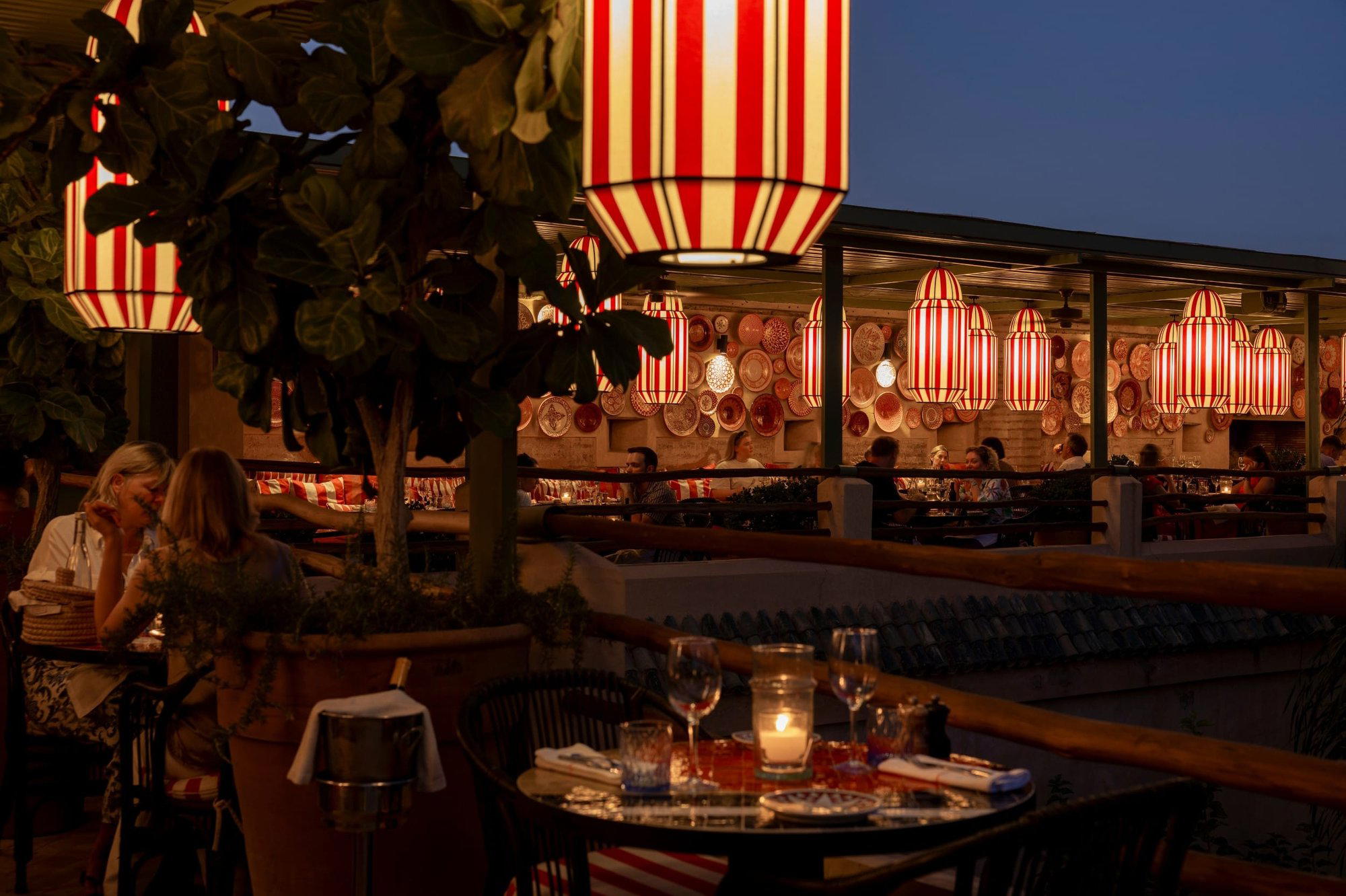
Romantic lighting with red hues in wood-paneled dining rooms featuring roaring fireplaces, or poolside under evening lights in a lush courtyard.
Know Before You Go
- Getting there
- 6 Rue Sidi Mimoun، Place Ben Tachfine, Marrakesh 40000, Morocco