


1 Michelin Key · Relais Chateaux Award · Mr & Mrs Smith Seal of Approval
La Villa des Orangers occupies a pair of early 20th-century riads on the rue Sidi Mimoun, a short walk from the Medina walls. Thirty-two rooms and suites, private terraces, an 8,600 sq.ft. spa, and an eighteen-meter heated courtyard pool define its position among Marrakesh's smaller, design-led properties. Rates from US$555 per night. Rated 4.7 on Google (414 reviews) and 4.8/5 by EP Club members.

Pearl is the En Primeur Club membership app, where members save venues, book tables and use the concierge.
A Medina-Edge Address Where Scale Works in Your Favour
Marrakesh's premium accommodation tier has long divided along a clear fault line: the grand palace hotels La Mamounia, Royal Mansour, with their sweeping grounds and hundreds of keys, and a quieter cohort of maison-scale properties that trade volume for intimacy. La Villa des Orangers belongs firmly to the second group. Thirty-two rooms across two adjoining early 20th-century residences, a single carved wooden door on the rue Sidi Mimoun, and no lobby to speak of in the conventional hotel sense. The property sits just inside the ramparts, accessible by crossing the Bab Jdid gate and turning right at the first set of traffic lights, Marrakech Menara International Airport is approximately eight kilometres away, the train station two kilometres closer.
That address matters editorially. The Medina-edge position means the street noise, the call to prayer, and the smell of cedar from the souks are present but not overwhelming. Guests are in the city without being consumed by it, a balance that smaller riad conversions inside the souks rarely achieve and that the larger resort properties, Four Seasons Resort Marrakech or Fairmont Royal Palm Marrakech, do not attempt, given their locations beyond the historic walls.
Two Courtyards, One Rooftop, and the Logic of Spatial Hierarchy
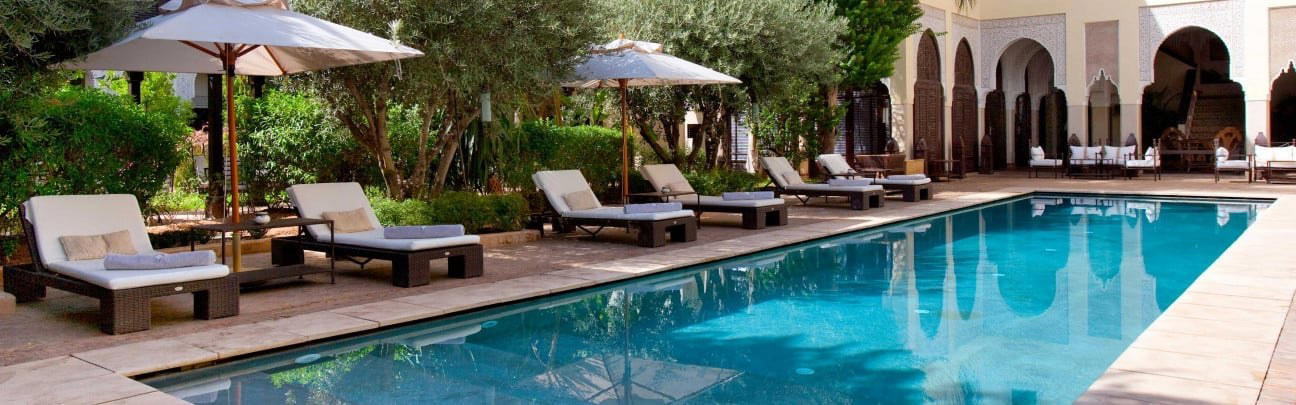
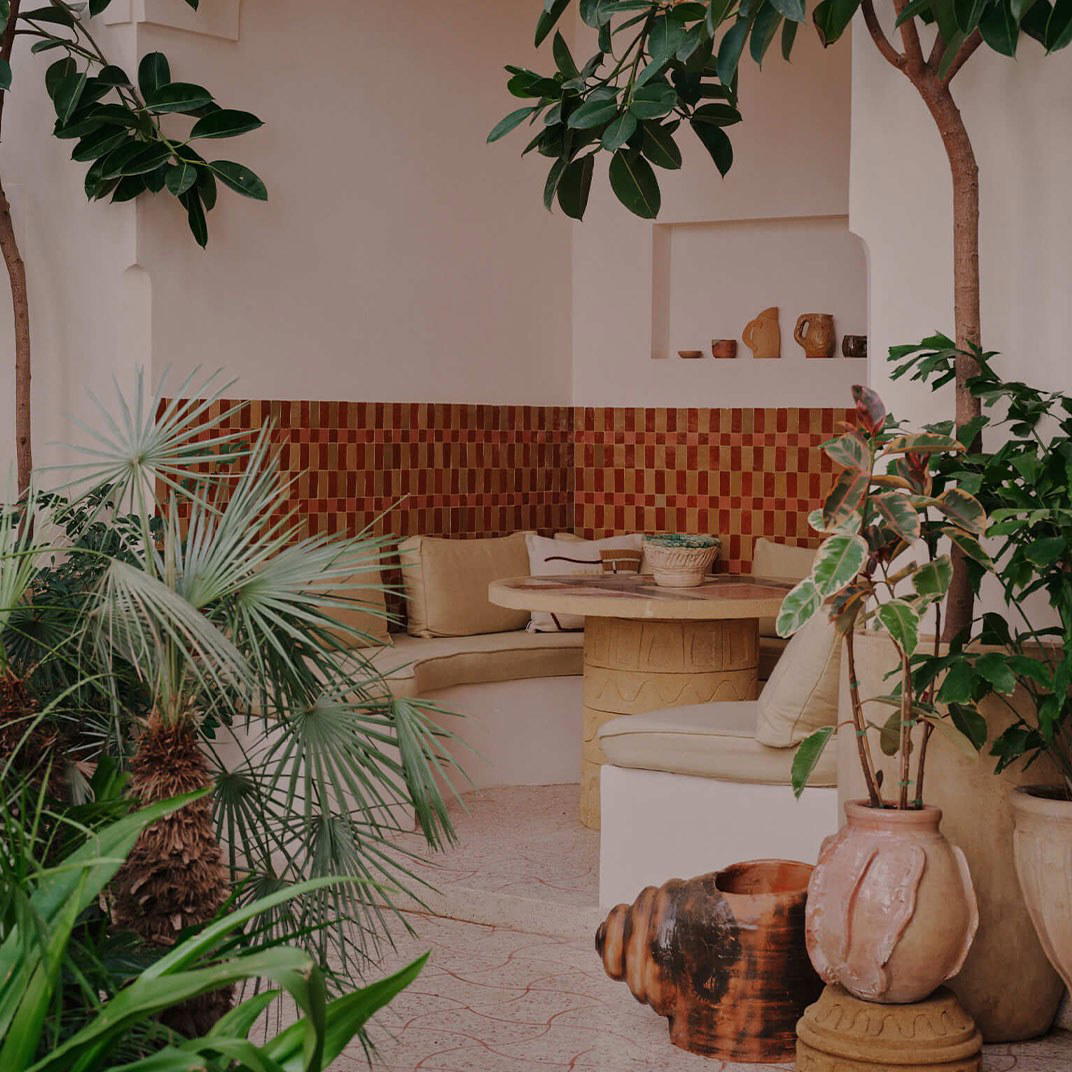
The property organises itself around two courtyards that perform different functions. The first is given over almost entirely to an eighteen-meter heated pool, a scale unusual for a riad conversion and one that places La Villa des Orangers in a different practical category from the smaller courtyard plunge-pool format typical of many medina guesthouses. The second courtyard is quieter in its purpose: a fountain, sofas, armchairs, and the kind of ambient stillness that Marrakesh can feel impossible to find once the souks are active.
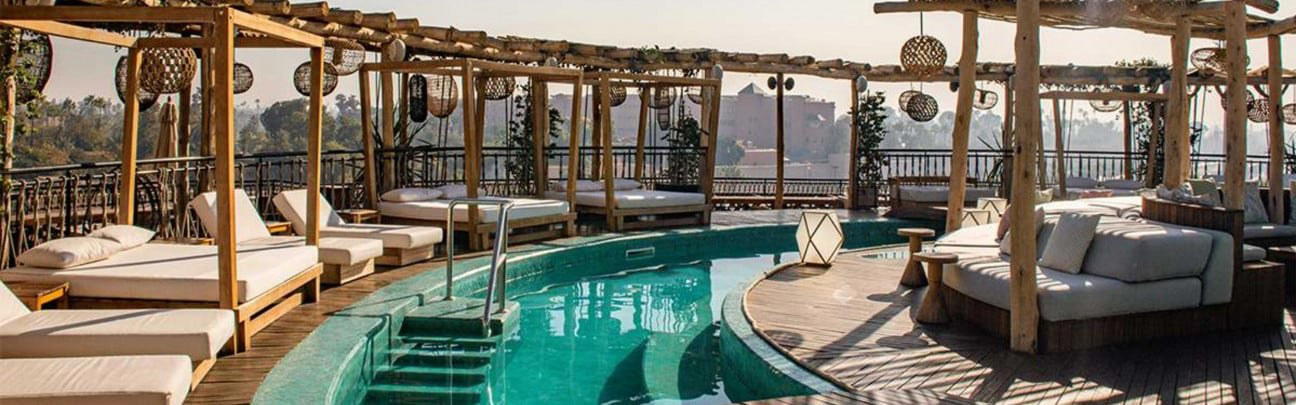
Above both courtyards, the rooftop terrace operates as a third distinct setting. A small plunge pool sits there alongside unobstructed views across the mosques and roofline of the old city, with the Atlas Mountains as a backdrop on clear days. In Marrakesh's accommodation market, rooftop access with this sightline, rather than a view of a hotel carpark or a newer development, functions as a genuine differentiator. Properties like El Fenn and IZZA Marrakech compete in a similar register of design-forward, view-conscious smaller hotels, and the comparison is instructive: all three position themselves against the heritage grandeur of the palace tier rather than against one another directly.
Traditional Craft as a Responsible Design Framework
There is a broader argument to be made about the responsible luxury credentials of properties that lean hard into traditional Moroccan craft rather than importing international fit-out contractors and materials. La Villa des Orangers falls into that first camp. The guest rooms carry ornate plaster work, tadelakt and carved stucco applied by local artisans using techniques that have remained largely unchanged across centuries, and delicately carved wooden furnishings that represent one of Marrakesh's most labour-intensive craft traditions. Commissioning that work, and maintaining it across a hotel operation, keeps specialist skills economically viable in a city where fast-build renovation has eroded some traditional trades.
What the architecture and material choices do signal is an alignment with the preservation of local craft heritage, which sits within the broader conversation about responsible tourism that has reshaped how the more thoughtful properties across Morocco present themselves. For context on how that conversation is playing out at the country level, properties like Jnane Tamsna in Marrakech and Dar al Hossoun in Taroudant represent comparable commitments to organic practices and local community employment, though with different formats and scales.
The 8,600 sq.ft. spa adds a dimension that the smallest riad properties in Marrakesh cannot match. At that footprint, it operates closer to the treatment volume and programme depth of the large resort spas, the kind you find at Amanjena or Ksar Char-Bagh, while remaining inside a property with fewer than 35 keys. That ratio of spa space to room count is atypical and positions La Villa des Orangers closer to a wellness property than a standard boutique hotel, even if that is not the primary positioning.
Dining in the Riad Tradition
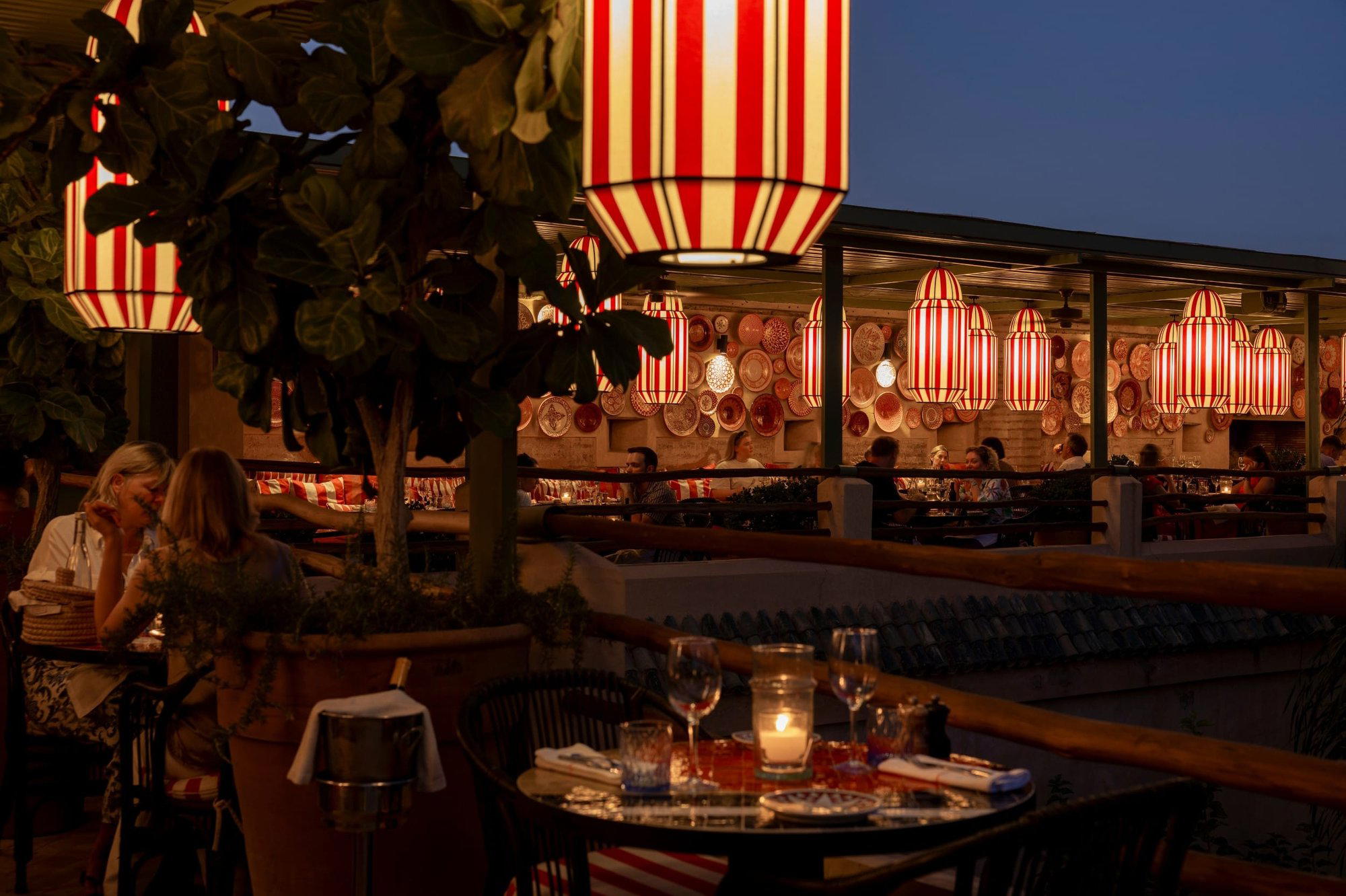
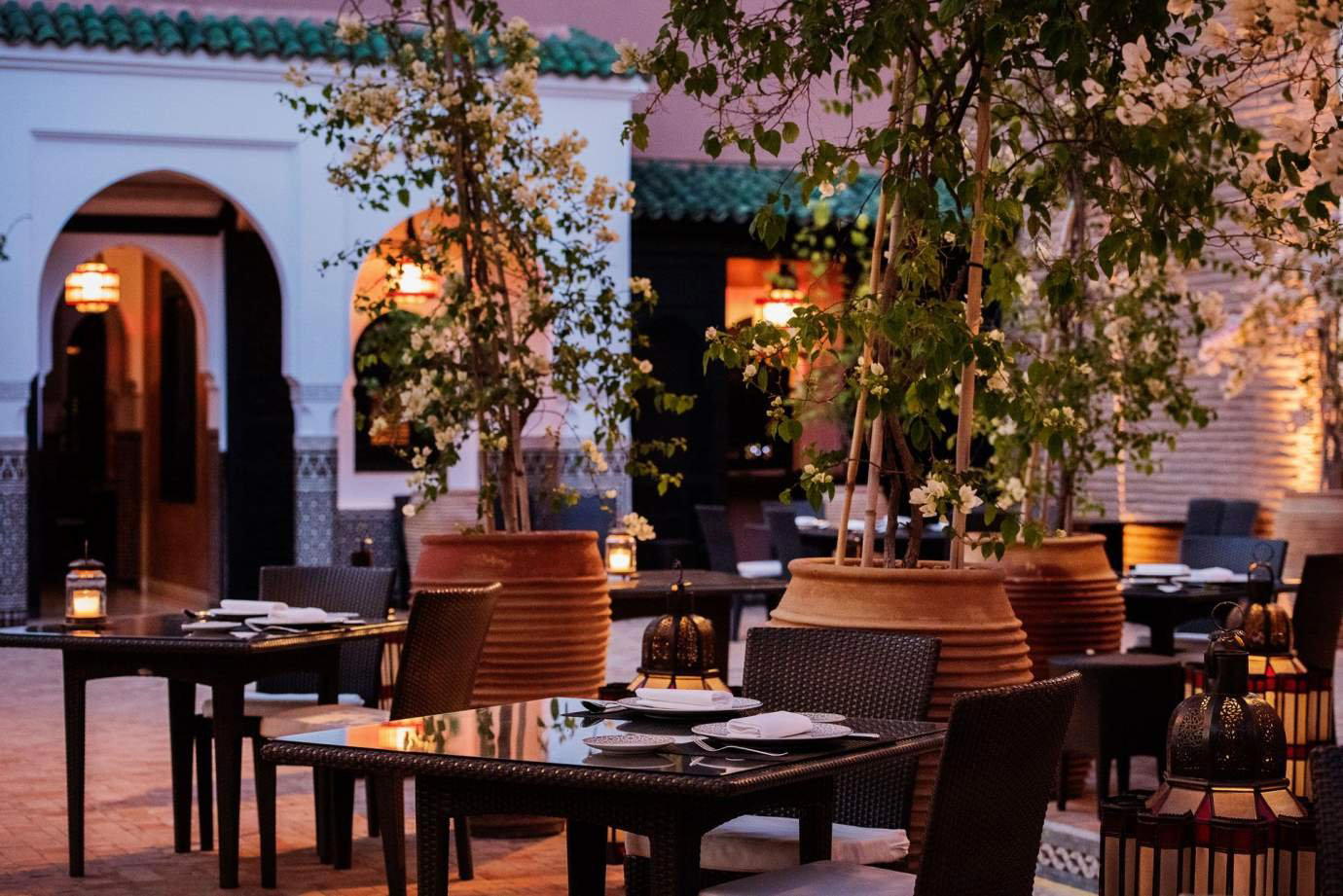
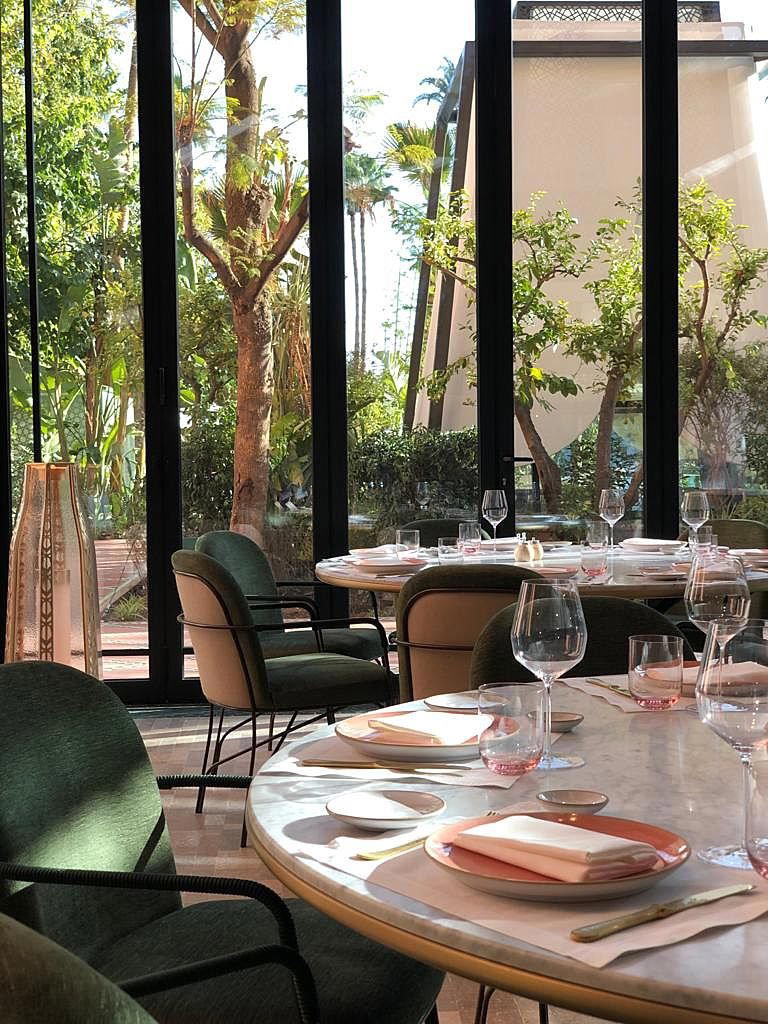
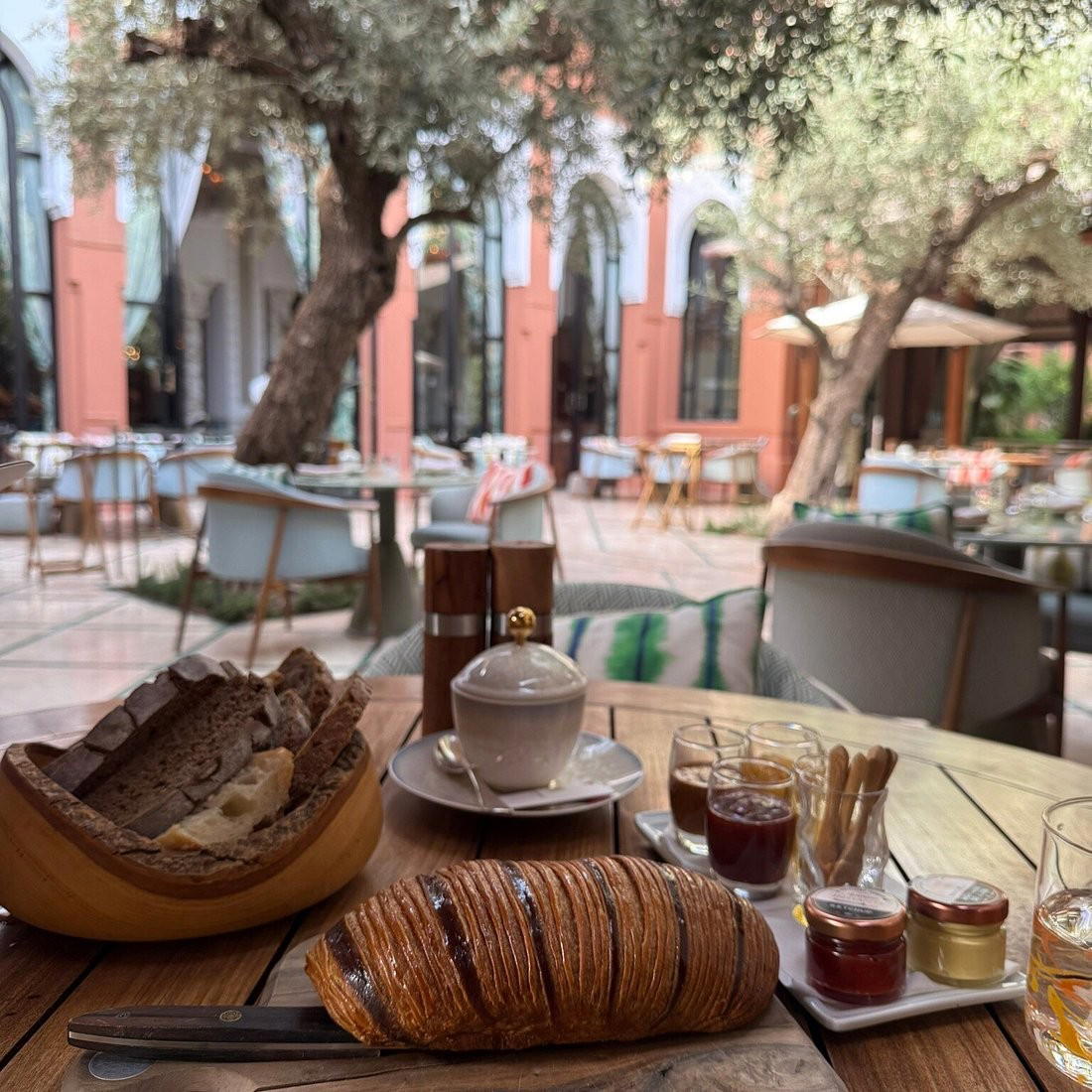
Moroccan cuisine at this level of property is less about menu innovation and more about the quality of the materials, the skill of the kitchen, and the setting in which the food appears. Traditional Moroccan cooking, tagines slow-cooked in clay, bastilla with its layers of pigeon or seafood and warqa pastry, harira with preserved lemon, is cuisine that rewards patience and proper technique rather than novelty. La Villa des Orangers serves that tradition in a formal dining room alongside a more fragmented network of salons, patios, and secluded nooks that allow for different moods across the same meal period. This multi-room format is characteristic of the larger riad conversion typology across Morocco, from Dar Ahlam in Ouarzazate to Dar Maya in Essaouira, and reflects an understanding that dining in a riad is as much about spatial experience as it is about what arrives on the plate.
The property has been identified among Marrakesh's dining destinations in its own right, a signal that the kitchen's output extends beyond the captive hotel guest audience. For a broader map of where that sits within the city's dining character, our full Marrakesh restaurants guide provides neighbourhood-level context.
Planning a Stay: What the Numbers Tell You
Rates begin at US$555 per night, which places La Villa des Orangers above the medina's guesthouse tier but below the opening rates of the major palace properties. Royal Mansour and La Mamounia operate at a materially different price point; La Villa des Orangers competes more directly with the upper tier of owner-operated riad conversions and with properties like Hotel Sahrai in Fes for guests who want craft-led authenticity without the full palace overhead. The property carries 32 rooms, which at Marrakesh's busier periods, the cooler months from October through April are peak season, with the Jemaa el-Fna at its most active, means availability can tighten considerably. Booking with adequate lead time is direct advice but worth taking seriously at a property of this size. The physical address at 6 Rue Sidi Mimoun, Place Ben Tachfine, places it within easy reach of both the medina on foot and the Hivernage district by car, with GPS coordinates 31.6205, -7.9916 for navigation.
For travellers building a wider Morocco itinerary, the property pairs naturally with properties elsewhere in the country's premium tier: Fes Marriott Jnan Palace or Hotel Sahrai in Fez for a historical counterpoint, Banyan Tree Tamouda Bay in Fnideq for a coastal shift, or Château Roslane for a detour into Morocco's wine country. Those planning onward travel to Europe will find useful comparisons in how small-footprint luxury operates elsewhere: Aman Venice applies a similar logic of historic building conversion with refined material standards, while the The Fifth Avenue Hotel in New York City and Aman New York represent the urban boutique tier at its most concentrated. Hilton Taghazout Bay Beach Resort and Spa and Fairmont La Marina Rabat Salé extend the Morocco circuit toward the Atlantic coast. Fairmont Tazi Palace Tangier adds a northern Morocco angle for those moving between the country's distinct regional characters. Hyatt Regency Casablanca rounds out the commercial capital option for mixed business and leisure itineraries.
Budget Reality Check
Comparable venues nearby, for context on price, style, and recognition.
| Venue | Price | Awards | Notes |
|---|---|---|---|
| La Villa des OrangersThis venue (the venue you are viewing) | $500–750 | 1 Michelin Key · Relais Chateaux Award | Not listed |
| Ksar Char-Bagh | $300–500 | 1 Michelin Key · Small Luxury Hotels of the World Member | Annakhil, Moorish palace riad in palm grove |
| Riad Tarabel | $300–500 | 1 Michelin Key · La Liste Top Hotels | Marrakech-Médina, Interconnected riads forming a private mansion with tree-lined patios and open lounges. |
| La Sultana Marrakech | $1,500–2,500 | 1 Michelin Key · La Liste Top Hotels | Méchouar-Kasba, Restored traditional Moroccan riads with contemporary luxury integration, positioned as a boutique heritage property within Small Luxury Hotels of the World collection. |
| Palais Ronsard | Not listed | 1 Michelin Key · Relais Chateaux Award | Annakhil, Ornate Moroccan palace with classic luxury positioning amid lush gardens. |
| Maison Brummell Majorelle | $200–300 | 1 Michelin Key · Mr & Mrs Smith Seal of Approval | Gueliz, Casual luxury design-forward boutique |
Recognition history
Dated appearances from independent guides and award organizations, with the underlying list record or original source where available.
Michelin 1 Key
Michelin
Mr & Mrs Smith Seal of Approval
Mr & Mrs Smith
Relais Chateaux Award
Relais Chateaux
Full recognition history (4 entries)
Michelin 1 Key
Michelin
Continue exploring
More in Marrakech
Hotels in Marrakech
All hotels in Marrakech →
Bars in Marrakech
All bars in Marrakech →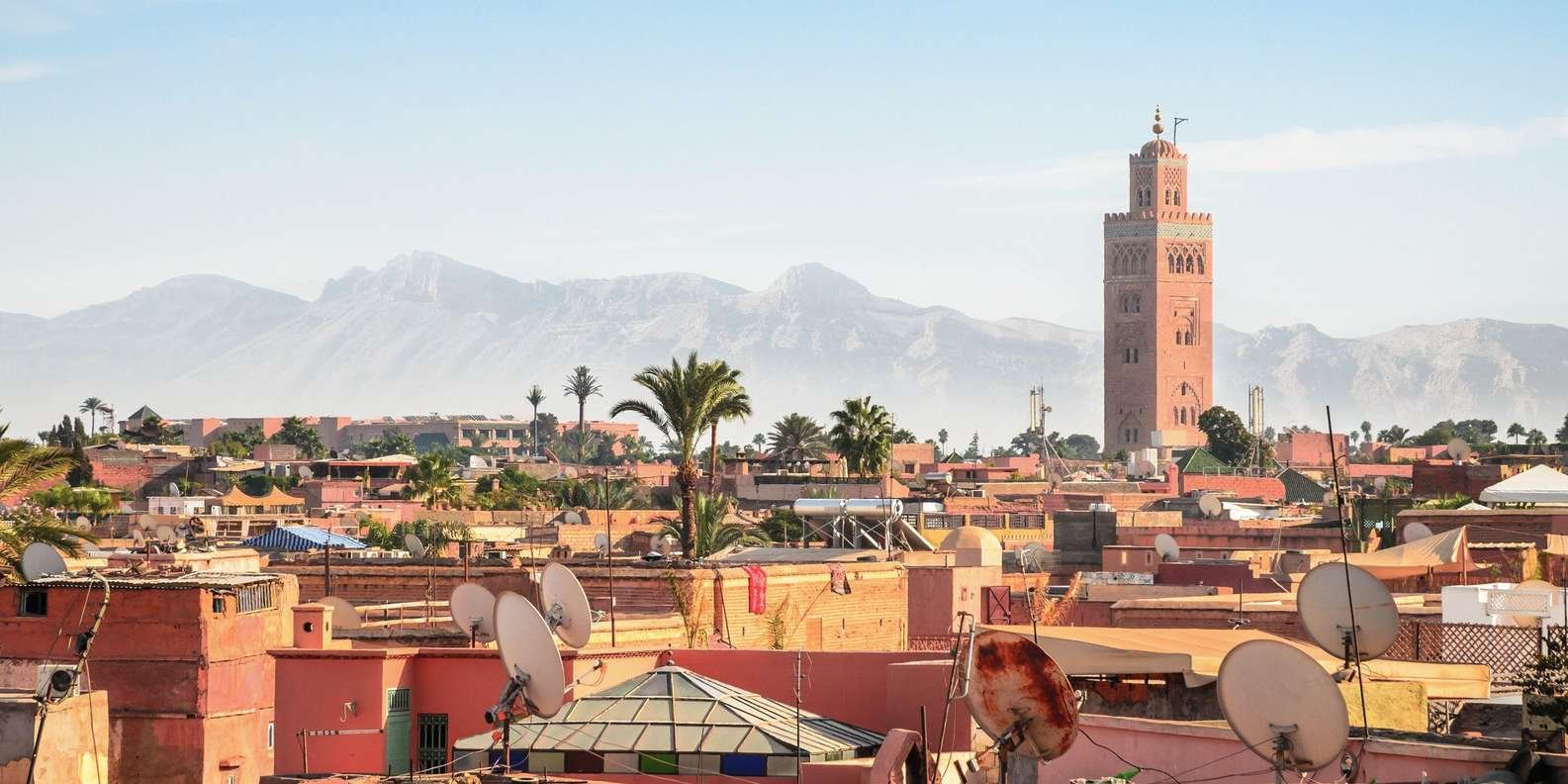
Restaurants in Marrakech
All restaurants in Marrakech →
Wineries in Marrakech
Browse all →
Details
- Romantic
- Elegant
- Quiet
- Intimate
- Sophisticated
- Ornate
- Honeymoon
- Romantic Getaway
- Anniversary
- Wellness Retreat
- Rooftop Pool
- Infinity Pool
- Garden
- Terrace
- Historic Building
- Pool
- Spa
- Room Service
- Concierge
- Wi Fi
- Breakfast Included
- Restaurant
- Bar
- Garden
- Mountain
Serene and elegant atmosphere with warm lighting in courtyards, creating a peaceful retreat amid the city's bustle.