


1 Michelin Star · Tabelog Bronze #226
Our verdict
Opened in February 2023 in Kagurazaka's residential backstreets, L'ÉTERRE earns its Tabelog Award Bronze and 4.14 score through an eight-seat counter format that fuses classic French technique with Japanese producer relationships. Head Chef Akira Tagome, trained under L'ARCHESTE's Yoshiaki Ito in Paris, runs a reservation-only dinner program priced at JPY 30,000–39,999, with a 400-label Burgundy-focused wine list and a sommelier on hand to match it.

Pearl is the En Primeur Club membership app, where members save venues, book tables and use the concierge.
Kagurazaka and the French Counter Format
When L'ÉTERRE opened on 1 February 2023 in a second-floor residence on Kagurazaka's 3-chome, the neighbourhood already had a reputation for the kind of French dining that Tokyo's Ginza or Minami-Aoyama corridors tend to overshadow. Kagurazaka's French connection is old enough to feel structural rather than fashionable: the area's stone-paved alleys and converted machiya townhouses have housed French restaurants for decades, and local residents have long treated the quartier as something of a Tokyo arrondissement. What has shifted more recently is the counter format, which has moved from sushi and kaiseki into high-end French kitchens across the city. At L'ÉTERRE, that format is taken seriously: eight seats, a counter facing the open kitchen, and a maximum party size of eight mean the room never accommodates more guests than a large dinner party.
That capacity constraint places L'ÉTERRE in a specific competitive tier within Tokyo's French scene. Compare it to three-Michelin-starred peers like L'Effervescence or Sézanne, which operate with larger dining rooms and the kind of international reservation pipelines that follow starred recognition. L'ÉTERRE, by contrast, sits closer in format to the intimate counter model also pursued by Crony, where the smallness of the room is a deliberate editorial choice about how French cooking should be received. The Tabelog Award 2026 Bronze and a score of 4.14, alongside selection for the Tabelog French TOKYO "Tabelog 100" 2025, confirm that the format is working on its own terms, within two years of opening.
The Kitchen and Its Lineage
The French counter model in Tokyo depends heavily on the credibility of the chef anchoring it, and at L'ÉTERRE that credibility runs through a specific Parisian lineage. Head Chef Akira Tagome trained in France from 2010 and worked under Yoshiaki Ito, whose restaurant L'ARCHESTE operates in Paris's 16th arrondissement. Tagome also studied at Jardin des Sens in Montpellier, one of the foundational addresses of southern French cuisine. That dual formation, north and south, classic and regional, informs the approach here: classic French technique is the grammar, but the vocabulary is built from Japanese producers. Before opening L'ÉTERRE, Tagome served as head chef at Hiramatsu Kodaiji in Kyoto for three years, a posting that sharpened his understanding of how Japanese ingredients perform under careful sourcing relationships. The result earned a Michelin star in the restaurant's first year of recognition.
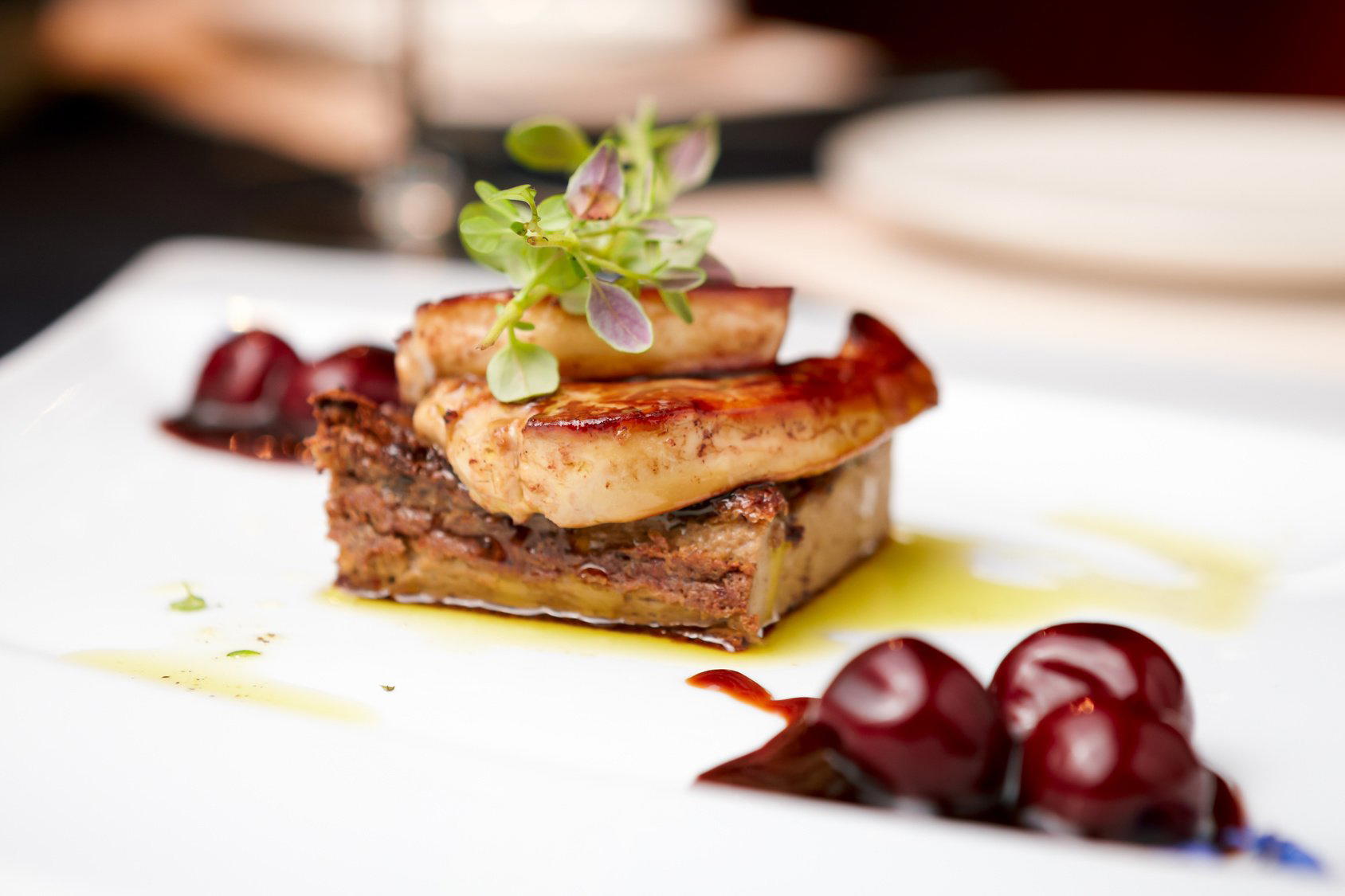
The cooking at L'ÉTERRE draws from both these formation periods. Japan is surrounded by sea, and the menu reflects that geography: seafood occupies a prominent position, treated through French classical structure. Vegetables and meat arrive from producers with established supply relationships, and the kitchen applies firewood, charcoal, and straw at key moments, techniques that are neither nostalgic affectation nor theatre, but practical tools for flavour development. The name itself carries that dual intention: a portmanteau of the French words for eternity and earth, it signals both a commitment to enduring methods and a rootedness in the specific terroir of its ingredients. For a kitchen this size, that level of sourcing discipline requires sustained attention from the whole team, not just the chef.
The Team Dynamic: Kitchen, Cellar, and Floor
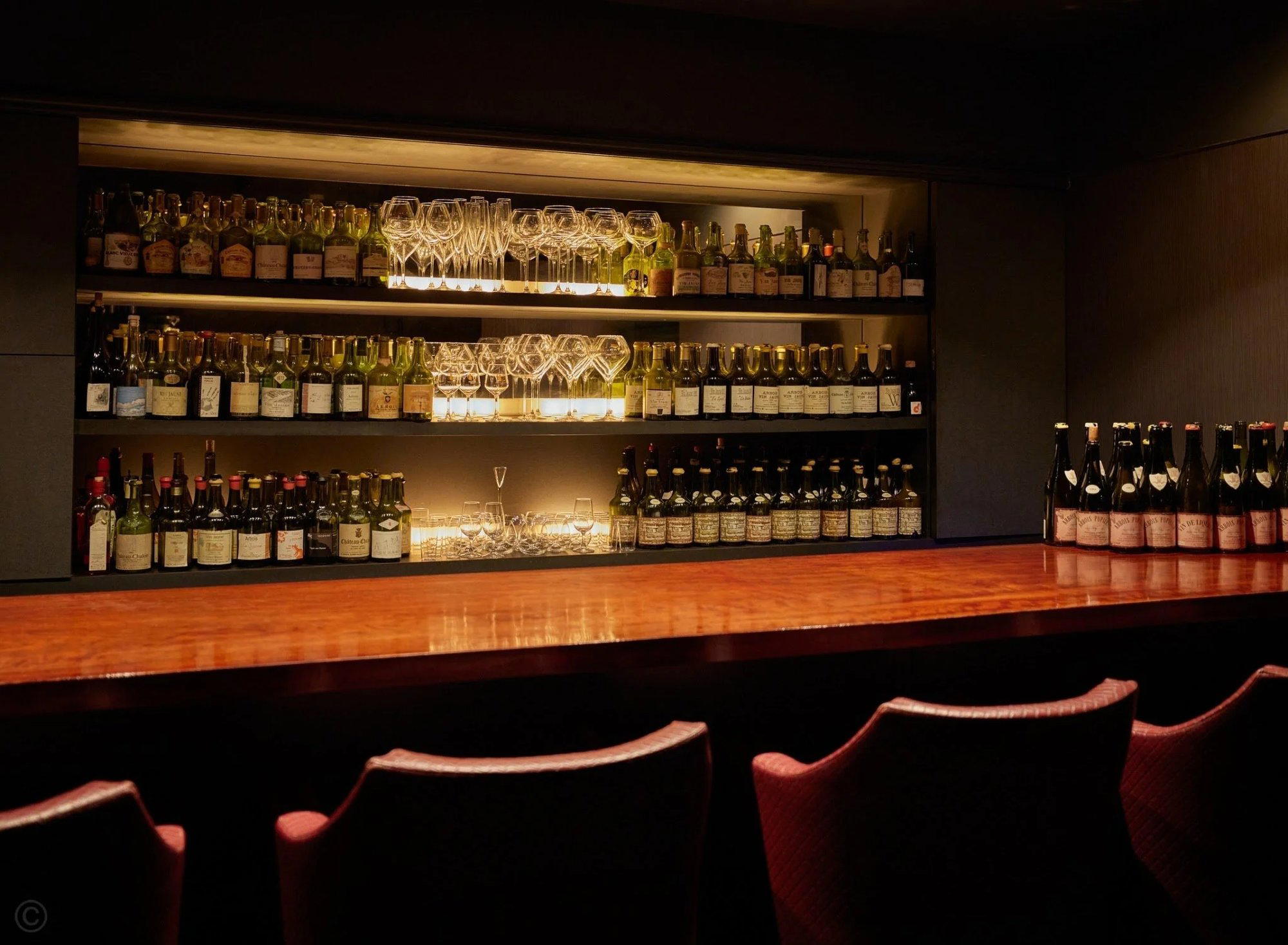
What distinguishes the counter format at this price point is the degree to which the experience depends on coordination between the chef, the sommelier, and the front-of-house, working at close range with guests. The walk-in wine cellar at L'ÉTERRE holds over 2,000 bottles, positioned directly beside the counter seats, and the wine list runs to approximately 400 labels, weighted toward Burgundy. That is not a casual wine program. A list of that depth, with a sommelier present, implies a pairing culture rather than a by-the-glass afterthought. In the broader context of Tokyo's fine French dining, Burgundy-focused cellars tend to appear at houses that are serious about the terroir conversation extending from the plate to the glass. At L'ÉTERRE, the proximity of the cellar to the counter is also physical: guests can see the bottles, and the sommelier's choices become part of the room's logic rather than a service transaction conducted elsewhere.
The front-of-house dynamic at an eight-seat counter is necessarily different from a conventional dining room. At this scale, the service team cannot diffuse across tables; every exchange is audible, every recommendation is addressed to the room. That model works well when chef, sommelier, and floor staff share a coherent point of view about what the evening is meant to communicate. That kind of pre-service coordination requires all three parts of the team to be operating from the same information, and it signals a kitchen that understands service as a collaborative structure rather than a sequence of individual interactions.
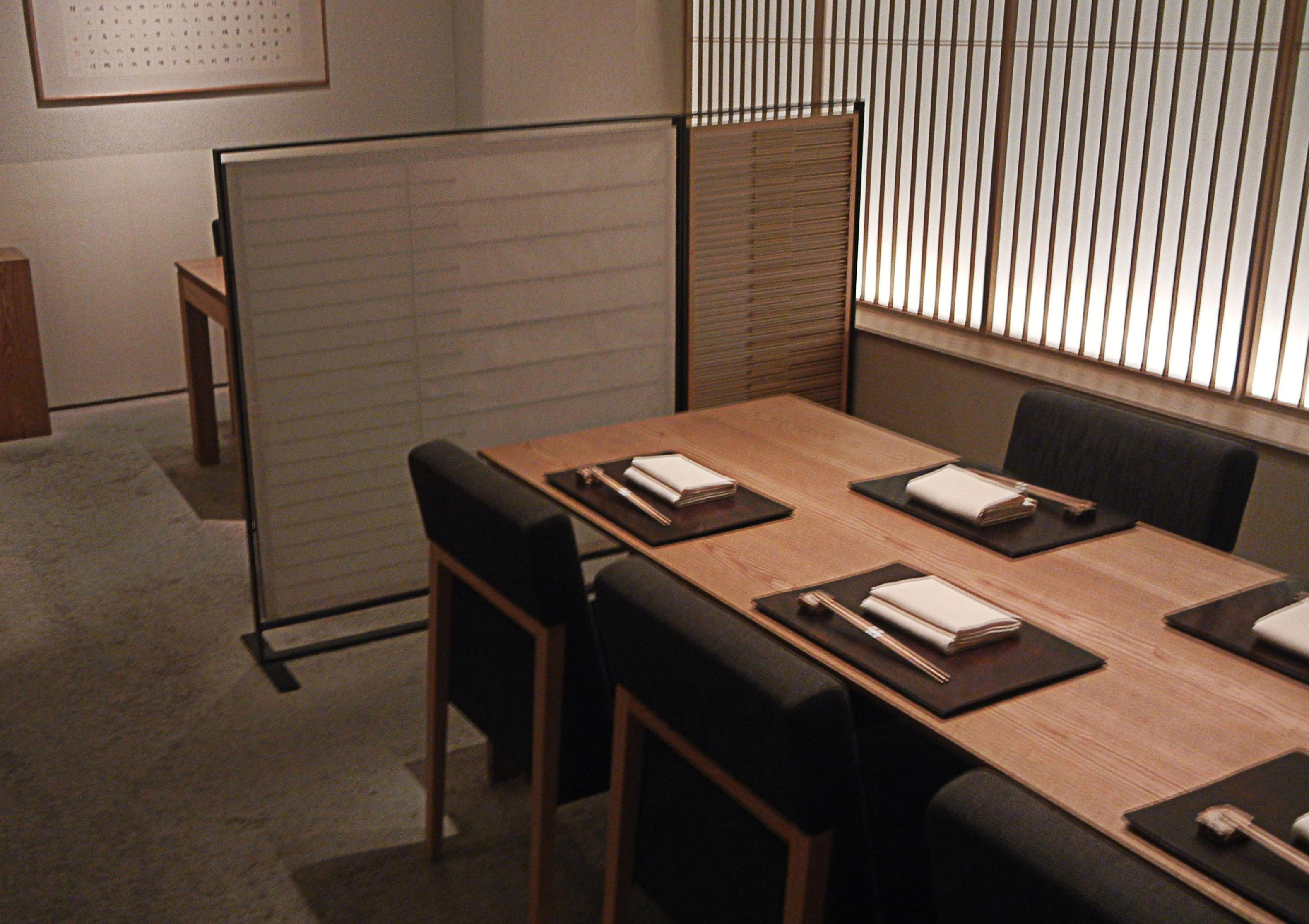
Private space is available for two to six guests, separate from the main counter, which allows the venue to operate across two distinct formats simultaneously. The sommelier's role extends to both settings, which at 2,000 bottles of cellar inventory is a considerable responsibility for what remains, by seat count, a small restaurant.
Where L'ÉTERRE Sits in the Tokyo French Scene
Tokyo's French dining category has bifurcated over the past decade. On one side sit the heavily awarded flagship rooms with international profiles, full tasting menus, and long waiting lists driven by guide recognition. On the other sit smaller, counter-driven houses that operate with less institutional visibility but tighter execution and more direct guest relationships. L'ÉTERRE belongs firmly in the second group, though its Tabelog credentials place it at the upper edge of that cohort. Its dinner pricing of JPY 30,000–39,999 (with actual spend reported by reviewers in the JPY 40,000–49,999 range when wine is included) positions it against the lower end of three-starred French houses rather than the mid-tier. That is a deliberate pricing signal: this is not a neighbourhood bistro that happens to have a counter. It is competing in the same conversation as the city's most serious French addresses.
For comparison, the three-Michelin-star houses that dominate this conversation, including L'Effervescence and Sézanne, operate at a different scale. Harutaka in the sushi category offers a parallel data point: a small counter, a singular chef, and pricing that reflects the format's exclusivity rather than its size. Beyond Tokyo, the broader Japanese fine dining scene at this tier includes HAJIME in Osaka, Gion Sasaki in Kyoto, akordu in Nara, Goh in Fukuoka, 1000 in Yokohama, and 6 in Okinawa, each operating at a similar intersection of Western technique and Japanese ingredient discipline. Internationally, the counter-French model at L'ÉTERRE shares structural DNA with destination tables like Le Bernardin in New York City in its seafood focus, and with Atomix in its commitment to a single, curated experience format. RyuGin represents the kaiseki parallel in Tokyo: a counter-adjacent format, serious technique, and ingredient sourcing as editorial statement.
Planning a Visit
L'ÉTERRE operates dinner service Monday, Tuesday, Thursday, and Friday from 17:30, with Saturday and Sunday offering both lunch from 12:00 and dinner from 18:00. The restaurant is closed on Wednesdays, and in practice Tuesdays also see closures on certain weeks. It is reservation-only, and the eight-seat capacity means the booking window should be treated seriously: securing a table requires advance planning, and the reservation process asks guests to declare allergies and dietary preferences upfront so sourcing can be adjusted. The address is 3-6-53 Kagurazaka, Shinjuku City, second floor of Togiya Residence, five minutes on foot from Ushigome-Kagurazaka Station on the Toei Oedo Line, or eight minutes from Kagurazaka Station on the Tozai Line. No parking is available. All prices include tax, with a 10% service charge added. Major credit cards are accepted, along with IC transport cards, iD, QUICPay, and QR payment platforms including PayPay and Rakuten Pay. Private use of the venue is available for groups using the semi-private space. Explore the broader Tokyo dining scene through our full Tokyo restaurants guide, or plan around it with our full Tokyo hotels guide, our full Tokyo bars guide, our full Tokyo wineries guide, and our full Tokyo experiences guide.
Frequently asked questions
Has L'ÉTERRE won any awards?
L'ÉTERRE has received recognition including:
What's the signature dish at L'ÉTERRE?
No single dish is published as a fixed signature, and the menu changes based on produce sourced that day, guests are asked to declare allergies and dislikes at reservation precisely because the course is built around what arrives fresh. The through-line is firewood, charcoal, and straw cookery applied to seafood-forward courses, with vegetables and meat used to reflect their specific terroirs. That approach earned the restaurant a Tabelog score of 4.14 and Tabelog Bronze recognition in 2026.
What's L'ÉTERRE's location?
L'ÉTERRE is located at Japan, 〒162-0825 Tokyo, Shinjuku City, Kagurazaka, 3 Chome−6−53 とぎやレジデンス 2階, Tokyo.
Do I need a reservation for L'ÉTERRE?
Yes, L'ÉTERRE operates on a reservation-only basis, and with just eight counter seats the room fills well in advance. Reservations can be made by phone at +81-3-6388-1312. When booking, the kitchen asks that you disclose any allergies or dislikes so the day's ingredients can be selected accordingly.
Comparable Spots, Quickly
Comparable venues nearby, for context on price, style, and recognition.
| Venue | Cuisine | Price | Awards | Notes |
|---|---|---|---|---|
| L'ÉTERREThis venue (the venue you are viewing) | Classic French Fine Dining | $200–300 | 1 Michelin Star · Tabelog Bronze #226 | Not listed |
| l'élan | Modern French Fine Dining | $150–200 | 1 Michelin Star · Tabelog 100 #73 | Shibuya |
| amarantos | Modern French Omakase | $300–500 | 1 Michelin Star | Chūō |
| hortensia | Modern French with Japanese Influences | $150–200 | 1 Michelin Star | Chūō |
| PRUNIER | Modern French Fine Dining | $200–300 | 1 Michelin Star | Chiyoda |
| mærge | Modern French | $300–500 | 1 Michelin Star | Minato |
Recognition history
Dated appearances from independent guides and award organizations, with the underlying list record or original source where available.
Michelin 1 Star
Michelin
Opinionated About Dining Top Restaurants in Japan Recommended
Opinionated About Dining
Tabelog Bronze #226
Tabelog
Full recognition history (4 entries)
Tabelog 100 #16 · No. 16
Tabelog · Tabelog 100 - French - TOKYO - 2025
Continue exploring
More in Tokyo
Restaurants in Tokyo
All restaurants in Tokyo →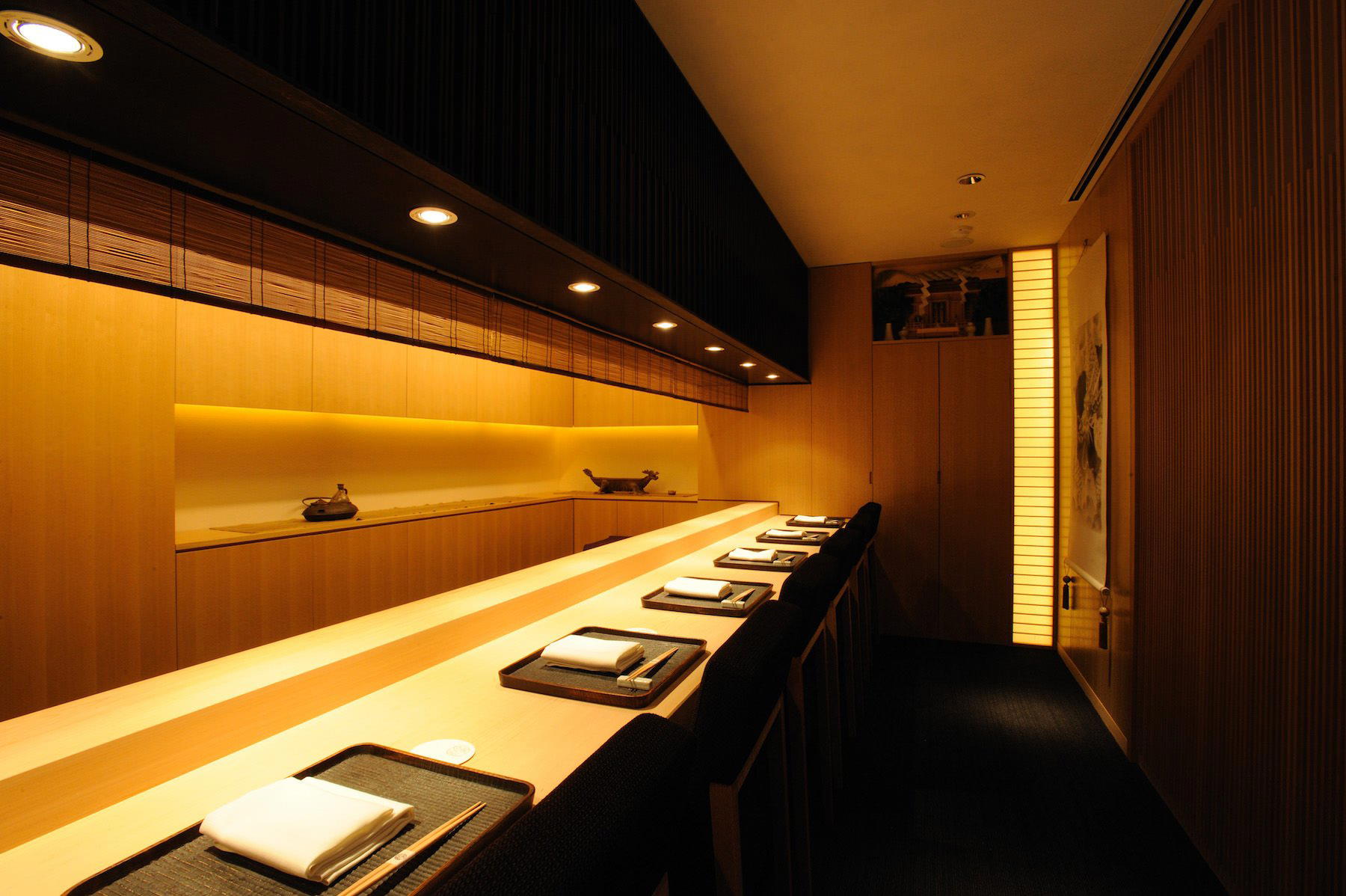
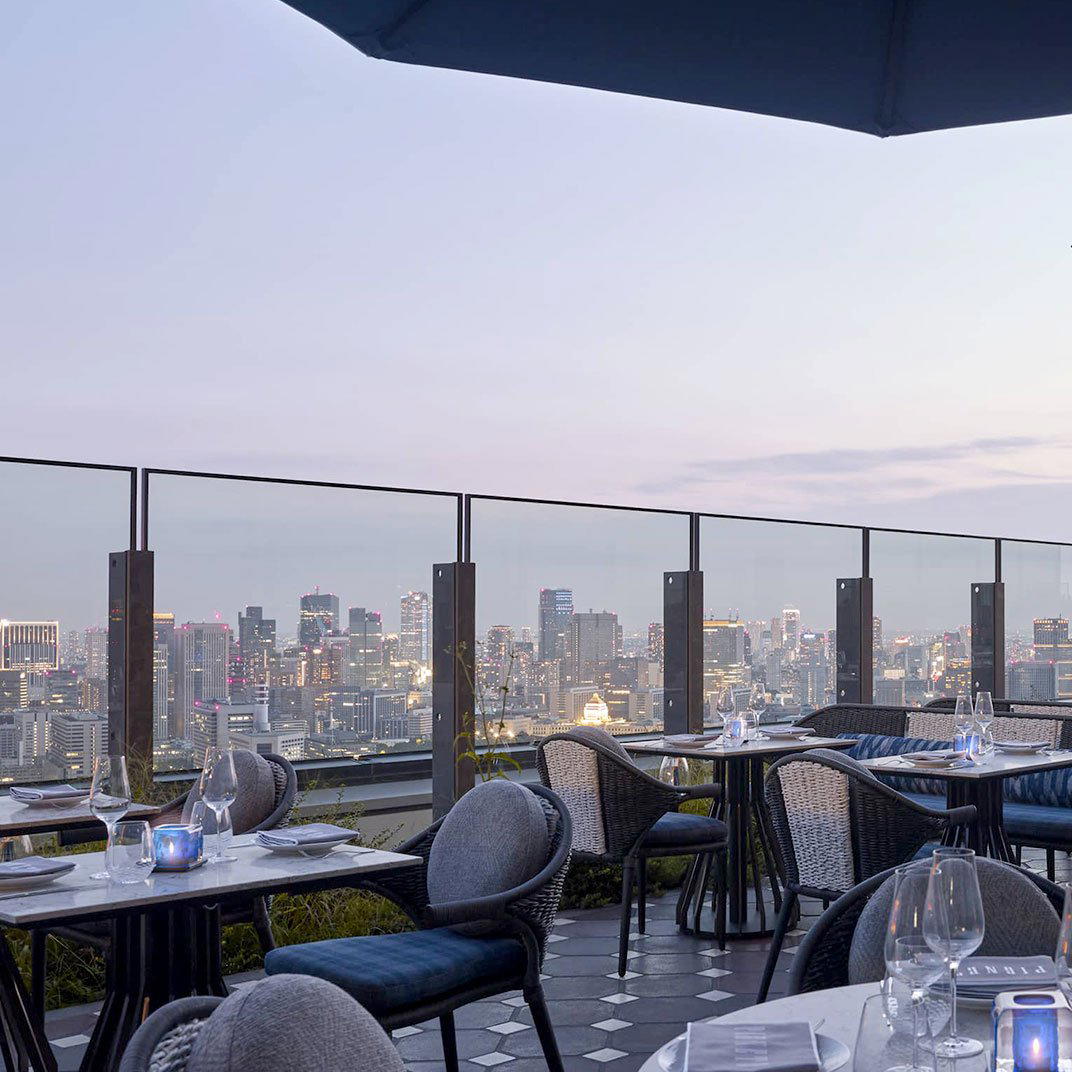
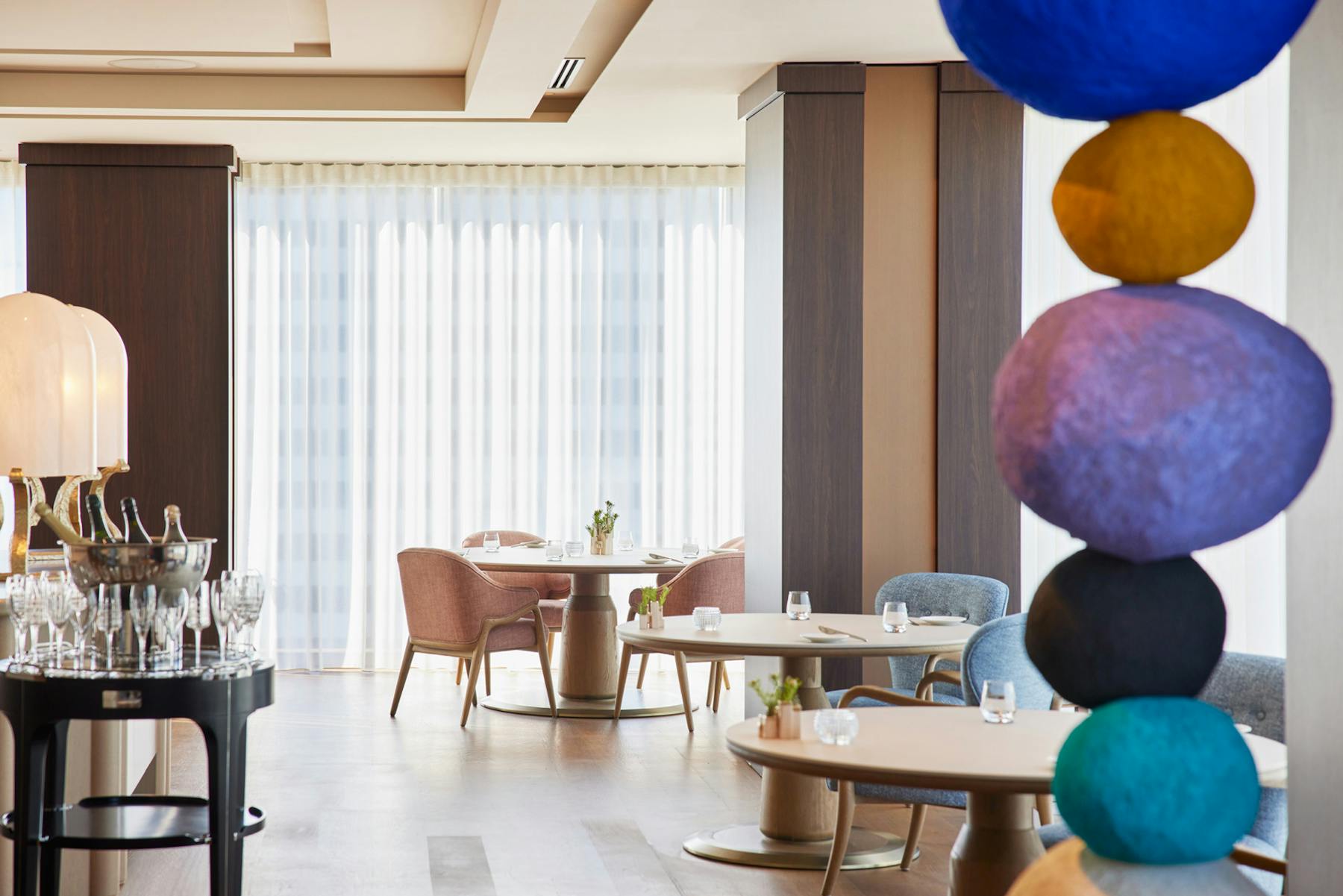
Bars in Tokyo
All bars in Tokyo →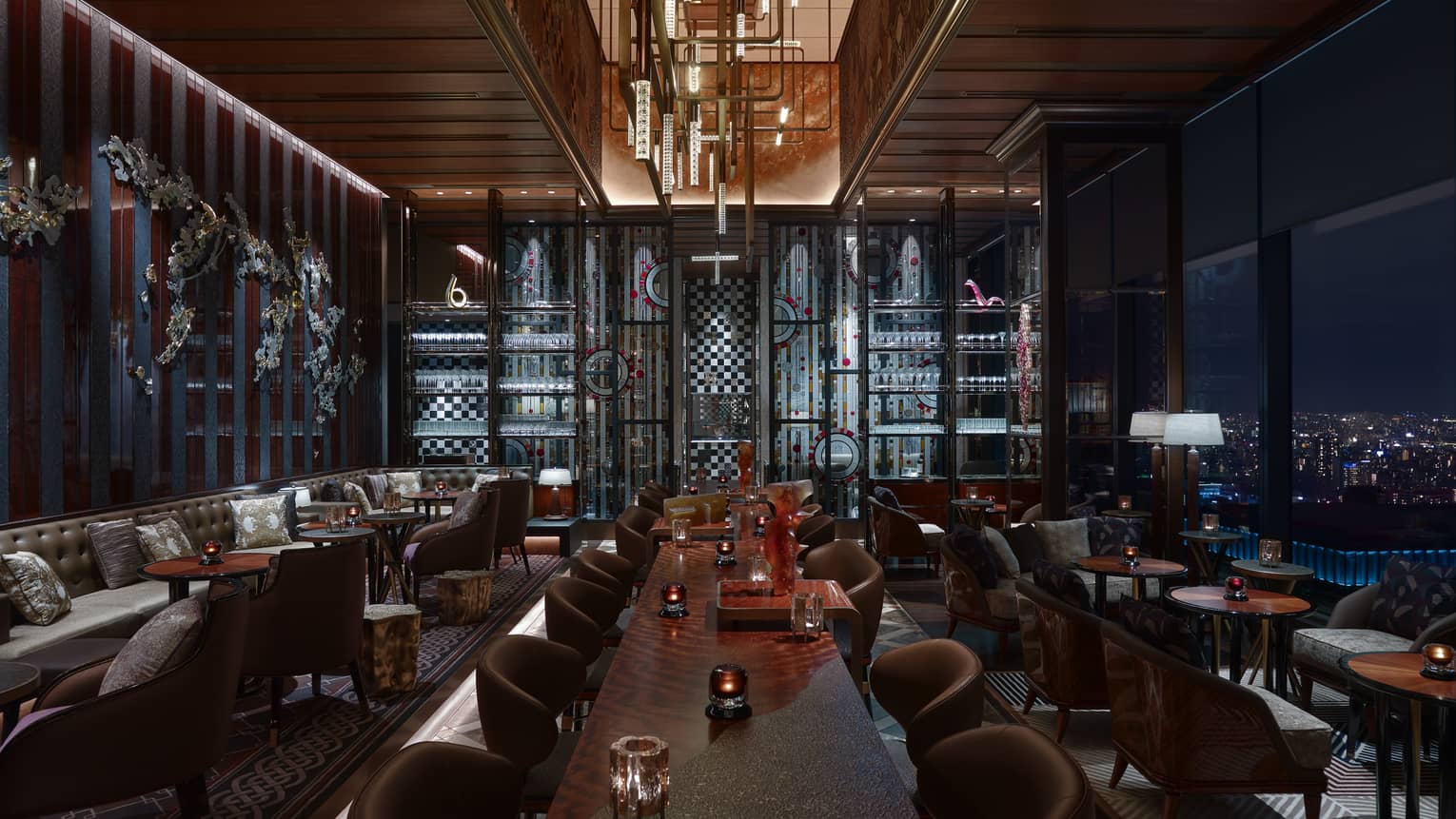
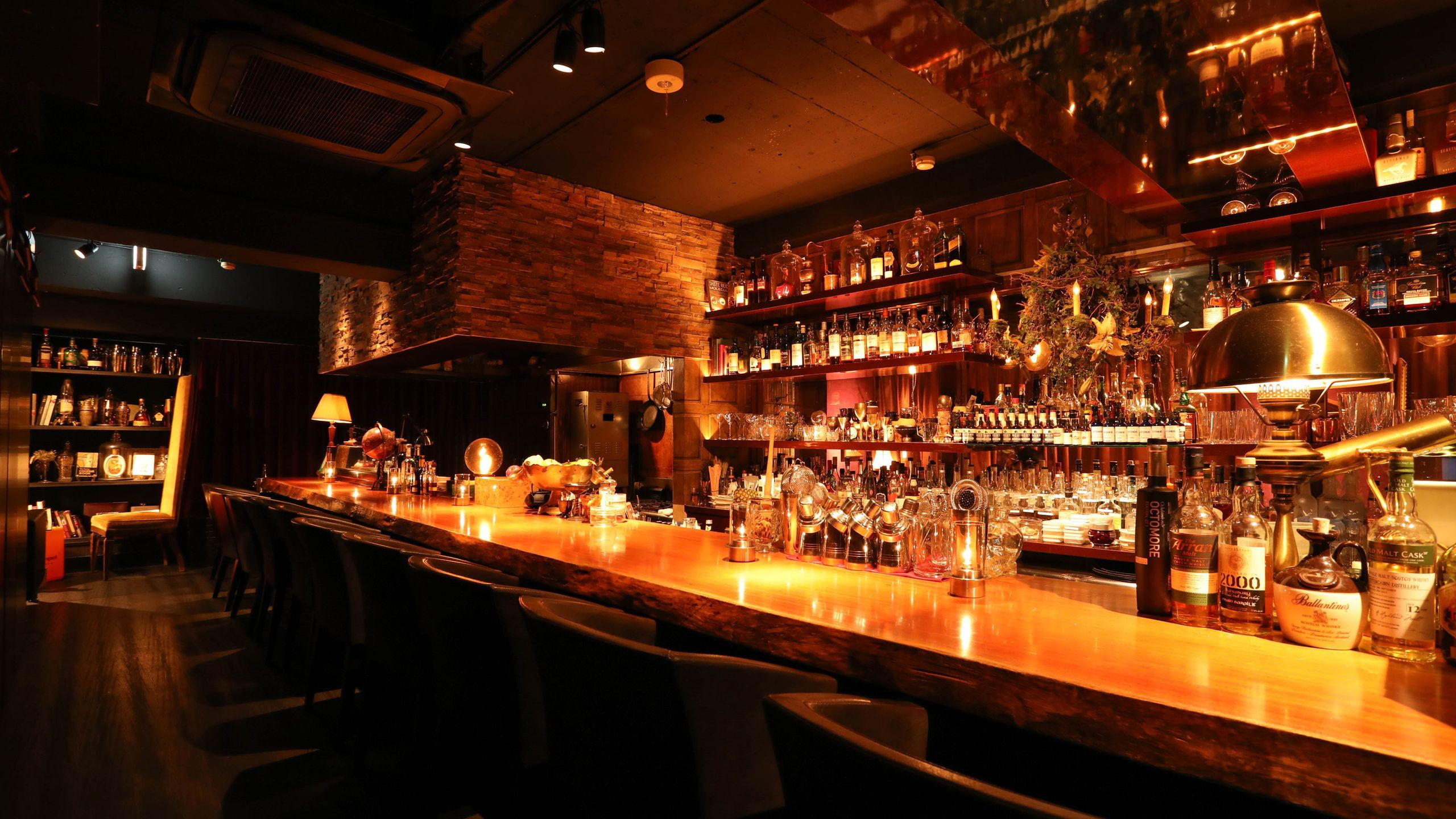
L'ÉTERRE
The wine
- Wine program
- Deep wine list
- Extensive wine list
- Sake program
Details
- Elegant
- Sophisticated
- Intimate
- Date Night
- Special Occasion
- Business Dinner
- Chefs Counter
- Open Kitchen
- Wine Cellar
- Extensive Wine List
- Sake Program
- Local Sourcing
- Tasting Menu
- Counter Dining
- Wine
- Allergy Accommodating
Current opening hours
- Monday
- 5–9 PM
- Tuesday
- Closed
- Wednesday
- Closed
- Thursday
- 5–9 PM
- Friday
- 5–9 PM
- Saturday
- 12–3 PM, 6–9 PM
- Sunday
- 12–3 PM, 6–9 PM
Hours can change for holidays and private events. Last verified .
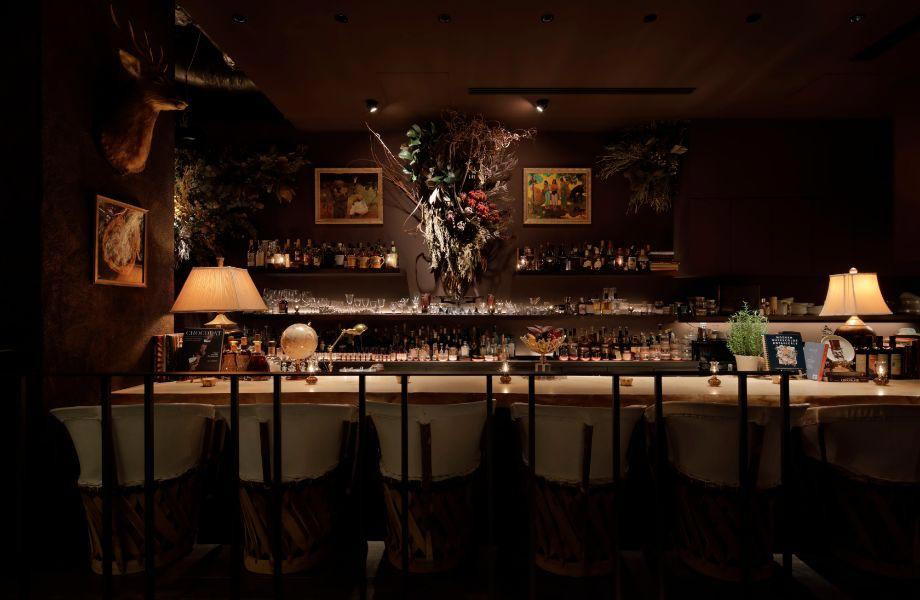
Relaxing stylish space with leather counter seating for 8 and open kitchen, though noted as lacking some atmosphere due to quiet chef introductions.