1 Michelin Star
Our verdict
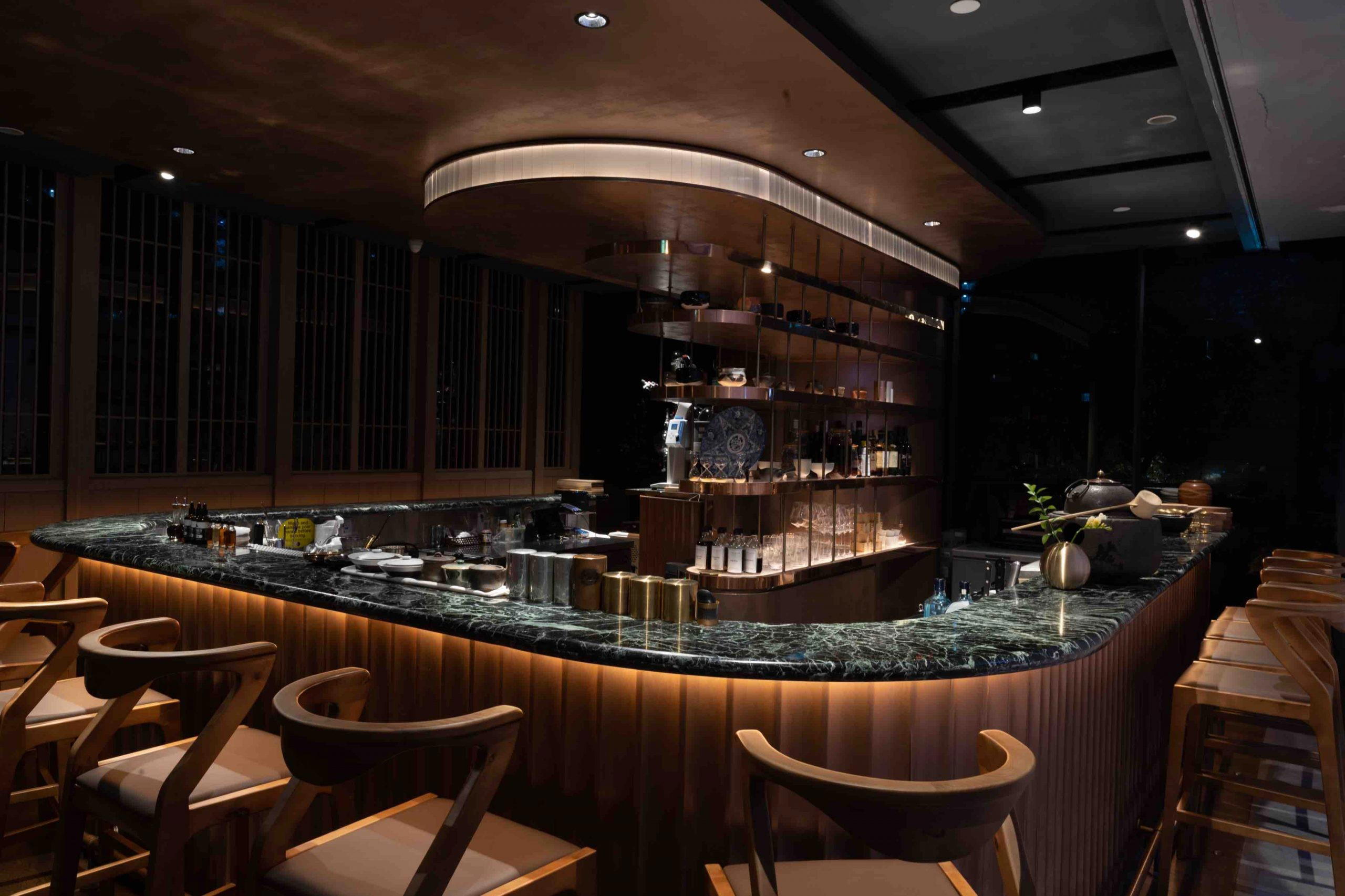
A Michelin-starred French counter on the ninth floor of a Ginza building, amarantos positions its chef's pâtissier background as a structural principle rather than a flourish, classical French technique shaped by the precision of pastry work, served directly across the counter in a format that collapses the distance between kitchen and guest.

Pearl is the En Primeur Club membership app, where members save venues, book tables and use the concierge.
The menu
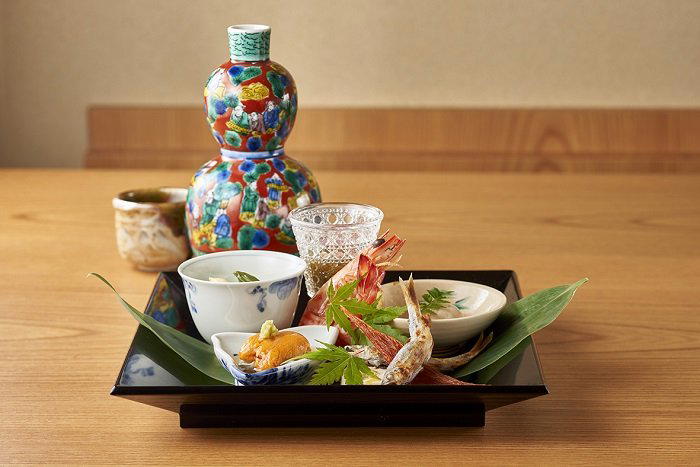
What to order
- Ishigaki beef
- Sweetbread with veal
- Kuromutsu with bouillabaisse
- Milk ice-cream with salt and herb oil
- Specialty breads
Counter French in Ginza: The Format That Changed Everything
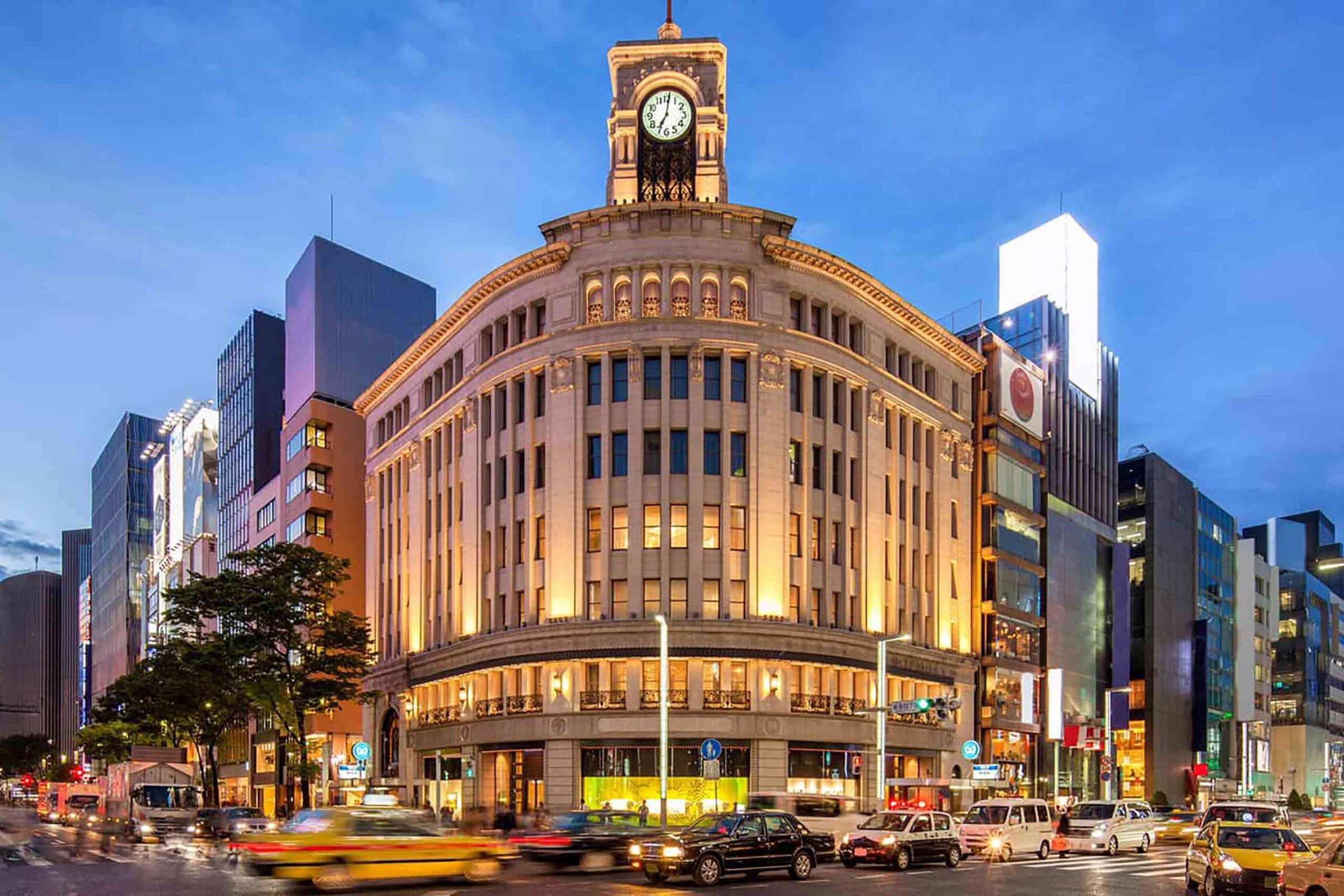
Ginza has long been Tokyo's address for European fine dining at its most formal: pressed tablecloths, brigade service, wine lists thick enough to require a sommelier's guidance before you even reach the food. That model still exists, and at addresses like Château Restaurant Joël Robuchon it remains a coherent statement. But a quieter format has been gaining ground over the past decade: the French counter, where a single chef cooks in front of a small number of guests, plates directly, and serves each course across the pass as a kind of ongoing conversation between the kitchen and the room. Amarantos, on the ninth floor of the SANWA Suzuran Building on Chome 5-6-7, sits squarely inside this movement.
The format is worth understanding before the food, because it shapes everything about how the meal is received. At a conventional French table, distance is the default condition: distance between diner and cook, between plate and its creation. The counter collapses that distance deliberately. Guests watch technique in real time, the moment of seasoning, the application of heat, the way a sauce is finished. What would have been invisible in a larger dining room becomes the actual texture of the experience. Tokyo's most attentive French counters, including ESqUISSE in nearby Ginza, have made this transparency central to their identity, and amarantos belongs to that cohort.
A Pâtissier's Instinct Applied to the Full Menu
The tension that defines much of contemporary French cooking in Asia is the one between classical rigour and the desire to innovate without untethering the food from its foundations. At amarantos, that tension is resolved through a specific and relatively unusual credential: the chef's formation as a pâtissier. Pastry work in a serious French kitchen is among the most technically demanding disciplines, it requires an understanding of structure, of how ingredients behave under precise conditions, of how sweetness, acidity, and texture interact across a sequence. What separates good pastry from poor pastry is almost never flavour alone. It is construction.
That instinct, when carried across a full tasting menu, produces food that is notable for its internal coherence. According to Michelin's own citation for the 2024 one-star award, the chef fuses a variety of ingredients into what the guide describes as a harmonious whole, a phrase that reads as a specifically pastry-trained sensibility applied to savoury courses. The Michelin inspectors also noted the tangible joy the chef shows when guests respond to the food, a quality that in the counter format is not incidental but structural: the chef can see the response, in real time, from across the pass.
For context on where amarantos sits within the city's French tier: L'Effervescence and Sézanne occupy the three-star register, while Florilège works at two stars with a notably Japanese sensibility embedded in its French structure. Amarantos' single Michelin star places it in a tier that in Tokyo's competitive French scene represents genuine recognition rather than a consolation bracket, there are many serious addresses at this level, and the distinction lies in craft and consistency rather than scale or spectacle.
The Ginza Setting and What It Means
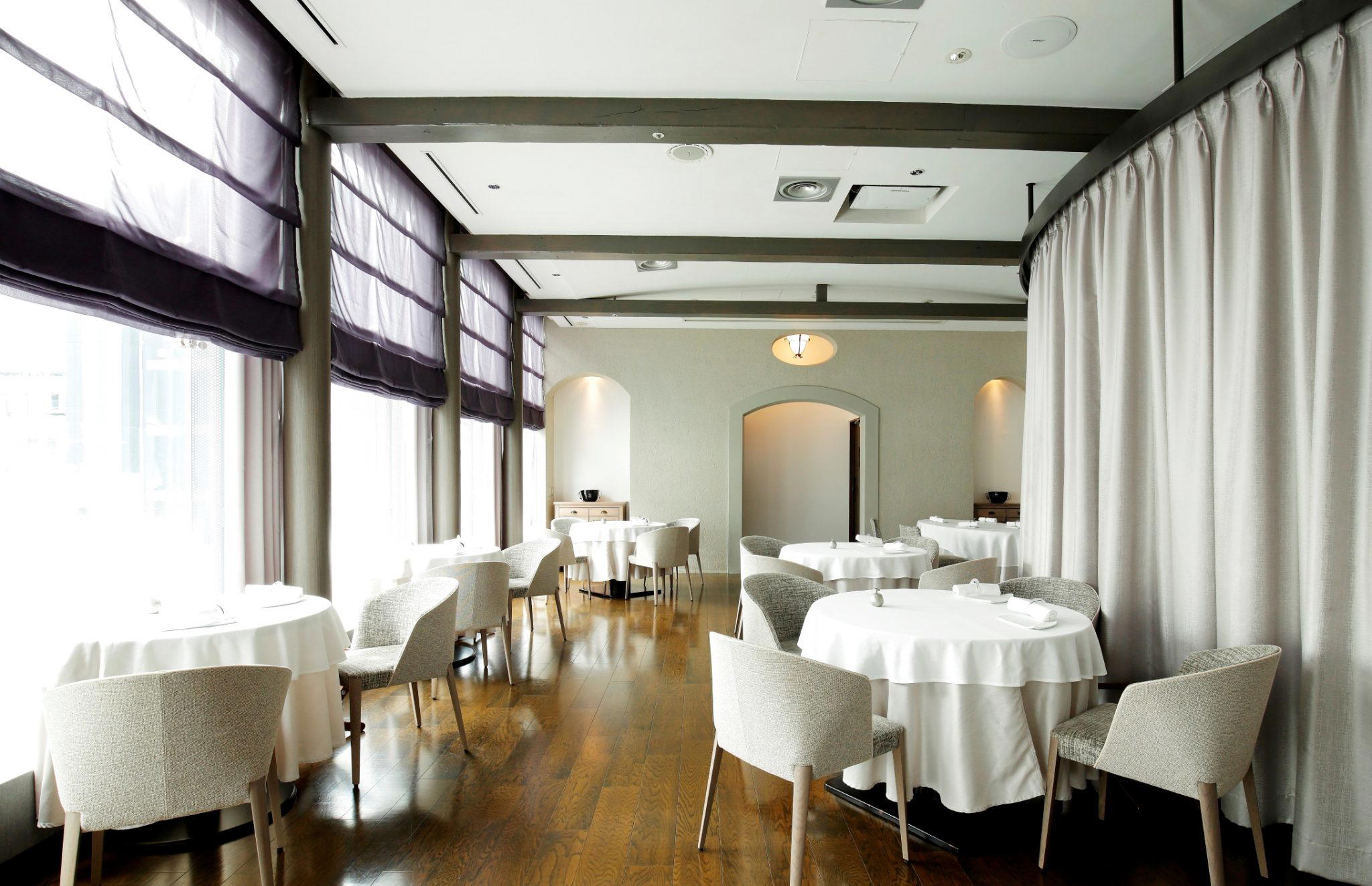
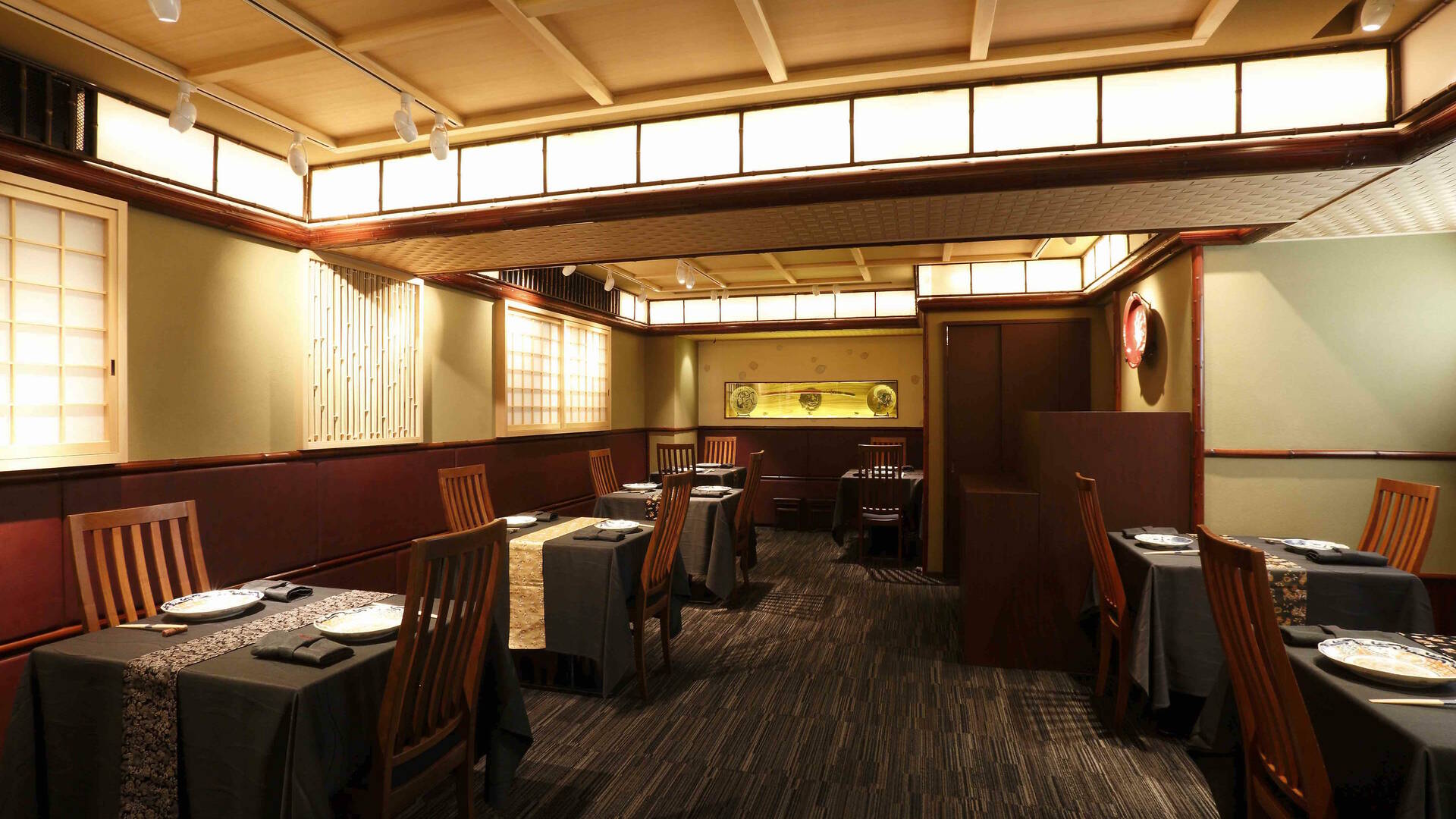
The ninth-floor positioning inside a commercial building on one of Ginza's principal streets is not incidental. Tokyo's most interesting single-chef counters have often chosen tower locations precisely because they offer something that ground-floor space in Ginza rarely provides: a room that exists outside the visual noise of the district below. The elevator arrival, the slight remove from street level, the compression of the space around a counter rather than spreading it across a conventional dining room, these physical conditions reinforce the format's logic. The attention in the room is concentrated inward, toward the cooking, rather than dispersed through a busy street-level facade.
Ginza as a neighbourhood carries a particular weight in Tokyo's dining geography. It is simultaneously the city's most expensive retail district and the address where Western cooking, French especially, first established its serious credentials in Japan. That history creates a productive friction for contemporary operators. To open a French restaurant in Ginza is to implicitly position yourself against several decades of reference points, from the grande maison style of earlier European imports to the more recent generation of Japanese chefs who trained in France and brought back something that belonged to both traditions. Amarantos' counter format is in part a response to that weight: it leans into intimacy rather than ceremony.
How It Compares Across Japan's French Scene
Japan's French cooking tradition is among the deepest outside France itself, and the competition within it is genuinely demanding. In Osaka, HAJIME operates at the three-star level with a philosophy that leans into ecological and philosophical frameworks. In Nara, akordu has established a Basque-French identity in an unexpected regional setting. For international comparison, Hotel de Ville Crissier in Switzerland and Les Amis in Singapore represent how classical French dining has taken root and evolved in non-French contexts with sustained rigor. Amarantos' position within this broader picture is that of a precise, format-driven counter operation where the chef's specific background, pastry, direct service, visible joy in the work, is the differentiating variable rather than scale, provenance, or conceptual ambition.
Counter restaurants of this type live or die on consistency: the format removes the buffer that brigade service provides, and any inconsistency in the evening's arc is immediately visible. A 4.8 average at this format and price point indicates that consistency is, at minimum, a feature the kitchen takes seriously.
Planning a Visit
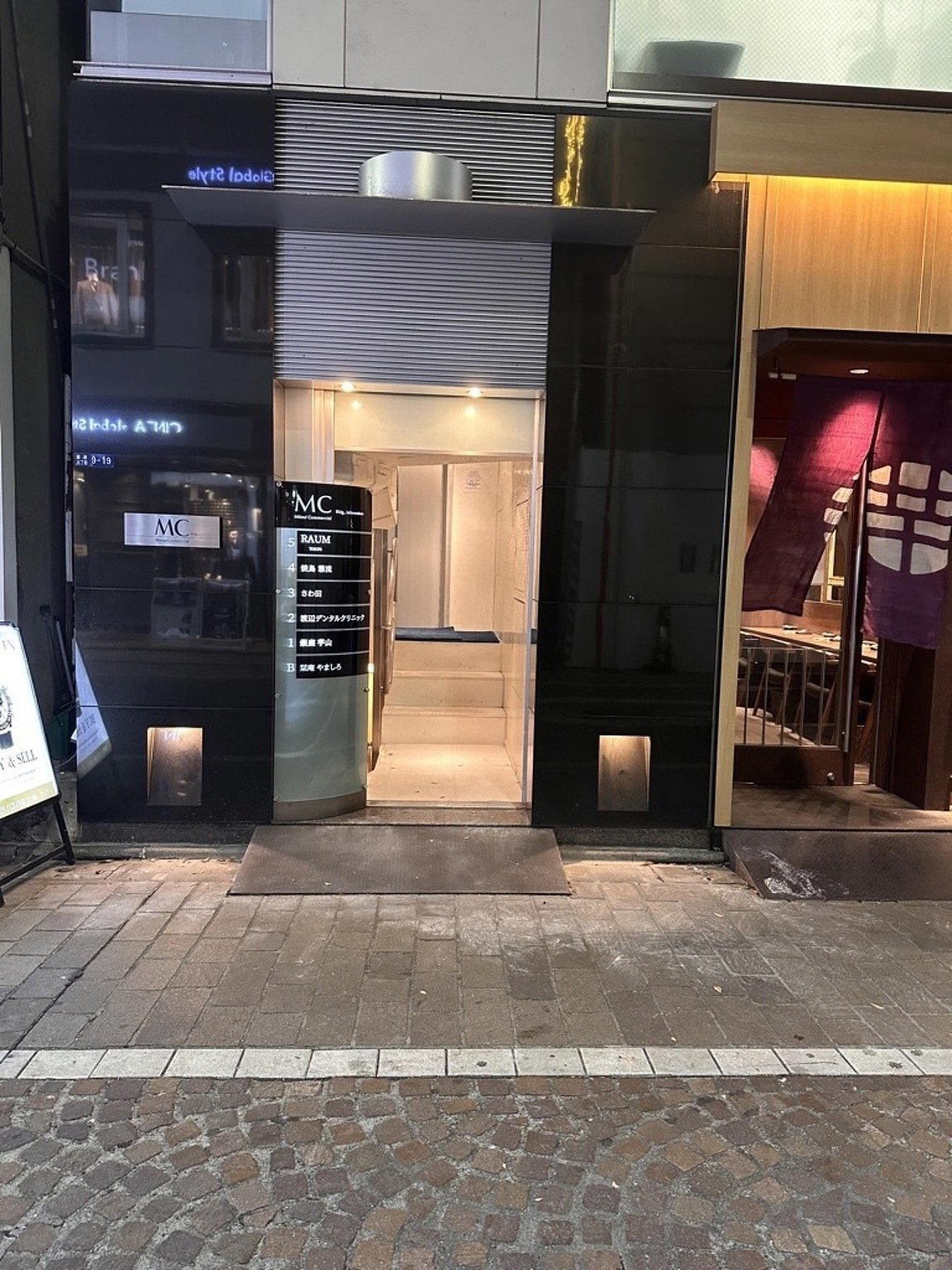
Amarantos operates at the ¥¥¥¥ price tier, placing it among Ginza's premium French addresses and in the same bracket as Tokyo's most serious counter dining. The building address, SANWA Suzuran Building, 5 Chome-6-7 Ginza, Chuo City, ninth floor, is leading approached via Ginza Station, which is directly served by the Ginza, Hibiya, and Marunouchi subway lines. Given the counter format and the precision-first approach to cooking, reservations should be treated as essential; seats at counters of this kind are limited by design, and the combination of a Michelin star and a loyal returning clientele means availability is not guaranteed on short notice. Contact and booking information are best confirmed through current restaurant-finder platforms or through a hotel concierge familiar with Ginza's dining scene.
For those building a broader itinerary, the full Tokyo restaurants guide covers the city's range from kaiseki to contemporary Japanese. The Tokyo hotels guide, bars guide, wineries guide, and experiences guide extend the picture across the city. Beyond Tokyo, the French-influenced dining tradition continues at Gion Sasaki in Kyoto, Goh in Fukuoka, 1000 in Yokohama, and 6 in Okinawa, each representing a distinct regional inflection on what it means to cook seriously in Japan.
Frequently asked questions
How would you describe the vibe at amarantos?
Focused and intimate. Amarantos operates as a single-chef counter on the ninth floor of a commercial building in Ginza, which strips away the formality typical of European fine dining in this neighbourhood and replaces it with direct, watchable cooking. Michelin's own notes describe guests responding with audible exclamations of 'Delicious!' as each course is served, the counter format makes that kind of spontaneous reaction feel natural rather than out of place.
What style of cooking does amarantos do?
Is amarantos Michelin-listed?
amarantos has received recognition including: The chef’s experience as a pâtissier is put to good use as he fuses a medley of ingredients into a harmonious whole. Guests watch with rapt attention as he works his kitchen and serves each item directly. As guests tuck into their meals wit….
What's the must-try dish at amarantos?
At a ¥¥¥¥ counter with a Michelin star, the omakase progression is the point; singling out one dish misses how the sequence is designed to accumulate.
What price level is amarantos?
Pricing at amarantos is listed as ¥¥¥¥.
Booking and Cost Snapshot
| Venue | Cuisine | Price | Awards | Notes |
|---|---|---|---|---|
| amarantosThis venue (the venue you are viewing) | Modern French Omakase | $300–500 | 1 Michelin Star | Not listed |
| Harutaka | Edo-Style Omakase Sushi | $200–300 | 3 Michelin Stars · World's 50 Best #76 | Sushi |
| RyuGin | Modern Kaiseki | $500+ | 3 Michelin Stars · World's 50 Best #41 | Kaiseki, Japanese |
| L'Effervescence | Modern French with Japanese Influences | $200–300 | 3 Michelin Stars · World's 50 Best #69 | French |
| HOMMAGE | Modern French with Japanese Influences | $150–200 | 2 Michelin Stars · World's 50 Best #78 | Innovtive French, French |
| MAZ | Innovative Peruvian-Japanese Fusion | $150–200 | 2 Michelin Stars · World's 50 Best #28 | Innovative |
Recognition history
Dated appearances from independent guides and award organizations, with the underlying list record or original source where available.
Michelin 1 Star
Michelin
Full recognition history (2 entries)
Michelin 1 Star
Michelin