Our verdict
On Antonia López de Bello in Recoleta, Korean Restaurant Sukine occupies a stretch of Santiago that has become increasingly serious about immigrant-cuisine traditions. The address places it within walking distance of the neighbourhood's broader dining circuit, where Korean cooking sits as one of the more underrepresented categories in a city whose dining scene trends heavily toward Chilean and European formats.

Pearl is the En Primeur Club membership app — saves, bookings, and concierge access live there. Same editors, same standards.
- Address
- Antonia López de Bello 244, 8420469 Recoleta, Región Metropolitana, Chile
- Phone
- +56 2 3313 5496
- Hours
- Mon–Sat 12–8 PMSun Closed
- Website
- sukine.com
- Directions
- Get directions
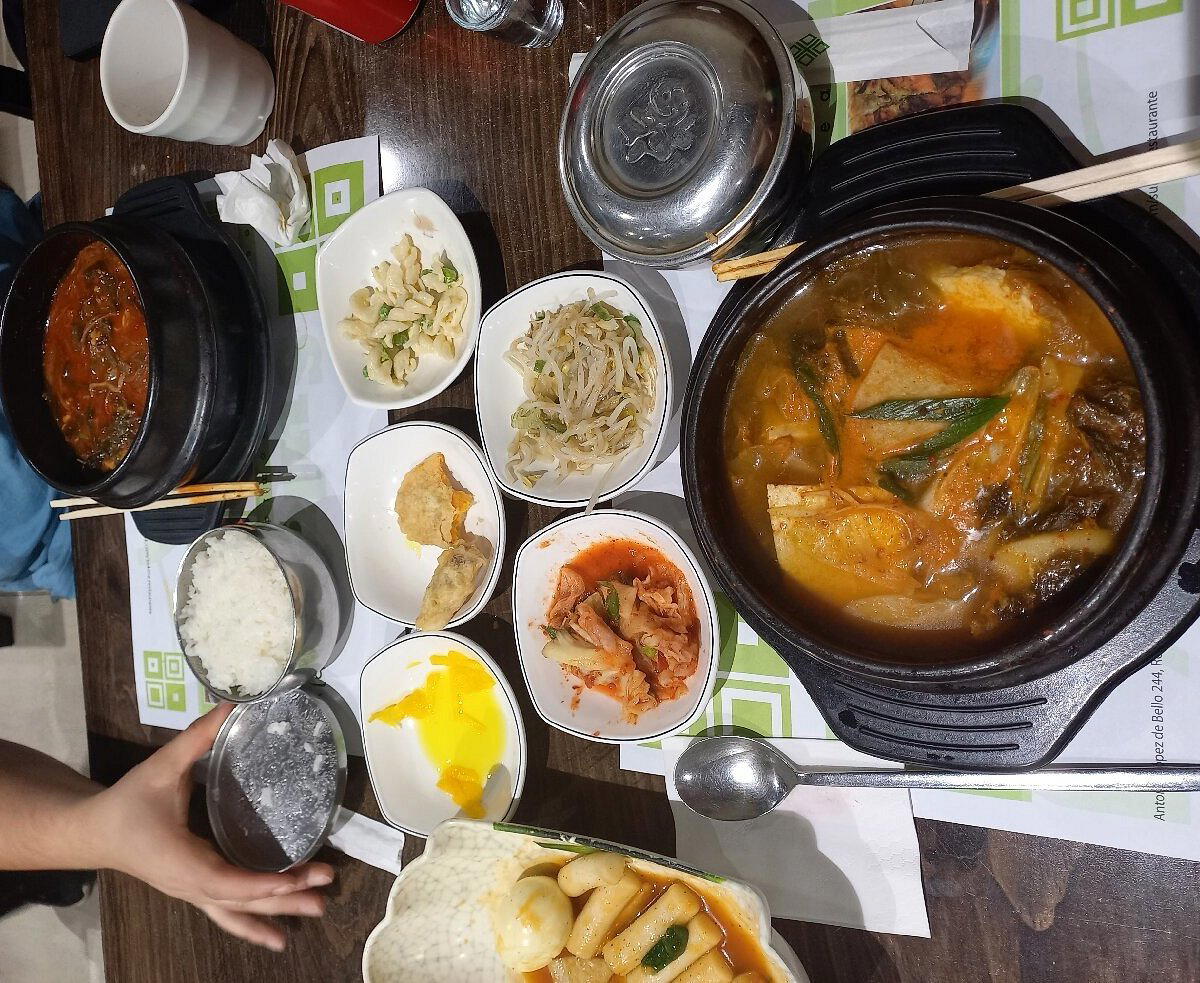
Korean Cooking in a City That Runs on Chilean Instinct
Santiago's dining scene has spent the last decade consolidating around a handful of dominant registers: modern Chilean tasting menus at addresses like Boragó, Franco-Chilean bistro formats at places such as Ambrosia, and the growing coastal-focused seafood wave represented by La Calma by Fredes. Korean cuisine occupies a considerably smaller share of that conversation. That scarcity is part of what makes Recoleta's Korean dining addresses worth paying attention to — they operate in a category where Santiago has limited competition and where the bar for comparison is set by the broader Korean diaspora tradition rather than by local trends.
Korean Restaurant Sukine sits on Antonia López de Bello 244 in Recoleta, a street that has developed a recognisable dining character over recent years, drawing independent operators rather than the polished groups that dominate Providencia or Las Condes. The area rewards pedestrian exploration in a way that quieter residential corridors do not, and Sukine's address places it inside that circuit.
Daytime Versus Evening: How the Register Shifts
Across Korean restaurant culture globally, the lunch-versus-dinner divide tends to be pronounced. Lunch service typically runs toward fast-turnaround formats: rice bowls, set combinations, single-protein plates designed for working hours. Dinner expands into the communal and grilled, with banchan spreads and table-leading barbecue formats that assume more time and more people. This structural pattern applies across Korean dining from Seoul to Los Angeles to the Korean-diaspora restaurants of Latin America, and it is the lens through which any Korean address in Santiago is leading understood.
At a lunch hour, Korean restaurants in this tier of the market typically offer the clearest value proposition: a defined menu at a compressed price, with less ceremony and faster execution. Evening service demands more from the kitchen and from the customer — longer stays, larger groups, higher per-head spend, and tends to draw a different demographic. For a first visit to Sukine, daytime arrival lets you read the room and the menu without committing to the fuller evening format. For a second visit, the evening dynamic, assuming it follows the broader Korean-restaurant pattern, is likely where the kitchen is working at its most complete range.
This structure also has implications for solo diners. Korean cuisine is built around shared plates, and the evening format at most Korean restaurants is designed for parties of two or more. A solo diner arriving at lunch will generally find the menu more accessible than one arriving at dinner, when the table-barbecue formats and multi-dish spreads are the default expectation. That is not a criticism of the format, it reflects the communal logic at the core of the cuisine, but it is a practical consideration worth factoring into a visit.
Recoleta's Role in Santiago's Immigrant Dining Geography
Recoleta has historically been one of Santiago's more demographically mixed neighbourhoods, and that mix has expressed itself in food. The area supports a broader range of immigrant-cuisine traditions than the wealthier eastern communes, and Korean restaurants in this part of the city tend to operate with a local rather than tourist clientele as their base. That distinction matters: restaurants feeding a community of regulars calibrate differently from those calibrating for visitors. Portions tend toward generosity, pricing toward accessibility, and the menu toward the dishes that the community actually eats rather than the dishes that photograph well.
The comparison is not a demotion. Community-rooted restaurants often outlast the trend-driven addresses by decades, because their customer base is not contingent on press cycles.
What Korean Dining in Santiago Signals About the City's Range
Santiago's most discussed restaurants tend to be Chilean-focused or European-influenced. The full Santiago dining scene is broader than its headline addresses suggest, however, and the Korean category is one of the clearer examples of that depth. Chilean diners have become more comfortable with fermented, spiced, and pickled flavour profiles over the past decade, partly through the influence of Japanese and Peruvian cooking, which have established deep roots in the city. Korean cuisine's own emphasis on fermentation and layered condiment-based seasoning sits closer to that sensibility than is sometimes assumed.
The gap between what Santiago's Korean restaurants offer and what Chilean diners expect from them is narrowing, which suggests the category has more room to grow than the current number of addresses implies. Sukine operates in that gap, serving a cuisine that remains underrepresented on the city's broader dining map but is not without an audience. For visitors coming from markets where Korean dining is more established, whether Seoul, Sydney, London, or New York, the Santiago Korean scene will read as early-stage but functional, closer to neighbourhood practicality than to the polished Korean-dining formats now appearing in global restaurant capitals.
Planning a Visit
Antonia López de Bello is reachable from central Santiago without significant difficulty, and the broader Recoleta area is leading treated as a neighbourhood visit rather than a single-stop destination. Other dining and café addresses in the area can anchor a longer afternoon or evening. For visitors building a wider Santiago itinerary, the city's range extends well beyond the capital: Pasta e Vino Ristorante in Valparaiso, D.O. Restoran in Lo Barnechea, and wine-country addresses including Lapostolle Residence in Santa Cruz and Viña Concha y Toro in Pirque represent the country's broader hospitality range. Further afield, Awasi Atacama in San Pedro de Atacama, andBeyond Vira Vira in Araucanía, CasaMolle in El Molle, Rosario in Rengo, and Aquí Jaime in Concon each offer a distinct register worth considering for a longer Chile itinerary. For those benchmarking against the wider global dining calendar, Le Bernardin in New York City and Lazy Bear in San Francisco illustrate how different the fine-dining tier operates at scale.
We recommend confirming details directly with the restaurant before visiting, particularly for evening service where group size and format can affect availability.
Frequently asked questions
Is Korean Restaurant Sukine a family-friendly restaurant?
Korean dining formats tend to work well for families — shared plates, varied textures, and table-centred cooking reduce the formality that can make younger diners restless. Sukine sits on Antonia López de Bello in Recoleta, a neighbourhood accustomed to communal, multi-generational dining across its immigrant-rooted restaurant culture. Specific seating configurations are not documented, so calling ahead before arriving with a large group is advisable.
What should I expect atmosphere-wise at Korean Restaurant Sukine?
Recoleta's Antonia López de Bello corridor reads less like a tourist strip and more like a working neighbourhood dining street, which tends to set the tone for restaurants along it. Korean restaurants in this register generally run practical and direct: the focus lands on the food and the table rather than on designed ambience. Without detailed interior data on Sukine specifically, expect a room shaped by function and regulars rather than by concept.
Is Korean Restaurant Sukine one of the few Korean dining options in Santiago?
Santiago's Korean restaurant count remains small relative to the city's overall dining breadth, which makes addresses like Sukine in Recoleta notable within the category. The restaurant occupies a position in a neighbourhood that has historically absorbed immigrant-led food businesses, giving it geographic logic within the city's international dining geography. For anyone specifically seeking Korean cooking in Santiago, Recoleta is the quarter most likely to deliver it consistently.
Where is Korean Restaurant Sukine located?
Korean Restaurant Sukine is located at Antonia López de Bello 244, 8420469 Recoleta, Región Metropolitana, Chile, Santiago.
Cuisine and Awards Snapshot
Comparable venues nearby, for context on price, style, and recognition.
| Venue | Cuisine | Price | Notes |
|---|---|---|---|
| Korean Restaurant SukineThis venue — the venue you are viewing | Authentic Korean | $10–20 | Not listed |
| El Huerto | Vegetarian World Cuisine | $10–20 | Providencia |
| Restaurante "El Rápido" | Traditional Chilean Empanadas | $1–10 | Santiago Centro |
| Los Dominicos | Traditional Chilean Cafe | $10–20 | Las Condes |
| Liguria | Traditional Chilean Gastropub | $20–30 | Providencia |
| Baco | French Bistro | $20–30 | Providencia |
Continue exploring
More in Santiago
Restaurants in Santiago
Browse all →
Bars in Santiago
Browse all →
Hotels in Santiago
Browse all →





Details
- Lively
- Casual
- Casual Hangout
- Group Dining
- Open Kitchen
- A La Carte
- Vegetarian Friendly
- Vegan Options
Current opening hours
- Monday
- 12–8 PM
- Tuesday
- 12–8 PM
- Wednesday
- 12–8 PM
- Thursday
- 12–8 PM
- Friday
- 12–8 PM
- Saturday
- 12–8 PM
- Sunday
- Closed
Hours can change for holidays and private events. Last verified .
Simple yet inviting atmosphere reflecting Korean culture in a lively neighborhood.