
1 Michelin Star
Our verdict
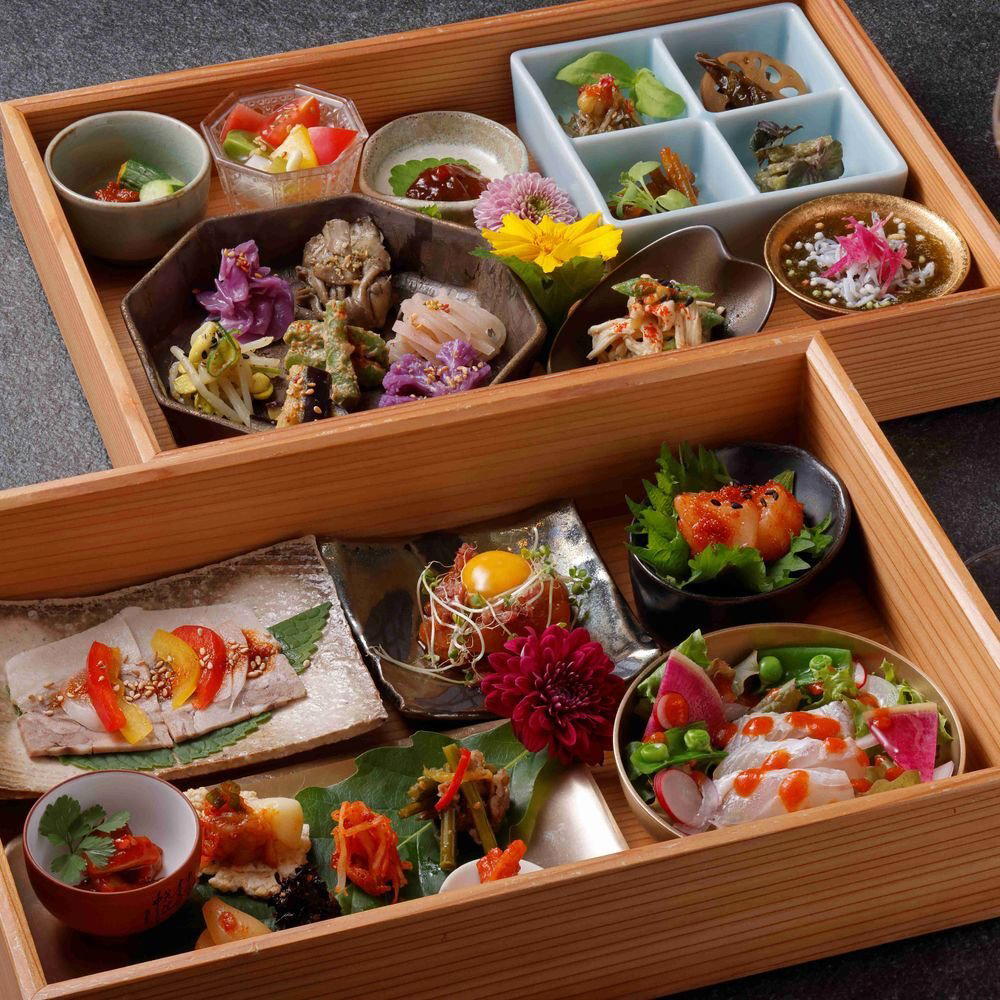
At 38 Mibu Tsujimachi, Byeoleeya brings Korean royal court cuisine to Kyoto through a prix fixe format shaped by the yakushoku-dogen principle, the idea that food and medicine share the same source. Chef Meika Hoshino, who studied in Seoul, works with Kyoto-grown vegetables for her namul and kimchi, and reconstructs early Joseon-dynasty dishes from an era before chillies reached the peninsula.

Pearl is the En Primeur Club membership app, where members save venues, book tables and use the concierge.
A Different Kind of Formality in Nakagyo-ku
Nakagyo Ward sits at the geographic and commercial centre of Kyoto, bounded by the old textile district of Nishijin to the north and the covered arcades of Shijo to the south. The neighbourhood carries a particular kind of layered formality: machiya townhouses converted into restaurants, streets where the aesthetic logic runs closer to tea ceremony than to casual dining. Into this context, Korean Restaurant Byeoleeya at 38 Mibu Tsujimachi introduces something that Kyoto's dining scene rarely accommodates, Korean cuisine treated with the same structural seriousness that the city reserves for its kaiseki tradition.
That parallel is not coincidental. Royal court cuisine from the Joseon dynasty and classical Kyoto kaiseki developed along similar axes: seasonal produce, precise preparation, and a belief that the composition of a meal carries significance beyond nutrition. Where Kyoto's kaiseki counters, among them Kikunoi Honten, Gion Sasaki, and Hyotei, anchor their menus in Buddhist and Shinto-inflected seasonal logic, Byeoleeya draws on a Korean philosophical tradition of equal depth and comparable discipline.
The Architecture of the Menu
The prix fixe format here is not simply a structural convenience. It is the expression of a specific governing idea: yakushoku-dogen, a Korean (and broader East Asian) concept asserting that diet has an essential role in maintaining good health, and that food and medicine operate from the same principles. Every element of the menu follows this logic. Nothing appears by accident.
The most immediate physical manifestation of that philosophy is the double-tiered food box, a reference drawn from the multi-coloured presentation of Korea's courtly dining tables. Where contemporary Korean restaurants in major cities often reduce banchan to a few dishes served family-style alongside a main, Byeoleeya reconstructs the grammar of court presentation: small quantities, deliberate colour, dishes arranged to be read as a composition rather than consumed as a sequence of independent items.
Namul and kimchi are prepared with Kyoto vegetables, a choice that places this restaurant in a specific tension between two culinary traditions. Kyoto kyo-yasai vegetables (the heritage varieties that Kyoto's cuisine has depended on for centuries) bring a particular character to preparations that would elsewhere use Korean produce. The result is neither fusion in the contemporary sense nor simple substitution: it is a considered dialogue between two geographies that share a reverence for seasonal, locally-sourced ingredients.
Early Joseon dynasty component of the menu is perhaps the most technically significant aspect of what Byeoleeya does. That period predates the introduction of chilli peppers to the Korean peninsula, a transformation that reshaped Korean cuisine so thoroughly that most people now associate Korean food with its heat. Reconstructing dishes from that earlier era requires not just research but a re-education of expectation. The flavours are quieter, more aromatic, built from fermented pastes, sesame, pine nuts, and subtle seasoning rather than the capsaicin-forward profiles that define modern Korean cooking internationally. In Kyoto, a city where diners already expect restraint from their finest restaurants, this historical register finds a receptive audience.
It does not compete directly with Kyoto's kaiseki houses like Mizai or Isshisoden Nakamura, nor does it belong to the category of modern Korean restaurants that have gained ground in Tokyo and Osaka. It sits closer to the tradition of scholarly reconstruction, restaurants where the menu is also an argument about culinary history. The analogy might be drawn to what akordu in Nara does with Spanish cuisine filtered through Japanese sensibility, or what Bleston Court Yukawatan in Nagano achieves by grounding French technique in the specificity of its alpine region.
Chef Meika Hoshino and the Seoul Connection
Korean royal court cuisine is a specialised discipline with a small number of trained practitioners. Hoshino studied in Seoul, which matters in two directions: it establishes the academic and technical legitimacy of the project, and it signals that the restaurant's point of reference is Korean tradition rather than the filtered Korean cuisine that circulates through Japan's urban restaurant circuits. That direct lineage to Seoul training is the foundational credential of what Byeoleeya serves.
The restaurant's stated aim, bringing Korean culinary culture to a wider audience, functions less as a mission statement than as a description of what a restaurant doing serious historical reconstruction necessarily accomplishes. The same dynamic applies at restaurants like Goh in Fukuoka or giueme in Akita, where regional specificity becomes the vehicle for genuine discovery rather than novelty.
Byeoleeya in the Context of Kyoto's Cross-Cultural Dining
Kyoto has historically been slower than Tokyo or Osaka to embrace foreign cuisines at the formal end of the market. The city's identity is so thoroughly defined by its own culinary heritage that restaurants working outside Japanese tradition tend to occupy a peripheral position in the dining conversation. Byeoleeya is an exception that operates by meeting Kyoto's standards rather than asking for accommodation. The prix fixe format, the philosophical framework, the use of local vegetables, the aesthetic care with presentation, these are all signals that read fluently within the city's expectations of serious dining.
For comparison, consider how HAJIME in Osaka or Harutaka in Tokyo operate: both have succeeded in their cities by absorbing local standards of rigour and applying them to a defined vision, rather than positioning themselves as outliers. Byeoleeya follows comparable logic, adapting to Kyoto's register rather than operating against it. Restaurants that take a similarly principled approach to cross-cultural synthesis at a formal level, like Le Bernardin in New York City or Emeril's in New Orleans, demonstrate that deep specificity and broad cultural reach are not mutually exclusive.
Planning a Visit
Byeoleeya is at 38 Mibu Tsujimachi in Nakagyo-ku, within walking distance of the central Karasuma Oike area. Given the prix fixe format and the evident care with preparation, this is a restaurant where booking in advance is strongly advisable, the combination of a specific tasting menu format and a serious scholarly approach to a niche cuisine typically means limited covers and high demand from those who seek it out. For Kyoto's full dining scene, including the kaiseki houses that define the city's haute cuisine identity, see our full Kyoto restaurants guide. Those planning a broader visit will also find value in our full Kyoto hotels guide, our full Kyoto bars guide, our full Kyoto wineries guide, and our full Kyoto experiences guide.
Frequently asked questions
Is Korean Restaurant Byeoleeya Michelin-listed?
Korean Restaurant Byeoleeya has received recognition including: Meika Hoshino breathes her own creativity into Korean royal court cuisine, which she studied in Seoul. Prix fixe offerings follow ‘yakushoku-dogen’, the idea that diet has an essential role in maintaining good health. The double-tiered food….
Where exactly is Korean Restaurant Byeoleeya?
Korean Restaurant Byeoleeya is located at 38 Mibu Tsujimachi, Nakagyo-ku, Kyoto.
What should I eat at Korean Restaurant Byeoleeya?
There is no à la carte selection: the menu is prix fixe, structured around the yakushoku-dogen principle that food and health are inseparable. The signature presentation is a double-tiered food box drawn from Korea's courtly dining tradition, filled with dishes that include Kyoto-vegetable namul and kimchi alongside early Joseon dynasty recipes that predate the introduction of chilli peppers. This means flavour profiles are more restrained and layered than modern Korean cooking.
Is Korean Restaurant Byeoleeya reservation-only?
Given the prix fixe format and the specialised preparation involved in Korean royal court cuisine, advance booking is strongly advisable. Restaurants of this format and focus in Kyoto typically cannot accommodate walk-ins without significant notice. Contact details are not listed publicly, so approaching through a concierge or hotel reservation service is the practical route.
What has Korean Restaurant Byeoleeya built its reputation on?
The reputation rests on Chef Meika Hoshino's scholarly approach: she studied Korean royal court cuisine directly in Seoul, a discipline with few formally trained practitioners. The menu reconstructs early Joseon dynasty cooking through the yakushoku-dogen framework, grounding historical accuracy in a specific philosophy about diet and wellbeing. That dual commitment to culinary heritage and health-centred thinking distinguishes Byeoleeya from both conventional Korean restaurants and Kyoto's broader formal dining circuit.
Accolades, Compared
Comparable venues nearby, for context on price, style, and recognition.
| Venue | Cuisine | Price | Awards | Notes |
|---|---|---|---|---|
| Korean Restaurant ByeoleeyaThis venue (the venue you are viewing) | Modern Korean Royal Court Cuisine | Not listed | 1 Michelin Star | Not listed |
| Ryoriya EN | Traditional Kyoto Kaiseki | $150–200 | Michelin Plate | Shimogyō |
| Totoyoshi | Seafood Kappo | Not listed | Michelin Plate | Nakagyō |
| SATOWA | Seasonal Kaiseki with Unagi | $150–200 | Michelin Plate | Nakagyō |
| Aoikonshin Yamada | Seasonal Kaiseki | $150–200 | Michelin Plate | Higashiyama |
| måne | Creative Italian | $100–150 | Michelin Plate | Nakagyō |
Recognition history
Dated appearances from independent guides and award organizations, with the underlying list record or original source where available.
Michelin 1 Star
Michelin
Continue exploring
More in Kyoto
Restaurants in Kyoto
All restaurants in Kyoto →
Bars in Kyoto
All bars in Kyoto →
Hotels in Kyoto
All hotels in Kyoto →
Wineries in Kyoto
Browse all →
Details
- Elegant
- Sophisticated
- Intimate
- Special Occasion
- Date Night
- Sake Program
- Local Sourcing
- Prix Fixe
Current opening hours
- Monday
- Closed
- Tuesday
- 6:30–9 PM
- Wednesday
- 6:30–9 PM
- Thursday
- 6:30–9 PM
- Friday
- 6:30–9 PM
- Saturday
- 6:30–9 PM
- Sunday
- 6:30–9 PM
Hours can change for holidays and private events. Hours as of .
Serene and refined atmosphere evoking Korean courtly dining with modern sensibility.