Michelin Plate
Our verdict
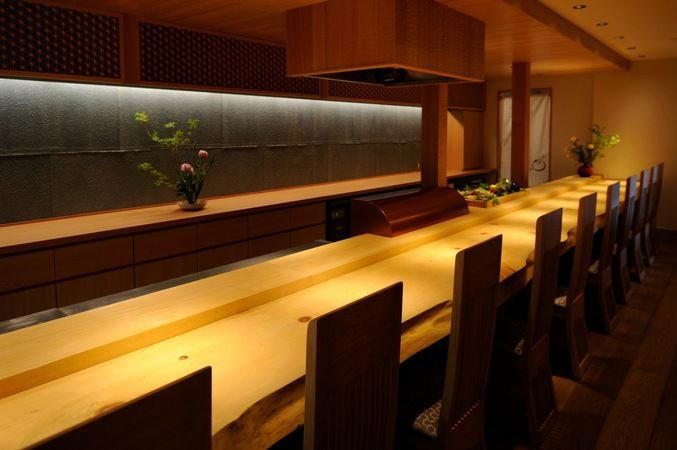
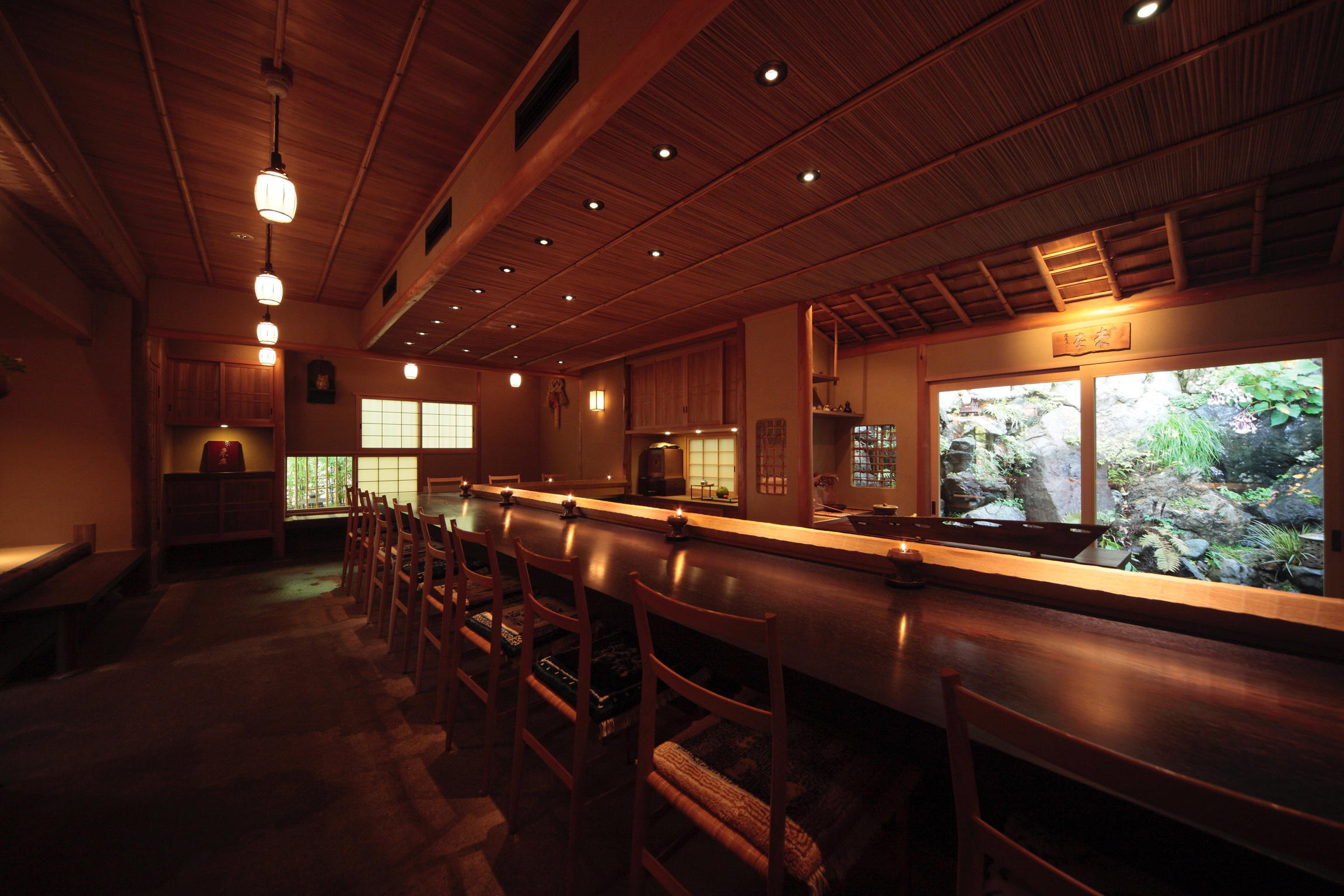
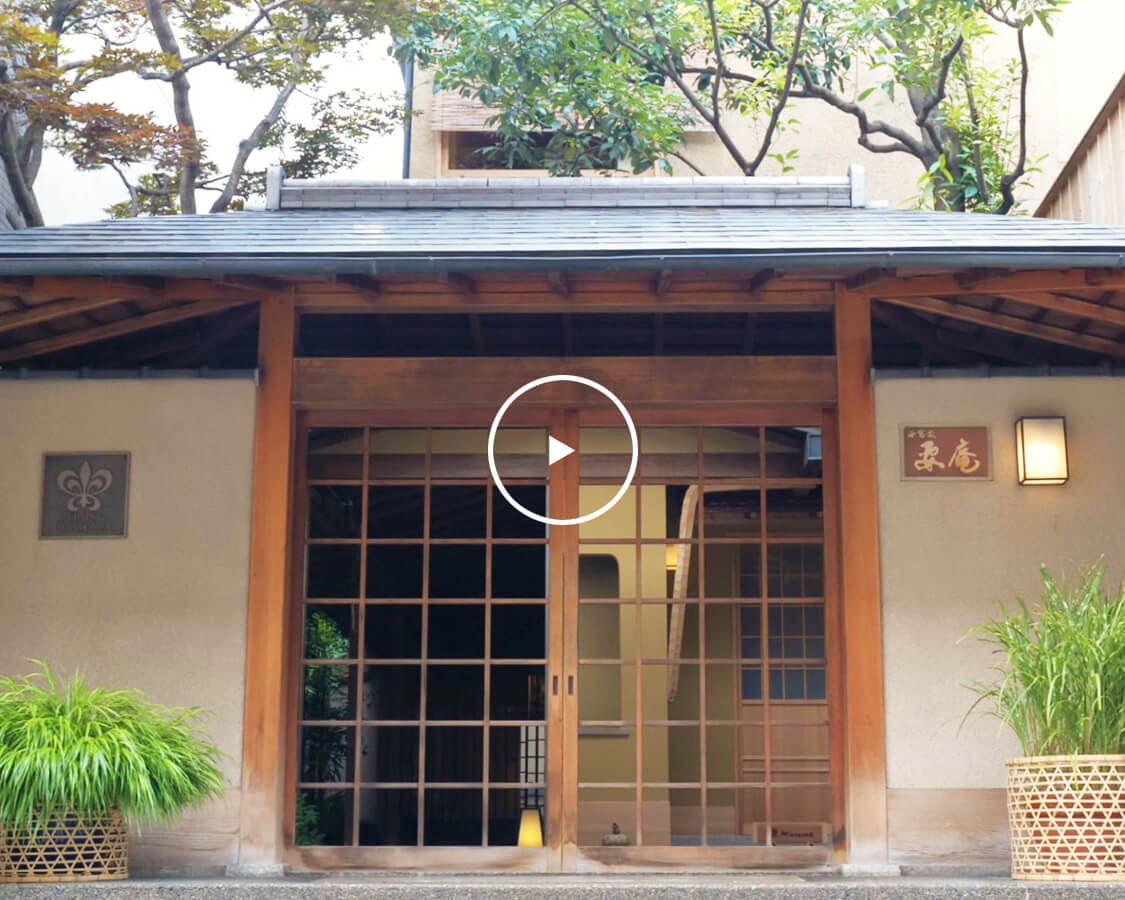
A third-generation sushi kappo on Kiyamachi Street where orders are placed through conversation rather than fixed menus, and the counter's built-in finger-rinse channel nods to Showa-era hospitality. The chef trained at Kitcho before returning to this family address, and the cooking reflects Kyoto's preference for restraint and pickled complexity over raw spectacle.

Pearl is the En Primeur Club membership app, where members save venues, book tables and use the concierge.
The menu
What to order
- Pickled nigiri
- Kelp-wrapped mackerel
- Fatty tuna sashimi
- Fried matsutake mushrooms
A Counter That Converses Back
Along Kiyamachi Street, where the canal runs between paper-lantern glow and wooden facades, the smallest dining rooms tend to carry the longest histories. The sushi kappo format, a hybrid of sushi counter and kappo cooking that sits between the formality of kaiseki and the brevity of a neighbourhood sushi bar, has been thinning in Kyoto for decades, squeezed from below by conveyor-belt chains and from above by the city's prestigious kaiseki houses. What remains is a short list of counters where the exchange between guest and chef still governs what gets cooked. Kiyamachi Ran operates from that smaller, more insistent tradition.
The physical environment signals where you are immediately. Beneath the counter ledge, a channel of flowing water rinses the fingers between courses, a detail drawn directly from Showa-era sushi culture, when tactile, unhurried service was the norm rather than the selling point. That feature alone separates this room from the majority of Kyoto's contemporary dining scene, where modernisation has replaced most such material continuities. At Kiyamachi Ran, the detail remains functional, not theatrical.
How the Room Works: The Kappo Conversation
The ordering format at Kiyamachi Ran is worth understanding before you arrive, because it shapes everything from pacing to value. Patrons do not receive a printed menu or a fixed tasting sequence. Instead, choices emerge from conversation with the chef, an old-style kappo exchange that requires a degree of engagement from the guest. This is not the passive omakase structure common to Kyoto's higher-end counters, where the kitchen's sequence is predetermined and the guest follows. Here, the direction of the meal is partly yours to shape.
That dynamic positions Kiyamachi Ran differently from the kaiseki tier entirely. At addresses like Gion Sasaki, Hyotei, or Kikunoi Honten, the kaiseki sequence is largely immutable, seasonal, composed, and priced at the ¥¥¥¥ tier. The sushi kappo format allows for more lateral movement: you might weight the meal toward sashimi, lean into the snacks, or extend the evening through conversation. For context on how Kyoto's broader Japanese dining scene sits relative to these tiers, the full Kyoto restaurants guide maps the range in detail.
The Lunch vs. Dinner Divide
In Kyoto's more serious dining rooms, the gap between lunch and dinner service is rarely just a matter of menu length. It reflects a different relationship between the kitchen and its guests. Daytime service at intimate kappo counters tends to attract locals on familiar footing, regulars who know what they want, arrive without theatre, and leave without lingering. The evening sitting carries a different weight. Guests arrive with more time, the conversation moves more slowly, and the chef has more latitude to introduce pieces not available earlier in the day, particularly when the fish market's selection informs what appears at the counter by nightfall.
At a counter like this one, where the meal is built through dialogue rather than a set sequence, the lunch sitting rewards decisive guests: those who know which direction they want to take, who can read the room, and who are comfortable guiding their own experience. The evening service suits guests willing to let the conversation extend. Neither is strictly better, they are different registers of the same tradition, and the choice should reflect how you want the meal to move.
For comparison, at Isshisoden Nakamura and Mizai, the kaiseki format enforces a fixed temporal arc regardless of sitting. The kappo model at Kiyamachi Ran is more elastic, which is either its appeal or its challenge, depending on the guest.
What Arrives at the Counter
The kitchen's approach reflects both the chef's Kitcho training and Kyoto's particular bias toward restraint. Kitcho, the multi-generational kaiseki institution that has shaped a significant proportion of Kyoto's serious chefs, instils a precise relationship between technique and ingredient, one where subtraction is as considered as addition. That influence is legible at this counter without the cooking becoming a direct echo of its source.
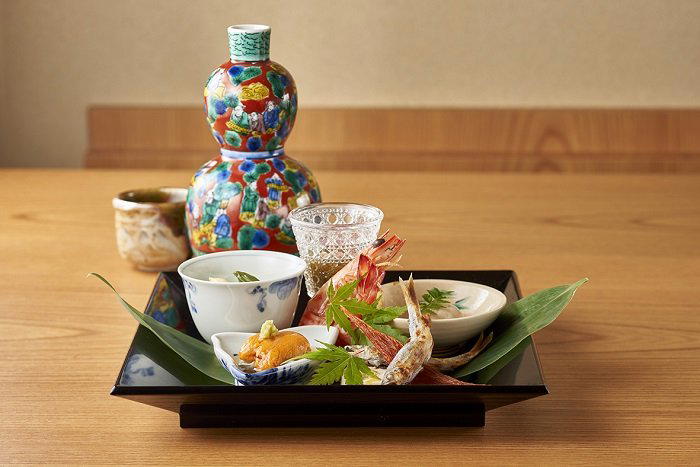
Among the snacks, the tuna near the collarbone, a fatty cut drawn from a less-harvested part of the fish, appears as sashimi, its richness balanced by the counter's characteristic finish: grated daikon wrapped in the same fatty tuna to clean the palate. This pairing addresses a structural problem common to high-fat sashimi sequences, where accumulation of richness can flatten the later courses. The daikon resolves that without introducing acid or heat.
The pickled nigiri is the piece most directly anchored to Kyoto's culinary identity. Pickling is the city's dominant preservation and flavour tradition, rooted in the geography of a landlocked former capital that historically had no direct access to fresh coastal fish. Pickled sushi (narezushi and its relatives) is older than the Edo-style pressed rice and sliced fish that most international diners now treat as the default form. At Kiyamachi Ran, the pickled nigiri is not a historical exhibit, it is a functioning part of the meal that carries the culture of the city in its acidity and texture.
Lineage and the Third Generation
The sushi kappo is run by the third-generation owner-chef and his mother, a family structure that is itself part of Kyoto's dining continuity. Multi-generational counters of this type are a specific subclass of the city's restaurant culture, distinct from the newer wave of chef-owned restaurants that have opened in Kyoto over the past decade. The chef's prior work at Kitcho provides a formal credential that anchors the counter in a recognisable tradition; his return to the family address rather than opening independently is a choice that speaks to the value placed on continuity here.
For Japanese dining of comparable seriousness across the Kansai and Kyushu regions, HAJIME in Osaka and Goh in Fukuoka represent very different expressions of the same underlying commitment to technique and sourcing. For a Tokyo sushi reference point, Harutaka in Tokyo operates the more familiar high-end omakase format. akordu in Nara and 6 in Okinawa show how smaller-city Japanese dining can carry equal rigour in different registers. Outside Japan entirely, Le Bernardin in New York City and Atomix in New York City are reference points for how precision fish cookery and chef-driven conversation translate in other contexts.
Planning Your Visit
| Category | Kiyamachi Ran | Gion Sasaki | Isshisoden Nakamura |
|---|---|---|---|
| Format | Sushi kappo, conversational ordering | Kaiseki, set sequence | Kaiseki, set sequence |
| Price tier | Not publicly listed | ¥¥¥¥ | Available on request |
| Awards | Kitcho-lineage chef | Michelin 3 Stars | Long-established address |
| Booking | Advance recommended | Advance essential | Advance recommended |
| Service register | Intimate, dialogue-led | Formal, ceremonial | Traditional, structured |
Kiyamachi Ran sits on Nabeyacho in Nakagyo Ward, within walking distance of the central Kiyamachi strip. Booking in advance is advisable, counter-format restaurants with small capacity and no fixed-menu pricing tend to fill through repeat guests and word of mouth rather than online reservation systems. Contact directly where possible. If you are building a wider Kyoto itinerary, the Kyoto hotels guide, Kyoto bars guide, Kyoto experiences guide, and Kyoto wineries guide cover the broader context. For Yokohama, 1000 in Yokohama offers a useful data point on how counter dining operates in a different Japanese port city.
Frequently asked questions
Is Kiyamachi Ran award-winning?
Kiyamachi Ran has received recognition including: This sushi kappo is run by the third-generation owner-chef, who previously worked at Kitcho, and his mother. From below the ledge, water flows to rinse the fingers, stirring fond memories of Showa-era times. Orders are placed old-style too:….
How do I find Kiyamachi Ran?
Kiyamachi Ran is located at Japan, 〒604-8015 Kyoto, Nakagyo Ward, Nabeyacho, 212-6, Kyoto.
What should I eat at Kiyamachi Ran?
The fatty tuna near the collarbone, a cut rarely foregrounded on Kyoto menus, is cited as a signature snack, served as sashimi. Grated daikon wrapped in fatty tuna provides the clean finish that follows. The pickled nigiri is the kitchen's most direct expression of Kyoto's preserved-food culture.
Should I book Kiyamachi Ran in advance?
A counter run by two people, the third-generation chef and his mother, has hard limits on covers per service. Walk-ins on Kiyamachi Street carry real risk; advance reservation is the practical baseline for any serious dining room of this scale in Kyoto's Nakagyo Ward.
What do critics highlight about Kiyamachi Ran?
The ordering format draws consistent attention: there is no written menu, and dishes are chosen through live conversation with the chef, a format that was standard in Showa-era Japan and has largely disappeared. The third-generation lineage, anchored by the chef's prior tenure at Kitcho, gives the kitchen a traceable connection to Kyoto's most rigorous kaiseki tradition.
Can Kiyamachi Ran adjust for dietary needs?
The conversational ordering format, where patrons select dishes directly with the chef, creates more room for real-time adjustment than a fixed tasting menu would. That said, the kitchen's identity is built around fish-forward Kyoto kappo, so diners with significant restrictions should communicate them clearly when booking.
Just the Basics
Comparable venues nearby, for context on price, style, and recognition.
| Venue | Cuisine | Price | Awards | Notes |
|---|---|---|---|---|
| Kiyamachi RanThis venue (the venue you are viewing) | Traditional Kyoto Sushi | $200–300 | Michelin Plate | Not listed |
| Gion Suetomo | Traditional Kyoto Kaiseki Omakase | $100–150 | Not listed | Higashiyama, Traditional Kyoto Kaiseki Omakase |
| Matakichi | Refined Kyoto Omakase & Kaiseki | $100–150 | Michelin Plate | Higashiyama, Refined Kyoto Omakase & Kaiseki |
| Tokuo | Michelin 3-Star Traditional Japanese Kaiseki | Not listed | Michelin Plate | Nakagyō, Michelin 3-Star Traditional Japanese Kaiseki |
| Daichan | Late-Night Premium Yakiniku | $200–300 | Tabelog Bronze #52 | Fushimi, Late-Night Premium Yakiniku |
| Takehisa | Kyoto Kappo Kaiseki | $100–150 | Michelin Plate | Nakagyō, Kyoto Kappo Kaiseki |
Recognition history
Dated appearances from independent guides and award organizations, with the underlying list record or original source where available.
Michelin Plate
Michelin