
A Michelin Plate-recognised kappo counter in Kashihara, Nara Prefecture, Kappo Risuke operates within the disciplined Japanese tradition of seasonal precision and produce-led cooking. With consecutive Michelin Plate recognition in 2024 and 2025, it sits in the mid-tier of Nara's serious dining scene, below starred kaiseki rooms but above the city's casual washoku offer.
Pearl is the En Primeur Club membership app — saves, bookings, and concierge access live there. Same editors, same standards.
- Address
- 497-5 Kuzumotocho, Kashihara, Nara 634-0007, Japan
- Phone
- +81 744-23-9307
- Website
- nara-risuke.com
- Directions
- Get directions
 Saves & bookings on Pearl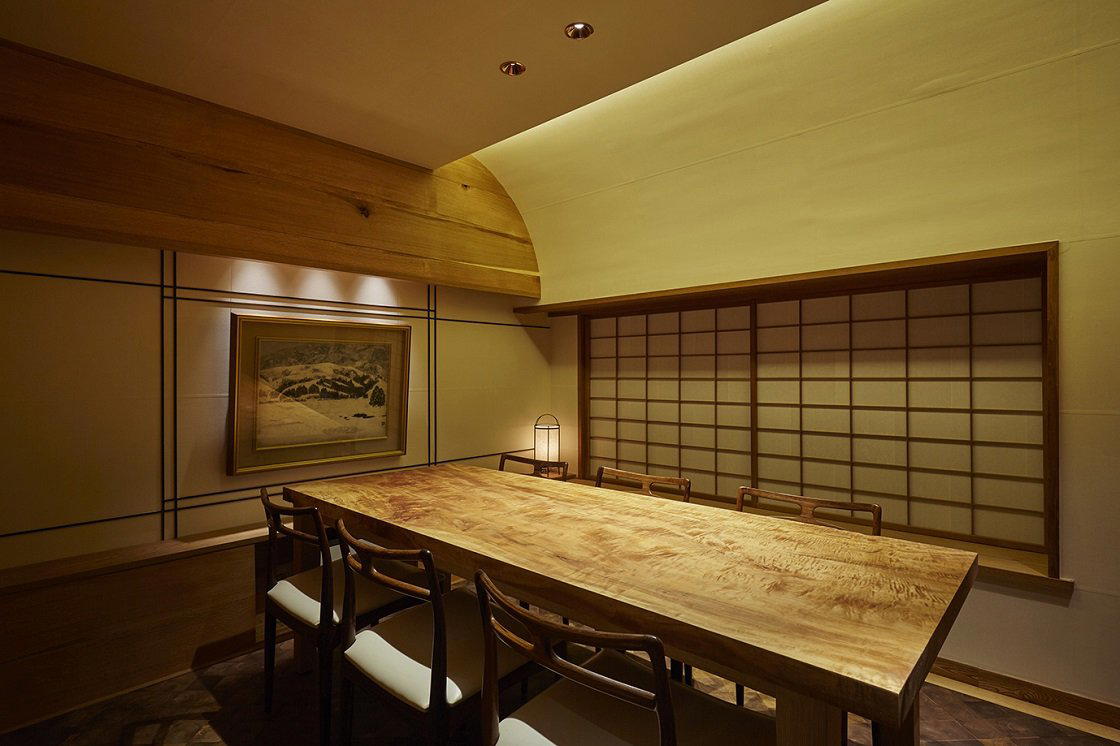
Kappo Cooking in Kashihara: The Quiet End of Nara's Dining Arc
Approach Kashihara from central Nara city and the urban density thins considerably. Kappo Risuke is a traditional Japanese kaiseki restaurant in Kashihara, Nara, at about $100 per person. This southern corridor of Nara Prefecture sits at a remove from the deer parks and tourist circuits that define the prefectural capital's daytime rhythm. The restaurants here do not trade on proximity to heritage sites; they earn their audiences through reputation that travels by word of mouth across the Kansai region. Kappo Risuke, addressed at 497-5 Kuzumotocho, operates in that context, a setting where the physical environment asks nothing of you except attention to what arrives at the counter.
Kappo, as a format, predates the kaiseki formalism that became Kyoto's dominant export. Where kaiseki codified seasonal cooking into ceremony, kappo retained something more direct: the chef works in open view, the courses reflect market availability rather than a fixed narrative arc, and the pacing is conversational rather than choreographed. That distinction matters when considering where Kappo Risuke fits within Nara's dining options. Compared to a kaiseki room like Tsukumo or the more format-driven Japanese dining at NARA NIKON, kappo positions itself as rigorous without being ritualistic.
Michelin Recognition and Where Risuke Sits in the Regional Tier
Michelin awarded Kappo Risuke a Plate in both 2024 and 2025. The Plate designation, indicating cooking of good quality according to the guide's own criteria, places the restaurant inside the Michelin-acknowledged tier without reaching the starred bracket. In Nara's context, that is a meaningful but not rarefied position. The prefecture has starred representation: NARA NIKON holds two Michelin stars at the same ¥¥¥ price tier, and Wa Yamamura operates as a one-starred kaiseki room also priced at ¥¥¥. The restaurant's consecutive Plate recognition signals consistent quality rather than the kind of year-to-year volatility that affects smaller operations working with tight seasonal windows.
3 from 154 responses. For comparison, venues that trend briefly on social media tend to show higher aggregate scores from smaller sample sizes. A 4.4 across 147 reviews suggests that diners who return, and those who arrived via recommendation, are broadly getting what they came for.
Within the wider Kansai kappo and kaiseki circuit, the reference points shift quickly toward starred rooms. Gion Sasaki in Kyoto and the more intervention-led Japanese cooking at HAJIME in Osaka represent the upper end of formal Japanese dining in the region. The restaurant operates in a different register, accessible enough to serve local professionals, precise enough to hold Michelin's attention for two consecutive years.
Seasonality, Sourcing, and the Ethics of Kappo's Produce Logic
The editorial angle that most honestly frames a venue like Kappo Risuke is not the accolades but the format's inherent relationship with seasonal sourcing. Kappo cooking is structurally anti-waste in ways that kaiseki, with its prescribed course architecture, is not always free to be. A kappo kitchen calibrates its daily offer to what has arrived, which means that ingredients in peak condition are used quickly and completely, and that supply dictates menu shape rather than a fixed design template overriding what the market can offer.
Nara Prefecture has a specific agricultural identity that rewards this approach. The Yamato region, the historical and agricultural heartland of Nara, produces distinct vegetable varieties collectively known as Yamato yasai. These heritage cultivars, some with documented cultivation histories stretching back centuries, are grown by a small network of producers and are not widely available outside the prefecture. A kappo kitchen in this geography has access to produce that a restaurant in Osaka or Tokyo would need to source by arrangement and transport at cost. That proximity is an inherent sustainability advantage: shorter supply chains, fresher product, and a direct relationship between the kitchen and the land it draws from.
Yamato yasai encompasses varieties including Yamato round eggplant, Yamato cucumber, and a range of root vegetables whose flavour profiles differ from the commodity equivalents available through wholesale distribution. When kappo cooking is working as it should, these ingredients appear on the plate in forms that require as little intervention as possible, a discipline that reduces kitchen waste and keeps preparation honest about what the ingredient actually is.
This is not a philosophy distinctive to the restaurant; it is structural to the format. But in a city where tourism infrastructure sometimes pulls restaurants toward approximated versions of traditional cooking designed for broad palatability, a venue that continues to earn Michelin Plate recognition suggests a kitchen maintaining that produce-led discipline rather than softening it for accessibility.
Nara's Dining Scene: Placing Risuke on the Map
Nara's serious dining scene is smaller and less internationally discussed than Kyoto's or Osaka's, but it is not thin. Oryori Hanagaki, Ajinokaze Nishimura, and Ajinotabibito Roman each represent different registers of Japanese cooking in the prefecture, and taken together they indicate a dining environment that rewards visitors who look beyond the city's tourist-facing offer. The restaurant's position in Kashihara places it in a less-visited part of that picture, which has practical implications: it is not a restaurant that fills on tourist footfall alone, and its audience is consequently more local and more considered.
For visitors constructing a broader Kansai itinerary, Nara's dining can integrate with excursions to Myojaku or Azabu Kadowaki in Tokyo, or with regional Japanese cooking at Goh in Fukuoka, each of which represents a different expression of Japanese cuisine's regional specificity. Closer to home, Harutaka in Tokyo and 1000 in Yokohama offer points of comparison for those tracking how kappo and Japanese fine dining interact across cities. 6 in Okinawa sits at the more experimental end of that national spectrum.
Planning a Visit
The restaurant sits at the ¥¥¥ price tier, consistent with other Michelin-recognised Japanese venues in Nara Prefecture. The Kashihara address (497-5 Kuzumotocho) is in the city of Kashihara, south of central Nara, accessible by the Kintetsu Osaka line to Kashiharajingu-mae station. Given its local audience base and the format's counter-seating nature, reservations are advisable and likely required for weekend sittings. Reservations are essential.
Visitors building a full Nara programme can use our full Nara restaurants guide as a starting point, alongside our full Nara hotels guide, our full Nara bars guide, our full Nara wineries guide, and our full Nara experiences guide.
The Essentials
Comparable venues nearby, for context on price, style, and recognition.
| Venue | Cuisine | Price | Notes |
|---|---|---|---|
| Kappo RisukeThis venue — the venue you are viewing | Kashihara, Traditional Japanese Kaiseki | $$$$ | Not listed |
| Naramachi Sushi Hanako | Nara, Traditional Sushi Omakase | $$$ | Not listed |
| Kawanami | Nara, Farm-to-Table Kaiseki | $$$ | Not listed |
| Nikutoieba Matsuda | Naizencho, Wagyu Kappo Kaiseki | $$$ | Not listed |
| Kiyosuminosato AWA | Not listed | $$ | Nara, Sustainable Yamato Vegetable Kaiseki |
| Kakomura | Nara, Traditional Kaiseki | $$$$ | Not listed |
Recognition history
Dated appearances from independent guides and award organizations, with the underlying list record or original source where available.
Michelin Plate
Michelin
Michelin Plate
Michelin
Continue exploring
More in Nara




Bars in Nara
Browse all →

Hotels in Nara
Browse all →




Wineries in Nara
Browse all →
At a Glance
- Intimate
- Elegant
- Quiet
- Cozy
- Special Occasion
- Date Night
- Private Dining
- Sake Program
Current opening hours
- Monday
- 11:45 AM–2 PM, 5:30–10 PM
- Tuesday
- 11:45 AM–2 PM, 5:30–10 PM
- Wednesday
- 11:45 AM–2 PM, 5:30–10 PM
- Thursday
- 11:45 AM–2 PM, 5:30–10 PM
- Friday
- 11:45 AM–2 PM, 5:30–10 PM
- Saturday
- 11:45 AM–2 PM, 6–10 PM
- Sunday
- 11:45 AM–2 PM, 6–10 PM
Hours can change for holidays and private events. Last verified .
Cultivated quiet with lacquered surfaces, gentle knife sounds, hushed sliding doors, and painterly calm emphasizing sensory detail.