

Michelin Plate · Tabelog Bronze #316
Our verdict
Nara’s beef dining culture is not only about marbling; at this level, sourcing control and butchery knowledge shape the meal as much as grilling technique. Nikutoieba Matsuda works in that tighter specialist lane, with an owner-chef butcher, an 18-seat format, Tabelog Bronze recognition in 2024, 2025, and 2026, and a Michelin Plate noted for 2024 and 2025.

Pearl is the En Primeur Club membership app, where members save venues, book tables and use the concierge.
The menu
What to order
- Wagyu fillet cutlet sandwich
- Wagyu beef tartare sushi
- Wagyu curry
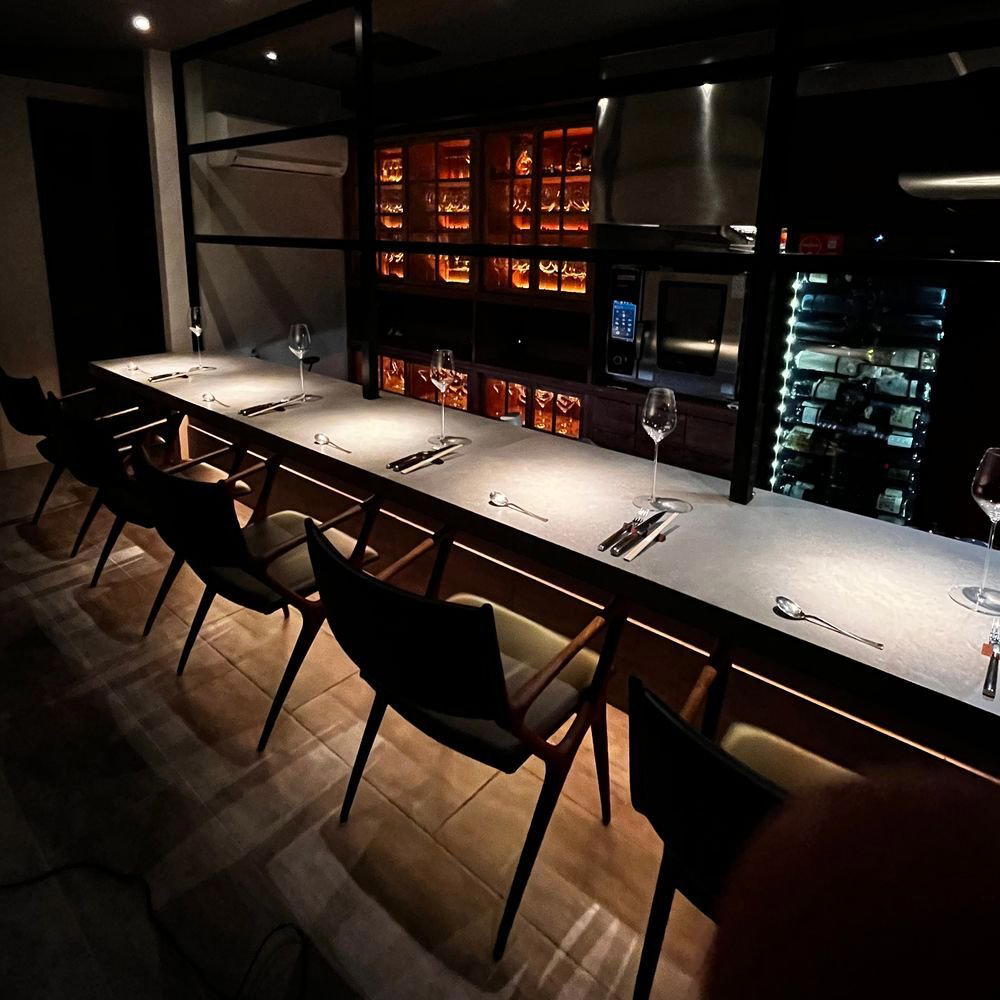
The room signals intent before the first course: counter seating, a compact service field, and the focus that comes when beef is treated less as commodity luxury than as a sequence of cuts, temperatures, and textures. Nara lacks the scale of Tokyo’s steak and yakiniku market, but that smaller stage can sharpen the experience. In Kashihara, the Yamato Yagi area gives serious restaurants a rhythm distinct from the tourist-heavy lanes around Nara Park, and beef specialists must justify the trip with precision rather than spectacle.
Nikutoieba Matsuda sits in the modern Japanese beef category between yakiniku, kappo, and course-menu dining. The point is not wagyu as a prestige word. At this tier, the key question is who controls the meat before it reaches the counter. An owner-chef with butcher credentials changes the premise: selection, trimming, portioning, and sequence become part of the cooking argument, not back-of-house administration.
Butchery knowledge drives the course more than grill theatre
Japan’s high-end beef restaurants often split into two camps. One relies on brand-name cattle and visible marbling as the headline. The other builds the meal cut by cut, pacing fat, lean muscle, offcuts, and texture so the guest does not tire halfway through. Nikutoieba Matsuda fits the second camp more convincingly. Its public recognition is tied to beef dishes and Japanese cuisine rather than a broad luxury label, placing it closer to a specialist counter than a general celebratory restaurant.
The distinction matters because wagyu becomes monotonous when richness is the only idea. A butcher-led format has more tools: thin slicing, controlled searing, leaner sections set against fattier ones, and a course structure that makes beef feel detailed rather than heavy. Tabelog Bronze status in 2024, 2025, and 2026, plus Michelin Plate recognition in 2024 and 2025, gives the format a measurable place in Japan’s crowded meat-dining hierarchy. Those signals do not describe the meal alone, but they show the restaurant is judged within a serious national conversation, not only as a local favourite.
Compared with out-of-metro beef rooms such as Nikuryori Shibuya, Beef in Kyoto, the Nara proposition is more compact and regionally specific. Kyoto beef dining often carries city polish and higher ceremonial expectation. Kashihara reads differently: smaller, more direct, and dependent on whether sourcing and butchery discipline can hold attention across the full course. That is the right lens for this style of meal.
Nara's serious dining is moving beyond temple-district expectations
Nara is still too often treated as a day-trip city, flattening its restaurant scene into lunch near heritage sites and early trains back to Kyoto or Osaka. The more interesting pattern sits outside that script. Kashihara, with its Kintetsu connections and local residential base, supports restaurants that need not perform Nara nostalgia for visitors. A beef counter here can speak to regional diners as much as destination eaters, a balance that rewards substance over decoration.
The broader restaurant map is also more varied than Nara’s reputation suggests. For category comparisons, 37+1 - Sanjuhachi, A VOTRE SANTE (French), Ajinokaze Nishimura (Japanese), Ajinotabibito Roman (Japanese), and akordu (Spanish, Innovative) show Nara’s range beyond one culinary lane. The useful comparison is not whether beef outranks kaiseki, French, or Spanish-influenced cooking; it is whether this format has enough identity to justify choosing it over those alternatives.
On that measure, Nikutoieba Matsuda has a clear editorial case. Eighteen seats, including counter seating and a small table allocation, create a high-contact service format where pacing matters. A sommelier presence and stated interest in sake and wine signal a meal built for pairing structure, not only grilled meat and rice. The room is non-smoking, private rooms are not part of the format, and children are limited to junior high school age and above if they can take the course, clarifying the audience without making it a formal dining room.
How to place it in a Nara itinerary
This is stronger for travellers who want one Nara meal built around ingredient command rather than a broad survey of local dishes. The course structure and awards history make it a deliberate reservation, not a casual stop between sightseeing blocks. It also suits diners who care about the difference between buying prestigious beef and understanding how to serve it. The former is common across Japan; the latter separates a specialist beef restaurant from a luxury yakiniku room with a larger bill.
There are practical implications. The restaurant operates on a set-course, reservation-only model, with lunch and dinner services split differently across weekdays, weekends, and public holidays; Mondays and Tuesdays are regular closure days. Payment favours major credit cards, while electronic money and QR payments are not listed options. Parking is not provided, though paid coin parking is available nearby. These details make the meal better suited to planning than improvisation.
For a wider Nara plan, use Our full Nara restaurants guide alongside Our full Nara hotels guide, Our full Nara bars guide, Our full Nara wineries guide, and Our full Nara experiences guide. Travellers comparing beef-focused meals beyond Nara can also look at -Grilled beef Sukiyaki- KAMAKURA TANUKIAN 鎌倉 たぬき庵 in Kamakura, Caviar & Bull, Beef in St Julian's, and the Kyoto reference point above. For contrast across Japan’s wider restaurant field, see. 鮪と炭火焼き うお炭 秋葉原店 in Tokyo.cafe in Osaka.know in Kumamoto, (Shoku) Vietnam in Kawasaki, and [Curry Senmon Ten] Maruyama Kyoju. in Sapporo.
The verdict is narrow but strong: choose Nikutoieba Matsuda when the priority is wagyu handled through sourcing intelligence and butcher-level control, not a broad Nara sampler or flexible family meal. Its value lies in a disciplined meat course format, small-room focus, and recognition from Japanese dining guides that take this category seriously.
Frequently asked questions
Is Nikutoieba Matsuda good for families?
It accepts junior high school students and above who can enjoy the course, so it is not a casual family stop. The 18-seat room, with 12 counter seats and 6 table seats, suits older children better than younger diners.
What kind of setting is Nikutoieba Matsuda?
This is a reservation-only beef restaurant in Nara with 18 seats, including a counter, table seating, and sommelier service. The house style is course-led, with service available at lunch and dinner on Wednesday through Sunday, and it is closed on Mondays and Tuesdays.
Is Nikutoieba Matsuda focused on a specific cuisine style?
Nikutoieba Matsuda serves Beef cuisine.
How much does it cost to eat at Nikutoieba Matsuda?
Pricing at Nikutoieba Matsuda is listed as ¥¥.
What are Nikutoieba Matsuda's hours?
Hours at Nikutoieba Matsuda: ■Business hours[Wed - Fri]Lunch: From 12:00 onwardsDinner: From 19:00 onwards[Sat, Sun & Public Holidays]Lunch: From 12:00 onwardsDinner Part 1: From 17:00 onwardsDinner Part 2: From 20:00 onwards■Closed onMondays and Tuesdays*Open on public holidays.
Quick Comparison
Comparable venues by cuisine and price in the same metro.
| Venue | Cuisine | Price | Awards | Notes |
|---|---|---|---|---|
| Nikutoieba MatsudaThis venue (the venue you are viewing) | Wagyu Kappo Kaiseki | $150–200 | Michelin Plate · Tabelog Bronze #316 | Not listed |
| Shikinoaji Enzu | Seasonal Kappo | $50–100 | Michelin Bib Gourmand | Nara |
| Ike Edoyakiunagi Asahitei | Edo-Style Grilled Eel (Unagi) | $50–100 | Michelin Bib Gourmand | Uda |
| Tempura Hattori | Tempura Omakase | $50–100 | Michelin Plate | Nara |
| Sosakukushinomise Rindo | Creative Kushikatsu with French Influences | $30–50 | Michelin Bib Gourmand | Ikoma |
| Araki | Seasonal Japanese Tempura and Kaiseki | $100–150 | Michelin Plate · Tabelog Bronze #23 | Nara |
Recognition history
Dated appearances from independent guides and award organizations, with the underlying list record or original source where available.
Michelin Plate
Michelin
Tabelog Bronze #316
Tabelog
Full recognition history (5 entries)
Michelin Plate
Michelin
Tabelog Bronze
Tabelog
Michelin Plate
Michelin
Continue exploring
More in Nara
Restaurants in Nara
All restaurants in Nara →


Bars in Nara
All bars in Nara →
Hotels in Nara
All hotels in Nara →


Wineries in Nara
Browse all →
Details
- Elegant
- Sophisticated
- Intimate
- Special Occasion
- Business Dinner
- Chefs Counter
- Open Kitchen
- Sake Program
- Local Sourcing
- Counter Dining
- Tasting Menu
Current opening hours
- Monday
- Closed
- Tuesday
- Closed
- Wednesday
- 7–11 PM
- Thursday
- 7–11 PM
- Friday
- 7–11 PM
- Saturday
- 12–11 PM
- Sunday
- 12–11 PM
Hours can change for holidays and private events. Hours as of .
Elegant black and gold interior with stylish, relaxing counter seating overlooking a lively open kitchen.