
A Michelin-starred counter in central Nara where the monthly menu operates as a seasonal record rather than a fixed programme. Tomio Onda's self-taught approach pulls from old cookbooks and regional tradition, producing a calendar that runs from chargrilled ayu in June to cold miso soup in August.
Pearl is the En Primeur Club membership app — saves, bookings, and concierge access live there. Same editors, same standards.
- Address
- 485 Sanjocho, Nara, 630-8244, Japan
- Phone
- +81 742-26-1881
- Directions
- Get directions
 Saves & bookings on Pearl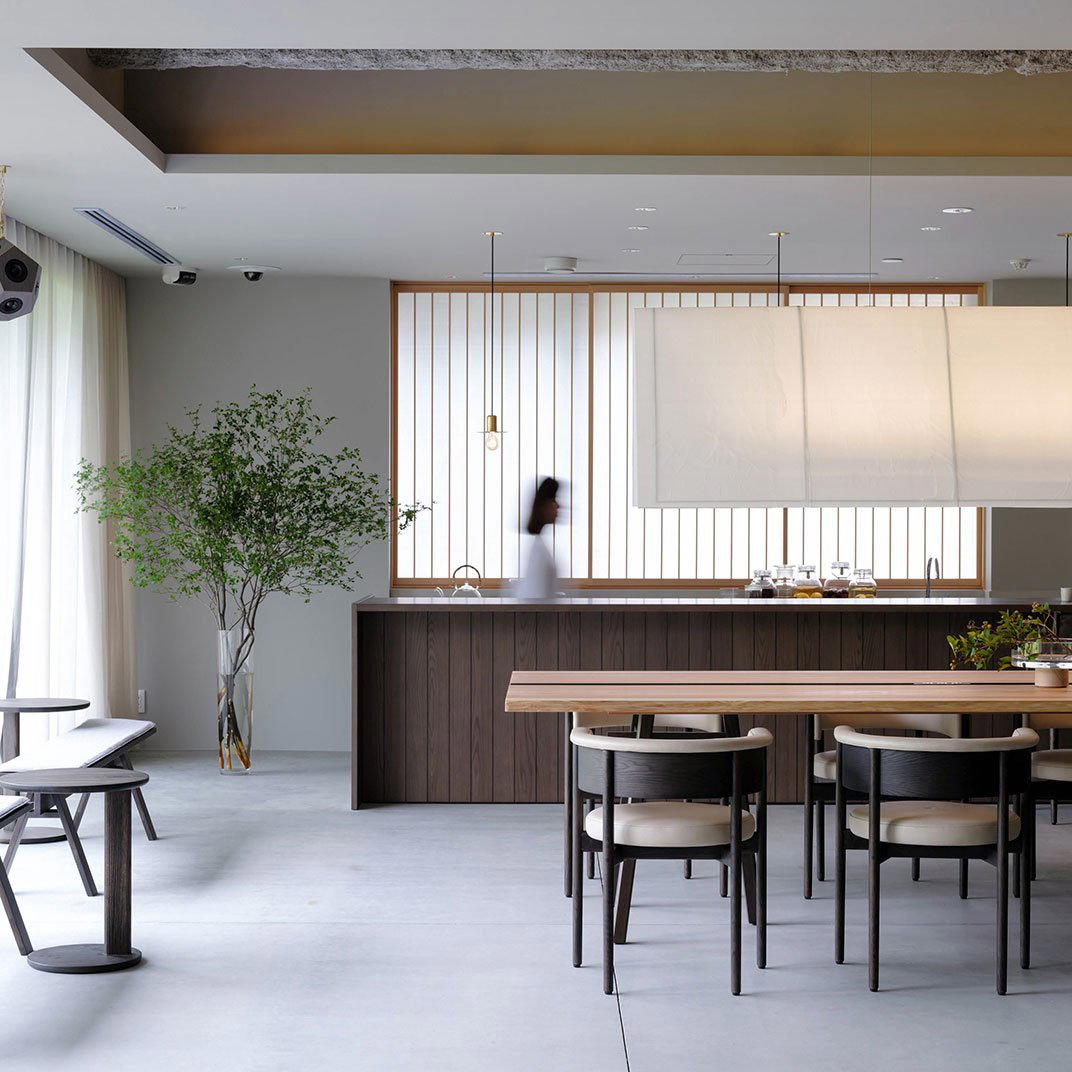
Where the Calendar Is the Menu
Nara's dining identity has long sat in the shadow of Kyoto's kaiseki institutions and Osaka's denser restaurant infrastructure. That positioning has, paradoxically, created space for a different kind of precision: smaller rooms, owner-operated kitchens, and menus that answer to local produce calendars rather than international trend cycles. Ajinotabibito Roman, on Sanjōchō in central Nara, operates squarely inside that tradition. The address places it within walking distance of the city's older merchant streets, and the room itself signals a kitchen that prioritises what arrives at the pass over how it photographs.
In Japan's Michelin-starred tier, the monthly-menu format carries a specific commitment. Unlike tasting menus built around a chef's permanent signature dishes, a calendar-driven kitchen must source and rework its programme twelve times a year. The Michelin one-star recognition at Ajinotabibito Roman reflects that consistency across seasons, not a single strong meal. At a $120 price point, it sits in a bracket shared by Nara peers such as Oryori Hanagaki and Tsukumo, though its self-taught, non-lineage positioning gives it a different flavour profile from kaiseki-trained kitchens in the same price range.
The Ingredient Logic
Japan's freshwater and coastal ingredient calendar is among the more codified in the world, and it structures Ajinotabibito Roman's monthly menus in ways that are immediately legible to anyone who follows seasonal Japanese cooking. The June programme centres on chargrilled ayu, the small river sweetfish whose season peaks in early summer and whose preparation, grilled over charcoal with its viscera intact, is one of the benchmarks against which traditional Japanese kitchens are quietly measured. Ayu is unforgiving raw material: its flavour degrades within hours of harvest, it resists heavy seasoning, and it requires controlled heat to preserve the faint bitterness of the gall bladder that defines the dish's character.
July shifts to curry, a move that might read as an interruption of the seasonal logic but in fact reflects the Shōwa-era home cooking tradition that Tomio Onda draws on alongside older cookbooks. Curry in this context is not a category departure; it is an ingredient-driven dish shaped by summer aromatics and the heat logic of a Japanese domestic kitchen rather than subcontinental spice architecture. By August, cold miso soup appears, a dish that compresses fermentation craft and temperature control into a single bowl. Miso's fermented base changes character in summer preparation: the soup is chilled, the fermentation flavours are sharper, and the dish functions as a record of the producer's seasonal output as much as the chef's technique.
This sequencing, ayu to curry to cold miso, is not arbitrary. It maps onto the rhythm that Onda describes as a summertime adventure, a framing drawn from the home cooking and old cookbook sources he has spent years working through. The ingredients lead; the dishes follow from what the season makes available and what traditional Japanese domestic kitchens historically did with it. Compared to the kaiseki grammar of Ajinokaze Nishimura or the more produce-driven format at GOKAN UOGIN, Onda's kitchen works in a register that is closer to refined domestic cooking than formal course structure.
A Self-Taught Kitchen in a City of Trained Lineages
Most Michelin-starred Japanese kitchens reach the guide through a legible path: an apprenticeship at a named restaurant, a progression through recognised positions, a mentor whose own star validates the training. Japan's restaurant culture places significant weight on this lineage structure, and it is embedded in how critics and regular diners talk about quality signals. Ajinotabibito Roman sits outside that framework. Onda's background runs through a general eatery rather than a kaiseki institution, and his technical development came from self-directed study of historical cookbooks alongside practical daily cooking, an approach that shares more with the research-led kitchens at places like Goh in Fukuoka than with the apprenticeship-heavy model of Harutaka in Tokyo or Gion Sasaki in Kyoto.
What that produces at the table is a menu with different reference points. Old cookbooks in Japan encode regional home-cooking techniques that were never formalised into restaurant programmes: pickling ratios from pre-refrigeration kitchens, seasonal combinations driven by what a rural household could source rather than what a market could supply, fermentation practices that predate industrial miso production. A chef working from those sources will produce dishes that do not map cleanly onto the kaiseki vocabulary most diners bring to a starred room, which is both the source of the kitchen's distinctiveness and the reason Michelin's 2024 one-star placement deserves to be read as a considered judgement rather than a courtesy award.
The family dimension reinforces the domestic register. With Onda's daughters working in the kitchen, the restaurant operates as a household enterprise in a tradition that Japanese food culture has long recognised as a legitimate category, different from the brigade-kitchen model but not subordinate to it.
Nara in the Context of Japan's Regional Starred Circuit
Japan's regional Michelin coverage has expanded significantly in the last decade, pulling recognition away from the Tokyo concentration that once dominated the guide. Cities like Fukuoka, Kanazawa, and Nara now host starred kitchens that operate with regional ingredient networks, local price sensitivities, and dining formats shaped by their own traditions rather than Tokyo's. Within that shift, Nara's starred tier is small but coherent: NARA NIKON operates at two stars, while the restaurant holds one, placing both rooms in a guide section that rewards specificity over scale.
For visitors already covering the Kansai circuit, the comparative logic is instructive. HAJIME in Osaka operates at the two-star innovative level; Myojaku in Tokyo and Azabu Kadowaki in Tokyo represent the capital's Japanese-course tradition. The restaurant does not compete in those registers. It competes as a document of what a self-taught kitchen rooted in Nara's seasonal calendar can produce at the one-star level, and that is a specific and genuinely different offering from anything the Osaka or Tokyo circuit provides.
Regional context also matters for understanding the price tier. At ¥¥¥, the restaurant sits below the highest Kansai omakase prices while delivering Michelin-recognised quality, a positioning that reflects Nara's generally lower restaurant price floor relative to Kyoto and Osaka. For guests planning Kansai itineraries that include stops at 1000 in Yokohama or 6 in Okinawa, a Nara meal at this tier offers a different value proposition from the upper-end omakase counter.
Planning a Visit
The restaurant is located at 485 Sanjōchō, Nara, within walking distance of Kintetsu Nara Station. The monthly menu format means the specific dishes available depend entirely on when you visit, and the summer months, with the ayu, curry, and cold miso sequence described above, represent one coherent seasonal arc. Booking in advance is advisable for a one-star room of this type; Japanese starred restaurants at the owner-operated scale frequently run small seatings, and the combination of local repeat guests and visiting diners from the Kansai circuit means availability closes well before the service date. At roughly $120 per person, expect a spend in the upper end of Nara's starred options.
A Lean Comparison
Comparable venues nearby, for context on price, style, and recognition.
| Venue | Cuisine | Price | Notes |
|---|---|---|---|
| Ajinotabibito RomanThis venue — the venue you are viewing | Nara, Traditional Japanese Kaiseki | $$$$ | Not listed |
| Okada | Nara, Seasonal Kaiseki | $$$$ | Not listed |
| Musoan | Nara, Traditional Japanese Kaiseki | $$$$ | Not listed |
| Koikiryori Aji Manso | Nara, Kappo | $$$$ | Not listed |
| VILLA COMMUNICO | Not listed | $$$$ | Nara, Modern Wood-Fired Japanese Fine Dining |
| Sushi Kawashima | Kashihara, Nara-Style Omakase Sushi | $$$$ | Not listed |
Recognition history
Dated appearances from independent guides and award organizations, with the underlying list record or original source where available.
Michelin 1 Star
Michelin
Michelin 1 Star
Michelin
Continue exploring
More in Nara




Bars in Nara
Browse all →


Hotels in Nara
Browse all →




Wineries in Nara
Browse all →
At a Glance
- Romantic
- Intimate
- Elegant
- Cozy
- Sophisticated
- Date Night
- Special Occasion
- Sake Program
- Local Sourcing
Calm, inviting, and warm atmosphere with gracious family service and focus on simple, heartfelt dishes.