
Michelin Bib Gourmand
Our verdict
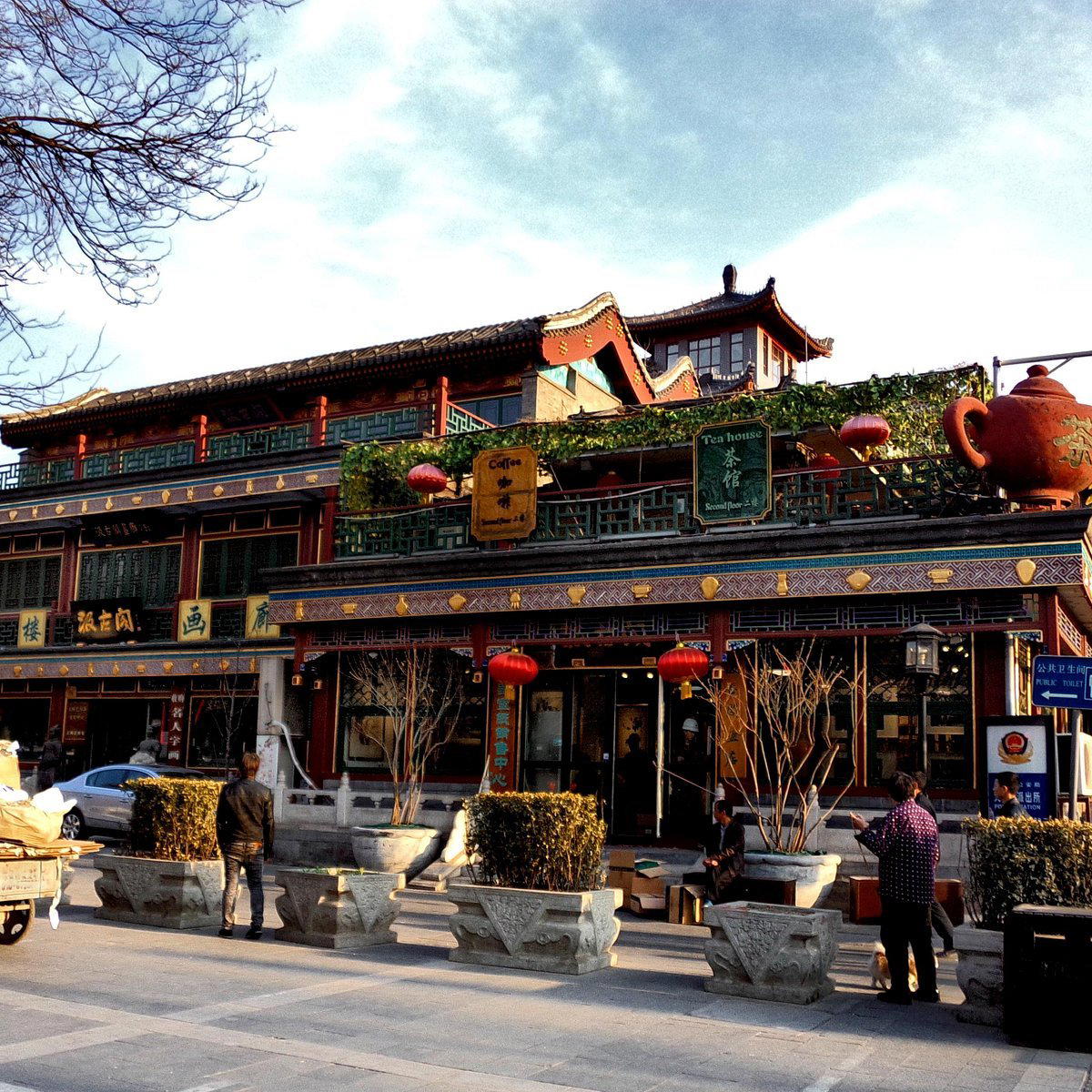
On Liulichang East Street in Beijing's Xicheng District, Jingyi has earned consecutive Michelin Bib Gourmand recognition in 2024 and 2025 for its Hubei cooking, a regional cuisine that rarely surfaces at this level of consistency in the capital.

Pearl is the En Primeur Club membership app, where members save venues, book tables and use the concierge.
The menu
What to order
- Braised tofu with fish roe
- Hot and sour young lotus root
- Sour and spicy lotus root with chicken gizzards
Liulichang and the Case for Regional Cooking in Beijing
Liulichang East Street is one of Beijing's older commercial corridors, known for antique dealers, calligraphy shops, and the kind of foot traffic that mixes tourists with neighbourhood regulars. It is not the address you expect to find a restaurant accumulating consecutive Michelin recognition. Yet that is precisely what makes Jingyi's position here worth paying attention to. Beijing's Michelin-recognised dining scene tends to cluster around Chaoyang's hotel-adjacent corridors or the hutong restaurant belt in Dongcheng. A Bib Gourmand recipient operating out of a culturally preserved street in Xicheng is something of an outlier, and outliers, in this city's restaurant map, are often where the more instructive meals happen.
The broader context matters here. Beijing's approved restaurant list skews heavily toward Cantonese, Jiangsu, and Shandong cuisines at its higher tiers, with Hubei cooking appearing rarely in critical discussion. The province's food tradition, anchored in freshwater fish, braised pork preparations, and a liberal hand with rice and fermented pastes, sits at some remove from the northern palate's defaults. That Jingyi has drawn sustained Michelin attention for this cuisine, at a price point marked by a single ¥ symbol, says something about the cooking's specificity rather than its accessibility to an average diner who hasn't sought Hubei food before.
What Hubei Cooking Brings to the Table
Hubei cuisine occupies a middle position in Chinese regional cooking, less internationally visible than Sichuan or Cantonese, less assertively spiced than Hunan, and more reliant on technique with freshwater ingredients than its neighbours. The province's position along the Yangtze corridor gives its kitchen a natural orientation toward fish and lotus root, both of which appear in preparations that reward patience: slow braises, careful steaming, the kind of cooking where timing and temperature carry more weight than dramatic seasoning.
In Beijing, finding this cuisine executed with the consistency that earns repeat Michelin notice is rare. The Bib Gourmand designation is instructive in this context. Unlike the starred categories, the Bib specifically marks good cooking at a price that represents value rather than spectacle. For Hubei food in particular, that framing is coherent: the cuisine's strengths are not theatrical, and a restaurant that wins recognition for it twice in succession is making a case through repetition and reliability rather than occasion-driven ambition. Compare this to the upper tier of Beijing's recognised list, Xin Rong Ji (Xinyuan South Road) at three Michelin stars and a ¥¥¥¥ price point, or Chao Shang Chao (Chaoyang) at the same level, and the gap in both price and format is considerable. Jingyi operates in a different register entirely.
Occasion Dining at the Affordable End of the Spectrum
There is a particular category of celebration meal that doesn't require a formal dining room or a tasting menu: the meal that marks something personal and does so through food that is specific, considered, and hard to replicate at home. Jingyi, with its Bib Gourmand credentials and Hubei specialisation, fits this model well. A milestone birthday, a reunion with someone who grew up in Wuhan or Hubei, a deliberate meal taken to mark a return visit to Beijing, these are occasions that don't need white tablecloths. They need cooking that is rooted enough to carry the weight of the moment.
The low price point (¥) means the occasion itself can be the focus rather than the bill, which for a certain type of diner is the most practical form of celebration design. Restaurants that deliver critical-level cooking at accessible prices are genuinely scarce in any major city, and Beijing is no exception.
For reference, other Bib Gourmand holders in Beijing's regional cuisine space include Chu Shan Si Ji and Hong Fan Qie (Yuyuantan South Road), both of which serve distinct regional traditions at comparable price tiers. The pattern across these spots suggests Beijing's Michelin inspectors have taken a consistent interest in affordable regional specialists, not just haute Chinese cooking.
Jingyi in Beijing's Wider Dining Picture
Beijing's restaurant recognition list in 2025 continues to reward technical ambition at the leading end, Lamdre (Vegetarian), with one Michelin star and a ¥¥¥¥ price point, represents the kind of serious, category-specific cooking that earns starred status. Jingyi's two-year Bib run places it in a different but equally coherent tier: recognised for consistency and value rather than format ambition.
Across China more broadly, the trend toward awarding regional cuisines at accessible price points is visible in other cities too. Ru Yuan in Hangzhou and Dai Yuet Heen in Nanjing both represent cities where local inspectors have developed specific frameworks for evaluating regional cooking on its own terms rather than against a European fine-dining template. Beijing's willingness to include a Hubei specialist on Liulichang East Street in its Bib list reflects the same tendency. For diners interested in how Michelin's China program is evolving, Jingyi is a useful data point.
Those interested in exploring the full range of Beijing dining should consult our full Beijing restaurants guide, which maps the city's recognised spots across price tiers and cuisine types. For broader city planning, our full Beijing hotels guide, full Beijing bars guide, full Beijing wineries guide, and full Beijing experiences guide cover the rest of the city's hospitality picture.
For comparison across Chinese cities at different price and prestige levels, Chef Tam's Seasons in Macau, 102 House in Shanghai, Xin Rong Ji in Chengdu, and Imperial Treasure Fine Chinese Cuisine in Guangzhou each illustrate a different point on the regional-cuisine recognition spectrum. Outside China, the contrast with award-level restaurants like Le Bernardin in New York City or Atomix in New York City underlines how differently Michelin applies its Bib framework when price context and cuisine tradition shift.
Planning a Visit
Jingyi sits at 2 Liulichang East Street in Xicheng District, a short walk from the Hepingmen or Liulichang subway access points and directly in the antique-dealer corridor that runs through this part of the district. The address puts it within practical reach of central Beijing but outside the Chaoyang restaurant cluster where most Western visitors concentrate their dining. The price tier (¥) makes this one of Beijing's more accessible Michelin-acknowledged addresses by cost, and the consecutive 2024–2025 Bib Gourmand recognition provides a credible reason to plan around it rather than treat it as a walk-in fallback.
Frequently Asked Questions
Cuisine and Awards Snapshot
| Venue | Cuisine | Price | Awards | Notes |
|---|---|---|---|---|
| Jingyi (Liulichang East Street)This venue (the venue you are viewing) | Hubei Cuisine | $20–30 | Michelin Bib Gourmand | Not listed |
| Jing | Modern French with Asian Influences | $300–500 | 1 Michelin Star · Black Pearl 1 Diamond | French Contemporary |
| Xin Rong Ji (Xinyuan South Road) | Taizhou Chinese Fine Dining | $300–500 | 3 Michelin Stars · World's 50 Best #84 | Taizhou |
| Chao Shang Chao (Chaoyang) | Modern Teochew (Chaoshan) Fine Dining | $200–300 | Michelin Plate · La Liste Top Restaurants | Chao Zhou |
| Lamdre | Modern Plant-Based Chinese Vegetarian | Not listed | 2 Michelin Stars · World's 50 Best #17 | Vegetarian |
| Jingji | Imperial Beijing Royal Cuisine | $200–300 | 2 Michelin Stars · La Liste Top Restaurants | Beijing Cuisine |
Recognition history
Dated appearances from independent guides and award organizations, with the underlying list record or original source where available.
Michelin Bib Gourmand
Michelin
Full recognition history (2 entries)
Michelin Bib Gourmand
Michelin
Continue exploring
More in Beijing
Restaurants in Beijing
All restaurants in Beijing →
Bars in Beijing
All bars in Beijing →


Details
- Cozy
- Rustic
- Intimate
- Casual Hangout
- Historic Building
- A La Carte
Simple, pared-down decor with rustic and quiet hutong charm, understated grey-brick facade.