Jikaseimen Nichome Ramen

Jikaseimen Nichome Ramen belongs to Sagamihara’s compact, specialist ramen tier, where house-made noodles and a narrow counter format matter more than ceremony. Recognition in Tabelog’s Ramen KANAGAWA 100 in 2024 and 2025 gives the shop a clear quality signal in a city where serious bowls often sit close to stations rather than hotel districts.
Pearl is the En Primeur Club membership app — saves, bookings, and concierge access live there. Same editors, same standards.
- Address
- 神奈川県相模原市緑区橋本2-2-13
- Website
- tabelog.com
 Saves & bookings on Pearl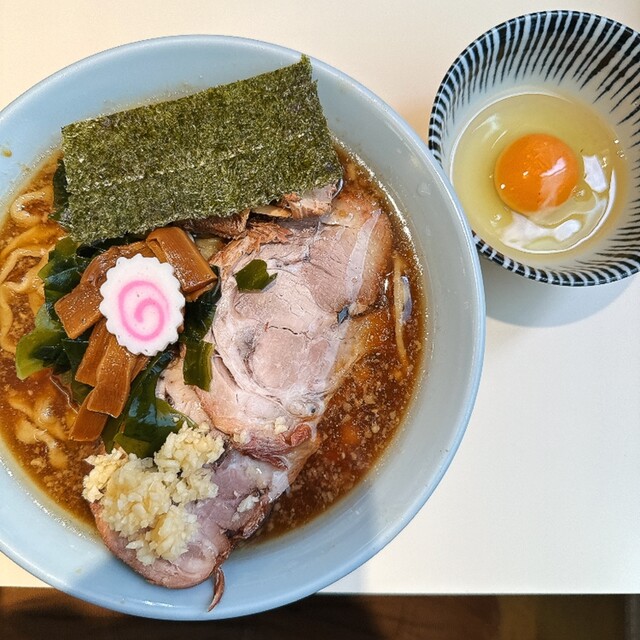
Hashimoto’s ramen scene is built for people who know exactly what they came for: a short walk from the station, a compact counter, steam from the kitchen, and a room where the meal is measured in bowls rather than courses. In Sagamihara, that format is not a compromise. It is the grammar of the city’s strongest casual cooking, especially when the shop puts noodle-making at the center of the proposition.
Jikaseimen Nichome Ramen sits in that lane. The name itself signals the point: jikaseimen means house-made noodles, a meaningful distinction in ramen because the noodle is not just a carrier for soup. Thickness, hydration, cut, and chew determine how broth clings, how dipping noodles behave, and whether abura-soba or maze-soba can hold seasoning without turning heavy. In a category where many diners talk first about soup, Sagamihara’s more serious ramen counters often reward attention to the wheat.
House-made noodles shape the bowl before the broth enters the argument
Kanagawa ramen has several identities at once: Yokohama’s Iekei lineage, coastal seafood inflections, suburban station-counter shops, and small independents that treat noodles with the seriousness of a soba house. Jikaseimen Nichome Ramen’s listed range, ramen, abura-soba, maze-soba, and tsukemen, places it inside the multi-format school rather than the single-broth purist camp. That matters because each format tests noodle structure differently. Soup ramen needs balance and lift; tsukemen asks for grip and resilience; oil-based bowls expose whether seasoning and noodle texture can carry the meal without a broth safety net.
The sourcing angle here is less about a named farm or a luxury ingredient claim than about control. Shops that make noodles in-house can tune the product to the menu rather than buy a generic specification. That control is one reason a low-priced ramen counter can produce a more exacting meal than its cost suggests. The category has long been one of Japan’s great value equations: technical labor, limited seating, quick turnover, and a narrow menu working together so the bowl carries the expense rather than the room.
Recognition in Tabelog’s Ramen KANAGAWA 100 for both 2024 and 2025 gives the shop a useful external signal. Tabelog’s Hyakumeiten lists are not luxury awards; they are category filters that identify highly rated specialists within a defined region. For ramen, that framing is more relevant than a broad fine-dining hierarchy. A counter like this competes with other Kanagawa noodle specialists, not with hotel restaurants or tasting-menu rooms.
Sagamihara rewards specialists, not spectacle
Sagamihara’s dining geography is different from central Tokyo’s. The city’s serious food stops tend to cluster around practical transport nodes and neighborhood routines, where a strong shop can become part of daily movement rather than a destination staged for visitors. Hashimoto, with rail connectivity and a steady local audience, suits the ramen format particularly well. The dining decision is concise: choose the style of bowl, accept the pace of a counter, and let the kitchen’s repetition do the work.
That places Jikaseimen Nichome Ramen in a useful local comparison set. Ganso Ichijoryu Ganko Sohonke Bunten occupies a lower listed price band, while Curry no Mise Maboroshi shows how Sagamihara’s casual specialists can command attention without formal dining signals. The broader city guide also includes names such as Iekei Ramen Kukkura, Kaigara Ya, and Menya Ayumu, which together point to a local scene where noodle shops and compact counters carry more culinary weight than their scale suggests.
The useful editorial read is this: the shop is not trying to translate ramen into fine-dining language. Its credibility comes from narrowness. An eight-seat counter concentrates attention, and the absence of private rooms or event-style dining keeps the exchange clear. This is a small-format, product-led meal, closer to a specialist workshop than a social restaurant. Diners looking for a long evening will misread it; diners who care about noodle texture, regional recognition, and the economy of a focused bowl will understand the appeal quickly.
How to place it in a Sagamihara food day
For a visitor planning around Sagamihara rather than passing through it, ramen works better as an anchor than an afterthought. The city’s appeal lies in these compact, high-signal places: a curry specialist, a ramen counter, a bakery run on its own rhythm, or a neighborhood room with a tight point of view. The right itinerary leaves room for queuing and avoids stacking too many sit-down meals back to back. Ramen counters move fast, but small capacity makes timing part of the experience.
Use Our full Sagamihara restaurants guide to read the city through that specialist lens, then build the rest of the trip around the category rather than the district alone. For lodging context, see Our full Sagamihara hotels guide; for post-meal planning, Our full Sagamihara bars guide, Our full Sagamihara wineries guide, and Our full Sagamihara experiences guide map the city beyond the bowl.
Readers extending the same low-ceremony, product-first logic across Japan and beyond can compare it with other focused listings: -Grilled beef Sukiyaki- KAMAKURA TANUKIAN 鎌倉 たぬき庵 in Kamakura. 鮪と炭火焼き うお炭 秋葉原店 in Tokyo.cafe in Osaka.know in Kumamoto, (Shoku) Vietnam in Kawasaki, [Curry Senmon Ten] Maruyama Kyoju. in Sapporo, Jōdo Saké Bar in Los Angeles, and Onigiri Time in Pasadena. The common thread is discipline over breadth: a clear format, a narrow product focus, and enough specificity that the meal makes sense without theatrical explanation.
At-a-Glance Comparison
Nearby venues at a similar price tier for orientation.
| Venue | Cuisine | Price | Notes |
|---|---|---|---|
| Jikaseimen Nichome RamenThis venue — the venue you are viewing | Homemade Noodle Ramen Shop | $$ | Not listed |
| Taisho Ken Fuchinobe ten | Classic Taishoken-style ramen | $ | Chuo Ward, Sagamihara (Fuchinobe) |
| Nakamura Menzaburo Shoten | Ramen shop | $ | Chuo Ward, Sagamihara |
| Nikuniboshi Chuka Soba Suzuki Ramen Ten | Japanese Ramen | $ | Minami Ward, Sagamihara City |
| Ramen Jiro Sagami oono ten | Jiro-style Ramen | $ | Sagami-Ono |
| Curry no Mise Maboroshi | Japanese Curry House | $ | Chuo, Sagamihara |
Recognition history
Dated appearances from independent guides and award organizations, with the underlying list record or original source where available.
Tabelog 100 #5 · No. 5
Tabelog · Tabelog 100 - Ramen - KANAGAWA - 2025
Continue exploring
More in Sagamihara
Restaurants in Sagamihara
Browse all →


Bars in Sagamihara
Browse all →




Hotels in Sagamihara
Browse all →



Wineries in Sagamihara
Browse all →
At a Glance
- Cozy
- Lively
- Solo
- Casual Hangout
- After Work
- Late Night
- Standalone
- Chefs Counter
A tiny, non-smoking counter-only ramen shop with eight seats, likely bright and functional with a casual, bustling feel typical of popular neighborhood ramen-ya near a station.