Curry no Mise Maboroshi

Curry no Mise Maboroshi is a small Sagamihara curry counter with Tabelog Curry EAST 100 selections in 2019, 2020, 2022, 2023, and 2024. Its appeal sits in Japan’s independent curry culture: compact rooms, short service rhythms, and a seriousness usually associated with ramen or sushi counters rather than everyday lunch curry.
Pearl is the En Primeur Club membership app — saves, bookings, and concierge access live there. Same editors, same standards.
- Address
- 3 Chome-7-1 Central, Chuo Ward, Sagamihara, Kanagawa 252-0239, Japan
- Phone
- +81 42-751-3320
- Website
- twitter.com
 Saves & bookings on Pearl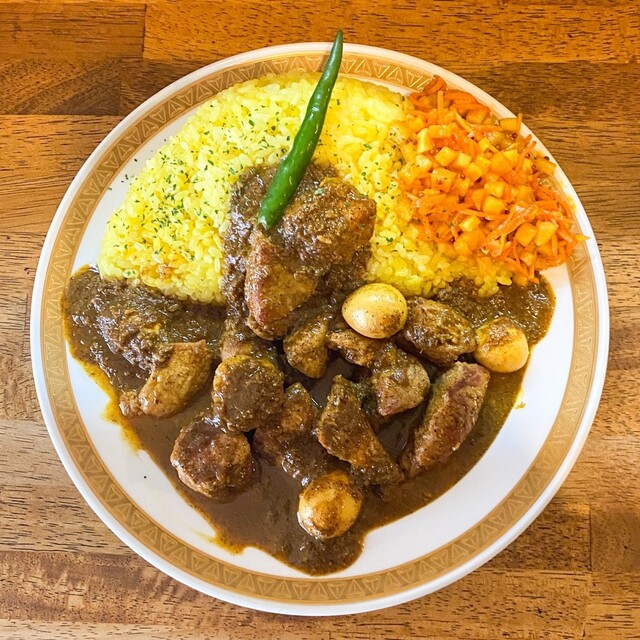
The approach to a serious suburban curry shop in Japan is usually quieter than the food-media shorthand suggests. There is no grand dining room to announce the occasion, only the familiar grammar of a local specialist: a compact frontage, a short midday rhythm, and a room built for people who know what they came for. In Sagamihara, Curry no Mise Maboroshi belongs to that category of small restaurants where the format does much of the talking before a plate reaches the table.
Japanese curry is often discussed abroad as comfort food, but that undersells the range. The category runs from school-lunch sweetness and railway-station speed to spice-led, Indian-influenced interpretations that sit closer to independent craft than chain convenience. Curry no Mise Maboroshi is listed in the curry and Indian curry category and has been selected for Tabelog Curry EAST 100 in 2019, 2020, 2022, 2023, and 2024, which places it in a more selective conversation than an ordinary neighborhood lunch stop. That recognition matters because curry shops rarely have the international trophy architecture of sushi, kaiseki, or French dining; reputation is built through repeat custom, consistency, and local scoring culture.
Sagamihara's small-room curry culture rewards focus over ceremony
Sagamihara’s dining map is not written like central Tokyo’s. The city’s appeal lies in specialist addresses scattered through residential and commuter districts, where ramen, curry, set meals, and small counters anchor daily eating. The better meals here are rarely dressed up as destination dining. They ask the traveler to accept a more local rhythm: arrive with a plan, eat within the room’s tempo, and treat compactness as part of the experience rather than an inconvenience.
That context is useful because Curry no Mise Maboroshi operates at a scale that changes the decision. Ten seats, including counter seating, create a different kind of pressure from a broad casual restaurant. Small rooms sharpen the kitchen’s identity and compress the service into a short, high-demand window. In Japan’s curry scene, that intimacy can be the point: spice, rice, sauce texture, heat, and portioning are judged with the same repeat-visit seriousness that ramen fans bring to broth and noodle structure.
The city’s noodle culture provides the closest comparison. Sagamihara has a dense ramen audience, visible in places such as Ganso Ichijoryu Ganko Sohonke Bunten, Iekei Ramen Kukkura, Jikaseimen Nichome Ramen, Kaigara Ya, and Menya Ayumu. The restaurant sits beside that culture rather than outside it: a lunch-focused specialist where regularity, speed, and a narrow craft language carry more weight than long-form dining theatre.
Recognition here signals consistency, not luxury coding
Tabelog’s Hyakumeiten selections have particular force in categories such as curry, ramen, soba, tonkatsu, and yakitori because they surface restaurants that may not fit international fine-dining narratives. A repeated Curry EAST 100 presence over several selection years points to durability in a field where the benchmarks are not linen, cellar depth, or chef biography. The relevant signals are narrower and more demanding: a focused category, a small service model, and enough customer conviction to keep the score conversation alive across years.
That makes the restaurant useful for travelers trying to understand everyday Japanese dining at a high level. The price band belongs to casual lunch culture, yet the recognition places it among a more scrutinized group of curry specialists in eastern Japan. This is the tension that defines many strong Japanese casual restaurants: modest spend, strict format, limited capacity, and a customer base that evaluates details with precision. The result is not luxury in the hotel-lobby sense. It is seriousness without ceremony.
There is also a broader cultural point. Curry in Japan has always been adaptive: imported through military and institutional channels, softened into household staple, then reworked by independent cooks through spice, regional preference, and Indian-restaurant influence. A Sagamihara curry counter with repeat specialist recognition shows how far the dish has moved from generic convenience. It belongs to the same contemporary habit that sends diners across town for a particular ramen stock, a handmade noodle, or a tightly executed lunch plate.
How to read this stop within a Sagamihara itinerary
The practical case is simple: treat this as a focused meal rather than a flexible fallback. The room is small, the service pattern is narrow, and the restaurant’s public notes include updates on takeout and sold-out items through official X. That combination is common among Japanese specialists with limited production: the more serious the kitchen, the less useful it is to treat opening hours as a guarantee of availability.
For a food-led day in the city, the stronger strategy is to build around one primary lunch target and keep nearby alternatives in mind. The broader EP Club map can help set that context through Our full Sagamihara restaurants guide, with separate planning views for Our full Sagamihara hotels guide, Our full Sagamihara bars guide, Our full Sagamihara wineries guide, and Our full Sagamihara experiences guide. Travelers comparing casual Japanese specialists beyond the city can also look at -Grilled beef Sukiyaki- KAMAKURA TANUKIAN 鎌倉 たぬき庵 in Kamakura. 鮪と炭火焼き うお炭 秋葉原店 in Tokyo.cafe in Osaka.know in Kumamoto, (Shoku) Vietnam in Kawasaki, [Curry Senmon Ten] Maruyama Kyoju. in Sapporo, Jōdo Saké Bar in Los Angeles, and Onigiri Time in Pasadena.
The editorial read is clear. The restaurant is not a grand-occasion restaurant, and approaching it that way misses the point. It is a small Sagamihara specialist whose repeated curry-category recognition makes it a sharper lens on Japanese casual dining: low ritual, high scrutiny, and a dish that has become one of the country’s most adaptable measures of everyday craft.
Budget Reality Check
Comparable venues by cuisine and price in the same metro.
| Venue | Cuisine | Price | Notes |
|---|---|---|---|
| Curry no Mise MaboroshiThis venue — the venue you are viewing | Chuo, Sagamihara, Japanese Curry House | $ | Not listed |
| Ganso Ichijoryu Ganko Sohonke Bunten | Not listed | $ | Midori Ward, Sagamihara, Classic Japanese Ramen Shop |
| Taisho Ken Fuchinobe ten | Not listed | $ | Chuo Ward, Sagamihara (Fuchinobe), Classic Taishoken-style ramen |
| Ramen Jiro Sagami oono ten | Sagami-Ono, Jiro-style Ramen | $ | Not listed |
| Nikuniboshi Chuka Soba Suzuki Ramen Ten | Not listed | $ | Minami Ward, Sagamihara City, Japanese Ramen |
| Sagamihara Keyaki | Not listed | $$ | Minami-ku, Sagamihara, Modern Japanese Ramen |
Recognition history
Dated appearances from independent guides and award organizations, with the underlying list record or original source where available.
Tabelog 100 #59 · No. 59
Tabelog · Tabelog 100 - Curry - EAST - 2024
Continue exploring
More in Sagamihara
Restaurants in Sagamihara
Browse all →


Bars in Sagamihara
Browse all →




Hotels in Sagamihara
Browse all →




Wineries in Sagamihara
Browse all →
At a Glance
- Cozy
- Lively
- Classic
- Solo
- Casual Hangout
- After Work
- Standalone
Current opening hours
- Monday
- Closed
- Tuesday
- Closed
- Wednesday
- 11 AM–2 PM
- Thursday
- 11 AM–2 PM
- Friday
- 11 AM–2 PM
- Saturday
- 11 AM–2 PM
- Sunday
- Closed
Hours can change for holidays and private events. Last verified .
A compact, no-frills local curry shop with a warm, lived-in feel and energetic atmosphere at peak lunch hours, where guests line up and are managed with numbered tickets when it gets busy.