Taisho Ken Fuchinobe ten

Taisho Ken Fuchinobe ten belongs to Sagamihara’s practical ramen culture: low spend, no-reservation dining, and a room built for regular use rather than ceremony. Its Tabelog Ramen KANAGAWA “Tabelog 100” selections in 2024 and 2025 place it in a recognized Kanagawa ramen tier, while the Fuchinobe setting keeps the experience grounded in a neighborhood rhythm.
Pearl is the En Primeur Club membership app — saves, bookings, and concierge access live there. Same editors, same standards.
- Address
- 2 Chome-6-24 Fuchinobe, Chuo Ward, Sagamihara, Kanagawa 252-0206, Japan
- Phone
- +81 42-755-5430
- Website
- tabelog.com
 Saves & bookings on Pearl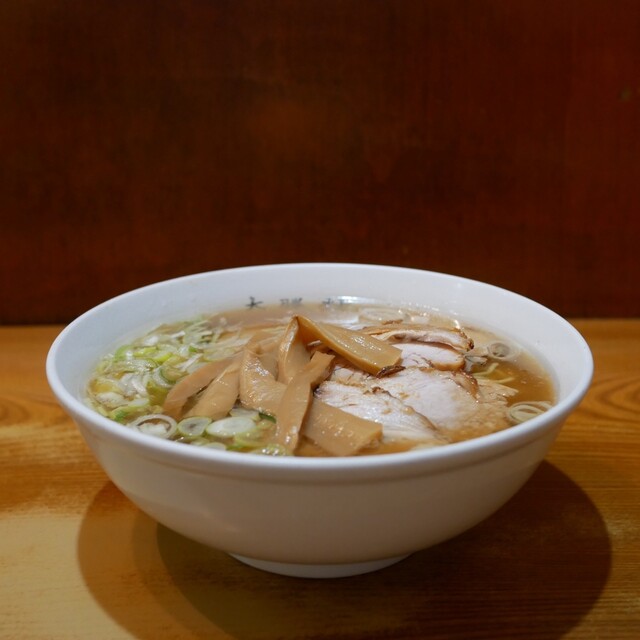
Fuchinobe’s ramen rooms do not announce themselves with luxury cues. The read is more local and functional: station-side streets, compact shopfronts, quick turnover, families at tables, solo diners at counters, and a meal price that keeps ramen in its proper role as everyday food. In that setting, Taisho Ken Fuchinobe ten sits inside a Kanagawa tradition where sourcing is judged less by theatrical provenance than by what ends up in the bowl: noodle texture, broth structure, seasoning balance, and whether the kitchen can repeat the same equation across a long service.
Sagamihara is often treated as a through-city between Tokyo, Yokohama, and the Tanzawa side of Kanagawa, but its ramen culture has its own logic. The city rewards shops that are useful, not ornamental. A 29-seat format, split between 3 counter seats and 26 table seats, changes the feel of a ramen stop: this is not only a lone-diner counter, but a room that can absorb small groups and children without turning the meal into an event. That matters in a suburban ramen market, where consistency, price, and access carry as much weight as chef mythology.
Kanagawa ramen, judged by repeatability rather than spectacle
Ramen sourcing in Japan is often discussed through highly specific components: wheat for noodles, bones or seafood for stock, shoyu or miso tare, aromatic oils, chashu, menma, and the temperature discipline that holds the bowl together. The available public details here do not name suppliers or a signature bowl, so the better way to read the restaurant is through category signals. The shop is classified as ramen, selected for Tabelog Ramen KANAGAWA “Tabelog 100” in both 2024 and 2025, and carries a Tabelog score of 3.69. Those are not decoration; in a region with deep ramen density, they indicate a shop that has cleared a local benchmark for repeatable execution.
The price band also says something about intent. At under JPY 999, the shop sits below several Sagamihara peers in the comparison set, including Kaigara Ya, Nakamura Menzaburo Shoten, and Curry no Mise Maboroshi, which sit in the JPY 1,000 to JPY 1,999 bracket. Menya Ayumu shares the sub-JPY 999 band, making this part of Sagamihara’s lower-cost serious-eating tier rather than its special-occasion dining circuit. That distinction is useful: expectations should be calibrated toward speed, value, and a focused bowl, not toward tasting-menu narrative.
The Taisho Ken name also carries broader ramen associations in Japan, particularly with hearty, workmanlike bowls and a culture of regular customers rather than fashion-driven dining. Without turning that into a claim about this branch’s exact recipe, the lineage matters as context. In suburban Kanagawa, ramen shops with recognizable naming and low pricing compete on dependable craft: the noodle has to hold, the soup has to carry, and the portioning has to feel fair for the spend.
A neighborhood room with counter discipline and table flexibility
Room format pushes Taisho Ken Fuchinobe ten into a different category from the narrow eight-seat ramen counters that dominate parts of central Tokyo. Three counter seats keep the solo-diner rhythm, while the table count makes the restaurant more flexible for local use. Tabelog’s occasion tags point in the same direction: family friendly, solo dining friendly, and suited to friends. Children are welcome, private rooms are not part of the format, and the non-smoking policy makes the room easier to read for mixed groups.
Reservations are unavailable, which suits the genre. Ramen at this price point works on arrival timing rather than advance planning. The practical move is to treat the meal as a targeted stop in Fuchinobe, not a long sit-down booking. The shop operates on a weekly rhythm with Tuesday and Wednesday closures, and service runs across the late morning into evening on operating days. For travelers building a Sagamihara food day, that makes it easier to pair with other low-ceremony local addresses rather than forcing the whole schedule around one table.
Payment is another signal of the room’s local character: credit cards, electronic money, and QR code payments are not accepted. Cash remains part of the experience at many serious neighborhood ramen shops in Japan, especially outside central-city dining districts. The shop also lists parking for two cars near the store, useful in a city where ramen eating is not always tied to train travel. Fuchinobe Station is the nearest rail reference, placing the restaurant in a practical suburb-to-station pattern rather than a destination-dining enclave.
How to place it within a Sagamihara food run
Sagamihara rewards a mapped approach. Ramen, curry, bakeries, and casual specialist rooms are spread across neighborhoods rather than packed into a single entertainment district. For a focused ramen comparison, nearby editorial reference points include Iekei Ramen Kukkura, Jikaseimen Nichome Ramen, and Ganso Ichijoryu Ganko Sohonke Bunten. The point is not to crown a winner; it is to understand how different noodle houses express value, broth style, and neighborhood demand across the city.
For broader planning, Our full Sagamihara restaurants guide gives the strongest context for eating across the city, while Our full Sagamihara hotels guide, Our full Sagamihara bars guide, Our full Sagamihara wineries guide, and Our full Sagamihara experiences guide help place the meal inside a wider Kanagawa itinerary. Travelers continuing beyond the city can use the same casual-specialist lens at -Grilled beef Sukiyaki- KAMAKURA TANUKIAN 鎌倉 たぬき庵 in Kamakura. 鮪と炭火焼き うお炭 秋葉原店 in Tokyo.cafe in Osaka.know in Kumamoto, (Shoku) Vietnam in Kawasaki, [Curry Senmon Ten] Maruyama Kyoju. in Sapporo, Jōdo Saké Bar in Los Angeles, and Onigiri Time in Pasadena.
The editorial case for Taisho Ken Fuchinobe ten is not luxury. It is the opposite: a recognized Kanagawa ramen shop operating in a sub-JPY 999 band, with enough seating flexibility for daily neighborhood use and enough external recognition to justify a detour for ramen-focused travelers. In a region where the serious bowl is often found in plain rooms, that is exactly the category to understand.
How It Stacks Up
Comparable venues by cuisine and price in the same metro.
| Venue | Cuisine | Price | Notes |
|---|---|---|---|
| Taisho Ken Fuchinobe tenThis venue — the venue you are viewing | Classic Taishoken-style ramen | $ | Not listed |
| Nikuniboshi Chuka Soba Suzuki Ramen Ten | Japanese Ramen | $ | Minami Ward, Sagamihara City |
| Nakamura Menzaburo Shoten | Ramen shop | $ | Chuo Ward, Sagamihara |
| Ramen Jiro Sagami oono ten | Jiro-style Ramen | $ | Sagami-Ono |
| Ganso Ichijoryu Ganko Sohonke Bunten | Classic Japanese Ramen Shop | $ | Midori Ward, Sagamihara |
| Kaigara Ya | Shellfish-focused ramen shop | $ | Fuchinobe |
Recognition history
Dated appearances from independent guides and award organizations, with the underlying list record or original source where available.
Tabelog 100 #41 · No. 41
Tabelog · Tabelog 100 - Ramen - KANAGAWA - 2025
Continue exploring
More in Sagamihara
Restaurants in Sagamihara
Browse all →


Bars in Sagamihara
Browse all →




Hotels in Sagamihara
Browse all →




Wineries in Sagamihara
Browse all →
At a Glance
- Lively
- Classic
- Cozy
- Solo
- Family
- Casual Hangout
- Group Dining
- After Work
- Late Night
- Standalone
Current opening hours
- Monday
- 11 AM–8:30 PM
- Tuesday
- Closed
- Wednesday
- Closed
- Thursday
- 11 AM–8:30 PM
- Friday
- 11 AM–8:30 PM
- Saturday
- 11 AM–8:30 PM
- Sunday
- 11 AM–8:30 PM
Hours can change for holidays and private events. Last verified .