Nikuniboshi Chuka Soba Suzuki Ramen Ten

Nikuniboshi Chuka Soba Suzuki Ramen Ten belongs to Sagamihara’s serious ramen tier: small counter format, niboshi-driven broth, house-made noodles, and selection in Tabelog’s Ramen Kanagawa 100 for 2024 and 2025. The appeal is not luxury polish but ingredient discipline, especially the way dried sardine, bonito, mackerel, and clear tonkotsu place the bowl inside Kanagawa’s broader ramen culture.
Pearl is the En Primeur Club membership app — saves, bookings, and concierge access live there. Same editors, same standards.
- Address
- 神奈川県相模原市南区相模大野3-18-3 新井ビル 1F
- Phone
- +81428543333
- Website
- tabelog.com
 Saves & bookings on Pearl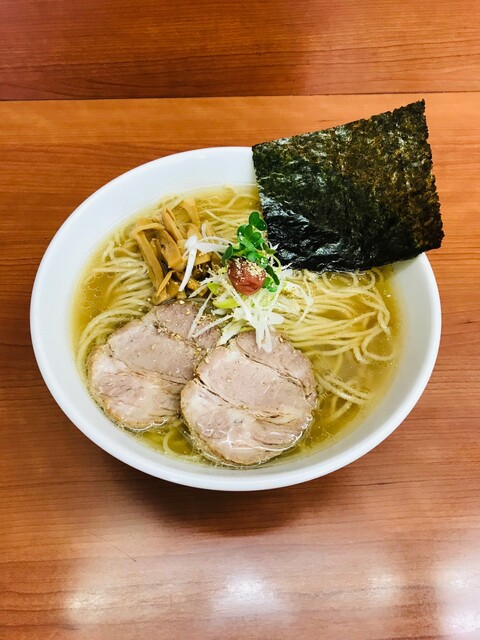
Approaching Sagami-Ono’s ramen counters, the city reads less like a destination dining district than a working commuter hub where the better bowls have to earn attention by craft rather than theatre. The format is compact, counter-led, and quick by design; the difference lies in what happens before service, when broth structure, noodle texture, and dried seafood selection decide whether a shop becomes merely useful or worth crossing town for.
Nikuniboshi Chuka Soba Suzuki Ramen Ten sits in that second category. Its selection for Tabelog’s Ramen Kanagawa 100 in both 2024 and 2025 is a useful signal because Kanagawa ramen is not a soft field: Yokohama’s iekei tradition, coastal seafood broths, suburban tsukemen specialists, and Jiro-style appetite all compete for attention. In that context, a Sagamihara shop built around niboshi and clear tonkotsu is not chasing novelty. It is working inside a precise Japanese ramen grammar where dried fish intensity, pork-bone clarity, and noodle making carry the argument.
Dried sardine, clear tonkotsu, and the Kanagawa ramen argument
Niboshi ramen can go wrong fast. Push the dried sardine too hard and bitterness takes over; soften it too much and the bowl loses its point. The stated construction here is a tonkotsu clear broth using a generous quantity of selected niboshi, primarily ma-iwashi, with katakuchi and shirokuchi also in the mix. Thick-shaved katsuobushi and saba add another layer of dried-fish depth. That sourcing detail matters because the shop’s identity is not simply “fish broth”; it is a layered dried-seafood profile set against pork-bone clarity rather than opaque heaviness.
The house-made noodle practice strengthens that position. Ramen shops often use custom noodles from specialist makers, and there is nothing lesser about that model, but daily in-house production changes the level of control. Hydration, thickness, and bite can be adjusted around the soup rather than treated as a fixed component. For a broth that depends on dried sardine tension and clear tonkotsu support, that control is not cosmetic. It is the difference between a bowl that feels integrated and one that reads as broth plus starch.
Sagamihara’s ramen scene gives that choice extra meaning. Iekei Ramen Kukkura represents the city’s Yokohama-rooted iekei lane at a similar low-price bracket, while Ramen Jiro Sagami oono ten points toward volume, density, and appetite. This shop works in another register: dried fish complexity rather than dairy-like pork weight, and clarity rather than maximal force. For readers mapping the city by style, Our full Sagamihara restaurants guide is the natural companion, but the useful distinction is already visible here. Sagamihara’s better ramen addresses different cravings, not a single hierarchy.
A counter shop that rewards focus over ceremony
The room follows the logic of serious everyday ramen: counter seating, limited capacity, no private-room apparatus, and a service rhythm built around bowls rather than lingering. That matters for expectation-setting. This is not the kind of restaurant where the meal expands into a long evening. It is closer to the Japanese lunch-counter ideal, where the guest’s job is to decide, eat while the noodles are at their intended texture, and move with the pace of the room.
The format is also why awards are a cleaner trust signal than atmosphere claims. A Tabelog 3.73 score and Kanagawa 100 selection in consecutive years point to sustained local and regional attention, not a single viral spike. In Japan’s ramen culture, where serious shops can be tiny and low-priced, recognition often attaches to consistency: broth that holds its line, noodles that suit the soup, and a menu that does not need luxury cues to justify attention.
Audience is broader than many counter shops of this type. The venue is listed as suitable for solo dining, friends, and families, with children welcome. That does not turn it into a leisurely family restaurant; it means the ramen-counter format here is accessible rather than exclusionary. Non-smoking status and wheelchair accessibility add practical comfort without changing the essential character of the meal.
Reservations are unavailable, which fits the genre. In ramen, especially in compact suburban shops, the transaction is usually queue, order, eat, leave. That rhythm can frustrate travelers expecting restaurant-style planning, but it is part of why the price-to-craft ratio remains so persuasive in Japan. The value proposition is concentrated in the bowl, not in tableware, wine service, or a padded reservation system.
Where it fits in a Sagamihara itinerary
For a food-focused day in Sagamihara, this is the stop for dried-seafood ramen rather than a general Japanese dining catch-all. The contrast with curry specialist Curry no Mise Maboroshi, shellfish-leaning Kaigara Ya, and noodle-focused Jikaseimen Nichome Ramen helps define the city’s range. Ganso Ichijoryu Ganko Sohonke Bunten adds another ramen reference point, useful for readers tracing how different shops manage salt, stock, and noodle texture.
Travel planning around Sagamihara benefits from that same category thinking. Use Our full Sagamihara hotels guide for the overnight base, Our full Sagamihara bars guide for the after-dinner map, Our full Sagamihara wineries guide for regional drinking context, and Our full Sagamihara experiences guide when the trip needs more than meals. For broader Japan dining comparisons, the network runs from -Grilled beef Sukiyaki- KAMAKURA TANUKIAN 鎌倉 たぬき庵 in Kamakura and. 鮪と炭火焼き うお炭 秋葉原店 in Tokyo to.cafe in Osaka.know in Kumamoto, (Shoku) Vietnam in Kawasaki, and [Curry Senmon Ten] Maruyama Kyoju. in Sapporo. Outside Japan, Jōdo Saké Bar in Los Angeles and Onigiri Time in Pasadena show how Japanese formats travel when the focus shifts from regional specialization to diaspora interpretation.
The critical read is simple: Nikuniboshi Chuka Soba Suzuki Ramen Ten is for diners who care about broth architecture and ingredient sourcing more than restaurant theatre. In a city where affordable ramen can cover several distinct schools, its case rests on niboshi selection, clear tonkotsu structure, and in-house noodles, supported by consecutive Kanagawa 100 recognition. That is enough reason to treat it as a serious Sagamihara ramen address, not merely a convenient bowl near the station.
Side-by-Side Snapshot
Comparable venues by cuisine and price in the same metro.
| Venue | Cuisine | Price | Notes |
|---|---|---|---|
| Nikuniboshi Chuka Soba Suzuki Ramen TenThis venue — the venue you are viewing | Japanese Ramen | $ | Not listed |
| Curry no Mise Maboroshi | Japanese Curry House | $ | Chuo, Sagamihara |
| Yakiniku Hasegawa | Traditional Yakiniku (Japanese BBQ) | $$ | Minami-ku, Sagamihara |
| Nakamura Menzaburo Shoten | Ramen shop | $ | Chuo Ward, Sagamihara |
| Ganso Ichijoryu Ganko Sohonke Bunten | Classic Japanese Ramen Shop | $ | Midori Ward, Sagamihara |
| Iekei Ramen Kukkura | Iekei (Yokohama-style) Ramen | $ | Sagami Ono |
Recognition history
Dated appearances from independent guides and award organizations, with the underlying list record or original source where available.
Tabelog 100 #78 · No. 78
Tabelog · Tabelog 100 - Ramen - KANAGAWA - 2025
Continue exploring
More in Sagamihara
Restaurants in Sagamihara
Browse all →


Bars in Sagamihara
Browse all →




Hotels in Sagamihara
Browse all →




Wineries in Sagamihara
Browse all →
At a Glance
- Classic
- Cozy
- Energetic
- Solo
- Family
- Casual Hangout
- Chefs Counter
- Standalone
Casual, compact ramen-shop atmosphere with counter seating and a focused, no-frills dining room.